
 = Partner Site
Serafina and the Black Cloak Reading Level: A Complete Guide
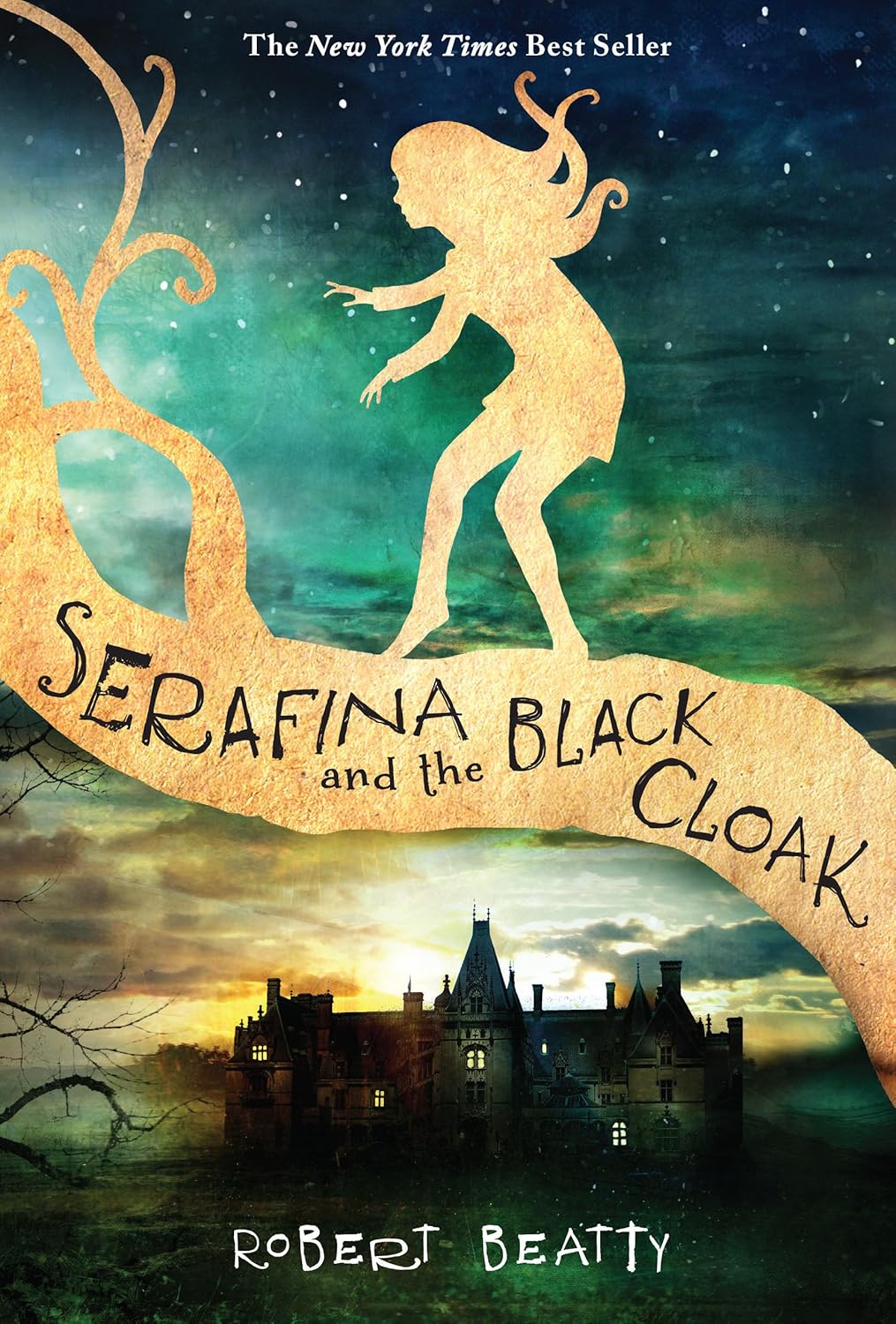
Serafina and the Black Cloak by Robert Beatty is a gothic mystery-adventure novel set in the gilded grandeur of Biltmore Estate in 1899 — a breathlessly paced story about a strange, secretive girl who lives hidden in the basement of the most magnificent mansion in America and the dark, shape-shifting evil she must face to save the children who are disappearing into the forest. This complete guide covers Serafina and the Black Cloak’s reading level, recommended age, content considerations, characters, themes, and books similar to Serafina and the Black Cloak, designed for parents, teachers, and students.
For Parents
Serafina and the Black Cloak is a gothic mystery-adventure with genuine suspense and atmospheric darkness — more intense than a typical middle-grade adventure without crossing into content most families would consider inappropriate. The villain is genuinely menacing, children disappear into a black cloak in ways that are frightening by design, and the forest scenes carry real dread. Most parents find it appropriate for readers ages 9 and up, with the strongest fit for ages 10–12. It is especially popular with readers who loved the Harry Potter series and are looking for something similarly atmospheric and plot-driven.
For Teachers
Serafina and the Black Cloak works well as a classroom text for grades 4–7, offering strong hooks for discussions of identity, class and social hierarchy in the Gilded Age, the natural world versus the human-built world, and good versus evil. The real Biltmore Estate setting provides an excellent opportunity to connect the novel to American history and architecture. The book’s gothic atmosphere and mystery structure make it a natural pairing with units on the mystery genre or American historical fiction. Robert Beatty includes historical detail about the real Biltmore and its era throughout the novel.
Serafina and the Black Cloak at a Glance
Find on Amazon →| Author | Robert Beatty |
| Published | 2015 |
| Grade Level | 4–6 (our assessment) |
| Recommended Age | 9–13 |
| Flesch-Kincaid Grade | 5.3 |
| Word Count | ~62,000 |
| Pages | 293 (standard hardcover) |
| Chapters | 43 |
| Genre | Gothic mystery / historical fiction / adventure |
| Setting | Biltmore Estate, Asheville, North Carolina; 1899 |
| Awards | New York Times bestseller |
For official Lexile and AR levels, visit Lexile.com or AR BookFinder. ReadingVine provides independent editorial assessments.
What Reading Level Is Serafina and the Black Cloak?
Serafina and the Black Cloak reads at approximately a 5th-grade word level by standard readability measures (Flesch-Kincaid grade 5.3), placing it solidly in the middle-grade range. Our editorial assessment is grades 4–6 for independent reading, with the book most rewarding for readers in grades 5–6. Beatty’s prose is vivid and immersive, favoring rich sensory description of the natural world and the opulent interiors of Biltmore over complex sentence structures, which keeps the book accessible while delivering a genuinely literary atmosphere.
What gives the book its reading complexity beyond word level is the sustained Gothic atmosphere and the mystery structure, which requires readers to track clues, suspects, and withheld information across a long and carefully paced narrative. The novel is also longer than many middle-grade titles at around 62,000 words, which means readers need stamina and engagement to carry through to the resolution. For confident 4th-grade readers who enjoy atmospheric stories, it works well; for readers who prefer lighter fare, the darkness of the premise and the menace of the villain may make it better suited to 5th grade and above. For official Lexile and AR scores, visit Lexile.com or AR BookFinder.
What Age Is Serafina and the Black Cloak Appropriate For?
We recommend Serafina and the Black Cloak for readers ages 9–13, with the strongest fit at ages 10–12. The mystery-adventure premise, the compelling protagonist, and the lush setting make it broadly appealing across the upper elementary and middle school range. Readers who love atmospheric, slightly spooky stories — and particularly readers who enjoyed the Harry Potter series, Coraline, or The Graveyard Book — tend to respond to it with great enthusiasm.
Serafina and the Black Cloak contains genuine gothic suspense and horror-adjacent content. A dark figure in a black cloak is kidnapping children at Biltmore, and the manner in which they disappear — absorbed into the cloak, souls trapped within its folds — is genuinely frightening by design. Several scenes in the dark forest carry real atmospheric dread. The villain is menacing and threatening, and there is peril for Serafina herself in multiple scenes. There is no profanity, sexual content, or graphic violence, but sensitive readers who are easily frightened should be aware that this is a darker, more suspenseful book than the average middle-grade adventure. The book also deals with themes of Serafina’s uncertain identity and origins, which involves some mystery around her parentage that is handled carefully but may prompt questions about family and belonging. Parents of readers who are sensitive to scary content may want to preview the early chapters before sharing with children on the younger end of the range.
The book has been a consistent favorite with the 10–12 age group in particular, and its combination of mystery, history, and a uniquely strange protagonist has made it a reliable recommendation for readers who have devoured the Harry Potter series and are looking for something with a similar pull-you-in quality and a satisfying, layered plot.
What Is Serafina and the Black Cloak About?
Serafina has lived her whole life in the basement of the Biltmore Estate — the vast, 250-room mansion built by George Vanderbilt in the mountains of western North Carolina. She has never gone upstairs during the day, never been seen by the estate’s guests or most of its servants, and never left the grounds. She doesn’t know exactly what she is. She has six toes on each foot, yellow eyes that see perfectly in the dark, and an instinctive speed and agility that seems to belong to something other than an ordinary girl. Her Pa, one of Biltmore’s engineers, has raised her in secret and told her only that she must never be seen.
One night Serafina witnesses something terrifying: a dark figure in a long black cloak chasing a young girl through Biltmore’s corridors. The girl is absorbed into the cloak and disappears. Serafina, who has spent her life watching the estate from the shadows, is the only one who saw what happened — and when children begin disappearing from Biltmore one by one, she is the only one positioned to stop it. Her investigation brings her into contact with Braeden Vanderbilt, the young nephew of Biltmore’s owner, who becomes her first real friend and her partner in trying to uncover the truth about the Black Cloak and the man who wears it.
Robert Beatty was inspired to write the novel while visiting the real Biltmore Estate in Asheville, North Carolina — a place he describes as feeling inherently mysterious and story-worthy. The estate is real, George Vanderbilt was a real person, and the physical details of Biltmore’s architecture, gardens, and surrounding forest are drawn from the actual location. Beatty invented Serafina and the threat of the Black Cloak, but placed them in a setting that readers can visit today. Biltmore Estate has since embraced the series, hosting events and partnerships around the books.
Serafina and the Black Cloak Characters
Serafina and the Black Cloak Themes and Lessons
At its core, Serafina and the Black Cloak is a story about a girl who doesn’t know what she is — and who discovers that what she is may be precisely what the situation requires. Serafina has spent her whole life defined by what she lacks: a proper place, a known identity, a family she understands, a right to exist in the light. The novel argues, through the plot’s unfolding, that the qualities that have made her an outsider — her night vision, her speed, her feral instincts, her knowledge of the estate’s hidden spaces — are not deficits but gifts, and that belonging can be earned through courage and action rather than simply granted by birth or circumstance.
The Gilded Age setting adds a layer of social commentary that rewards classroom discussion. Biltmore represents extraordinary wealth and privilege — a 250-room mansion staffed by dozens of servants, filled with art and luxuries imported from around the world — while Serafina lives literally beneath it, invisible and uncounted. Her navigation of that world, and the way Braeden Vanderbilt crosses class lines to befriend her, raises questions about who gets to occupy which spaces and on whose terms. Discussion questions worth exploring: Why has Serafina’s Pa kept her hidden, and was he right to do so? What does the Black Cloak represent beyond its literal function as a villain’s weapon? How does Serafina’s outsider perspective allow her to see things that the estate’s guests and servants cannot? What does friendship mean when it crosses the boundaries of class, as it does between Serafina and Braeden?
How Many Pages and Chapters Are in Serafina and the Black Cloak?
Serafina and the Black Cloak is 293 pages in the standard hardcover edition, divided into 43 chapters. The word count is approximately 62,000 words, making it a full-length middle-grade novel at the longer end of the range. At an average middle-grade reading pace of around 250 words per minute, most readers in the target age range will finish the book in 7–9 hours of total reading time — roughly one to two weeks of 30–45 minute daily reading sessions. The chapters are short and propulsive, most running 6–8 pages, which gives the book its characteristic momentum: each chapter ends with enough forward pull to make it genuinely difficult to stop. The pacing is one of the novel’s greatest strengths, and readers who start it tend to finish it quickly. An author’s note at the back provides historical context about the real Biltmore Estate and is worth reading to understand what Beatty invented and what is historically grounded.
Books Similar to Serafina and the Black Cloak
About Robert Beatty
Robert Beatty is an American author and technology entrepreneur who lives in Lexington, Kentucky. He spent years working in the technology industry — co-founding several companies, including an early internet provider — before turning to fiction writing. Serafina and the Black Cloak was his debut novel, published by Disney Hyperion in 2015, and became a New York Times bestseller. The novel grew from a visit to the real Biltmore Estate in Asheville, North Carolina, which Beatty found so atmospheric and story-worthy that he became fascinated with what it might have been like to live there — not as a guest, but as someone hidden in its walls. The Serafina series has since expanded to four books: Serafina and the Black Cloak (2015), Serafina and the Twisted Staff (2016), Serafina and the Splintered Heart (2017), and Serafina and the Seven Stars (2019). The real Biltmore Estate — still privately owned by the Vanderbilt family’s descendants and open to the public as a tourist attraction in Asheville, North Carolina — has embraced the series enthusiastically, partnering with Beatty on events and promotions. Beatty has said he writes the kind of adventure stories he loved as a child and wants to share with young readers today.
Serafina and the Black Cloak: Frequently Asked Questions
What grade level is Serafina and the Black Cloak?
By standard readability measures, Serafina and the Black Cloak reads at approximately a 5th-grade word level (Flesch-Kincaid grade 5.3). Our editorial assessment is grades 4–6 for independent reading, with the book most rewarding for readers in grades 5–6. The gothic atmosphere and mystery structure add complexity beyond the word-level score, making it better suited to confident 5th-grade readers and above, though strong 4th-grade readers who enjoy atmospheric stories will engage with it fully.
Is the Biltmore Estate in Serafina a real place?
Yes. The Biltmore Estate is a real place — a 250-room château-style mansion built by George Washington Vanderbilt II in Asheville, North Carolina, completed in 1895. It remains the largest privately owned house in the United States and is still owned by Vanderbilt’s descendants. It is open to the public as a major tourist attraction in western North Carolina, drawing hundreds of thousands of visitors each year. Robert Beatty visited the estate before writing the novel, and the physical details of Biltmore’s architecture, gardens, basement, and surrounding forest are drawn from the real location. Readers who visit Biltmore today can recognize specific rooms, corridors, and landscape features from the novel.
Is Serafina and the Black Cloak part of a series?
Yes. Serafina and the Black Cloak is the first book in the Serafina series by Robert Beatty. The sequels are Serafina and the Twisted Staff (2016), Serafina and the Splintered Heart (2017), and Serafina and the Seven Stars (2019). Each book continues Serafina’s story at and around Biltmore, deepening the mystery of her true nature and bringing new supernatural threats. The first book works as a satisfying standalone, but readers who love it will find the sequels continue the story’s emotional arc and world-building richly.
How scary is Serafina and the Black Cloak?
Serafina and the Black Cloak is genuinely atmospheric and suspenseful — darker in tone than a typical middle-grade adventure, though not as unrelentingly frightening as, say, Coraline. The villain is menacing, the disappearing children scenes are designed to be unsettling, and several forest sequences carry real dread. Most readers ages 10 and up handle it well and find the suspense more exciting than frightening. Readers ages 8–9 who are sensitive to scary content should be previewed for comfort level, while those who actively enjoy spooky stories will likely find it perfectly pitched. The horror is atmospheric and supernatural rather than violent or gory.
What is Serafina, exactly?
Serafina’s true nature is one of the novel’s central mysteries and is best discovered through reading. What can be said without spoiling the reveal: she is not an ordinary human girl, she has physical abilities that go beyond what a normal person can do, and her origins are connected to the forest that surrounds Biltmore in ways that only become clear as the story unfolds. Beatty draws on American folklore and the mythology of the natural world in crafting what Serafina is, and the reveal is both surprising and deeply satisfying in how it recontextualizes everything that has come before.
Is Serafina and the Black Cloak based on a true story?
No — Serafina and the events of the novel are entirely fictional. However, the setting is real and historically grounded. The Biltmore Estate, George Vanderbilt, and the general atmosphere of Gilded Age America in 1899 are accurately depicted. Robert Beatty researched the estate’s history, architecture, and the Vanderbilt family extensively, and an author’s note at the back of the book explains what is real and what he invented.
Can I visit the Biltmore Estate?
Yes. The Biltmore Estate in Asheville, North Carolina is open to the public year-round as a major tourist attraction. It is the largest privately owned house in the United States and includes the mansion, extensive gardens designed by Frederick Law Olmsted, a winery, and surrounding grounds. The estate offers special programming related to the Serafina series, including mystery-themed events. For families who read the book together, a visit to Biltmore makes an exceptional companion experience — many of the rooms, corridors, and outdoor spaces described in the novel can be walked through in person.
Who is George Vanderbilt, and was he a real person?
George Washington Vanderbilt II (1862–1914) was a real American art collector and philanthropist, the grandson of the railroad magnate Cornelius Vanderbilt. He built the Biltmore Estate beginning in 1889 and completed it in 1895, intending it as a country retreat and working farm. Vanderbilt was known for his love of art, architecture, literature, and the natural world — he worked with landscape architect Frederick Law Olmsted to develop the estate’s grounds using sustainable forestry practices that were innovative for the era. In the novel he is depicted with historical accuracy as a cultured, thoughtful man genuinely concerned for those in his employ and on his estate.