
 = Partner Site
Fever 1793 Reading Level: A Complete Guide
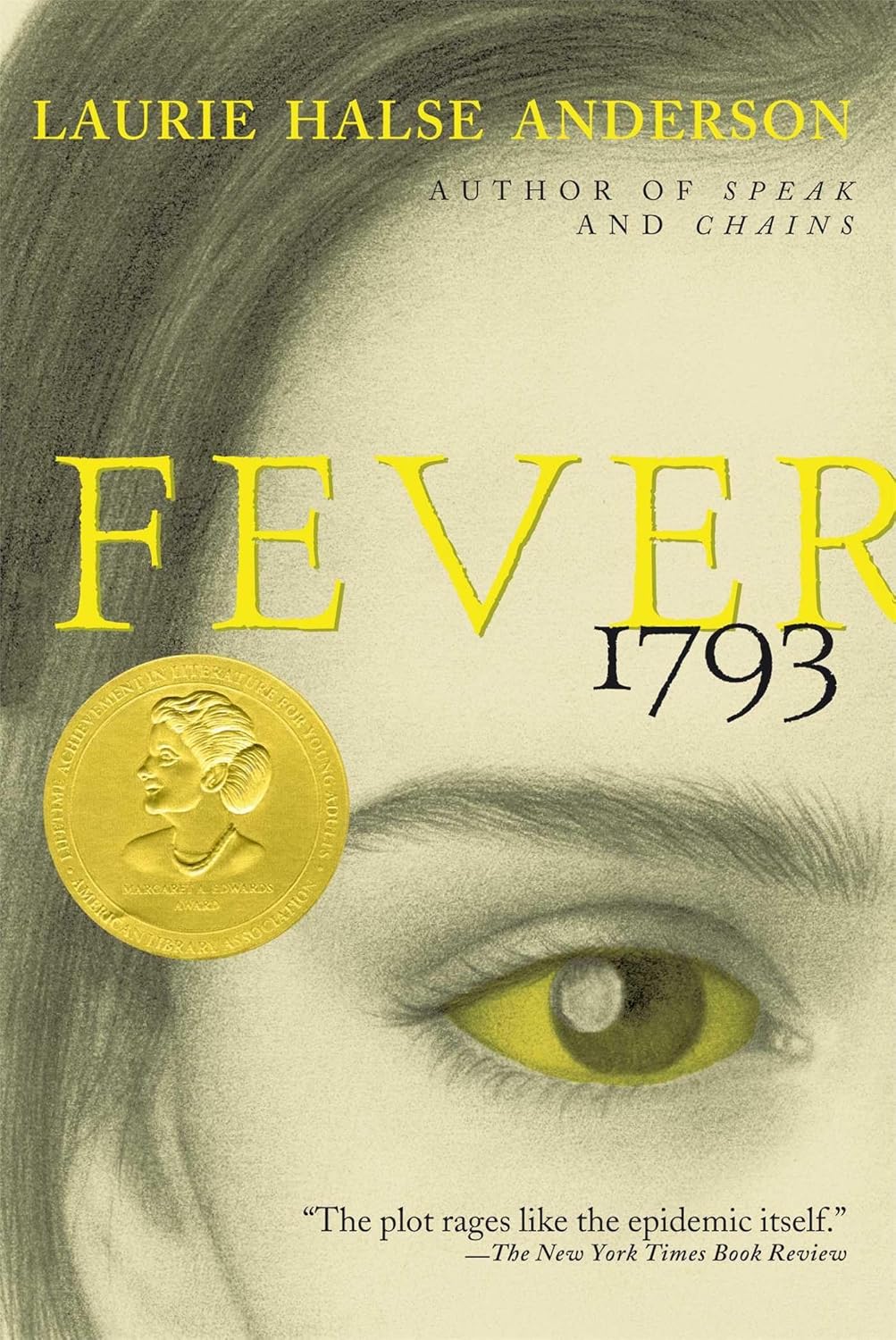
Fever 1793 by Laurie Halse Anderson is a gripping, meticulously researched, and emotionally powerful novel about a fourteen-year-old girl named Mattie Cook who survives the yellow fever epidemic that killed nearly one in ten residents of Philadelphia in the summer and fall of 1793 — at the time the capital of the United States and one of the largest cities in the new nation. Fast-moving, historically precise, and built around one of the most dramatic and most underrepresented events in American history, it is a novel about the specific courage required to keep going when everything familiar has been taken away, about who steps up and who steps back in a crisis, and about what a girl discovers about herself when the world stops giving her any choice but to find out. This complete guide covers the reading level, age appropriateness, themes, characters, and everything parents and teachers need to know about this essential novel.
For Parents
Fever 1793 is a novel about epidemic disease told with the honesty the subject requires — people die, including people Mattie loves, and the death toll of the historical epidemic is not minimized. Best suited for readers ages 10-13, it is also one of the most gripping and most readable historical novels in the middle grade canon: the pace rarely slackens, Mattie’s voice is funny and specific and entirely winning, and the historical world Anderson builds — the coffee house, the market stalls, the stinking streets of late-summer Philadelphia — is rendered with the specificity of someone who has done her research and loves her material. Parents looking for historical fiction that takes both the history and the reader seriously will find it one of the best available choices.
For Teachers
A widely taught novel well suited to grades 5-7, Fever 1793 is an exceptional text for teaching historical fiction craft, the specific narrative challenges of epidemic fiction, and the early American republic as a lived experience rather than a set of dates and documents. The novel’s Philadelphia — messy, multicultural, politically charged, and suddenly terrifying — is a corrective to the idealized version of the founding era that most students encounter in history classes. It pairs naturally with units on early American history, public health, and the science of epidemic disease, and Anderson’s author’s note and bibliography are among the most useful teaching appendices available at this level.
Fever 1793 at a Glance
Find on Amazon →| Author | Laurie Halse Anderson |
| Published | 2000 |
| Grade Level | 5-7 (our assessment) |
| Recommended Age | 10-13 |
| Flesch-Kincaid Grade | 5.6 |
| Word Count | ~47,000 |
| Pages | 243 (standard paperback) |
| Chapters | 26 |
| Genre | Historical fiction |
| Setting | Philadelphia, Pennsylvania, summer and fall of 1793 |
| Awards | ALA Notable Children’s Book; ALA Best Book for Young Adults; IRA Teacher’s Choice Award |
For official Lexile and AR levels, visit Lexile.com or AR BookFinder. ReadingVine provides independent editorial assessments.
What Reading Level Is Fever 1793?
Fever 1793 reads at approximately a 5th-7th grade level by our editorial assessment, with a Flesch-Kincaid grade level of around 5.6. Anderson writes in Mattie’s voice with a vivid, propulsive energy that reflects Mattie’s character — direct, observant, occasionally wry, and possessed of the specific forward momentum of someone who does not have the luxury of stopping to feel sorry for herself. The prose is accessible and fast-moving, with period vocabulary woven in naturally enough to be enriching rather than obstructive, and the short chapters create a pacing that makes the novel difficult to put down at any point after the epidemic begins in earnest.
The novel is accessible to strong 5th grade readers and fully rewarding through 7th grade. The historical context — the 1793 Philadelphia yellow fever epidemic, the early American republic, the specific social landscape of a city that included both founding fathers and free Black communities — builds naturally through the story and is significantly enriched by the author’s note Anderson provides at the end. Readers who bring historical knowledge to the novel will find its details resonating in additional ways; those encountering this period for the first time will find Anderson’s historical world completely habitable. The novel’s emotional demands — deaths of significant characters, Mattie’s sustained grief and fear — are more substantial than the prose style’s accessibility suggests.
The book is most commonly recommended for grades 5-7. For official Lexile and Accelerated Reader scores, visit Lexile.com or AR BookFinder.
What Age Is Fever 1793 Appropriate For?
We recommend Fever 1793 for readers ages 10-13. The novel depicts a historical epidemic with honesty — people die in significant numbers, including characters the reader has come to care about — and parents should be prepared for a book that does not minimize the death toll or the fear that epidemic disease produces.
The yellow fever epidemic is depicted with historical accuracy: the symptoms of the disease (high fever, jaundice, black vomit in severe cases) are described, though not gratuitously. Characters die, including a significant secondary character whose death is the novel’s emotional low point. Mattie contracts the fever herself and her survival is genuinely uncertain for a stretch of the novel. The epidemic’s social effects — the flight of the wealthy, the abandonment of the sick, the collapse of basic civic infrastructure — are depicted honestly. There is a brief scene involving violence from a looter. The novel includes a substantial free Black community, particularly the members of the Free African Society who stayed in Philadelphia to nurse the sick when most white residents had fled — their role is depicted with historical accuracy and considerable dignity. There is no sexual content and no strong language. The novel’s difficulty is historical, medical, and emotional, and Anderson handles all three with the care and craft of one of the most trusted authors in middle grade historical fiction.
Fever 1793 has been taught widely in classrooms for more than twenty years and has been recommended by educators and librarians as one of the most historically rich and most narratively compelling novels available for this age range. Its relevance to students who have lived through their own experience of epidemic disease — the COVID-19 pandemic has made the novel’s themes newly immediate for many readers — has only increased since 2020, and many teachers have found it an invaluable bridge between historical events and present experience.
What Is Fever 1793 About?
Mattie Cook is fourteen and lives with her mother and grandfather above the Cook Coffeehouse in Philadelphia — a busy, prosperous establishment where Mattie works hard, argues with her mother about her future, and dreams of something larger than the life that seems to be waiting for her. It is the summer of 1793, and Philadelphia is the capital of the new United States: a city of about 50,000 people, a center of trade and politics and ideas, and — as the summer deepens and the heat refuses to break — a city in which people have begun to die of a disease no one yet understands.
The yellow fever epidemic of 1793 killed nearly 5,000 people in Philadelphia — close to one in ten of the city’s population — in a span of roughly three months. It drove the president out of the city, collapsed the government, and revealed with brutal clarity which of the city’s residents had the resources to flee and which did not. Anderson’s novel drops Mattie into the middle of this catastrophe and follows her from the epidemic’s beginning to its end, tracking not just her survival but her transformation from a girl who expects others to manage the world for her into one who manages it herself.
The novel opens in the last days before the epidemic becomes undeniable. Mattie’s mother falls ill first — not with fever, but with an illness that leaves her bedridden and unable to run the coffeehouse — and Mattie and her grandfather set out for the countryside to escape the city before the fever reaches them. They do not escape in time. Grandfather contracts the fever on the road, and Mattie nurses him through it, and when they return to Philadelphia they find a city transformed: half-empty, the streets strewn with the dead, the institutions of civil society in collapse.
What Mattie discovers in the ruins of normal life is the version of herself that normal life had never required: organized, decisive, capable of leadership, unwilling to abandon the people who cannot abandon themselves. She finds allies — particularly in the members of the Free African Society, the organization of free Black Philadelphians who stayed in the city to nurse the sick when most white residents had fled — and she finds, by the novel’s end, that the coffeehouse and the life she was impatient with before the fever are now hers to build as she chooses.
Anderson spent years researching the 1793 Philadelphia epidemic before writing the novel, and the historical detail is dense and accurate. The author’s note at the end, which provides historical context and distinguishes fictional elements from documented fact, is essential reading and is assigned alongside the novel in most classrooms that use it.
Fever 1793 Characters
Is Fever 1793 Banned?
Fever 1793 has not been widely banned or challenged and does not appear regularly on lists of challenged books. It has been embraced by educators, librarians, and parents since its publication in 2000 as one of the most reliable and most historically rich works of historical fiction in the middle grade canon. Its depiction of disease and death has occasionally prompted questions from parents of younger or more sensitive readers, but these are discussions about age-appropriateness rather than challenges to the book’s content or intent. It is widely taught and widely available in school and public libraries.
Fever 1793 Themes and Lessons
The central theme of Fever 1793 is what a crisis reveals about who a person actually is — the argument that the self we discover under extreme pressure is more fully ourselves than the self we perform in ordinary life. Mattie before the epidemic is a girl who resists the domestic future her mother has planned, who wants more without knowing what more is, and who has never had to discover what she is capable of because ordinary life has never required it. The epidemic removes every scaffold that has held Mattie’s identity in place — her mother, the coffeehouse, the predictable rhythms of daily life — and what remains is the Mattie who can keep moving when everything else has stopped. The novel’s arc is the story of that discovery, and what it costs.
The novel is also a portrait of how epidemic disease reveals and magnifies existing social inequalities. The wealthy flee. The poor stay and die, or stay and nurse the dying. The free Black community of Philadelphia — the members of the Free African Society led by Absalom Jones and Richard Allen — stayed when almost everyone else with a choice to make chose to leave, and their role in caring for the sick is one of the most important and most underrepresented stories in the historical record of the epidemic. Anderson’s decision to make Eliza and her community central to the novel’s second half is one of its most historically significant choices, and discussing what the epidemic’s social geography reveals about Philadelphia in 1793 is one of the richest conversations the book generates.
Loss and grief are the novel’s third great themes, handled with the specific honesty of a book that refuses to protect its protagonist from the full weight of what the epidemic takes from her. Mattie loses people she loves. She loses the familiar shape of her life. She loses the comfortable assumption that adults will manage things and she will only need to endure what they manage. What she gains in exchange is harder to name but entirely real: a self she did not know she had, a future that is genuinely hers to build, and the specific knowledge that she has survived the worst thing she can imagine. That knowledge, the novel suggests, is worth something — not everything, but something.
Discussion starters for classrooms: How does Mattie change over the course of the epidemic? What does the epidemic reveal about Philadelphia’s social structure — who has the resources to flee and who does not? Why did the Free African Society stay in Philadelphia to nurse the sick? What does Mattie discover about herself that she could not have discovered any other way? How does the novel’s portrait of the 1793 epidemic compare to epidemic experiences students may have had or read about more recently?
How Many Pages and Chapters Are in Fever 1793?
The standard paperback edition of Fever 1793 is 243 pages, divided into 26 chapters averaging around nine pages each. The word count is approximately 47,000 words. The chapters are short and propulsive, and the novel’s three-part structure — Before, During, and After the epidemic’s worst phase — gives it a clear shape that makes it easy to navigate as a classroom text. The author’s note, historical bibliography, and discussion questions included in most editions add significant value and are commonly assigned alongside the novel.
For readers in the target age range of 10-13, expect a reading time of roughly 4-6 hours, or about a week and a half of comfortable reading at 30 minutes per session. The novel’s pacing makes stopping genuinely difficult once the epidemic is under way — many readers finish it in two or three sittings. As a classroom text it works extremely well in a two-to-three week unit, with the historical context the author’s note provides enriching every chapter. It pairs naturally with primary source materials about the 1793 epidemic, the Free African Society, and early American urban life. Many teachers also teach it in conversation with more recent epidemic experiences, finding the structural parallels — the flight of the privileged, the collapse of civic infrastructure, the specific courage of those who stayed to help — immediately legible to students who have lived through their own experience of pandemic.
Books Similar to Fever 1793
About Laurie Halse Anderson
Laurie Halse Anderson is one of the most important and most honored American authors writing for young readers today, known for historical fiction of extraordinary research depth and contemporary fiction of uncommon honesty. Fever 1793, published in 2000, was among her early novels and established the combination of meticulous historical research, propulsive pacing, and a young female protagonist navigating a world in crisis that characterizes her best work. Her other major novels include Speak (1999), a landmark novel about sexual assault that has helped generations of young readers find language for their own experiences, and the Seeds of America trilogy — Chains (2008), Forge (2010), and Ashes (2016) — which represents the most sustained fictional reckoning with slavery in the American Revolution available to young readers. She has spoken about Fever 1793 as the book that taught her how to write historical fiction: the research process, the discipline of distinguishing documented fact from imaginative invention, and the specific challenge of making a historical world feel fully inhabited rather than merely accurate. She lives in Pennsylvania.
Fever 1793: Frequently Asked Questions
What reading level is Fever 1793?
Fever 1793 has a Flesch-Kincaid grade level of approximately 5.6. Our editorial assessment places it at grades 5-7 (ages 10-13). The prose is vivid, propulsive, and accessible, with period vocabulary woven in naturally. The emotional demands — deaths of significant characters, sustained grief and fear — are more substantial than the prose style’s accessibility suggests, and the novel benefits significantly from the historical context Anderson’s author’s note provides. For official Lexile and AR scores, visit Lexile.com or AR BookFinder.
Was the 1793 Philadelphia yellow fever epidemic real?
Yes — the epidemic of 1793 is one of the most significant public health disasters in American history and one of the most underrepresented in standard historical education. Beginning in late July 1793 and lasting until the first hard frost of November killed the mosquitoes that were carrying the disease (though germ theory did not exist yet and the mosquito connection was not understood at the time), the epidemic killed approximately 5,000 people in a city of about 50,000 — roughly one in ten of Philadelphia’s entire population. It drove President Washington and most of the federal government out of the city, collapsed basic civic services, and revealed profound inequalities in who had the resources to flee and who did not. Anderson’s author’s note provides essential historical context and is assigned reading in most classrooms that use the novel.
What role did the Free African Society play in the epidemic?
The Free African Society — an organization of free Black Philadelphians founded in 1787 by Absalom Jones and Richard Allen — played one of the most heroic and most underrecognized roles in the epidemic’s history. When most white Philadelphians with the means to do so fled the city, members of the Free African Society stayed to nurse the sick, bury the dead, and maintain what remained of civic order. They did so partly because they believed, incorrectly as it turned out, that Black people were immune to yellow fever — a belief that the city’s white authorities encouraged, in part to secure their labor. They were not immune, and many died. Their courage and their role in the epidemic’s history are among the most important stories Anderson tells in the novel, centered on the character of Eliza and her community. The real Absalom Jones and Richard Allen appear in the novel as historical figures.
Does Mattie get yellow fever?
Yes — Mattie contracts the fever during the epidemic’s worst phase, and her illness and recovery are the novel’s central narrative turning point. Her survival is genuinely uncertain while she is sick, which is part of what makes the novel’s middle section so tense. The experience of being ill, and of recovering in the care of the Free African Society’s nurses, is also the experience that most directly changes Mattie’s understanding of the city she lives in and the people who have been invisible to her. Her illness is not a detour in the novel; it is its pivot.
How does Fever 1793 connect to current events?
The 1793 Philadelphia epidemic and the COVID-19 pandemic share a structural logic that many teachers and readers have found striking since 2020: the flight of those with resources, the collapse of civic infrastructure, the disproportionate burden falling on those without the option to flee, the courage of those who stayed to help, and the specific social inequalities that epidemic disease reveals and magnifies. Anderson has spoken about the parallels, and many teachers have found the novel an invaluable bridge between historical events and present experience — a way of giving students a historical framework for understanding what they have lived through. The novel was written two decades before the COVID-19 pandemic, which makes its historical accuracy feel, to many current readers, almost uncannily prescient.
Is Fever 1793 part of a series?
Fever 1793 is a standalone novel. It is not part of a series, though it is often taught alongside Anderson’s Seeds of America trilogy — Chains, Forge, and Ashes — as part of a broader unit on early American history from perspectives the standard narrative excludes. Readers who love Fever 1793 and want more of Anderson’s early American historical fiction will find the Seeds of America trilogy, which begins with Chains, a natural next step, though it is aimed at slightly older readers and deals with considerably darker material.
What grade is Fever 1793 typically assigned in?
Fever 1793 is most commonly assigned in grades 5, 6, and 7, both as independent reading and as a classroom text. It is particularly well suited to units on early American history, public health history, and epidemic disease. Anderson’s author’s note and historical bibliography are essential assigned reading. Many teachers have found it especially productive since 2020 as a historical lens on the COVID-19 pandemic. It also pairs naturally with primary source materials about the 1793 epidemic and the Free African Society, and with Chains for a two-book Anderson unit on early American history from the perspectives of the young, the female, and the excluded.