
 = Partner Site
Freak the Mighty Reading Level: A Complete Guide
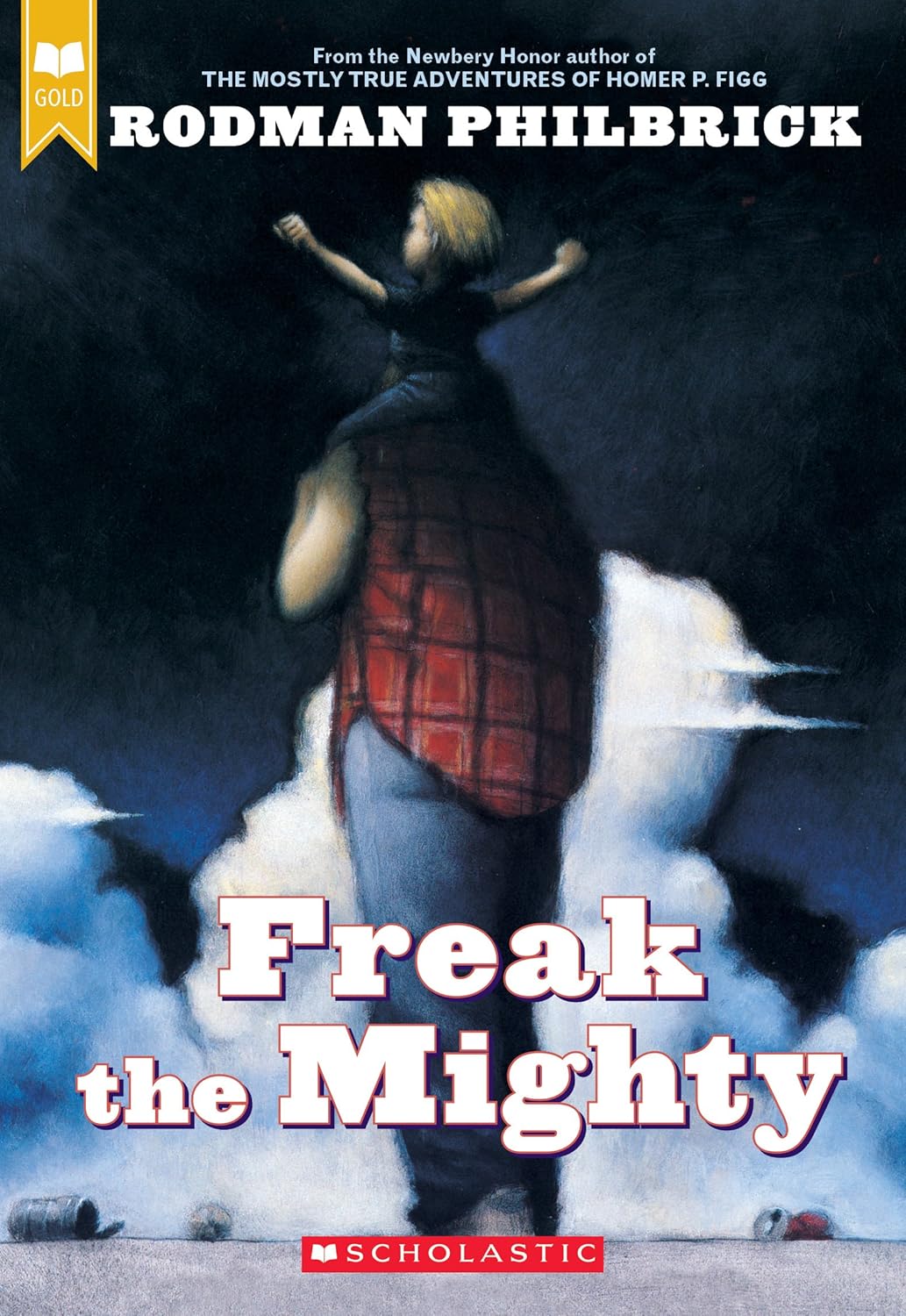
Freak the Mighty by Rodman Philbrick is one of the most beloved and most emotionally affecting novels in middle grade fiction — a story about two boys who should have nothing in common, who become best friends, and who together become something neither could be alone. Max is large, slow, and convinced he is as stupid as everyone has always told him; Kevin is small, brilliant, and living in a body that is destroying itself. Together they are Freak the Mighty: a boy who provides the legs and a boy who provides the brain, moving through the world as a single creature of extraordinary capability. Funny, wise, genuinely moving, and lit throughout by the specific light of a friendship between people who see each other clearly when no one else does, it is a novel that earns every one of its tears. This complete guide covers the reading level, age appropriateness, themes, characters, and everything parents and teachers need to know about this essential middle grade classic.
For Parents
Freak the Mighty is a novel about friendship, disability, and the specific cruelty and specific grace that children can show each other — and a novel whose ending requires genuine emotional readiness from its readers. Best suited for readers ages 10-13, it handles Kevin’s illness with honesty rather than sentimentality, and Max’s grief with the same respect. Parents should be aware that the novel ends with Kevin’s death, which is the novel’s emotional climax and is handled with care and dignity. The novel also involves Max’s father, a violent man who is in prison for murder and whose return is a source of genuine menace. Neither element is gratuitous; both are handled with the craft the story deserves.
For Teachers
Widely taught in grades 5-8, Freak the Mighty is an exceptional text for teaching first-person unreliable narration, disability representation, the relationship between intelligence and worth, and how authors use the voice of a character who underestimates himself to create dramatic irony. Max’s narration — convinced he is stupid, demonstrably not — is one of the most productive examples of the gap between how a narrator sees himself and how the reader sees him available at this level. The novel also opens essential discussions about what friendship actually looks like when it is genuine, about family and violence, and about the specific courage required to grieve.
Freak the Mighty at a Glance
Find on Amazon →| Author | Rodman Philbrick |
| Published | 1993 |
| Grade Level | 5-8 (our assessment) |
| Recommended Age | 10-13 |
| Flesch-Kincaid Grade | 4.5 |
| Word Count | ~37,000 |
| Pages | 169 (standard paperback) |
| Chapters | 25 |
| Genre | Realistic fiction / coming-of-age |
| Setting | A working-class neighborhood in New Hampshire, early 1990s |
| Awards | ALA Notable Children’s Book; ALA Best Book for Young Adults; California Young Reader Medal |
For official Lexile and AR levels, visit Lexile.com or AR BookFinder. ReadingVine provides independent editorial assessments.
What Reading Level Is Freak the Mighty?
Freak the Mighty reads at approximately a 5th-8th grade level by our editorial assessment, with a Flesch-Kincaid grade level of around 4.5. That score runs notably low for a novel most associated with grades 5-8 — Philbrick writes in Max’s voice with deliberate accessibility, reflecting Max’s self-conception as someone who is not smart and who does not use complicated words. The prose is direct, often funny, and propulsive in the way of a narrator who is telling a story that matters to him and who does not want to slow down. It reads faster than its page count suggests.
What makes the novel more demanding than its word-level score indicates is the dramatic irony built into Max’s narration throughout. Max is convinced he is stupid — convinced so thoroughly that he preemptively dismisses his own observations, undercuts his own perceptions, and defers to Kevin’s intelligence at every turn. The reader sees, continuously, that Max is not stupid: that he notices things, remembers things, feels things with precision and depth. The gap between how Max sees himself and how the reader sees him is the novel’s most important technical achievement, and engaging with that gap — understanding what it means that Max cannot see what the reader sees — is the most demanding and most rewarding thing the novel asks.
The book is most commonly recommended for grades 5-8. For official Lexile and Accelerated Reader scores, visit Lexile.com or AR BookFinder.
What Age Is Freak the Mighty Appropriate For?
We recommend Freak the Mighty for readers ages 10-13. The novel deals with disability, death, domestic violence, and a child’s grief for a parent killed by his own father — all handled with care and craft, none of it gratuitous, all of it in service of a story that is ultimately about the transformative power of genuine friendship.
Kevin has Morquio syndrome, a degenerative condition in which his organs are growing faster than his body can accommodate — he will not survive to adulthood, and this is known to Kevin and eventually made clear to the reader, though Kevin does not tell Max directly. Kevin’s death near the novel’s end is the emotional climax; it is handled with dignity and without graphic medical detail. Max’s father, Kenny Kane, is in prison for murdering Max’s mother when Max was very young — this backstory is established early and is part of Max’s understanding of himself. Kenny Kane is released during the novel and poses a genuine physical threat; he kidnaps Max, and the scene is menacing rather than graphic. Max has grown up in the care of his grandparents, and his family situation — particularly his relationship with “Grim” and “Gram” — is warm and well drawn. There is no sexual content and no strong language beyond what is appropriate to the working-class neighborhood setting. The novel’s difficulty is emotional rather than content-based.
Parents and teachers should be prepared to discuss the novel’s ending with young readers, particularly those who are reading it independently. Kevin’s death is not a surprise to careful readers — the novel plants its foreshadowing with care — but it hits hard regardless, and having space to process that grief is part of what the novel is asking for. Many teachers consider this one of the novel’s greatest gifts: a safe, contained experience of loss that opens real conversations about grief, about what it means to lose someone, and about what a friendship can give us that outlasts the person who gave it.
What Is Freak the Mighty About?
Maxwell Kane is thirteen years old, enormous for his age, and has spent most of his life being afraid of himself. His father killed his mother when Max was very small; Max has grown up with his grandparents, who love him and are terrified of him in equal measure, in a basement room they call the down under. He has been placed in learning disabled classes not because he cannot learn but because he sits at the back and does not try — convinced, by years of being told he is like his father, that the effort would be pointless. He has no friends. He has not had friends. He does not expect to have them.
Kevin has lived next door to Max’s grandparents for years. They were in the same daycare together as small children, though neither remembers this well. Kevin is small — very small, smaller than children much younger than him — with a head that seems too large for his body and crutches he uses to move around. He is also, as Max will come to understand, the most intelligent person Max has ever met: a boy who has read everything, who thinks faster than most adults, and who has compensated for his body’s limitations by building a mind of extraordinary reach. Kevin’s diagnosis is Morquio syndrome. He knows what it means for his future. He has decided, with the particular clarity of someone who has had time to think about it, that he is going to live as fully as possible with the time and the body he has.
The friendship begins when Kevin asks Max to carry him on his shoulders — to be his legs while Kevin provides direction and navigation. Walking through the neighborhood as a single combined creature, they name themselves Freak the Mighty and begin a series of adventures rooted partly in Kevin’s love of Arthurian legend: they are knights, questing. The adventures are partly comic — retrieving a purse from a storm drain, evading a gang of bullies — and partly genuinely dangerous, particularly as Max’s father’s release from prison approaches and eventually arrives.
What the friendship does for both boys is the novel’s real subject. For Max, Kevin provides something no one else has: a person who sees him as capable, who gives him credit for his perceptions, who treats his thoughts as worth having. Kevin calls Max his “noble steed” but means it without condescension — he needs Max in ways that are specific and real, and he says so. For Kevin, Max provides uncomplicated loyalty, physical protection, and the particular gift of someone who does not treat him as fragile or pathetic — who carries him through the world not as a burden but as a partner. Together they are more than either is separately, which is both the novel’s central metaphor and its plainest statement of what friendship is.
The novel’s final third, in which Kenny Kane returns and Max must face the thing he has most feared about himself — that he is capable of the same violence his father committed — is the novel’s darkest and most important section. Kevin’s resolution of the crisis is characteristic: unexpected, intelligent, and entirely in keeping with who he is. His death, shortly after, is the novel’s emotional center — the loss that Max must learn to carry, and that the act of writing the novel (Max is narrating from after the events, writing in the blank book Kevin gave him) is his way of learning to carry.
Freak the Mighty Characters
Is Freak the Mighty Banned?
Freak the Mighty has been challenged in some school districts, though it does not appear among the most frequently challenged books and its challenges have not been widely sustained. Objections have typically centered on the novel’s depiction of domestic violence and Kenny Kane’s criminal history, and occasionally on its emotional difficulty for younger readers. Most educators and librarians who have reviewed challenges to the novel have defended its inclusion as a text that handles difficult material with craft and purpose — one of the more consistent arguments being that Max’s story is precisely the kind of story that young readers who have experienced family violence most need to see told with honesty and respect. The novel is widely available and widely taught.
Freak the Mighty Themes and Lessons
The central theme of Freak the Mighty is friendship as transformation — the specific argument that a genuine friendship between two people who see each other clearly can change who both people are, not by making them different but by making them more fully themselves. Max arrives at the novel as a boy who has accepted the story others have told about him: that he is large and dumb and dangerous, a copy of his father. Kevin provides the first consistent counter-evidence Max has ever received. He treats Max’s observations as intelligent because they are. He relies on Max’s capabilities because they are real. He does not adjust for Max’s self-image or reinforce it — he simply proceeds as though Max is the person Kevin can see, and Max, slowly and then all at once, begins to be that person.
Intelligence and self-perception are the novel’s second great themes, rendered through Max’s narration in ways that are among the most technically sophisticated available at this level. Max’s voice is constructed to reveal, to readers paying attention, that he is not what he thinks he is — that the boy telling this story with such clarity, such humor, such emotional precision, cannot be the stupid boy he describes. The novel is, among other things, a sustained argument that intelligence takes many forms and that the forms valued by schools are not the only ones that matter.
Identity and inheritance — the specific fear that Max will become his father — give the novel’s final third its deepest tension. Max has grown up in the shadow of what his father did, and the novel takes that fear seriously rather than dismissing it. The scene in which Max confronts his own capacity for violence — and chooses differently from his father — is not a resolution of the fear so much as a discovery: that choice is possible, that the past is not a sentence, that who you are is not simply who your parents were. It is the most important thing the novel tells Max, and it is the most important thing it tells its readers.
Discussion starters for classrooms: Why does Max believe he is stupid? What evidence does the novel give us that he is wrong? What does Kevin give Max that no one else has given him? What does Max give Kevin? Why does Max write the story down — what does storytelling do for him? What is Max most afraid of about himself, and how does the novel address that fear?
How Many Pages and Chapters Are in Freak the Mighty?
The standard paperback edition of Freak the Mighty is 169 pages, divided into 25 chapters averaging around seven pages each. The word count is approximately 37,000 words — compact and fast-moving, a novel that reads in a weekend of engaged reading and that the best readers will want to start over immediately upon finishing. The chapters are brisk and often end with the kind of observation or image that makes stopping difficult, which is characteristic of Philbrick’s storytelling instincts and entirely appropriate to Max’s voice.
For readers in the target age range of 10-13, expect a reading time of roughly 3-4 hours, or about a week of comfortable reading at 30 minutes per session. As a classroom text it works extremely well in a two-to-three week unit. The novel’s most productive classroom discussions center on Max’s narration — on the gap between how he sees himself and what the reader observes — and on the specific question of what Kevin’s friendship does for Max that no other relationship in his life has done. The novel was adapted as a film in 1998 under the title The Mighty, featuring Kieran Culkin and Elden Henson, which many teachers find a useful companion text for discussion of how adaptation choices change a story’s emphasis. Philbrick wrote a companion novel, Max the Mighty (1998), which follows Max’s adventures after the events of this book.
Books Similar to Freak the Mighty
About Rodman Philbrick
Rodman Philbrick is an American author of adult crime fiction and middle grade novels who has been writing in both genres since the 1980s. Born in Boston and raised in New Hampshire — the state where Freak the Mighty is set — he published his first middle grade novel in 1993, and it became immediately and enduringly one of the most-read novels in its age range. Philbrick has spoken about the novel’s origins in his own experience of knowing children with physical disabilities and his observation that their inner lives were consistently richer and more complex than the way they were discussed by the adults around them — that the assumption of limitation was the problem, not the limitation itself. He has also spoken about Max’s voice as the aspect of the novel he worked hardest to get right: a narrator who is smart about everything except himself, and who tells the reader everything they need to know without knowing he is doing it. The novel was adapted as a film in 1998 under the title The Mighty. Philbrick’s other middle grade novels include The Last Book in the Universe (2000), which shares Freak the Mighty‘s interest in storytelling as survival, and Zane and the Hurricane (2014), set during Hurricane Katrina.
Freak the Mighty: Frequently Asked Questions
What reading level is Freak the Mighty?
Freak the Mighty has a Flesch-Kincaid grade level of approximately 4.5, which runs notably low for a novel most associated with grades 5-8 (ages 10-14). Philbrick writes in Max’s voice with deliberate accessibility, reflecting Max’s self-image as someone who is not smart and who does not use complicated words. What makes the novel more demanding is the sustained dramatic irony of Max’s narration — the gap between how he sees himself and what the reader observes. For official Lexile and AR scores, visit Lexile.com or AR BookFinder.
What disease does Kevin have in Freak the Mighty?
Kevin has Morquio syndrome — a rare genetic disorder that affects skeletal development, causes progressive physical complications, and typically shortens life expectancy. Philbrick uses the condition with medical accuracy as the basis for Kevin’s situation, though he does not dwell on clinical detail. Kevin himself knows his prognosis and has chosen to treat it as motivation for living as fully as possible rather than as a reason for despair — a choice that is entirely in keeping with his character and one of the novel’s most quietly important portraits of courage.
Does Kevin die in Freak the Mighty?
Yes — Kevin dies near the end of the novel, of complications related to his condition. His death is the novel’s emotional climax and the event that the entire narrative has been building toward, both structurally and emotionally. Philbrick foreshadows it carefully — readers who are paying attention to the novel’s details will have understood what is coming long before it arrives — and handles it with dignity and without melodrama. Max’s grief in the aftermath is the novel’s final subject, and his act of writing the story down — which is what the novel itself is — is his way of honoring Kevin and of surviving the loss.
What does “Freak the Mighty” mean?
Freak the Mighty is the name Max and Kevin give themselves when Kevin rides on Max’s shoulders — the combined entity they become when Kevin provides direction and intelligence and Max provides the physical capability to carry them both. The name is Kevin’s invention, characteristically, and it reflects his love of Arthurian legend: they are knights, a single warrior made of two people. The name also captures what the friendship does for both boys: together, they are something that neither is separately. Max is not Freak the Mighty. Kevin is not Freak the Mighty. Together, walking through the world, they are.
Is Max actually stupid?
No — and the novel’s central dramatic irony depends on the reader understanding this clearly. Max is convinced he is stupid, and he has evidence for this conviction: years of being placed in learning disabled classes, years of being compared unfavorably to his father, years of sitting at the back and not trying because trying and failing seemed worse than not trying at all. But the voice telling this story is not a stupid voice. Max notices things with precision, remembers things with accuracy, feels things with a depth and specificity that require considerable intelligence to articulate, even indirectly. He is not book-smart in the way Kevin is. He is smart in ways the novel’s educational system has never valued or measured. Recognizing this gap — between the story Max tells about himself and the person the reader can see — is one of the most important things the novel asks its readers to do.
Is there a movie of Freak the Mighty?
Yes — The Mighty (1998), directed by Peter Chelsom, features Kieran Culkin as Kevin and Elden Henson as Max. The film is generally faithful to the novel’s central relationship and emotional arc, though it makes changes to the surrounding story that are worth discussing with students who have read the book: it softens some of the darker elements of Max’s family situation and changes the ending’s framing in ways that affect the novel’s central statement about storytelling and grief. Many teachers find it a productive companion text for discussing how adaptation choices change a story’s emphasis and what is gained and lost in translation from page to screen.
What grade is Freak the Mighty typically assigned in?
Freak the Mighty is most commonly assigned in grades 5, 6, 7, and 8 both as independent reading and as a classroom text. It is particularly well suited to units on first-person narration and unreliable narrators, on disability representation, and on friendship as a narrative subject. The discussion of Max’s self-perception — the gap between how he sees himself and what the reader observes — is one of the most productive close reading exercises available at this level. It pairs naturally with Wonder for a unit on disability and identity, and with Bridge to Terabithia for a unit on friendship and loss.