
 = Partner Site
Harry Potter and the Deathly Hallows Reading Level: A Complete Guide
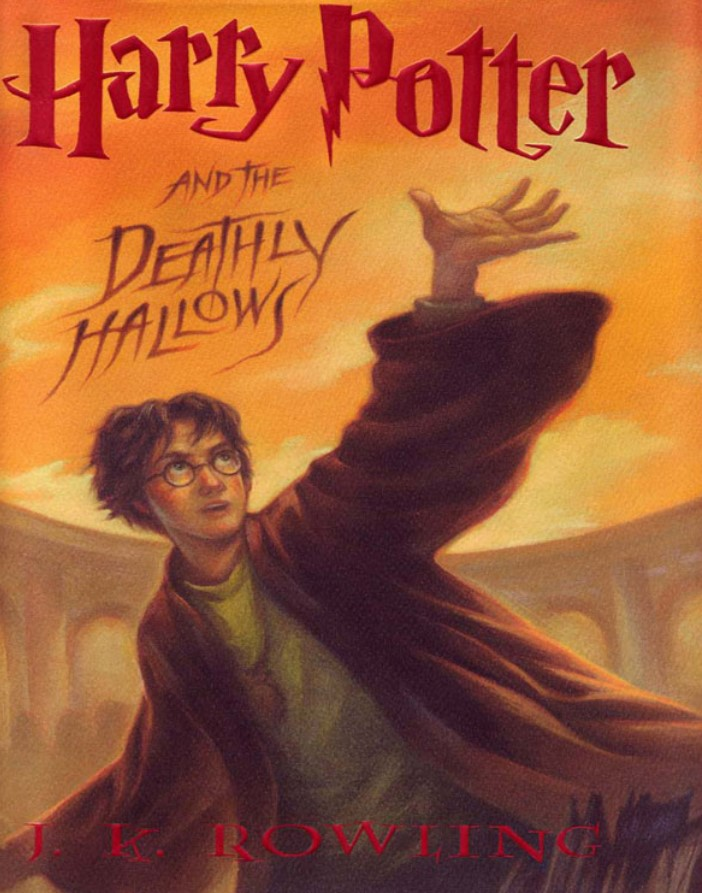
Harry Potter and the Deathly Hallows by J.K. Rowling is the seventh and final book in the Harry Potter series, following Harry, Ron, and Hermione as they abandon Hogwarts to hunt down and destroy Voldemort’s remaining Horcruxes while the wizarding world falls under Death Eater control. First published in 2007, it is the conclusion to one of the most widely read series in publishing history — darker, more violent, and more thematically serious than any of its predecessors, ending a story that began as a children’s book with something that has more in common with war literature. This complete guide covers Deathly Hallows‘s reading level, recommended age, content considerations, characters, themes, and books similar to Harry Potter and the Deathly Hallows, designed for parents, teachers, and students.
For Parents
The series’ darkest and most violent volume by a significant margin — multiple beloved characters die, torture is depicted with specificity, and the ending asks real philosophical questions about sacrifice and death. Best for readers who have completed Books 1–6 and are ages 13 and up. Not a standalone read under any circumstances.
For Teachers
Most effectively taught as the conclusion of a full series unit rather than as a standalone text. For grades 8–10, the novel offers rich material on sacrifice, propaganda, resistance movements, and the literary treatment of death. The King’s Cross chapter in particular rewards close reading as Rowling’s most direct statement of the series’ philosophical and spiritual argument.
Harry Potter and the Deathly Hallows at a Glance
Find on Amazon →| Author | J.K. Rowling |
| Published | 2007 |
| Grade Level | 8–10 (our assessment) |
| Recommended Age | 13+ |
| Flesch-Kincaid Grade | ~7.2 |
| Word Count | ~198,000 |
| Pages | 759 (Scholastic paperback) |
| Chapters | 37 (plus Epilogue) |
| Genre | Fantasy / young adult |
| Setting | Wizarding Britain; Hogwarts; the Forest of Dean; Shell Cottage; 1997–98 |
| Series | Harry Potter, Book 7 |
For official Lexile and AR levels, visit Lexile.com or AR BookFinder. ReadingVine provides independent editorial assessments.
What Reading Level Is Harry Potter and the Deathly Hallows?
Deathly Hallows reads at approximately an 8th–10th grade level by our editorial assessment, with a Flesch-Kincaid grade level of around 7.2. Rowling’s prose in this final volume is notably more spare and direct than in the middle books — the excess has been stripped away, and what remains is controlled, purposeful, and often austere in the way of writing that has something serious to say. The book reads faster than Order of the Phoenix despite being nearly as long, because almost nothing is wasted.
The real demands here are emotional and philosophical rather than linguistic. Deathly Hallows asks its reader to process multiple major character deaths, to hold the series’ full seven-book arc in mind while following an extended camping sequence that tests patience, and to engage with Rowling’s most direct statement of the series’ argument about death, sacrifice, and what survives. A reader who has grown up with the series over years will experience this differently than one who reads it consecutively — the emotional weight of the deaths depends significantly on accumulated attachment. For official Lexile and AR scores, visit Lexile.com or AR BookFinder. ReadingVine’s assessments are independent editorial judgments.
What Age Is Harry Potter and the Deathly Hallows Appropriate For?
We recommend Deathly Hallows for readers ages 13 and up. This is the most violent and emotionally intense book in the series, and parents should be aware of the specifics before placing it with a younger reader who has reached the end of the series.
Deathly Hallows contains the series’ highest body count and its most graphic violence. Multiple named characters the reader has known since Book 1 die over the course of the novel, including several in rapid succession during the Battle of Hogwarts. The torture scenes — Bellatrix torturing Hermione at Malfoy Manor, Voldemort’s killing of Charity Burbage in the opening chapter — are depicted with more specificity than any violence in the earlier books. A character is killed by a snake in an attack that is extended and visceral. Dobby’s death is handled with particular emotional force. The novel also contains a sequence in Voldemort’s perspective depicting the murder of a family, and the Horcrux destruction scenes involve psychological attack on Harry and Ron that includes sexual imagery — specifically, a vision of Hermione and Harry embracing, used to torment Ron. This is brief and not explicit, but it is present. The book’s treatment of death is sustained and unrelenting from approximately the midpoint onward. All of this serves the story’s serious argument about mortality and sacrifice, but parents of readers at the lower end of the age range should be prepared for a book that earns its conclusion through genuine darkness.
For readers 13 and up who have followed the series, Deathly Hallows is a fully realized conclusion that honors the emotional investment of seven books. The darkness is never gratuitous — it is the necessary cost of a story that has been building toward this since the first chapter of the first book.
What Is Harry Potter and the Deathly Hallows About?
Voldemort has taken control of the Ministry of Magic, Death Eaters have infiltrated Hogwarts, and Harry, Ron, and Hermione have abandoned school to hunt down and destroy the remaining Horcruxes — the pieces of Voldemort’s soul hidden in objects across the wizarding world. They have three: a locket, a cup, a snake, and something else they don’t yet know about. Destroying all of them is the only way to make Voldemort mortal enough to be killed. The problem is that they don’t know where most of them are.
The novel’s long middle section follows the three of them in hiding — moving between safehouses, camping in the wilderness, listening to Potterwatch on the radio, and enduring the slow erosion of hope and trust that comes from months of isolation and failure. The locket Horcrux, which they carry in rotation, amplifies its wearer’s worst feelings and nearly destroys their friendship. The section is deliberately uncomfortable — Rowling is depicting the grinding reality of a resistance, not a heroic montage — but it is also where the novel’s emotional and thematic work is done.
The final act — the return to Hogwarts, the Battle of Hogwarts, Harry’s walk into the forest — is among the most carefully constructed endings in popular fiction. Rowling had planned the final chapter since the beginning, and the precision of her plotting shows: everything that has been established across seven books has a function here. Harry’s death and return, the revelation of Snape’s full story, the King’s Cross chapter in which Dumbledore explains what has happened — these are the series’ most philosophically serious passages, and they make the argument about love and death and sacrifice that the books have been building toward since Lily Potter died to protect her son.
Harry Potter and the Deathly Hallows Characters
Is Harry Potter and the Deathly Hallows Banned?
Like all books in the Harry Potter series, Deathly Hallows has been challenged in schools and libraries primarily on the grounds of witchcraft and occult content, appearing on the ALA’s most frequently challenged books lists. The series as a whole is one of the most challenged in American publishing history, though these challenges have not prevented it from becoming one of the most widely read.
Deathly Hallows in particular has drawn challenges related to its violence and its treatment of death, which is more sustained and graphic than any previous volume. These concerns are substantive and consistent with our own recommendation to reserve it for readers 13 and up.
Harry Potter and the Deathly Hallows Themes and Lessons
The series’ central argument — introduced in its first chapter when Lily Potter dies to protect Harry — is completed here: love, specifically the willingness to die for others, is the one force Voldemort cannot understand or overcome, and it is the only force that can defeat him. Harry’s walk into the forest is the act the whole series has been building toward, and Rowling frames it explicitly as a repetition of his mother’s sacrifice: he dies willingly, which means Voldemort cannot kill those he loves without their consent. The protection is the act of giving up, not the act of fighting.
The novel’s treatment of death is its most sustained and serious theme. The two epigraphs — from Aeschylus and William Penn — announce that this is a book about mortality, and Rowling follows through. Every major death is handled with intention: Fred Weasley’s death is the one that breaks the family; Snape’s death is the one that demands immediate reevaluation; Dobby’s death is the one that changes Harry’s understanding of what he is fighting for. Rowling’s argument, articulated most clearly in the King’s Cross chapter, is that the fear of death is Voldemort’s defining characteristic and his fundamental weakness — that someone who accepts death as part of life has access to a kind of power he will never understand.
The Snape revelation is the series’ most complex moral statement. Snape was, for seven books, an ambiguous figure — cruel enough to be plausibly a villain, but never quite fitting the role. The revelation of his love for Lily Potter, his devastation at her death, and his decades of service as a double agent for Dumbledore is not a simple redemption arc — Snape was still cruel, his treatment of students was still wrong — but it is a portrait of a man whose entire life was shaped by a love he expressed in the only way he knew how. Rowling does not ask the reader to excuse Snape; she asks the reader to understand him, which is harder.
Discussion questions for classrooms and families: Why does Harry’s willingness to die protect those he loves? What does the series argue about the relationship between the fear of death and the nature of evil? Is Snape a hero — and does the answer matter? What does Neville’s arc across all seven books say about heroism and destiny? What does Dumbledore’s full story add to your understanding of his earlier choices?
How Many Pages and Chapters in Harry Potter and the Deathly Hallows?
The Scholastic paperback edition is 759 pages across 37 chapters plus an Epilogue. At approximately 198,000 words, it is shorter than Order of the Phoenix but considerably more dense — the pacing is tighter, the prose leaner, and the book feels substantially faster despite its length. Most readers who have followed the series finish it in one to two weeks; many report the final third being impossible to put down once the Battle of Hogwarts begins.
The novel divides naturally into three movements: the preparation and camping phase (roughly Chapters 1–19), the gathering of information and allies (Chapters 20–29), and the return to Hogwarts and the battle (Chapters 30–37). The middle section’s deliberately slow pacing is the book’s most commonly cited structural weakness, but it is also where the novel’s emotional and thematic groundwork is laid. The final act is among the most carefully plotted endings in popular fiction and rewards the patience the middle section requires.
Books Similar to Harry Potter and the Deathly Hallows
About J.K. Rowling
J.K. Rowling was born in 1965 in Yate, England, and conceived Harry Potter on a delayed train from Manchester to London in 1990. She has said that she knew the final chapter of Deathly Hallows before she finished the first book — that the series was always headed toward Harry’s walk into the forest and his conversation with Dumbledore at King’s Cross. The two epigraphs at the opening of Deathly Hallows, chosen years before the book was written, announce this intention: the book is, at its heart, about mortality and what love can do in the face of it.
Deathly Hallows was published on July 21, 2007, with an initial print run of 12 million copies in the United States alone — the largest in publishing history. The series has sold more than 600 million copies worldwide and has been translated into more than 85 languages. Rowling has been involved in several significant public controversies in the years since the series concluded. She lives in Edinburgh.
Harry Potter and the Deathly Hallows: Frequently Asked Questions
What reading level is Harry Potter and the Deathly Hallows?
Deathly Hallows has a Flesch-Kincaid grade level of approximately 7.2. Our editorial assessment places it at grades 8–10 (ages 13+). The prose is more controlled and spare than the middle books; the demands are emotional and philosophical rather than linguistic. For official Lexile and AR scores, visit Lexile.com or AR BookFinder.
What grade is Harry Potter and the Deathly Hallows appropriate for?
We recommend grades 8–10 as the primary range, and ages 13 and up. The violence, the body count, and the philosophical weight of the ending make it the most demanding book in the series. It is not appropriate as a standalone read — the emotional impact depends entirely on the investment built across six previous books.
How many pages are in Harry Potter and the Deathly Hallows?
The Scholastic paperback is 759 pages across 37 chapters plus an Epilogue. Word count is approximately 198,000 words. Most readers who have followed the series finish it in one to two weeks, with the final third difficult to put down once the Battle of Hogwarts begins.
What is Harry Potter and the Deathly Hallows about?
Harry, Ron, and Hermione abandon Hogwarts to hunt down and destroy Voldemort’s remaining Horcruxes while the wizarding world falls under Death Eater control. The novel follows their months of difficult, often demoralizing searching through to the Battle of Hogwarts and Harry’s final confrontation with Voldemort — a confrontation whose outcome depends on Harry’s willingness to die rather than his ability to fight.
Who dies in Harry Potter and the Deathly Hallows?
Many characters die, including several who have been present since Book 1. Among the most significant: Dobby, Fred Weasley, Lupin, Tonks, Colin Creevey, and Snape. Voldemort and Bellatrix Lestrange also die in the final battle. Harry himself dies and is returned to life. Rowling has expressed regret about Fred’s death in particular and has said in interviews that she considered sparing Arthur Weasley instead.
Does Harry Potter die in Deathly Hallows?
Yes — and no. Harry walks willingly into the forest to be killed by Voldemort, and Voldemort does kill him. Harry then finds himself at a version of King’s Cross station where Dumbledore explains what happened: because Harry carried a piece of Voldemort’s soul within him as an unintentional Horcrux, Voldemort killed that piece of himself rather than Harry. Harry is given the choice to go back or move on, and he chooses to go back. The scene is the series’ most explicit engagement with its argument about death, sacrifice, and what love actually does.
What are the Deathly Hallows?
The Deathly Hallows are three legendary magical objects said to have been created by Death itself: the Elder Wand (the most powerful wand ever made), the Resurrection Stone (which can bring back the dead in a limited sense), and the Invisibility Cloak (which hides the wearer from Death entirely). Together they are said to make their possessor the Master of Death. The novel’s argument is that the Deathly Hallows are a temptation — that the desire to master death rather than accept it is exactly Voldemort’s failing — and that the only meaningful way to be the Master of Death is to accept mortality willingly.
Is there a Harry Potter and the Deathly Hallows movie?
Yes — two films. The novel was split into Harry Potter and the Deathly Hallows: Part 1 (2010) and Part 2 (2011), both directed by David Yates and rated PG-13. Part 1 covers roughly the first half of the novel through the escape from Malfoy Manor; Part 2 covers the return to Hogwarts and the Battle of Hogwarts. Both films are generally faithful to the source material and are considered among the stronger entries in the film series. Part 2 in particular is widely regarded as the best of the eight films.