
 = Partner Site
If You Give a Mouse a Cookie Reading Level: A Complete Guide
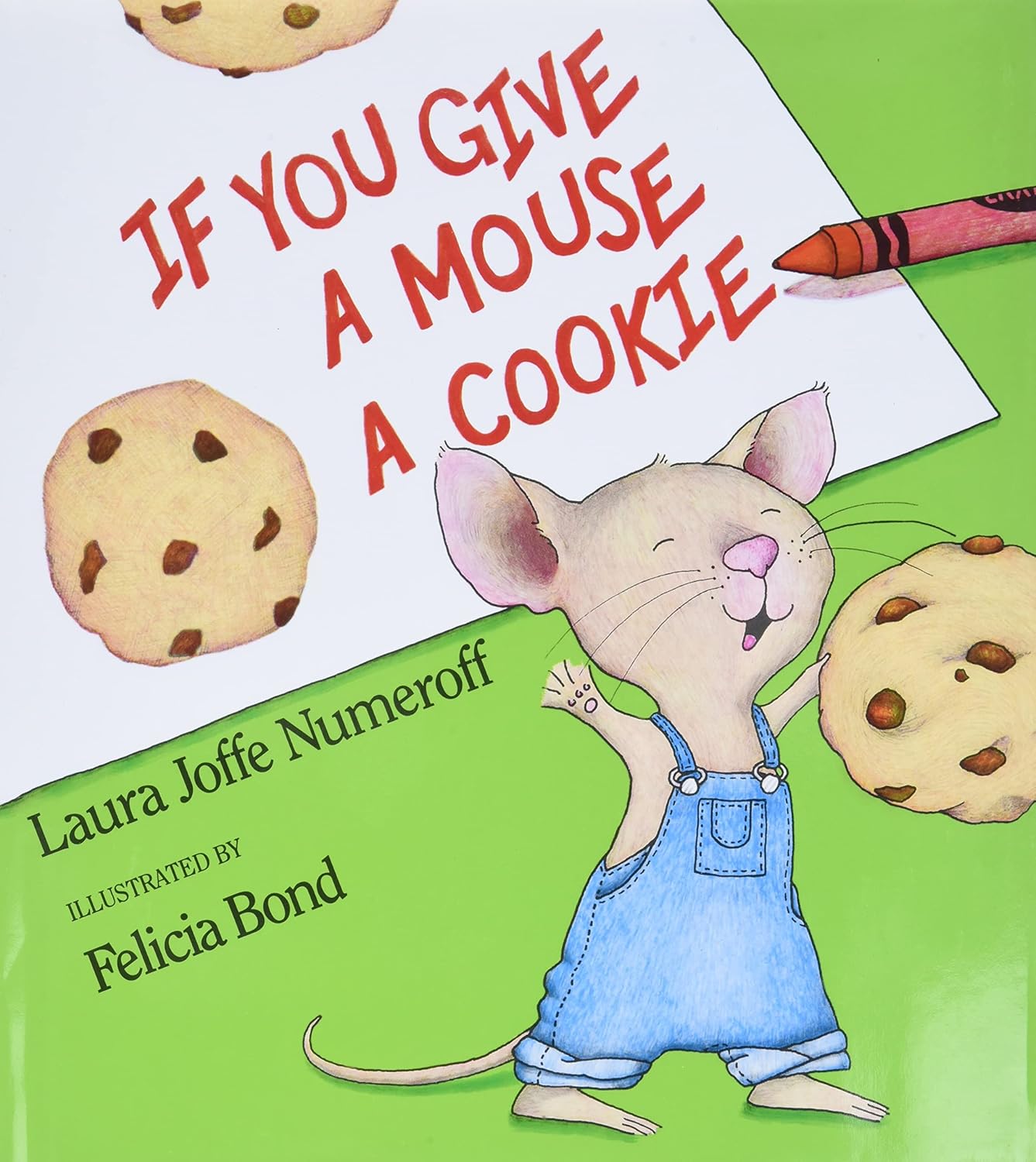
If You Give a Mouse a Cookie by Laura Numeroff, illustrated by Felicia Bond, is one of the most beloved and widely read picture books of the past four decades — a circular, cause-and-effect story about a very demanding mouse that children find endlessly funny and endlessly re-readable. This guide covers the reading level, recommended age, read-aloud vs. independent reading guidance, themes, and everything parents and teachers need to know about sharing this classic with young readers.
For Parents
Find out whether If You Give a Mouse a Cookie works best as a read-aloud or independent read for your child, what age range it suits, and why its circular cause-and-effect structure makes it one of the most effective early literacy tools in picture book form.
For Teachers
Grade-level data, read-aloud timing, key themes, and discussion questions for a K–1 classroom staple. Strong connections to cause-and-effect lessons, sequencing, and circular narrative structure — one of the most teachable texts at this level.
If You Give a Mouse a Cookie at a Glance
Find on Amazon →| Author | Laura Numeroff |
| Illustrator | Felicia Bond |
| Published | 1985 |
| Grade Level | K–1 (our assessment) |
| Recommended Age | 4–7 |
| Best For | Read-aloud ages 3–6; independent reading ages 5–7 |
| Flesch-Kincaid Grade | 2.6 |
| Word Count | ~290 |
| Pages | 40 |
| Genre | Picture book / fiction |
| Setting | A child’s house and yard |
For official Lexile and AR levels, visit Lexile.com or AR BookFinder. ReadingVine provides independent editorial assessments.
What Reading Level Is If You Give a Mouse a Cookie?
If You Give a Mouse a Cookie is a K–1 reading level by our editorial assessment, with a Flesch-Kincaid grade level of approximately 2.6. The text is conversational and fast-moving, built from short, linked clauses that carry readers forward from one consequence to the next. The vocabulary is largely familiar — cookie, milk, straw, napkin, mirror, scissors — with a few slightly longer words like “refrigerator” and “comfortable” that may need support for younger independent readers.
What makes the book work as a literacy tool is its structure rather than its vocabulary. The cause-and-effect chain — if this happens, then that will happen — is one of the most fundamental logical relationships in language, and If You Give a Mouse a Cookie makes it feel like a game. Children who have heard it a few times begin to anticipate the next consequence before it arrives, which is exactly the kind of predictive reading habit that serves them well as they move into more complex texts.
For parents who use specific reading level systems: we recommend checking your child’s level on Lexile.com or AR BookFinder for official scores, or asking your child’s teacher for their Guided Reading or DRA level.
Is If You Give a Mouse a Cookie a Read-Aloud or Independent Read?
If You Give a Mouse a Cookie works beautifully as both a read-aloud for ages 3–6 and an independent read for ages 5–7. As a read-aloud, it has an irresistible comic momentum — the mouse’s escalating demands are funny, and children delight in seeing how far things spiral from a single cookie. Most adults can read it aloud in about 5–7 minutes.
As a read-aloud, the book rewards an expressive voice that builds with the mouse’s growing list of needs. Felicia Bond’s warm, detailed illustrations show the boy’s house being progressively overtaken by the mouse’s activities — there is always more happening in the pictures than the text describes, and children who look closely will find details that extend the humor of each spread. Pausing to let children notice what the mouse is doing in the illustration before reading the next page is one of the great pleasures of sharing this book.
For independent reading, a confident kindergartner or early first grader can handle the text with minimal support. The sentence structures are clear, the vocabulary is mostly familiar, and the cause-and-effect chain provides enough narrative momentum that children rarely lose their place in the story. The word “refrigerator” is the most likely stumbling block for early readers — worth a quick preview if your child is reading it independently for the first time.
There is nothing in this book that requires parental preparation. The mouse is demanding and the boy is very patient — a dynamic that children find both funny and slightly vindicating.
After the first reading, try going back to the beginning and asking your child to predict what will happen next at each step — before you turn the page. By the second or third reading, most children ages 4 and up can reconstruct the whole chain from memory. This is sequencing and cause-and-effect reasoning disguised as a game, and children love doing it.
What Is If You Give a Mouse a Cookie About?
A boy gives a mouse a cookie. The mouse wants milk to go with it. The milk leads to a request for a straw, the straw to a napkin, the napkin to a mirror, and so on — each satisfied want immediately generating a new one. The mouse asks for scissors to trim his hair, a broom to sweep up, paper and crayons to draw a picture, tape to hang the picture, a nap in a comfortable box, a story, and eventually a glass of milk. The milk, of course, reminds him of a cookie — and the whole chain is about to start again.
The book is funny and fast, but its circular structure carries a quiet observation about how wants work: satisfying one doesn’t eliminate desire, it just generates the next one. Children love the mouse’s audacity. Adults often recognize something more pointed in it. Felicia Bond’s illustrations give the boy’s house a cozy domestic warmth that makes the mouse’s progressive takeover all the funnier — by the end, the house is a complete mess and the boy looks pleasantly exhausted.
If You Give a Mouse a Cookie Characters
If You Give a Mouse a Cookie Themes and Lessons
The primary literary lesson of If You Give a Mouse a Cookie is cause and effect — the understanding that actions have consequences, and that those consequences generate further consequences in a chain. Numeroff makes this logical relationship feel like a game, which is why teachers have used the book as an introduction to cause-and-effect thinking for nearly four decades. The “if… then…” structure of the text is the same structure children encounter in science experiments, logical reasoning, and eventually formal argument — and here it arrives wearing the costume of a very funny story about a mouse.
The book also teaches circular narrative structure — the satisfaction of a story that ends where it began. The mouse ends up wanting another cookie, and the whole chain is about to start again. Children find this ending both funny and satisfying: the story is complete and also infinite, which is how the best jokes work. Understanding circular structure is a genuine literary concept, and most children grasp it intuitively from this book before they ever encounter the term.
For adults, there is a secondary theme about wants vs. needs and the way generosity can be tested by insatiable demand — though the book presents this with such good humor that it never tips into didacticism. The boy gives the mouse everything it asks for without resentment, which is a quietly generous model of how to treat someone who wants a great deal from you.
Discussion starters for families: Why did giving the mouse a cookie lead to so many other things? Can you remember all the things the mouse wanted, in order? Was the boy being kind? Is there anything you would have said no to? What do you think will happen when the mouse gets his next cookie?
How Long Is If You Give a Mouse a Cookie?
If You Give a Mouse a Cookie has 40 pages and approximately 290 words. Most adults can read it aloud in about 5–7 minutes, though many families linger over Bond’s detailed illustrations and extend the reading naturally.
A child reading independently at a kindergarten or early first-grade level will typically finish in about 8–12 minutes. Children who love this book often read it multiple times in a row — the circular structure makes starting again feel like a natural extension of the ending rather than a repeat.
Books Similar to If You Give a Mouse a Cookie
If your child loves If You Give a Mouse a Cookie, these titles share the same circular structure, cumulative energy, or cause-and-effect humor:
About the Author and Illustrator
Laura Numeroff is an American author who has written more than 30 picture books for children. If You Give a Mouse a Cookie, published in 1985 and illustrated by Felicia Bond, was her breakthrough work and remains her most recognized title. It launched one of the most popular series in children’s publishing — the “If You Give…” books — which includes If You Give a Moose a Muffin, If You Give a Pig a Pancake, If You Give a Cat a Cupcake, and many more, all illustrated by Bond and all built on the same circular cause-and-effect structure. Numeroff has said the idea for the original book came from thinking about how one small thing can set off a chain of unexpected consequences — an observation about human nature that she found funnier when applied to a mouse. She is based in Los Angeles and has been a consistent advocate for childhood literacy and library funding throughout her career.
Felicia Bond is an American illustrator whose warm, detailed pen-and-ink illustrations have defined the visual world of the Mouse books for four decades. Her illustrations for If You Give a Mouse a Cookie established the mouse’s design — small, round-eared, expressive — that has become one of the most recognized animal characters in children’s publishing. Bond’s backgrounds are rich with domestic detail that extends and deepens the humor of Numeroff’s text, rewarding children who look closely with visual jokes that the words don’t mention. She has illustrated all of the books in the “If You Give…” series and has collaborated with Numeroff on other projects as well.
If You Give a Mouse a Cookie: Frequently Asked Questions
What reading level is If You Give a Mouse a Cookie?
If You Give a Mouse a Cookie is a K–1 reading level by our editorial assessment, with a Flesch-Kincaid grade level of approximately 2.6. The text is conversational and fast-moving, with mostly familiar vocabulary. It works best as a read-aloud for ages 3–6 and as an independent read for ages 5–7. For official Lexile and AR levels, visit Lexile.com or AR BookFinder.
What age is If You Give a Mouse a Cookie for?
If You Give a Mouse a Cookie is appropriate for ages 3–7. As a read-aloud it works well from age 3 — the humor and the escalating demands land even for preschoolers who don’t yet grasp cause and effect as a concept. As an independent read, it suits kindergartners and early first graders ages 5–7. It is one of those books that remains funny across a wide age range.
Can a kindergartner read If You Give a Mouse a Cookie alone?
Many kindergartners can read If You Give a Mouse a Cookie independently, particularly in the second half of kindergarten. The vocabulary is mostly familiar and the cause-and-effect chain keeps the narrative moving in a way that supports early readers. The word “refrigerator” is the most likely stumbling block — worth a quick preview if your child is reading it independently for the first time.
How long does it take to read If You Give a Mouse a Cookie aloud?
Most adults can read If You Give a Mouse a Cookie aloud in about 5–7 minutes. Many families spend longer — Felicia Bond’s illustrations contain visual details that extend and deepen each spread, and pausing to look at them is part of what makes the book so re-readable.
What is If You Give a Mouse a Cookie about?
If You Give a Mouse a Cookie is about a mouse who is given a cookie by a boy and immediately wants milk to go with it — which leads to a straw, then a napkin, then a mirror, then scissors, and so on through a long chain of wants, each one leading directly to the next. The chain circles back to a glass of milk, which reminds the mouse of a cookie, and the whole thing is about to start again. It is a funny, fast, and endlessly satisfying circular story about cause and effect.
Are there other books in the If You Give a Mouse a Cookie series?
Yes — If You Give a Mouse a Cookie launched a long-running series of books by Laura Numeroff and Felicia Bond, all built on the same circular cause-and-effect structure. Other titles include If You Give a Moose a Muffin, If You Give a Pig a Pancake, If You Give a Cat a Cupcake, If You Give a Dog a Donut, and several more. All follow the same format and are appropriate for the same age range.