
 = Partner Site
Interpreter of Maladies Reading Level: A Complete Guide
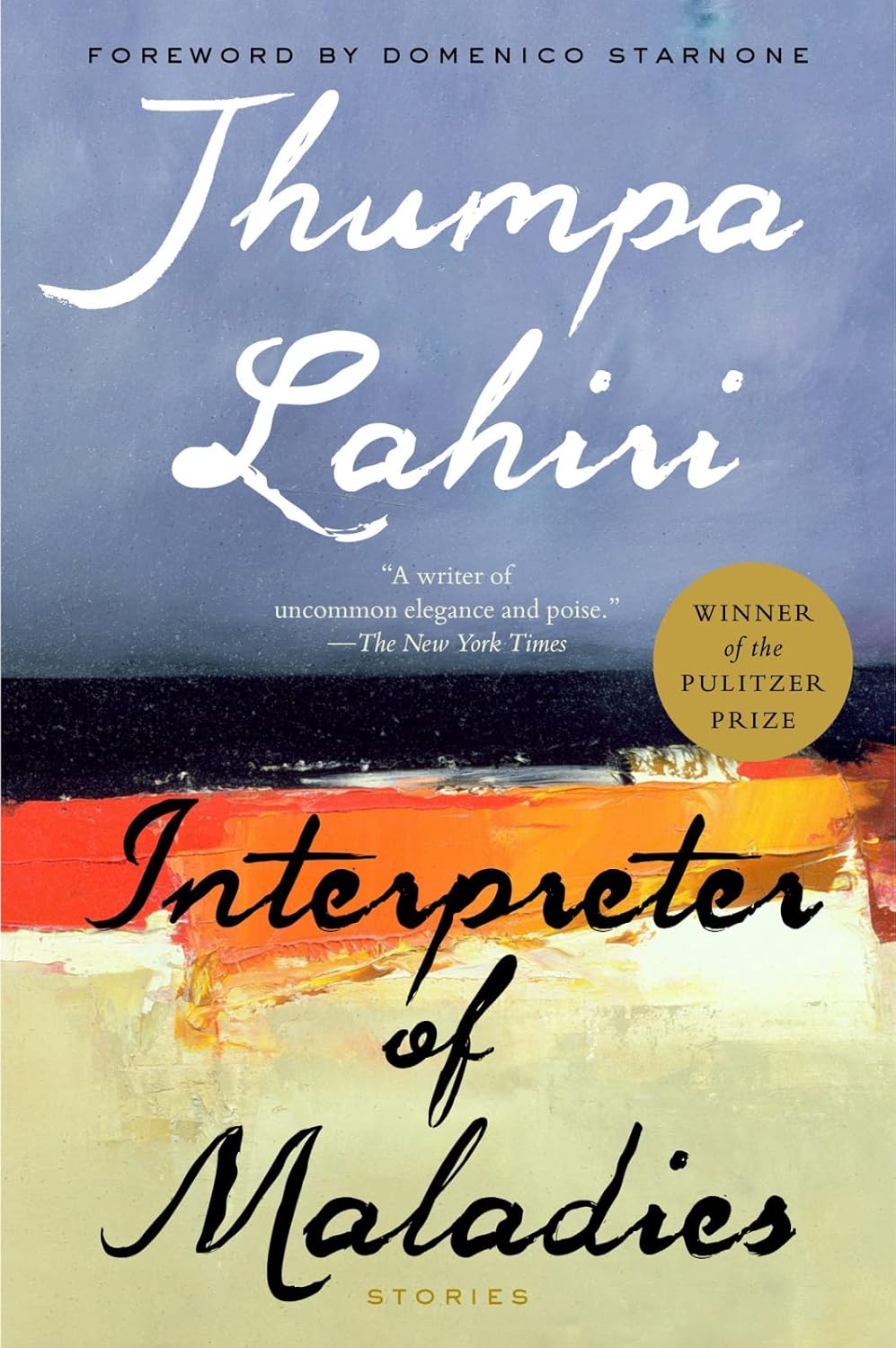
Interpreter of Maladies by Jhumpa Lahiri is a collection of nine short stories about Indian and Indian-American characters navigating the distances between cultures, generations, and the people they love. Published in 1999 and winner of the Pulitzer Prize for Fiction in 2000, it was the first debut short story collection and one of the few collections of any kind to win the Pulitzer. The stories move between India and America, between first-generation immigrants and their American-born children, between marriages that have grown cold and connections that catch fire too briefly. What holds them together is Lahiri’s particular quality of attention: a precise, quiet style that makes small moments — a shared meal, a power outage, an afternoon’s drive — carry the weight of entire lives. This complete guide covers Interpreter of Maladies‘s reading level, recommended age, content considerations, stories, themes, and books similar to Interpreter of Maladies, designed for parents, teachers, and students.
For Parents
A quiet, precise, and emotionally intelligent short story collection — the most understated in terms of content of any literary fiction in this catalog. Contains marital breakdown, infidelity, a stillbirth, and the Bangladesh Liberation War as background to one story. Appropriate for ages 13 and up; widely assigned in grades 9–11 and frequently anthologized as individual stories.
For Teachers
An excellent grades 9–11 text for teaching the short story form — Lahiri’s restrained, image-based prose and her use of the epiphanic ending make each story an ideal close-reading unit. The collection as a whole rewards discussion of how individual stories accumulate into a larger argument about diaspora and belonging. “A Temporary Matter,” “Interpreter of Maladies,” and “The Third and Final Continent” are the most frequently taught individually; reading all nine reveals thematic dimensions invisible in any single story.
Interpreter of Maladies at a Glance
Find on Amazon →| Author | Jhumpa Lahiri |
| Published | 1999 (Houghton Mifflin) |
| Grade Level | 9–11 (our assessment) |
| Recommended Age | 13+ |
| Lexile | 1050L |
| Word Count | ~49,500 |
| Pages | ~198 (Houghton Mifflin paperback) |
| Structure | 9 short stories |
| Genre | Short fiction / literary fiction |
| Setting | India; Boston; Rhode Island; various; late 20th century |
| Awards | Pulitzer Prize for Fiction (2000); PEN/Hemingway Award (2000) |
For official Lexile and AR levels, visit Lexile.com or AR BookFinder. ReadingVine provides independent editorial assessments.
What Reading Level Is Interpreter of Maladies?
Interpreter of Maladies has a Lexile of 1050L — higher than most novels assigned at the same grade level, and in this case the score is more accurate than the inflated scores produced by verse or translation that affect other titles in this catalog. Lahiri writes in standard contemporary American literary prose: long, carefully built sentences, rich in specific sensory detail, economical about what they say explicitly and generous about what they imply. The vocabulary is not difficult, but the sentences reward the kind of careful, slow reading that extracts implication rather than just information.
The primary reading challenge in Interpreter of Maladies is not lexical but tonal. Lahiri’s most important effects arrive in what is not said — in the gap between what a character does and what the story implies they are feeling, in the weight of a detail that seems incidental until the story’s final paragraph makes it matter. Students who read quickly and skip what they consider description frequently miss the stories entirely. Lahiri is doing something specifically short-story-shaped: building toward an epiphanic moment that illuminates the whole, and trusting the reader to hold the earlier material in memory until that illumination comes. This is a reading skill that benefits from instruction and practice, which makes individual stories in the collection excellent for close-reading exercises.
At approximately 49,500 words across nine stories, the collection is short by novel standards — most readers finish it in four to six hours at a reading pace. Classroom assignments typically run two to three weeks for the full collection, though individual stories are often assigned and discussed in a single class period. For official Lexile and AR scores, visit Lexile.com or AR BookFinder. ReadingVine’s assessments are independent editorial judgments.
What Age Is Interpreter of Maladies Appropriate For?
We recommend Interpreter of Maladies for readers ages 13 and up. The collection is the least content-challenging work of literary fiction in this catalog — there is no graphic violence, no graphic sexual content, and no sustained depiction of trauma or abuse. What the stories do contain is adult emotional experience: marriages breaking down, infidelity, stillbirth, loneliness, and the specific kind of sadness that comes from living between two cultures and fully belonging to neither. The age recommendation is based on the emotional maturity required to engage with these experiences rather than on content that needs to be flagged.
“A Temporary Matter” centers on a couple whose marriage has been strained since the stillbirth of their child. “Sexy” follows a young American woman having an affair with a married Bengali man. “When Mr. Pirzada Came to Dine” uses the Bangladesh Liberation War of 1971 as background context; the war’s violence is not depicted but its weight is present throughout. These are the collection’s most content-specific elements, and none of them rises to the level requiring a formal content note.
What Are the Stories in Interpreter of Maladies?
Interpreter of Maladies is a short story collection rather than a novel, and the nine stories do not share a plot or a central cast of characters — they share concerns: displacement, longing, the failures of communication between people who love each other, and the specific experience of living between Indian and American culture without fully belonging to either. Each story works as an independent unit, but reading all nine reveals a cumulative argument about what it means to be a foreigner — not only literally, in a new country, but in a marriage, in a family, in a body, in a life that does not fit the shape you were given for it.
“A Temporary Matter” — Shoba and Shukumar, a young Indian-American couple in Boston, have been drifting apart since their baby was stillborn. During a series of neighborhood power outages, they agree to confess one secret each night in the dark — and gradually, painfully, speak the truth about where they are. The story’s ending is one of the finest in contemporary short fiction: devastating and precise and entirely prepared for.
“When Mr. Pirzada Came to Dine” — A young girl named Lilia narrates her memory of a Bangladeshi scholar who came to dinner at her family’s house in Rhode Island in 1971, while his own family was trapped in Dacca during the Bangladesh Liberation War. He watches the news every night for word of his family. She prays for them with candy she has collected on Halloween, learning something about the world’s size and the weight of what other people carry.
“Interpreter of Maladies” — Mr. Kapasi drives an Indian-American family — the Das family — to a temple in Orissa. He works as a doctor’s interpreter and is briefly, painfully infatuated with Mrs. Das, who misreads his profession as something more than translation. She confesses a secret she has been carrying for years — her youngest child’s real parentage — and asks him to interpret it for her, as if it were a malady with a cure. He has no cure, and neither does she.
“A Real Durwan” — Boori Ma is a sweeper woman in a Calcutta apartment building who maintains her position through the stories she tells of the life she lost at Partition. When a new sink is installed in the building’s lobby and then stolen, she is blamed and expelled — the most precarious person in a community that has decided someone must be responsible.
“Sexy” — Miranda, an American woman, is having an affair with Dev, a Bengali man whose wife is away visiting family. The story turns on her encounter with a young boy named Rohin, whose father is having an affair of his own, and whose simple definition of “sexy” — “It means loving someone you don’t know” — illuminates what Miranda cannot see about her own situation.
“Mrs. Sen’s” — A woman newly arrived from India cares for a young American boy named Eliot after school. She is adrift in the suburbs, unable to drive, dependent on her husband, desperately homesick for the community of women she left behind — a community where the sound of every neighbor’s kitchen was part of the fabric of her day. Eliot watches, absorbs, and understands more than he can articulate.
“This Blessed House” — Newlyweds Twinkle and Sanjeev move into a house and find it full of Christian paraphernalia left by the previous owners. Twinkle collects them; Sanjeev is irritated by them. The objects become the surface on which a fundamental incompatibility — in temperament, in what each person finds funny or meaningful — becomes visible.
“The Treatment of Bibi Haldar” — Told in the collective first person (“we”), the story follows a community’s relationship with Bibi Haldar, a young woman with an unexplained illness who is ostracized and then, through a transformative event, finds independence and purpose. The collective narration — the community as a single speaker — is the story’s most formally distinctive feature.
“The Third and Final Continent” — The collection’s final story, and its most expansive: an Indian man narrates his journey from Calcutta to London to Boston, his arranged marriage to Mala, and their gradual building of a life together in America. He rents a room from an ancient landlady, Mrs. Croft, who he comes to feel genuine affection for. It ends with a meditation on the distance traveled — geographical, generational, emotional — and the wonder of having survived it to tell someone.
Interpreter of Maladies: Key Figures
Is Interpreter of Maladies Banned?
Interpreter of Maladies has not been the subject of significant formal challenge or banning in American schools or libraries and does not appear on any notable challenged books lists. The collection is widely taught in secondary school and university curricula without controversy. It is a Pulitzer Prize winner with no documented removal activity.
Interpreter of Maladies Themes and Lessons
The collection’s governing metaphor — interpretation, translation, the gap between what is said and what is meant — runs through all nine stories in different registers. Mr. Kapasi interprets between a doctor and patients who share no language, and is asked to interpret a confession he has no framework for. Shoba and Shukumar have stopped being able to interpret each other’s silences. Mrs. Sen cannot interpret why no one in America knocks on her door. The narrator of “The Third and Final Continent” interprets between countries, between generations, between the man he was and the man he has become. Lahiri’s title is the collection’s thesis: the stories are about maladies — conditions of longing, loss, and disconnection — that resist interpretation but that nonetheless ask to be heard.
The diaspora experience in these stories is not homogeneous. Lahiri draws distinctions between first-generation immigrants (Mrs. Sen, the narrator of “The Third and Final Continent,” Mr. Pirzada) and their American-born or American-raised children and counterparts (Lilia, Miranda, the Das children in “Interpreter of Maladies”). First-generation characters carry a specific weight: the memory of a place and community they have left, the inability to fully enter the new one, and the particular isolation of living between. Second-generation characters carry a different weight: the absence of that memory, the inability to fully understand why their parents are the way they are, and the discomfort of being expected to represent a culture they have only partially inherited. Both conditions produce loneliness; they produce different kinds of loneliness.
Lahiri’s prose style is inseparable from her argument. The stories are written with a precision and restraint that enacts the collection’s central concern: the difficulty of expressing what matters most. Her sentences do not tell readers what to feel; they accumulate detail with a neutrality that places the emotional weight on the reader’s recognition rather than the narrator’s declaration. This is not the emotional flatness of Hemingway’s iceberg — Lahiri’s narrators are warm and present — but a similar trust in what can be implied over what needs to be stated. The technique is particularly visible in endings: “A Temporary Matter” ends with a single action and no commentary; “The Third and Final Continent” ends with a sentence that contains an entire life’s retrospect in fewer than sixty words.
Discussion questions for classrooms and families: What does the title story’s concept of “interpreting maladies” mean beyond Mr. Kapasi’s literal job — how does it apply to the other stories in the collection? How do first-generation and second-generation immigrant characters experience displacement differently in these stories? What do the endings of “A Temporary Matter” and “The Third and Final Continent” withhold — and what does the withholding do? How does Lahiri use the detail of food across the collection — what does cooking, eating, and the preparation of food carry in these stories? What is the difference between loneliness and solitude in these stories, and which characters experience each?
How Long Is Interpreter of Maladies?
The Houghton Mifflin paperback is approximately 198 pages across nine stories. Word count is approximately 49,500 — short by novel standards but substantial for a short story collection. Individual stories range from about 15 pages (“A Real Durwan,” “This Blessed House”) to about 30 pages (“The Third and Final Continent,” “Mrs. Sen’s”). Most readers finish the full collection in four to six hours; a classroom working through all nine stories with discussion typically takes two to three weeks. Individual stories are routinely assigned and discussed in a single class period of forty-five to fifty minutes.
The stories are not arranged in any obviously chronological or thematic sequence — they move between India and America, between first-person and third-person narration, between the 1970s and the 1990s, without announced transitions. This apparent looseness is itself a formal argument: diaspora life does not arrange itself in tidy order, and the stories’ relationship to each other is one of resonance rather than sequence. Reading the collection straight through, rather than selecting individual stories, reveals thematic rhymes invisible in any single piece: the image of food prepared and shared appearing in story after story; the recurring figure of a woman isolated in an American suburb; the endings that withhold emotional declaration and trust the reader to supply it.
Books Similar to Interpreter of Maladies
About Jhumpa Lahiri
Jhumpa Lahiri was born in London in 1967 to Bengali immigrant parents and raised in Rhode Island. Her full name is Nilanjana Sudeshna; “Jhumpa” is a nickname that became her pen name. She trained as a scholar — completing a Ph.D. in Renaissance Studies at Boston University — before turning to fiction full time after a fellowship at the Fine Arts Work Center in Provincetown. She wrote the stories in Interpreter of Maladies during that fellowship year, and in seven months had found an agent, sold the collection, and published a story in The New Yorker. The Pulitzer Prize arrived the following year, when she was thirty-two.
Lahiri has said that her identity as a writer is inseparable from her experience of living between cultures — between the Bengali world of her parents and the American world she grew up in, belonging fully to neither. Several stories in the collection are drawn from her family’s experiences: “Mrs. Sen’s” is modeled on her mother; “The Third and Final Continent” on her father. Her first novel, The Namesake (2003), expanded the diaspora themes of the collection into a multigenerational narrative and was adapted into a film by Mira Nair in 2006. Her second collection, Unaccustomed Earth (2008), was a number-one New York Times bestseller.
Since 2015, Lahiri has been writing primarily in Italian — a third language she learned as an adult — and has described this project as a deliberate estrangement from English, an attempt to experience again the condition of being a foreigner in language that she has been writing about since the beginning. Her books in Italian include In Altre Parole (In Other Words), a memoir about learning Italian, which she translated into English herself. She is currently the Millicent C. McIntosh Professor of English and Director of Creative Writing at Barnard College, Columbia University.
Interpreter of Maladies: Frequently Asked Questions
What reading level is Interpreter of Maladies?
Interpreter of Maladies has a Lexile of 1050L, which accurately reflects the prose’s complexity — long, carefully built sentences with significant implied meaning. The primary challenge is tonal rather than lexical: Lahiri’s most important effects arrive in what is not said, which requires the kind of slow, attentive reading that extracts implication. Our editorial assessment places it at grades 9–11, ages 13 and up. For official Lexile and AR scores, visit Lexile.com or AR BookFinder.
What grade is Interpreter of Maladies appropriate for?
We recommend grades 9–11, ages 13 and up. The collection is the least content-challenging literary fiction title in this catalog — no graphic violence, no graphic sexual content. It contains marital breakdown, infidelity, stillbirth, and the Bangladesh Liberation War as background. The age recommendation is based on emotional maturity required rather than specific content concerns.
How many pages are in Interpreter of Maladies?
Approximately 198 pages across nine stories; about 49,500 words. Most readers finish the full collection in four to six hours. Classrooms working through all nine stories with discussion typically take two to three weeks; individual stories are often assigned and discussed in a single class period.
What is Interpreter of Maladies about?
Nine short stories about Indian and Indian-American characters navigating the distances between cultures, generations, and the people they love — set between India and America in the late twentieth century. The stories do not share a plot or characters; they share concerns: displacement, the failure of communication between people who love each other, and the specific loneliness of living between cultures without fully belonging to either.
What is the title story “Interpreter of Maladies” about?
Mr. Kapasi is a tour guide and a doctor’s interpreter in Orissa who drives an Indian-American family — the Das family — to a local temple. He becomes briefly infatuated with Mrs. Das, who misreads his profession as a kind of spiritual counseling. She confesses that her youngest child was fathered by another man — a secret she has carried for years — and asks him to interpret it, as if it were a malady he could diagnose and treat. He has no treatment. The story is about the gap between what people hope someone will give them and what that person is actually capable of giving, and about the misreadings that desire produces.
What won the Pulitzer Prize — a short story collection?
Yes — Interpreter of Maladies won the Pulitzer Prize for Fiction in 2000, making it one of the very few short story collections ever to win the prize, and the only debut collection. The prize is typically awarded to novels; the Pulitzer board’s decision to award it to a debut short story collection by a first-time author was widely noted as unusual. Lahiri was thirty-two years old at the time.
Which story in Interpreter of Maladies is most commonly taught?
Three stories are most frequently anthologized and assigned individually: “A Temporary Matter” (for its structure and its ending), “Interpreter of Maladies” (the title story, for its themes of translation and misreading), and “The Third and Final Continent” (for its scope and its tone of retrospective wonder). “Sexy” and “When Mr. Pirzada Came to Dine” are also widely taught. Reading any single story gives access to Lahiri’s style and concerns; reading all nine reveals the cumulative argument that individual stories cannot make alone.
Is Interpreter of Maladies based on a true story?
Several stories draw directly on Lahiri’s family’s experiences. “Mrs. Sen’s” is modeled on her mother; “The Third and Final Continent” on her father’s experience immigrating from Calcutta to London to Boston. “When Mr. Pirzada Came to Dine” comes from a vague childhood memory of a Bangladeshi scholar who visited her family during the Bangladesh Liberation War. The stories are fiction — the characters and events are invented — but the emotional and cultural material is drawn from Lahiri’s own experience of living between Bengali and American worlds.