
 = Partner Site
Lu Reading Level: A Complete Guide
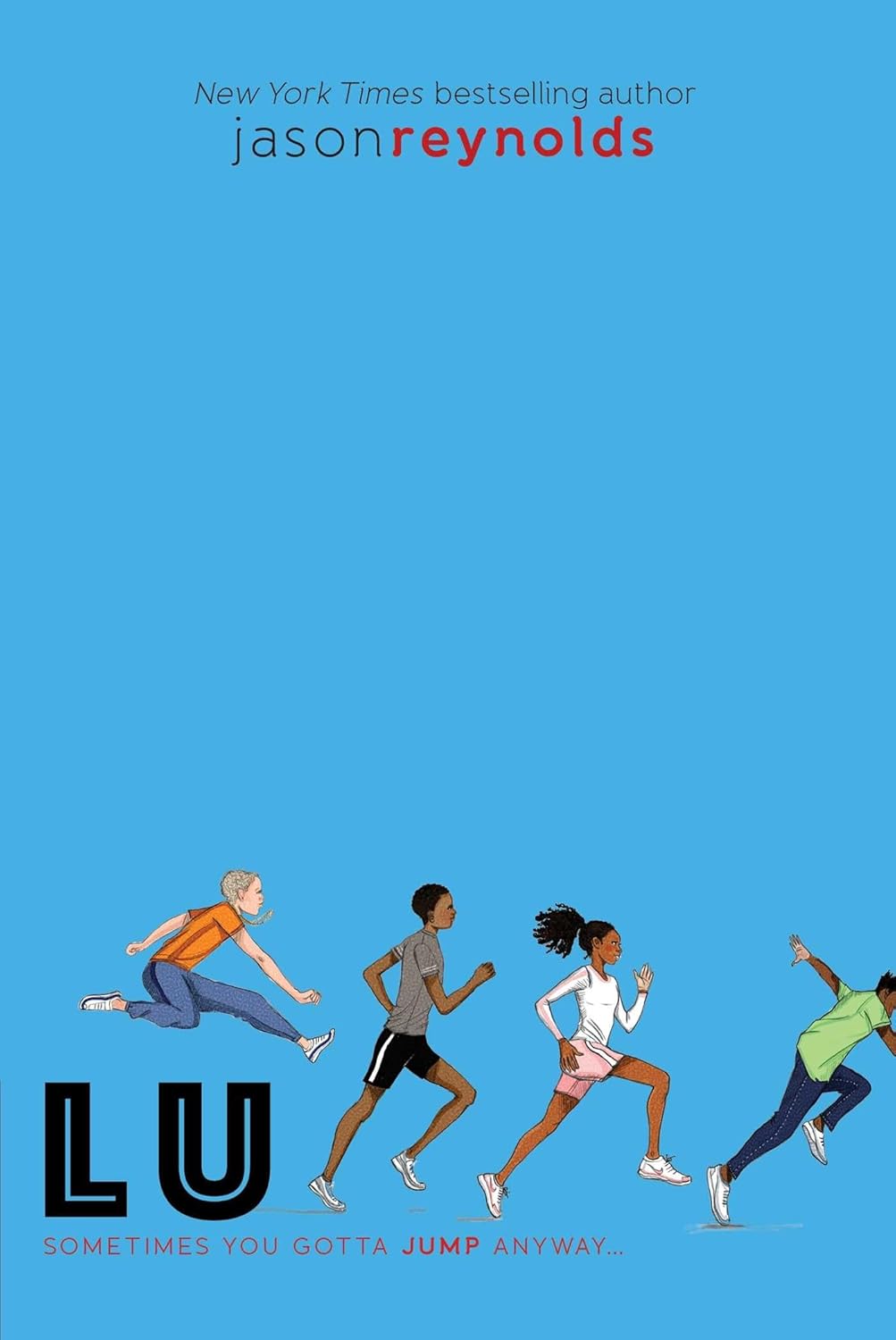
Lu, written by Jason Reynolds, is a 224-page realistic fiction novel and the fourth and concluding book of the original Track series — the anchor leg of Reynolds’s relay. Lu was born to be cocaptain of the Defenders. He was also born with albinism, which means he moves through the world in a body that people stare at and make assumptions about, and has responded by developing a level of swagger — gold chains, diamond earrings, unshakeable confidence — that is both genuine and armor. Lu knows he is good. He is also, as the novel begins, facing more hurdles than he expected: literally (he is training for the hurdles event at the championship meet) and figuratively (his parents are expecting a baby, he discovers a secret about his father that upends his understanding of their relationship, and a nemesis from his past reappears). The hurdles, Reynolds makes clear, are not just obstacles — they are how you measure where you are and what you can clear. New York Times bestseller; SLJ starred review (“pure gold”); Kirkus: “the perfect anchor leg for a well-run literary relay.” This guide covers reading level, age appropriateness, the series context, themes, and similar books. Read Ghost, Patina, and Sunny first.
For Parents
The fourth and concluding book of the original Track series — narrated by Lu, a boy with albinism, gold chains, and more swagger than anyone on the Defenders. Ages 10–14, grades 4–7. Content: a family secret about Lu’s father; a pregnant mother; an antagonist from Lu’s past. No gun violence or content as serious as Ghost’s. Best read after the first three books.
For Teachers
A grades 4–7 series conclusion — the most thematically complete of the four Track books, with the hurdles event as a structural metaphor that pays off the entire series’ argument. SLJ starred review: “pure gold.” A natural capstone for a Track series unit, allowing discussion of how Reynolds developed four distinct voices across four books. Albinism as a specific, named aspect of Lu’s identity is worth classroom discussion.
Lu at a Glance
Find on Amazon →| Author | Jason Reynolds |
| Published | 2018 (Atheneum / Caitlyn Dlouhy Books) |
| Grade Level | 4–7 (our assessment) |
| Recommended Age | 10–14 |
| Lexile | 570L |
| ATOS Level | 4.0 |
| Word Count | 44,012 |
| Pages | 224 |
| Genre | Realistic fiction / sports |
| Series | Track, Book 4 of 4 (Ghost → Patina → Sunny → Lu) |
| Setting | Contemporary; urban United States |
| Awards | SLJ starred review; Kirkus starred; NYT bestseller; Booklist Top 10 Sports Books for Youth 2019 |
For official Lexile and AR levels, visit Lexile.com or AR BookFinder. ReadingVine provides independent editorial assessments.
What Reading Level Is Lu?
Lexile 570L, ATOS 4.0, word count 44,012, interest level grades 5–8. Our assessment: grades 4–7, ages 10–14. The 570L is the lowest Lexile in the Track series — lower than Ghost (730L), Patina (710L), and Sunny (700L) — reflecting Lu’s specific narrative voice, which is more clipped and confident than the other narrators. As with all Track books, the reading challenge is emotional and thematic rather than linguistic; the formula scores reflect accessible prose rather than simple content. For official scores, visit Lexile.com or AR BookFinder.
Read the Series in Order
Lu is the fourth and concluding book of the Track series: Ghost (2016), Patina (2017), Sunny (2018), Lu (2018). It assumes full knowledge of all four team members — their histories, their specific weights, their relationships with Coach and with each other — that has accumulated across the first three books. Reading Lu without that context is possible; reading it with that context means the championship meet, and the team decision made there, lands with the weight it deserves. See our Ghost guide for the series introduction.
What Is Lu About?
Lu — full name Luchiano — has albinism: his skin is pale, his hair is white, his eyes are light-sensitive, and people have been staring at him and making assumptions about him his whole life. He has responded by becoming the most confident person in any room — the gold chains, the diamond earrings, the swagger that announces itself before he does. He is cocaptain of the Defenders, genuinely talented, and genuinely annoying to everyone who has to share a team with him. He is also, under all of that, someone who has learned to make himself untouchable because being touchable has consequences.
As the season builds toward the championship meet, Lu is preparing for a new event: the hurdles. Hurdles require a different technique than sprinting — you cannot go around them, you cannot avoid them, and if you flinch at the wrong moment you hit the ground. Reynolds uses the hurdles structurally throughout: everything Lu faces is a hurdle. His mother is pregnant with a new baby — a hurdle. He discovers a secret about his father that reframes their relationship — a hurdle. A figure from his past, Kelvin Jefferson, reappears — a hurdle. And the question the novel asks, literally and figuratively, is whether Lu can clear them without flinching.
The championship meet brings Ghost, Patina, Sunny, and Lu together for a climax that the series has been building toward since Book 1 — and the decision the team makes there, together, is the answer to every question the four books have been asking about what it means to run as a team rather than as four separate individuals.
The Hurdles — The Series’ Concluding Metaphor
Each Track book uses its protagonist’s specific event as a structural metaphor for their emotional situation. Ghost sprints — raw speed from the wrong reasons, learning to redirect it. Patina runs relay — learning to pass the baton, to trust. Sunny runs the mile — learning to stop, to be still enough to understand what he’s running for. Lu runs hurdles — learning that you cannot go around what’s in your way; you have to clear it.
Reynolds makes this explicit without making it heavy: Lu’s voice is too quick and too funny for heaviness. But the hurdles are doing real structural work. The championship meet is the first time all four narrative threads converge in real time — Ghost, Patina, Sunny, and Lu running together, each carrying what they’ve carried across their individual books, each needing the others. Kirkus called it “the perfect anchor leg for a well-run literary relay,” which is exactly right about what Reynolds accomplishes with the series structure: each book is a leg of the relay, and Lu is the anchor.
Lu and Albinism
Lu’s albinism — he was born with the genetic condition that reduces melanin production, resulting in very light skin, white hair, and light-sensitive eyes — is a specific and named part of his identity rather than a background detail. Reynolds depicts what it is like to move through the world in a body that people stare at and make assumptions about, from both inside Lu’s experience and in the reactions of other characters. Lu’s swagger is partly confidence and partly a response to that visibility — a way of controlling how he is seen before others can decide how to see him.
For classroom use, albinism as a specific condition is worth discussing directly — what it is, what it isn’t, and how Reynolds uses it in the novel as a lens for exploring visibility, assumption, and the difference between how you present yourself and who you actually are.
Lu Themes and Lessons
Simon & Schuster’s discussion guide identifies empathy as Lu’s central learning arc — and it is specific rather than general. Lu doesn’t need to learn that other people have feelings; he needs to learn to act on that knowledge even when it costs him something. The decisions he makes at the championship meet, and toward Kelvin Jefferson and his father, demonstrate empathy in its most demanding form: understanding why someone behaved as they did without excusing it, and choosing what to do with that understanding.
The word Reynolds returns to in the novel’s final movement is integrity — what it looks like in practice, what it costs, and why Lu’s choices at the end of the book demonstrate it. These are worth discussing explicitly with students finishing the series.
Discussion questions: What does the hurdles event teach Lu that sprinting didn’t? What secret does Lu discover about his father — and how does he respond? How is Lu’s albinism connected to his swagger? What decision does the team make at the championship, and why does it matter that they make it together?
Books Similar to Lu
About Jason Reynolds
See our Ghost guide for a full biography of Jason Reynolds. Lu was published in October 2018, the same year as Sunny, completing the original four-book Track series in a single year. Reynolds has since published a fifth Track book, Coach (2025), narrated by Coach himself. The original four-book relay — Ghost, Patina, Sunny, Lu — was Reynolds’s most sustained single series project and the work most frequently cited by educators for its accessibility to middle school readers who resist fiction.
Lu: Frequently Asked Questions
What reading level is Lu by Jason Reynolds?
Lexile 570L, ATOS 4.0, word count 44,012, grades 3–8. Our assessment: grades 4–7, ages 10–14. The lowest Lexile in the Track series, reflecting Lu’s clipped, confident voice. Reading challenge is emotional and thematic rather than linguistic. For official scores, visit Lexile.com or AR BookFinder.
What is Lu about?
Lu — born with albinism and armed with gold chains, diamond earrings, and unshakeable swagger — is cocaptain of the Defenders preparing for the championship meet and his first hurdles event. He discovers a secret about his father, confronts a figure from his past, and learns, literally and figuratively, that you cannot go around a hurdle — you have to clear it.
Do I need to read the other Track books before Lu?
Yes — Lu is the fourth and concluding book and assumes knowledge of Ghost, Patina, and Sunny. The championship meet, and the team decision made there, carries the weight of all four books’ worth of character development. Read in order: Ghost → Patina → Sunny → Lu.
What is albinism — why does it matter in this book?
Albinism is a genetic condition that reduces melanin production, resulting in very pale skin, white or light hair, and light-sensitive eyes. Lu was born with it and has spent his life in a body that people stare at and make assumptions about. His swagger — the gold chains, the confidence, the way he announces himself — is partly genuine and partly a response to that visibility. Reynolds uses it to explore the specific experience of moving through the world in a body others find conspicuous.
Is Lu the last Track book?
Lu (2018) is the last book of the original four-book series. Reynolds published a fifth book, Coach (2025), narrated by Coach himself, which continues the series from the mentor’s perspective.