
 = Partner Site
Mrs. Piggle-Wiggle Reading Level: A Complete Guide
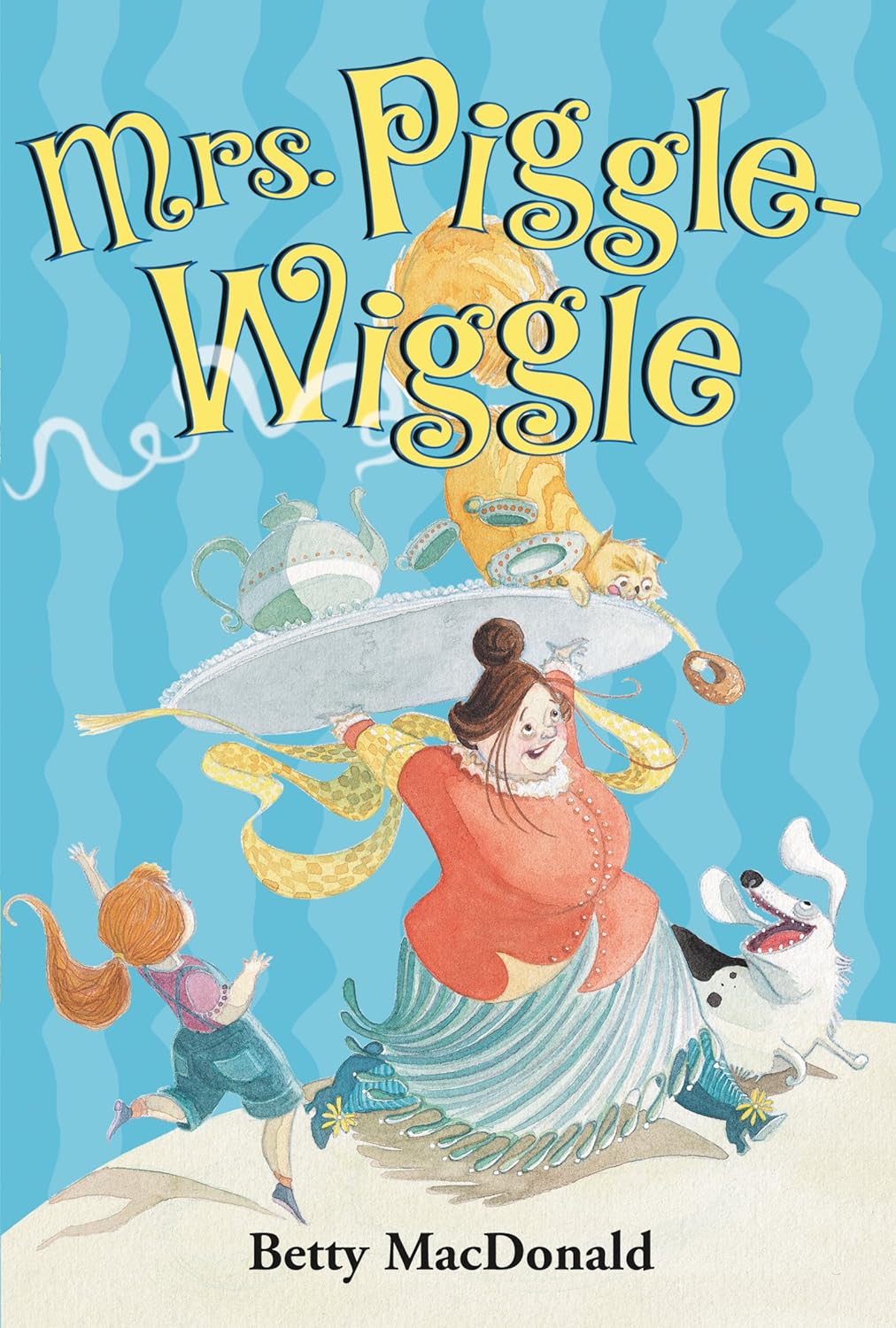
Mrs. Piggle-Wiggle by Betty MacDonald is a beloved classic of early chapter book fiction — a warmly funny collection of stories about a magical, wonderfully peculiar woman who lives in an upside-down house and has an unfailing cure for every bad habit a child could possibly develop. This complete guide covers Mrs. Piggle-Wiggle’s reading level, recommended age, content considerations, characters, themes, and books similar to Mrs. Piggle-Wiggle, designed for parents, teachers, and students.
For Parents
Mrs. Piggle-Wiggle is one of the most reliably delightful read-aloud books in the early chapter book canon. Each chapter is a self-contained story about a child with a specific bad habit — not wanting to go to bed, refusing to eat, being a bully, not putting things away — and Mrs. Piggle-Wiggle’s hilariously inventive cures. The humor is warm and gentle rather than mean-spirited, and the book has charmed parents and children equally since 1947. It is especially effective as a shared read because the jokes land for adults just as well as for children. Appropriate for ages 6 and up.
For Teachers
Mrs. Piggle-Wiggle is an excellent early chapter book for grades 2–4, working well both as a classroom read-aloud and as an independent reading assignment for emerging chapter book readers. Its episodic structure — each chapter a complete story — makes it easy to read in single sessions, and each story naturally generates discussion about behavior, consequences, and how we treat other people. The book’s gentle satirical humor also provides an early introduction to comedic voice and exaggeration as literary tools.
Mrs. Piggle-Wiggle at a Glance
Find on Amazon →| Author | Betty MacDonald |
| Published | 1947 |
| Grade Level | 3–4 (our assessment) |
| Recommended Age | 6–10 |
| Flesch-Kincaid Grade | 4.2 |
| Word Count | ~20,000 |
| Pages | 128 (standard paperback) |
| Chapters | 7 (each a self-contained story) |
| Genre | Children’s fiction / humor / fantasy |
| Setting | A small American town; mid-20th century |
| Awards | — |
For official Lexile and AR levels, visit Lexile.com or AR BookFinder. ReadingVine provides independent editorial assessments.
What Reading Level Is Mrs. Piggle-Wiggle?
Mrs. Piggle-Wiggle reads at approximately a 4th-grade word level by standard readability measures (Flesch-Kincaid grade 4.2), but it is most comfortably enjoyed by readers in grades 2–4. Our editorial assessment is grades 3–4 for independent reading, though confident 2nd-grade readers can engage with it independently and it works beautifully as a read-aloud for children as young as 5 or 6. The vocabulary is accessible and context-supportive, the sentences are clear and well-paced, and the episodic chapter structure means each story can be read and enjoyed on its own without requiring a reader to hold a complex ongoing plot in mind.
What pushes the Flesch-Kincaid score slightly above the typical 2nd-grade independent reading range is MacDonald’s comedic prose style — she writes with a pleasantly dry, wry voice that is more sophisticated than most early chapter books, and the humor rewards readers who are reading closely enough to catch the jokes. This makes the book particularly effective as a read-aloud, where an adult reader can modulate voice and timing to bring out the comedy. For official Lexile and AR scores, visit Lexile.com or AR BookFinder.
What Age Is Mrs. Piggle-Wiggle Appropriate For?
We recommend Mrs. Piggle-Wiggle for readers ages 6–10, with the broadest appeal at ages 7–9 — roughly 1st through 3rd grade as a read-aloud, and 2nd through 4th grade for independent reading. The book is essentially worry-free from a content standpoint: it is gentle, funny, and warm-hearted throughout. There is no peril, no death, no bullying beyond the mild kind that Mrs. Piggle-Wiggle then delightfully cures, and no content that would concern parents of young readers.
Mrs. Piggle-Wiggle contains no violence, profanity, or frightening content. The only things worth noting are that some of Mrs. Piggle-Wiggle’s “cures” involve a degree of exaggerated discomfort — a child who won’t bathe is allowed to get so dirty that radishes grow on them; a child who won’t eat is served only the foods they request until they beg for something different. These are played entirely for comedy and no child is actually harmed, but very young or very literal readers may need reassurance that the cures are fantastical rather than realistic. The book was written in 1947 and reflects mid-20th-century American domestic life; some parenting attitudes and gender roles depicted are dated by contemporary standards, which can itself be a conversation-starting point for older readers.
Mrs. Piggle-Wiggle has an unusually long age range for a picture-free chapter book because it works so well as a family read-aloud. Many parents who read it with their 7-year-olds find their 10- and 11-year-old siblings drifting in to listen — the humor genuinely works for a wide range of ages, and the stories are short enough that the whole family can enjoy one before bed.
What Is Mrs. Piggle-Wiggle About?
Mrs. Piggle-Wiggle is a collection of seven stories, each centered on a different child in a small American town who has developed a particularly troublesome bad habit. When the children’s parents find themselves at their wits’ end, they call Mrs. Piggle-Wiggle — a small, cheerful, slightly magical woman who lives in a charming upside-down house (the furniture is all on the ceiling) and was once married to a pirate who left her a buried treasure. Mrs. Piggle-Wiggle loves children unconditionally and has a cure for every bad habit imaginable, though her cures are never lectures or punishments — they are inventive, absurdist, and invariably hilarious.
The children in the stories include a boy who won’t put his things away (his room fills up so completely that he can no longer get in or out), a girl who is a tattle-tale, a boy who won’t go to bed at night, a girl who is a slow-eater (she is served meals on a schedule so rigid that she misses breakfast and lunch entirely for days), and several others. In each story, Mrs. Piggle-Wiggle prescribes a cure — sometimes involving a magic powder or potion from her collection, sometimes relying entirely on logical consequences taken to their comic extreme. The cures always work, the children are always reformed, and the parents always hang up the telephone shaking their heads in wonder.
Betty MacDonald originally invented the character of Mrs. Piggle-Wiggle to amuse her two daughters during a long illness. The book grew out of those stories and became the first in a series of four Mrs. Piggle-Wiggle books. MacDonald’s genius was in understanding that children find their own bad habits funny when seen from a slight distance — the children in the stories are recognizable enough to be relatable but exaggerated enough to be safely laughable.
Mrs. Piggle-Wiggle Characters
Mrs. Piggle-Wiggle Themes and Lessons
The genius of Mrs. Piggle-Wiggle as a children’s book is that it teaches without lecturing. Each story’s cure is essentially a logical consequence taken to its most absurdist extreme: if you won’t wash, you get so dirty that vegetables grow on you. If you won’t put things away, your room fills until you can’t move. If you won’t go to bed, you get to stay up — until you are so tired that you fall asleep standing up in the middle of the next day. The lesson in each case is not hammered home but allowed to emerge naturally from the comedy, which is precisely why it works so well. Children laugh at the exaggerated situations while absorbing the underlying point with very little resistance.
The book also models something rarer in children’s fiction of its era: a genuine, unconditional love for children as they actually are, bad habits and all. Mrs. Piggle-Wiggle is never disgusted by the children’s behavior, never loses patience, never threatens or punishes. She is simply endlessly resourceful and warmly confident that every child can be helped. This makes her one of the most quietly radical figures in mid-century children’s literature — an adult who takes children seriously and treats their problems as worthy of creative, respectful solutions. Discussion questions worth exploring: Why does Mrs. Piggle-Wiggle’s approach work when the parents’ approaches don’t? Which cure do you think is the funniest, and why? Can you think of a bad habit that Mrs. Piggle-Wiggle doesn’t have a cure for? What would her cure for it be?
How Many Pages and Chapters Are in Mrs. Piggle-Wiggle?
Mrs. Piggle-Wiggle is 128 pages in the standard paperback edition, divided into 7 chapters — each one a complete, self-contained story running roughly 15–20 pages. The word count is approximately 20,000 words. At a 3rd-grade reading pace of around 150–180 words per minute, most readers in the target age range finish the book in 3–4 hours of total reading time, or about a week of 20–30 minute daily reading sessions. As a classroom read-aloud, each chapter can be completed comfortably in a single 20–30 minute session, making it an ideal week-long read-aloud. The original edition features charming line illustrations by Richard Bennett that appear throughout the book, adding visual warmth to the storytelling.
Books Similar to Mrs. Piggle-Wiggle
About Betty MacDonald
Betty MacDonald was born Anne Elizabeth Campbell Bard in 1908 in Boulder, Colorado, and grew up in Seattle, Washington. She is best known to adult readers for her memoir The Egg and I (1945), a humorous account of her first marriage and years spent running a chicken farm on the Olympic Peninsula, which was a massive bestseller and was adapted into a film the following year. The Mrs. Piggle-Wiggle character grew from stories MacDonald told her two daughters, Anne and Joan, to entertain them during a long illness. The first Mrs. Piggle-Wiggle book was published in 1947, illustrated by Richard Bennett, and was followed by three sequels: Mrs. Piggle-Wiggle’s Magic (1949), Mrs. Piggle-Wiggle’s Farm (1954), and Hello, Mrs. Piggle-Wiggle (1957). MacDonald died in 1958 at the age of 49, having completed four books in the series. A fifth book, Happy Birthday, Mrs. Piggle-Wiggle, was written by Annie MacDonald Canham — Betty MacDonald’s daughter — and published posthumously in 2007. The series has remained in print continuously since 1947 and has sold millions of copies worldwide.
Mrs. Piggle-Wiggle: Frequently Asked Questions
What grade level is Mrs. Piggle-Wiggle?
By standard readability measures, Mrs. Piggle-Wiggle reads at approximately a 4th-grade word level (Flesch-Kincaid grade 4.2). Our editorial assessment is grades 3–4 for independent reading, with the book working beautifully as a read-aloud for children as young as 5 or 6. Its short, self-contained chapters make it an ideal choice for readers who are transitioning from picture books to chapter books.
Is Mrs. Piggle-Wiggle a series?
Yes. Mrs. Piggle-Wiggle is the first book in a series of five. The sequels are Mrs. Piggle-Wiggle’s Magic (1949), Mrs. Piggle-Wiggle’s Farm (1954), Hello, Mrs. Piggle-Wiggle (1957), and Happy Birthday, Mrs. Piggle-Wiggle (2007), the last of which was written by Betty MacDonald’s daughter after MacDonald’s death. Each book follows the same format: new children, new bad habits, new delightfully inventive cures. The books can be read in any order.
What bad habits does Mrs. Piggle-Wiggle cure in the first book?
The seven stories in the first Mrs. Piggle-Wiggle book address the following bad habits: not putting things away, tattling, not wanting to go to bed, refusing to eat, being a slow eater, not washing or bathing, and bullying. Each cure is inventive, escalating, and played entirely for comedy — no children are harmed, and every child ends the story reformed and generally cheerful about it.
Why does Mrs. Piggle-Wiggle live in an upside-down house?
The upside-down house — with its furniture on the ceiling and its general air of pleasant impossibility — is one of Betty MacDonald’s most charming inventions. The book gives a brief explanation: Mrs. Piggle-Wiggle’s late husband was a pirate who built it that way, and she has simply kept it as he left it, along with his buried treasure in the yard. The upside-down house signals to children from the very first page that Mrs. Piggle-Wiggle’s world operates by different rules than the ordinary adult world — and that those different rules are generally more interesting and fun.
Is Mrs. Piggle-Wiggle appropriate for kindergarteners and 1st graders?
As a read-aloud, absolutely. The stories are accessible and funny for children as young as 5 or 6, and the bad habits the children have — not wanting to go to bed, not picking up toys, not eating dinner — are deeply familiar to children at that age. The comedy lands well, and the cures are satisfyingly absurd in ways that young children find hilarious. For independent reading, Mrs. Piggle-Wiggle is best suited for 2nd grade and above, as the vocabulary and sentence length can be challenging for very early readers working on their own.
Who illustrated Mrs. Piggle-Wiggle?
The original Mrs. Piggle-Wiggle (1947) was illustrated by Richard Bennett, whose charming line drawings appear throughout the book and have become inseparable from the story for many readers. Later editions have sometimes featured new illustrations. The sequels were illustrated by different artists, including Hilary Knight, who illustrated Mrs. Piggle-Wiggle’s Magic and whose style many readers associate strongly with the series.
How is Mrs. Piggle-Wiggle magical?
Mrs. Piggle-Wiggle’s magic is gentle and domestic rather than dramatic. She keeps a collection of magic powders and potions that can produce specific effects — a powder that makes radishes grow on unwashed skin, a potion that causes a child to speak only in whispers, and so on. But many of her cures require no magic at all, just an inventive application of logical consequences taken to their comic extreme. Her true magic, the book suggests, is her unconditional love for children and her absolute confidence that every bad habit can be cured without punishment, shame, or lectures.
Is Mrs. Piggle-Wiggle still relevant for modern kids?
Yes — generations of children have found Mrs. Piggle-Wiggle just as funny as their parents and grandparents did, because the bad habits at the center of each story are timeless. Children have always been reluctant to go to bed, put things away, take baths, and eat their dinners, and the comedy that comes from those situations is as fresh in the 21st century as it was in 1947. Some of the book’s domestic details and parenting attitudes are dated by contemporary standards — it reflects mid-20th-century American family life — and older readers or classroom teachers may find it worth acknowledging those differences as part of the reading experience. But the stories themselves hold up beautifully.