
 = Partner Site
Tales of a Fourth Grade Nothing Reading Level: A Complete Guide
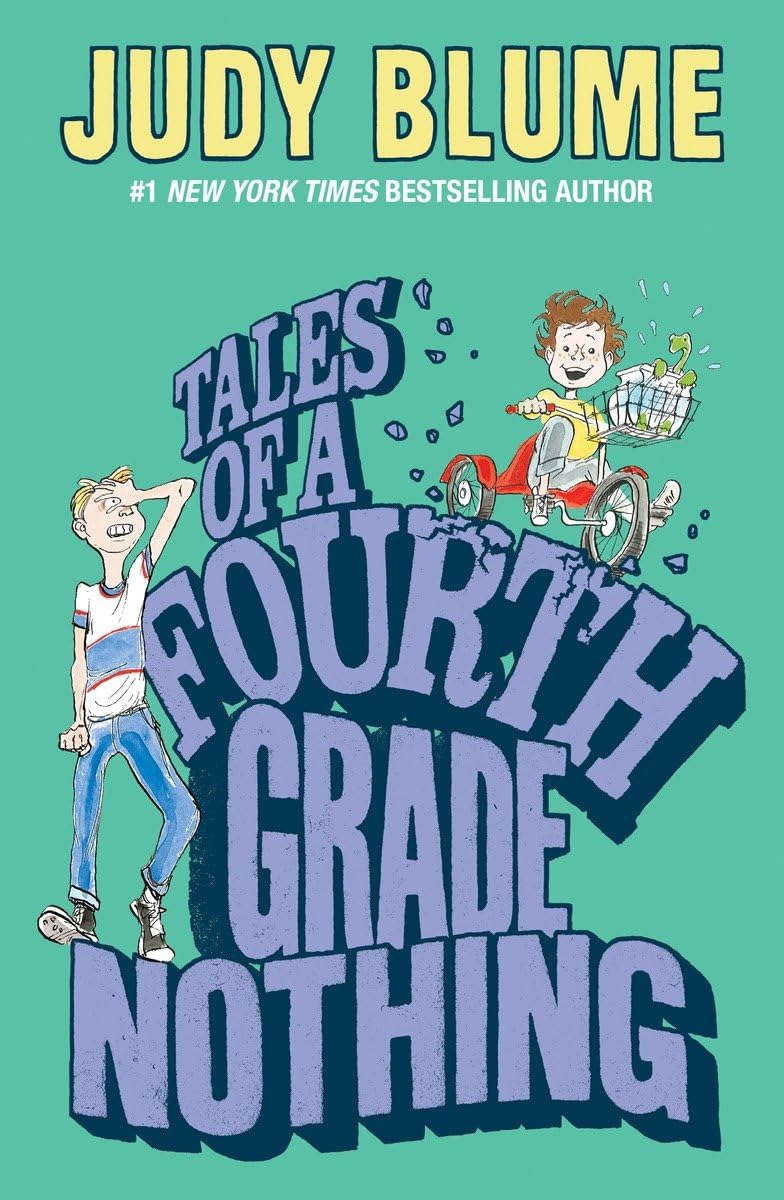
Tales of a Fourth Grade Nothing by Judy Blume tells the humorous and relatable story of a fourth grader struggling to cope with his wild younger brother. This guide provides parents and teachers with reading level information, age recommendations, content insights, and discussion questions for this beloved classic about family dynamics, sibling rivalry, and growing up.
For Parents
Find the right reading level for your child, understand the book’s honest portrayal of sibling conflict and family frustration, and get conversation starters to help your child explore feelings about siblings, fairness, and being heard by parents.
For Teachers
Access grade-level guidance, reading metrics, character analysis support, and thematic discussion questions perfect for classroom use. This classic offers rich opportunities for exploring realistic fiction, first-person narration, and relatable family dynamics.
Tales of a Fourth Grade Nothing at a Glance
Find on Amazon →| Author | Judy Blume |
| Published | 1972 |
| Grade Level | 3–5 (our assessment) |
| Recommended Age | 8–10 |
| Flesch-Kincaid Grade | 3.9 |
| Word Count | ~25,000 |
| Pages | 120 (standard paperback) |
| Chapters | 10 |
| Genre | Children’s fiction / realistic fiction / family story |
| Setting | New York City, contemporary family life |
| Awards | Classic (first book in the Fudge series) |
For official Lexile and AR levels, visit Lexile.com or AR BookFinder. ReadingVine provides independent editorial assessments.
What Reading Level Is Tales of a Fourth Grade Nothing?
Tales of a Fourth Grade Nothing is appropriate for grades 3–5, with a Flesch-Kincaid grade level of 3.9. The vocabulary is straightforward and accessible, with everyday language that reflects how real children and families talk. The sentence structure is simple to moderate, and the first-person narration from Peter’s perspective makes the story feel conversational and immediate.
Judy Blume’s writing style is direct, honest, and humorous. She captures the voice of a nine-year-old boy perfectly—his frustrations, embarrassments, and occasional triumphs feel completely authentic. The episodic structure, with each chapter presenting a new Fudge-related disaster, keeps the plot moving and provides natural stopping points. Blume doesn’t talk down to children or sugarcoat family life; she shows real conflicts, real frustrations, and the messy reality of living with a difficult younger sibling.
While strong second graders can handle the reading mechanics, the story resonates most deeply with readers ages 8–10 who have enough life experience to relate to Peter’s situation—whether from having annoying younger siblings themselves, feeling overlooked by parents, or experiencing the general unfairness of family life. The book rewards readers who appreciate realistic, humorous stories about ordinary family problems rather than fantastical adventures.
What Age Is Tales of a Fourth Grade Nothing Appropriate For?
Tales of a Fourth Grade Nothing is most appropriate for readers ages 8–10. The story deals with sibling rivalry, parental frustration, and family conflict in honest but age-appropriate ways. Blume doesn’t shy away from showing that family life can be difficult and that parents aren’t perfect, which some younger children may find unsettling but older elementary readers find validating.
Sibling conflict and resentment: Peter openly resents Fudge and sometimes wishes he didn’t exist. These feelings are normal but may need discussion, especially with children who have sibling issues.
Parents focus on the younger child: From Peter’s perspective, his parents seem to give Fudge more attention and often excuse his behavior, which feels unfair to him. This portrayal of imperfect parenting is realistic but may upset some children.
The turtle’s death: Fudge swallows Peter’s pet turtle, Dribble. The turtle dies, which is sad and disturbing. While Blume handles the scene realistically without being graphic, it’s still a pet death that affects some readers emotionally.
Embarrassing situations: Peter experiences several humiliating moments caused by Fudge’s behavior (like Fudge biting at a movie theater). Children who are sensitive to embarrassment may find these scenes uncomfortable.
Fudge’s bad behavior: Fudge throws tantrums, refuses to eat, kicks, screams, and generally behaves terribly. Some parents worry about children imitating this behavior.
What’s NOT in the book: No violence (beyond toddler tantrums), no profanity, no bullying between peers, no romance. The conflicts are all family-based and realistic. Blume treats serious topics like feeling overlooked and losing a pet with honesty but without being traumatic. The book ends hopefully, with Peter finally getting a puppy and feeling his parents understand him better.
What Is Tales of a Fourth Grade Nothing About?
Peter Warren Hatcher is a nine-year-old fourth grader living in New York City with his parents and his two-and-a-half-year-old brother, Farley Drexel Hatcher—nicknamed “Fudge.” Peter’s life revolves around dealing with the chaos Fudge creates and feeling frustrated that his parents don’t seem to understand how difficult it is to be Fudge’s older brother.
The book is episodic, with each chapter presenting a new disaster or embarrassment caused by Fudge. In one incident, Peter brings a poster he made to school, only to have Fudge cover it with crayon scribbles, ruining it. Peter’s mother dismisses his anger, saying Fudge is “just a baby.” When Fudge throws a tantrum in a shoe store, screaming and kicking, Peter’s mother buys him the shoes anyway, teaching Fudge that tantrums work. Peter watches in disbelief as his parents reward bad behavior.
Peter’s father is in advertising, and he brings an important client, Mr. Yarby, and his wife home for dinner. Fudge refuses to eat, demanding instead to eat “under” the table. In a misguided attempt to get Fudge to eat, Peter’s father crawls under the table with Fudge. Fudge then throws a bowl of cornflakes and blueberries on top of Mrs. Yarby, covering her in cereal and staining her dress. The dinner is ruined, and Peter’s father nearly loses the account. Yet somehow, Fudge faces minimal consequences.
In perhaps the most famous chapter, Fudge refuses to eat. His parents try everything—begging, bribing, making food fun. Peter’s mother decides to let Peter handle dinner one night, hoping Fudge will eat if Peter’s in charge. Peter makes Fudge’s favorite foods and tries to feed him. When Fudge still refuses, Peter loses his temper and smears mashed potatoes on Fudge’s face. His mother is horrified at Peter but immediately after, Fudge starts eating normally again—apparently, Peter’s aggressive approach worked where their gentle methods failed.
Peter has one thing that’s completely his own: his pet turtle, Dribble. He keeps Dribble in a bowl in his room, taking care of him carefully. Dribble is Peter’s responsibility and his escape from Fudge’s chaos. Fudge is fascinated by the turtle and always wants to play with it, but Peter protects Dribble fiercely.
One day, Peter comes home from a birthday party to discover that Dribble is missing. Fudge has been in Peter’s room, and the turtle bowl is empty. When Peter’s parents question Fudge about where Dribble is, Fudge smiles and says, “I ate him.” Peter’s parents think Fudge is making up a story, but they rush Fudge to the hospital just in case. Based on Fudge’s statement and symptoms, the doctor treats it as very likely that Fudge swallowed the turtle, and it will have to pass through his system. The turtle doesn’t survive.
Peter is devastated and furious. He’s lost his pet because of Fudge, and his parents still seem more concerned about Fudge than about Peter’s loss. Peter feels like he’s always invisible, always secondary to Fudge’s drama and needs. He’s been the responsible one, the patient one, the one who never causes problems, and it feels like nobody notices or cares.
After Fudge recovers, Peter’s parents finally seem to understand how much Peter has been dealing with. His father takes him aside and acknowledges that it’s been hard being Fudge’s brother. As a surprise, they give Peter a puppy—something Peter has wanted for years. Peter is overjoyed. He names the puppy “Turtle” in honor of Dribble. For the first time, Peter feels like his parents see him and value him as much as they do Fudge. The book ends on this hopeful note, with Peter holding his new puppy and feeling that maybe, finally, things will get better.
Tales of a Fourth Grade Nothing Characters
Tales of a Fourth Grade Nothing Themes and Lessons
At its heart, Tales of a Fourth Grade Nothing is about what it feels like to be the “good kid” in a family—the responsible one who gets less attention precisely because they don’t cause problems. Peter does everything right: he’s polite, he does his homework, he takes care of his belongings, he tries to be patient with Fudge. Yet his parents focus all their energy on Fudge because Fudge is difficult. This dynamic is deeply unfair and frustrating, and Blume doesn’t pretend otherwise. She validates Peter’s feelings while also showing that parents are human and imperfect—they’re doing their best but sometimes get priorities wrong.
The book also explores healthy and unhealthy ways of dealing with anger and frustration. Peter mostly keeps his feelings inside, trying to be mature and patient. When he does explode (smearing potatoes on Fudge’s face), it’s treated as understandable even if not ideal. The book teaches that it’s normal to feel angry at siblings, normal to feel overlooked, and important to express these feelings rather than always bottling them up. The ending, where Peter’s parents finally acknowledge his sacrifices and give him the puppy, shows that speaking up and letting people know you’re hurting can lead to positive change.
Discussion questions for families:
- Has Peter’s situation ever happened to you—feeling like you get less attention because you’re not causing problems? How did you handle it?
- Why do you think Peter’s parents focus so much on Fudge? Are they being unfair, or are they doing the best they can?
- How does Peter feel when Fudge swallows Dribble? Why is losing the turtle so important beyond just losing a pet?
- What do you think about how Peter’s parents handle Fudge’s tantrums and bad behavior? What would you do differently?
How Many Pages and Chapters in Tales of a Fourth Grade Nothing?
Tales of a Fourth Grade Nothing has 120 pages in the standard paperback edition and is divided into 10 chapters. The word count is approximately 25,000 words, making it a quick, accessible read for upper elementary students. The chapters average 12 pages each and are episodic—each chapter presents a different Fudge-related incident, making the book easy to read in chunks.
For independent readers in the target age range (8–10), the book typically takes 2–3 hours to complete, or about a week of reading 20–30 minutes per day. The relatable situations, humor, and Peter’s engaging narrative voice keep readers interested. Many children with siblings read it quickly because they recognize their own family dynamics in the story and want to see how things turn out for Peter.
As a read-aloud, Tales of a Fourth Grade Nothing takes approximately 2–2.5 hours total. The episodic structure makes it perfect for reading one chapter at a time—each chapter tells a complete Fudge story while advancing Peter’s overall arc. The humor translates well to read-aloud, and many families enjoy reading it together because it sparks conversations about sibling relationships, fairness, and how families work. It’s also popular in classrooms because the situations are so relatable that students immediately connect with Peter’s frustrations.
Books Similar to Tales of a Fourth Grade Nothing
If your child enjoyed Tales of a Fourth Grade Nothing, here are six similar books that explore themes of family, siblings, and realistic childhood experiences:
About Judy Blume
Judy Blume (born 1938) is one of the most influential and beloved children’s and young adult authors of all time. Tales of a Fourth Grade Nothing, published in 1972, was one of her early successes and introduced the character of Fudge, who became so popular that Blume wrote four more books about the Hatcher family (the “Fudge series”). Blume is known for her honest, direct approach to children’s feelings and experiences—she doesn’t sugarcoat family conflict, doesn’t pretend parents are perfect, and validates the real frustrations kids experience. This honesty was revolutionary in children’s literature when she started writing in the late 1960s and early 1970s. Before Blume, many children’s books presented idealized families where problems were solved easily and everyone was fundamentally happy. Blume showed families as they really are: loving but messy, well-meaning but imperfect, with siblings who genuinely annoy each other and parents who sometimes get priorities wrong. The character of Fudge was inspired partly by Blume’s own experiences with her children and partly by observing other challenging toddlers. Peter’s voice—frustrated, honest, occasionally sarcastic—captures exactly how a nine-year-old boy feels, making readers immediately connect with him. Blume has written dozens of books, including Are You There God? It’s Me, Margaret, Superfudge (the sequel to Tales of a Fourth Grade Nothing), Blubber, and Forever. Her books have sold over 85 million copies worldwide and have been translated into 32 languages. She’s won numerous awards and is credited with changing children’s literature by treating young readers as people who could handle honest stories about real life. Despite facing censorship and book bans for her frank approach to topics like puberty, divorce, and family conflict, Blume has remained committed to writing truthfully for children and teens, believing they deserve books that reflect their actual experiences and feelings.
Tales of a Fourth Grade Nothing: Frequently Asked Questions
What happens to the turtle in Tales of a Fourth Grade Nothing?
Fudge swallows Peter’s pet turtle, Dribble. Peter comes home from a birthday party to find Dribble missing from his bowl. When his parents ask Fudge where the turtle is, Fudge says “I ate him.” At first, Peter’s parents think Fudge is making up a story, but they take him to the hospital just in case. Based on Fudge’s statement and symptoms, the doctor treats it as very likely that Fudge swallowed the turtle whole. The turtle has to pass through Fudge’s digestive system, and Fudge recovers fine, but Dribble dies. This is the book’s emotional climax—Peter loses his pet because of Fudge’s behavior, and it represents all the times Peter has lost things or opportunities because of his brother. It’s a sad moment but is handled with Blume’s characteristic honesty about difficult feelings. Peter’s parents eventually give him a puppy, which helps comfort Peter after losing Dribble.
How old is Fudge in Tales of a Fourth Grade Nothing?
Fudge is two and a half years old in Tales of a Fourth Grade Nothing. His full name is Farley Drexel Hatcher, but everyone calls him Fudge. He’s at the age where toddlers are developing independence and often test boundaries through tantrums and difficult behavior. Judy Blume captures the challenges of this age perfectly—Fudge refuses to eat, throws screaming fits, and demands his own way constantly. While some of Fudge’s behavior is typical for a toddler, he’s particularly difficult and his parents struggle to set boundaries effectively. By the time Peter is in fourth grade (about nine years old), Fudge is turning three, making the age gap about six and a half years—old enough that Peter remembers life before Fudge and feels like Fudge has disrupted his previously peaceful family.
Is Tales of a Fourth Grade Nothing appropriate for 2nd grade?
Tales of a Fourth Grade Nothing can be appropriate for second graders, especially as a read-aloud, though third grade and up is generally better. The reading level (3.9 Flesch-Kincaid) is accessible to strong second-grade readers, and the short length and episodic structure work well for younger children. However, some content may be challenging for second graders. The turtle’s death can be upsetting, and the realistic portrayal of parental imperfection (parents focusing more on Fudge, sometimes being unfair to Peter) might confuse younger children who still see parents as always right. Also, second graders may not have enough perspective on sibling dynamics to fully appreciate Peter’s frustrations. As a class read-aloud with teacher guidance to process Peter’s feelings and the turtle’s death, it works well for second grade. For independent reading, third grade and up is typically more appropriate.
What is the main conflict in Tales of a Fourth Grade Nothing?
The main conflict is Peter’s ongoing struggle with Fudge’s disruptive behavior and his parents’ apparent inability to control Fudge or recognize how difficult things are for Peter. Each chapter presents a new incident where Fudge causes chaos or embarrassment, and Peter feels increasingly frustrated and overlooked. The external conflict is Peter versus Fudge’s behavior; the deeper internal conflict is Peter feeling invisible and unimportant compared to Fudge. Peter is the responsible, well-behaved child, but he gets less attention and appreciation precisely because he doesn’t cause problems. This comes to a head when Fudge swallows Dribble, and Peter loses the one thing that was completely his own. The resolution comes when Peter’s parents finally acknowledge his sacrifices and give him a puppy, showing they do see and value him. The book doesn’t pretend Fudge will suddenly become easy, but it shows Peter finding his voice and his parents learning to appreciate him better.
How many books are in the Fudge series?
There are four main books in the Fudge series by Judy Blume, published over 30 years. The series follows the Hatcher family as the children grow up. The books in order are: Tales of a Fourth Grade Nothing (1972), Superfudge (1980), Fudge-a-Mania (1990), and Double Fudge (2002). Tales of a Fourth Grade Nothing introduces the family when Peter is nine and Fudge is two and a half. Superfudge follows Peter in sixth grade when Fudge is five and their baby sister Tootsie is born. Fudge-a-Mania takes place the following summer when the Hatchers vacation with Sheila Tubman’s family. Double Fudge features the family when Fudge is obsessed with money. Each book can be read independently, but they’re most enjoyable in order as you watch the characters grow and family dynamics evolve. Note: The Pain and the Great One (1984) is a separate Judy Blume book about sibling rivalry, not part of the Fudge series.
Why do Peter’s parents favor Fudge?
Peter’s parents don’t necessarily favor Fudge, but from Peter’s perspective, Fudge receives more attention because he demands it through difficult behavior and because he’s younger and needs more supervision. This is a common and realistic family dynamic that Blume portrays honestly. Parents often focus energy on the “squeaky wheel”—the child who’s having tantrums, refusing to eat, or causing chaos—while the well-behaved child gets less attention. Peter’s parents are doing their best but make mistakes in how they handle Fudge, sometimes giving in to tantrums rather than setting firm boundaries. They’re not bad parents, but they’re overwhelmed and sometimes unintentionally overlook Peter’s needs. By the end of the book, Peter’s parents begin recognizing this pattern and make an effort to show Peter they value him. The puppy represents their acknowledgment of Peter’s patience and sacrifices. The book teaches that parents are human and imperfect, and that it’s okay to tell them when you feel overlooked.
What age group is Tales of a Fourth Grade Nothing for?
Tales of a Fourth Grade Nothing is most appropriate for ages 8–10, corresponding to grades 3–5. The reading level is accessible to third graders, but the themes about sibling rivalry, feeling overlooked, and family frustration resonate most with children who have enough life experience to relate to Peter’s situation. Eight-year-olds with younger siblings immediately connect with Peter’s frustrations. The book also works well for only children who wonder what having siblings would be like, or for youngest children who want to understand their older siblings’ perspectives. While the protagonist is in fourth grade, third and fifth graders enjoy it equally. Younger children (under 8) may find the turtle’s death too upsetting or not understand why Peter’s parents sometimes seem unfair. Older children (11+) still enjoy it but may find it a bit young unless they’re particularly interested in realistic family stories or rereading a childhood favorite.
What is the message of Tales of a Fourth Grade Nothing?
The main message is that it’s normal to feel frustrated with siblings and family situations, and it’s important to express your feelings rather than always being the “good kid” who never complains. Peter learns that bottling up resentment doesn’t help—he needs to let his parents know when things feel unfair. The book validates that sibling rivalry is real and normal, not something to be ashamed of. It also teaches that parents are human and imperfect; they make mistakes but can learn and do better when you communicate with them. Another key message is about fairness: being the responsible, well-behaved child is admirable, but you still deserve attention, appreciation, and things that are yours alone. The book empowers children to advocate for themselves within their families. Finally, it shows that family love is complicated—you can be furious at your sibling (or parents) and still love them, and difficult phases (like Fudge’s terrible twos) eventually pass.