
 = Partner Site
Ramona Quimby, Age 8 Reading Level: A Complete Guide
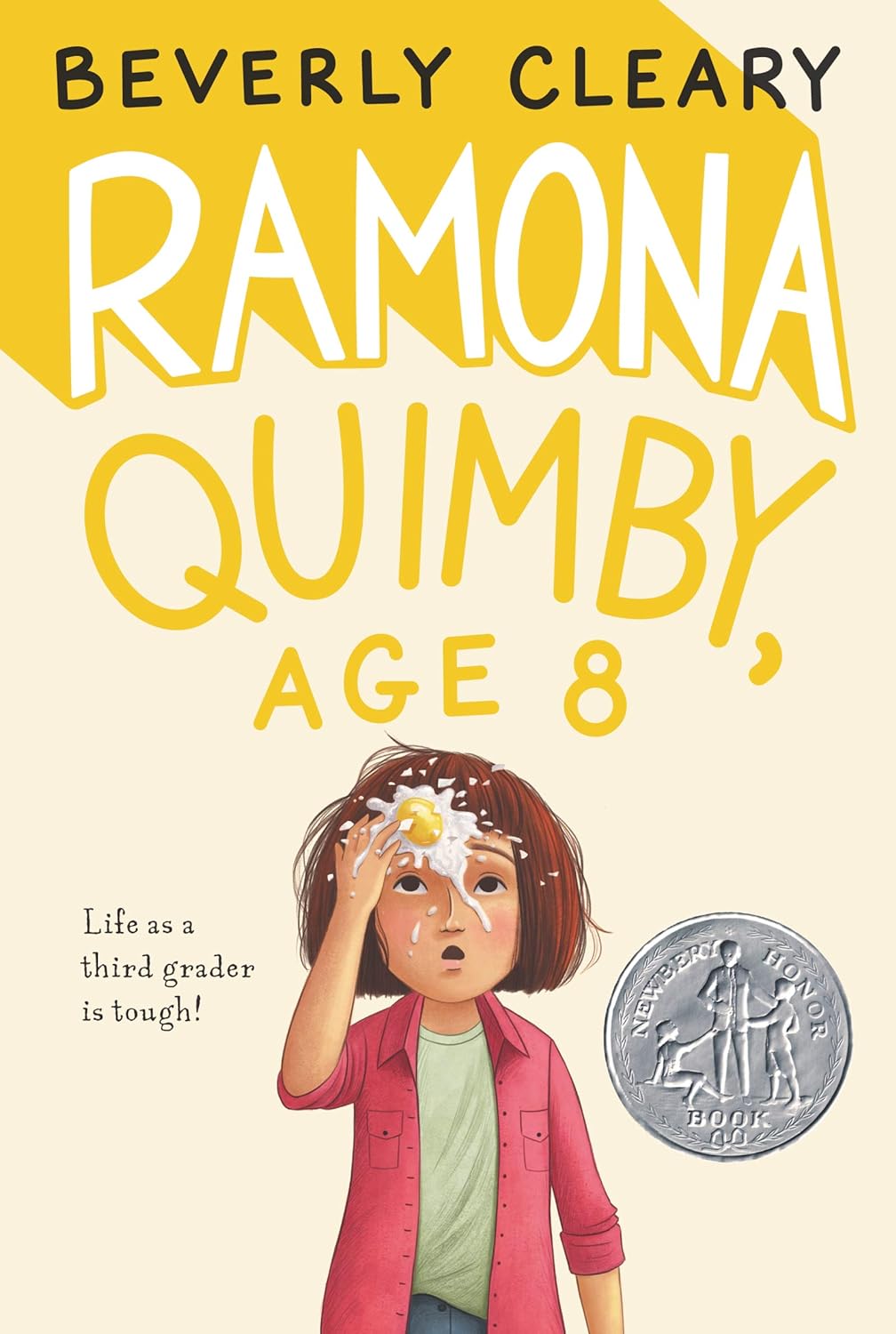
Ramona Quimby, Age 8 by Beverly Cleary tells the heartwarming and honest story of a spirited third grader navigating family challenges, school frustrations, and growing up. This guide provides parents and teachers with reading level information, age recommendations, content insights, and discussion questions for this Newbery Honor classic about resilience, family, and finding your place in the world.
For Parents
Find the right reading level for your child, understand the book’s honest portrayal of family financial stress and childhood worries, and get conversation starters to help your child explore feelings about money, fairness, and being misunderstood.
For Teachers
Access grade-level guidance, reading metrics, character analysis support, and thematic discussion questions perfect for classroom use. This Newbery Honor book offers rich opportunities for exploring realistic fiction, character development, and resilient problem-solving.
Ramona Quimby, Age 8 at a Glance
Find on Amazon →| Author | Beverly Cleary |
| Published | 1981 |
| Grade Level | 3–4 (our assessment) |
| Recommended Age | 7–10 |
| Flesch-Kincaid Grade | 4.2 |
| Word Count | ~33,000 |
| Pages | 190 (standard paperback) |
| Chapters | 7 |
| Genre | Children’s fiction / realistic fiction / family story |
| Setting | Portland, Oregon, contemporary family life |
| Awards | Newbery Honor (1982) |
For official Lexile and AR levels, visit Lexile.com or AR BookFinder. ReadingVine provides independent editorial assessments.
What Reading Level Is Ramona Quimby, Age 8?
Ramona Quimby, Age 8 is appropriate for grades 3–4, with a Flesch-Kincaid grade level of 4.2. The vocabulary is accessible with everyday language, and the sentence structure is straightforward. Beverly Cleary’s writing is clear and conversational, capturing how children actually think and speak. The third-person narration stays close to Ramona’s perspective, making readers feel they’re experiencing events alongside her.
Cleary’s style is deceptively simple—she writes about ordinary events (school, family dinners, rainy Sundays) in ways that reveal deep emotions and important truths about childhood. She respects her readers’ intelligence and doesn’t explain everything; she trusts children to understand nuance and complexity. The episodic structure, with seven long chapters that each focus on a different challenge Ramona faces, provides natural stopping points while building toward Ramona’s growth and the family’s resolution of their problems.
While strong second graders can handle the reading mechanics, the story resonates most deeply with readers ages 7–10 who have enough life experience to understand Ramona’s worries about money, feeling misunderstood by teachers, and wanting to help their families. The book rewards readers who appreciate realistic stories where problems don’t have easy solutions and where characters feel real emotions—anger, embarrassment, worry, pride—just like actual people.
What Age Is Ramona Quimby, Age 8 Appropriate For?
Ramona Quimby, Age 8 is most appropriate for readers ages 7–10. The story deals with family financial stress, parental unemployment, and childhood anxiety in honest but age-appropriate ways. Cleary doesn’t minimize real problems, but she also shows families working through difficulties together with love and humor, making the book both realistic and ultimately reassuring.
Financial stress and worry: Ramona’s father loses his job and goes back to school, creating money problems. The family worries about paying bills, can’t afford extras, and experiences stress. This is handled sensitively but realistically.
Ramona feels misunderstood: Teachers and her sister’s teacher misinterpret Ramona’s actions, and she feels unfairly judged. These scenes can be frustrating for readers who relate to being misunderstood by adults.
Ramona throws up at school: After eating a hard-boiled egg at lunch, Ramona vomits in class. While not graphic, this is embarrassing for Ramona and may upset sensitive readers.
Parent stress and arguments: Ramona’s parents are tired, worried, and occasionally short-tempered due to financial pressure. They don’t have major fights, but the tension is present and realistic.
Feeling like a burden: Ramona worries she’s a nuisance and wonders if her family would be better off without her. These thoughts are temporary but may concern younger readers.
What’s NOT in the book: No divorce or family breakup, no violence, no bullying, no profanity. The Quimby family stays together and works through their problems. Ramona’s worries are realistic childhood concerns handled with empathy. The book ends hopefully, with Mr. Quimby finding a job and the family stronger for having faced challenges together.
What Is Ramona Quimby, Age 8 About?
Ramona Quimby is starting third grade, excited to be old enough to ride the bus to school and sit at her own desk. But life isn’t quite as wonderful as she’d hoped. Her father has lost his job and is going back to college to become a teacher, which means her mother has to work full-time. Money is tight, and Ramona can sense her parents’ worry even when they try to hide it. Ramona desperately wants to help, but she’s only eight and doesn’t know how.
At school, Ramona faces challenges with her new teacher, Mrs. Whaley. Ramona admires Mrs. Whaley’s perfect, grown-up appearance but struggles to live up to what she imagines Mrs. Whaley expects. During a lesson on book reports, Mrs. Whaley asks students to “sell” their books creatively, the way commercials sell cat food. Ramona takes this literally and creates an elaborate book report where she pretends to be a cat eating the book (complete with meowing). Mrs. Whaley doesn’t appreciate Ramona’s creativity, dismissing it as showing off. Ramona is crushed—she wasn’t showing off; she was doing exactly what was asked, just in her own spirited Ramona way.
The financial stress at home continues. Ramona’s family can’t afford treats anymore. When Ramona accidentally cracks a raw egg in her lunch one day, she has to eat it anyway because her family can’t waste food. The egg tastes terrible and makes Ramona feel sick. Later, at lunch, Ramona tries to eat a hard-boiled egg but associates it with the raw egg incident. She throws up in front of the whole class. Mrs. Whaley is kind about it, but Ramona is mortified. To make matters worse, Ramona overhears teachers in the office referring to her as a “show-off”, which devastates her.
Ramona tries to be helpful at home, but her efforts often backfire. She makes dinner one night—tongue, which her father insisted would be economical—but everyone finds it disgusting. Ramona’s attempt to help has made things worse, not better. She feels like a burden to her family, wondering if they’d be happier without her causing problems.
As the year progresses, Ramona continues to struggle with feeling misunderstood. Her teacher for the day (when Mrs. Whaley is sick) is Mrs. Hobart, Ramona’s older sister Beezus’s teacher. Mrs. Hobart praises Beezus constantly, making Ramona feel she can never measure up. When Ramona makes a mistake during a reading assignment, she feels Mrs. Hobart thinks she’s not as smart or good as Beezus.
On a particularly difficult rainy Sunday when everyone is stuck inside and tensions are high, Ramona’s family faces a crisis. Mr. Quimby is stressed about school and money. Mrs. Quimby is exhausted from work. Beezus and Ramona are bickering. Everything comes to a head, and Ramona blurts out that she wishes she’d never been born, that she’s just a nuisance to everyone. Her parents are shocked and deeply moved. They reassure Ramona that they love her, that she’s not a nuisance, and that families face hard times together—but they stay together.
Mr. Quimby sits down with Ramona and has an honest conversation. He explains that yes, things are hard right now. Yes, he and Mrs. Quimby are worried and tired. But Ramona is not the problem—money and stress are the problems. Her family needs her spirit, her creativity, and her love. In fact, Ramona helps by being herself and by being part of the family. This conversation helps Ramona understand that her worth isn’t measured by being perfect or never causing trouble, but by being a loving member of the family.
The school year continues with its ups and downs. Ramona makes a friend, tries her best at school, and slowly learns that being eight is complicated—you’re not a baby anymore, but you’re not all grown up either. You have real feelings and real problems, but you also have a family that loves you.
The book ends hopefully. Mr. Quimby gets a job as a teacher. The family’s financial pressure eases. They go out for a celebratory dinner at the Whopperburger, something they couldn’t afford during the hard times. Ramona orders without worrying about money for the first time in months. At dinner, Mr. Quimby tells Ramona she’s his “spunky girl,” and Ramona feels proud. She’s learned that she doesn’t have to be perfect to be valuable, that families go through hard times but love each other through them, and that being herself—spirited, creative, sometimes difficult Ramona—is exactly who she should be.
Ramona Quimby, Age 8 Characters
Ramona Quimby, Age 8 Themes and Lessons
At its heart, Ramona Quimby, Age 8 is about discovering your worth doesn’t come from being perfect or never causing problems. Ramona desperately wants to be “good”—to help her family, to please her teacher, to be as admirable as Beezus. But she keeps making mistakes, being misunderstood, and feeling like she’s not good enough. The book’s central message comes in Mr. Quimby’s conversation with Ramona: she doesn’t need to be perfect to be valuable. Her family needs her exactly as she is—spirited, creative, sometimes difficult, always trying. This is a profound lesson for children who worry they’re not measuring up.
The book also explores economic stress with unusual honesty for children’s literature. The Quimbys’ money problems aren’t a plot device quickly resolved; they’re a sustained reality affecting every aspect of family life. Cleary shows how financial stress creates tension, limits choices, and makes everyone irritable. But she also shows that families can survive hard times through love, communication, and pulling together. The Quimbys don’t pretend everything is fine, but they also don’t fall apart. They talk honestly about their problems (appropriate to Ramona’s age) and reassure Ramona that while money is tight, love isn’t rationed.
Discussion questions for families:
- How does Ramona try to help her family? Why don’t her efforts always work out the way she hoped?
- Have you ever felt misunderstood like Ramona does with Mrs. Whaley? How did you handle it?
- What does Mr. Quimby mean when he tells Ramona she’s not a nuisance? Why is this important for Ramona to hear?
- How does the Quimby family get through their hard times together? What can we learn about facing difficulties as a family?
How Many Pages and Chapters in Ramona Quimby, Age 8?
Ramona Quimby, Age 8 has 190 pages in the standard paperback edition and is divided into 7 chapters. The word count is approximately 33,000 words, making it a substantial read for early middle-grade readers. The chapters are long—averaging about 27 pages each—and each focuses on a different challenge or event in Ramona’s third-grade year, from the first day of school to the rainy Sunday crisis to the celebratory dinner at the end.
For independent readers in the target age range (7–10), the book typically takes 4–5 hours to complete, or about two weeks of reading 30 minutes per day. The longer chapters require readers to sustain attention through extended narratives, but Cleary’s engaging writing and Ramona’s relatable struggles keep readers interested. Many children relate so strongly to Ramona’s experiences that they read faster, eager to see how she handles each new challenge.
As a read-aloud, Ramona Quimby, Age 8 takes approximately 3–4 hours total. The long chapters mean you might read one chapter over several sessions, making it work well for bedtime reading stretched over a week or two. The emotional depth—particularly Ramona’s feelings of being a nuisance and Mr. Quimby’s reassurance—can prompt important family conversations about worth, stress, and how families support each other through difficult times. Many families find the book helps children understand and articulate their own feelings about family stress, school challenges, and growing up.
Books Similar to Ramona Quimby, Age 8
If your child enjoyed Ramona Quimby, Age 8, here are six similar books that explore themes of family, resilience, and realistic childhood experiences:
About Beverly Cleary
Beverly Cleary (1916–2021) was one of the most beloved and influential children’s authors of all time, writing over 40 books that sold more than 91 million copies worldwide. Ramona Quimby, Age 8, published in 1981, won a Newbery Honor and is considered by many to be the finest book in the Ramona series. Cleary created Ramona as a minor character in the Henry Huggins series in the 1950s, but readers fell in love with this spirited, imperfect, utterly real little girl. Ramona got her own series, and over eight books (from Beezus and Ramona through Ramona’s World), readers watched her grow from age four to age ten. Cleary based much of Ramona’s character on herself as a child—creative, spirited, often misunderstood by adults—and on children she observed as a librarian. Ramona Quimby, Age 8 is special because it tackles economic hardship directly, something rare in children’s literature of the 1980s. Cleary drew from the Great Depression experiences of her own childhood, when her father lost his job and her family struggled financially. She remembered feeling like a burden and wanting to help but not knowing how—feelings she gave to Ramona. Cleary’s genius was writing about ordinary life—making dinner, riding the school bus, rainy Sundays—in ways that revealed profound truths about childhood. She never talked down to children or simplified emotions. She showed that children have real worries, complex feelings, and deserve to be taken seriously. Her honest, empathetic approach influenced generations of children’s authors. Cleary won numerous awards including the Newbery Medal for Dear Mr. Henshaw, the National Book Award, and the Laura Ingalls Wilder Award for her lasting contribution to children’s literature. She wrote until her 80s and lived to 104, seeing her books beloved by multiple generations. The Ramona books remain timeless because the feelings Cleary captured—wanting to be good, feeling misunderstood, worrying about family, figuring out who you are—are universal to childhood across all eras.
Ramona Quimby, Age 8: Frequently Asked Questions
What happens in Ramona Quimby, Age 8?
Ramona Quimby, Age 8 follows Ramona’s third-grade year as her family faces financial hardship after her father loses his job. Mr. Quimby goes back to college to become a teacher while Mrs. Quimby works full-time. Ramona struggles with feeling like a burden to her stressed parents and being misunderstood by her teacher, Mrs. Whaley. Major events include Ramona’s creative cat-food book report (which Mrs. Whaley dismisses as showing off), throwing up at school after a bad egg experience, overhearing teachers call her a show-off, making a disastrous tongue dinner, and a rainy Sunday when she tells her parents she wishes she’d never been born. Her father’s loving conversation reassuring her that she’s valuable exactly as she is becomes the emotional heart of the story. The book ends hopefully when Mr. Quimby gets a teaching job and the family celebrates at the Whopperburger.
Why does Ramona throw up in Ramona Quimby, Age 8?
Ramona throws up at school because she has a bad association with eggs. Earlier, she accidentally cracked a raw egg in her lunch and had to eat it anyway because her family couldn’t waste food—it tasted terrible. Later, when she tries to eat a hard-boiled egg at the school cafeteria, the memory and smell of the raw egg make her feel sick. She throws up in front of her whole class, which is deeply embarrassing for her. This incident represents the larger theme of how financial stress affects every aspect of Ramona’s life—even something as simple as eating lunch becomes complicated and humiliating because of her family’s money problems. Mrs. Whaley is kind about the incident, but Ramona is mortified and worried about what people think of her.
Is Ramona Quimby, Age 8 appropriate for 2nd grade?
Ramona Quimby, Age 8 can be appropriate for second graders, especially strong readers or as a read-aloud, though third grade and up is generally better. The reading level (4.2 Flesch-Kincaid) is slightly above typical second grade, and the long chapters (about 27 pages each) require sustained attention. More importantly, the emotional content—family financial stress, feeling like a nuisance, parental tension—may be challenging for some second graders to process. The book works best for children who have enough emotional maturity to understand that Ramona’s worries are valid but that the family will be okay. As a class or family read-aloud with adult guidance to discuss Ramona’s feelings and the family’s challenges, it can work well for mature second graders. For independent reading, third grade and up is typically more appropriate.
What is the main problem in Ramona Quimby, Age 8?
The main external problem is the Quimby family’s financial hardship after Mr. Quimby loses his job. This creates stress, limits what the family can afford, and makes everyone tense and irritable. However, the deeper internal problem is Ramona’s struggle with self-worth. She feels like a nuisance, worries she’s a burden to her struggling family, and believes she’s not as good as her sister Beezus or as perfect as adults want her to be. Ramona desperately wants to help and to be good, but she keeps making mistakes and being misunderstood. The resolution comes when Mr. Quimby reassures Ramona that her worth isn’t based on being perfect or never causing problems—she’s valuable because she’s herself and because she’s part of the family. The financial problem resolves when Mr. Quimby gets a teaching job, but the emotional resolution is more important: Ramona learns she’s loved exactly as she is.
How many Ramona books are there in order?
There are eight books in the Ramona series by Beverly Cleary, following Ramona from age four to age ten. In publication order: Beezus and Ramona (1955), Ramona the Pest (1968), Ramona the Brave (1975), Ramona and Her Father (1977, Newbery Honor), Ramona and Her Mother (1979), Ramona Quimby, Age 8 (1981, Newbery Honor), Ramona Forever (1984), and Ramona’s World (1999). While they can be read in any order, they’re best enjoyed in publication order as Ramona grows and matures. Ramona also appears as a side character in the Henry Huggins series. Ramona Quimby, Age 8 is often considered the finest book in the series for its emotional depth and honest handling of economic hardship.
What does Ramona learn in Ramona Quimby, Age 8?
Ramona learns several important lessons. Most significantly, she learns that her worth isn’t measured by being perfect, never causing problems, or being as admirable as Beezus. When Mr. Quimby reassures her that she’s not a nuisance and that her family needs her exactly as she is—spirited, creative, sometimes difficult—Ramona begins to understand that being herself is enough. She learns that families face hard times but stay together through them, that her parents’ stress isn’t her fault, and that asking for reassurance when you’re worried is important. She also learns that growing up is complicated—being eight means you’re not a baby anymore but not all grown up either—and that it’s okay to have real feelings about real problems. Finally, she learns resilience: when things are hard, you keep trying, you ask for help, and you remember that you’re loved.
Why is Ramona Quimby, Age 8 a Newbery Honor book?
Ramona Quimby, Age 8 won a Newbery Honor in 1982 because of Beverly Cleary’s exceptional ability to capture childhood with honesty, empathy, and literary skill. The Newbery Committee recognized that Cleary tackled economic hardship—rare in children’s literature of the time—with sensitivity and realism, showing how financial stress affects families without being preachy or depressing. The book’s emotional complexity is remarkable: Ramona’s feelings about self-worth, being misunderstood, and wanting to help are portrayed with depth and nuance. Cleary’s writing shows rather than tells, trusting young readers to understand complicated emotions. The characterization is vivid and real—Ramona feels like an actual child, not a literary creation. The book also demonstrates strong thematic development, with Ramona’s journey from feeling like a nuisance to understanding her worth providing a satisfying emotional arc. Finally, Cleary’s prose is deceptively simple but beautifully crafted, making difficult topics accessible to young readers while respecting their intelligence and emotional capacity.
What age group is Ramona Quimby, Age 8 for?
Ramona Quimby, Age 8 is most appropriate for ages 7–10, corresponding to grades 3–4, though strong second graders and fifth graders also enjoy it. The protagonist is eight, making it perfect for readers around that age who see themselves in Ramona’s experiences. Seven-year-olds who are transitioning to chapter books find it accessible and relatable. Eight- and nine-year-olds connect most deeply with Ramona’s struggles with school, family, and self-worth. Ten-year-olds still enjoy it, either as a bridge to longer middle-grade novels or as a comforting read about familiar challenges. The book works across this age range because Cleary writes about universal childhood experiences—feeling misunderstood, worrying about family, wanting to be good—that resonate with early elementary readers. Children younger than seven may find the emotional content about financial stress and feeling like a nuisance too mature, while children older than ten may find it somewhat young unless they particularly love realistic family stories.