
 = Partner Site
Othello Reading Level: A Complete Guide
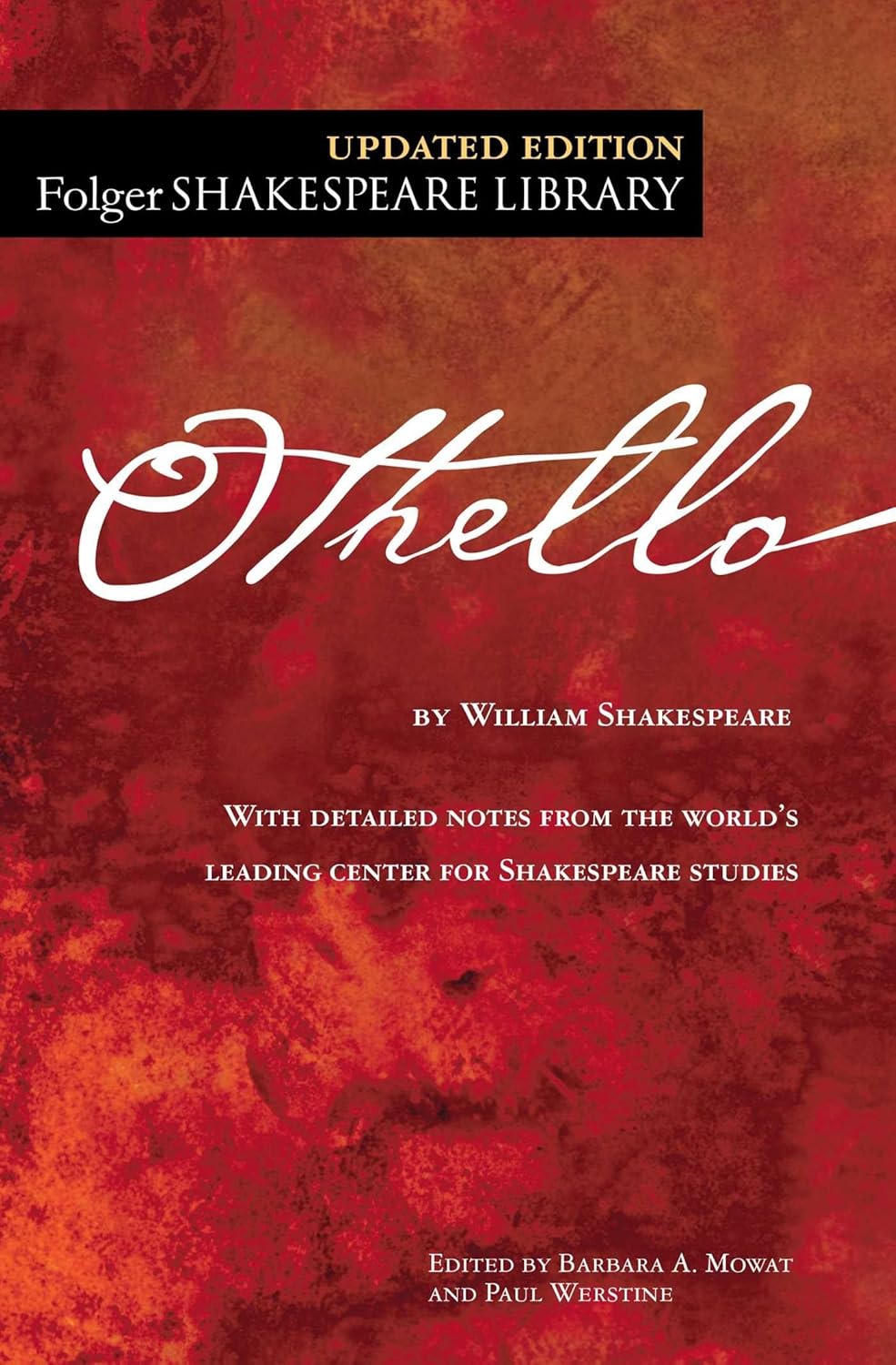
Othello, the Moor of Venice is a tragedy by William Shakespeare, believed to have been written around 1603 and first performed at the court of King James I in 1604. It is set in Venice and on the island of Cyprus and follows Othello — a Black Moorish general in the service of the Venetian state — whose marriage to Desdemona, the daughter of a Venetian senator, is destroyed by the manipulation of his ensign Iago. Iago, passed over for promotion in favor of Cassio, undertakes a calculated campaign to convince Othello that Desdemona has been unfaithful with Cassio. The play is one of Shakespeare’s four major tragedies, alongside Hamlet, Macbeth, and King Lear. It is among the more widely assigned Shakespeare plays in American high school curricula, typically taught in 9th–12th grade depending on the district. Like all Shakespeare plays, it is written in verse (primarily iambic pentameter) and prose; reading level formulas do not apply to verse drama in the standard way. This guide covers reading level, age appropriateness, content, structure, themes, and similar texts.
For Parents
A Shakespeare tragedy about a Black general whose marriage is destroyed by a scheming ensign who convinces him his wife is unfaithful. Ages 14–18, grades 9–12. Content: Iago’s dialogue contains extended sexual innuendo; racial slurs directed at Othello appear in the dialogue of Iago and Brabantio; Desdemona is murdered by smothering; Iago kills Emilia and Roderigo; Othello kills himself. Standard high school tragedy alongside Hamlet and Macbeth.
For Teachers
A grades 9–12 Shakespeare standard, most commonly assigned in 10th–12th grade. The Folger Shakespeare Library edition (the most common classroom text) lists ATOS 8.4 and Flesch-Kincaid grade level 9; Lexile is listed as NP (Not Prose) for verse drama. Approximately 19,700 words; 5 acts. The Folger, No Fear Shakespeare, and Oxford School Shakespeare editions are the most commonly used in classrooms. Race and racism in the play are among the primary discussion topics in contemporary curricula.
Othello at a Glance
Find on Amazon →| Author | William Shakespeare (1564–1616) |
| Written | c. 1603; first performed 1604 |
| Grade Level | 9–12 (our assessment; most commonly 10th–12th grade) |
| Recommended Age | 14–18 |
| Lexile | NP (Not Prose — verse drama; formulas do not apply) |
| ATOS Level | 8.4 (Folger edition) |
| Flesch-Kincaid | Grade 9 (Folger edition) |
| Word Count | ~19,700 |
| Structure | 5 acts |
| Genre | Tragedy / verse drama |
| Setting | Venice and Cyprus; early modern period |
| Status | Public domain |
Standard reading level formulas do not apply to Shakespeare’s verse drama in the usual way. For edition-specific data, visit Lexile.com or AR BookFinder and search by ISBN.
What Reading Level Is Othello?
Reading level formulas do not apply to Shakespeare’s verse drama in the standard way. The Lexile system designates plays as “NP” (Not Prose), indicating the formula is not designed for this text type. The Folger Shakespeare Library edition — the most widely used classroom text — lists an ATOS of 8.4 and a Flesch-Kincaid grade level of 9. These scores reflect the language and sentence-level complexity of the text but do not capture the additional demands of reading Early Modern English, understanding verse structure, or following dramatic action across a script rather than a narrative. The 770L that appears in some databases refers to a prose adaptation, not Shakespeare’s original play.
Our assessment: grades 9–12, ages 14–18, most commonly assigned in 10th–12th grade. The play is generally considered more linguistically accessible than Hamlet or King Lear and is often assigned earlier in a high school sequence. For students new to Shakespeare, the play’s relatively focused plot — a single sustained manipulation — can be easier to follow than the multiple plot lines of Hamlet.
Editions — Which Text to Use
Three editions are most commonly used in American high school classrooms:
Folger Shakespeare Library Edition — The standard classroom text for most American high schools. Edited by Barbara Mowat and Paul Werstine; includes facing-page glossary, notes, and critical essays. The most widely available paperback edition.
No Fear Shakespeare (SparkNotes) — Presents the original text on the left page and a modern English paraphrase on the right. Widely used by students as a reading aid. Not a replacement for the original but useful for students who need additional support.
Oxford School Shakespeare — Edited for classroom use with glossary and activities. More commonly used in UK curricula but available in the US.
The play is in the public domain and the original text is freely available at Project Gutenberg and the Folger Digital Texts website.
What Age Is Othello Appropriate For?
Ages 14–18, grades 9–12. Content worth noting:
Iago’s dialogue contains extended and graphic sexual innuendo, including explicit descriptions of Othello and Desdemona’s sexual relationship directed at Brabantio in the opening scene and throughout. Racial slurs directed at Othello appear in the dialogue of Iago and Brabantio — described in contemporary terms as anti-Black slurs. Desdemona is murdered by smothering in Act 5; Emilia is killed by Iago; Roderigo is killed; Othello kills himself. These are standard features of Shakespearean tragedy but parents of younger students in the grade range (grades 9–10) should be aware of the sexual content of Iago’s dialogue in particular.
What Is Othello About?
Othello, a Black Moorish general serving the Venetian state, has secretly married Desdemona, the daughter of the Venetian senator Brabantio. His ensign Iago — passed over when Othello promoted the Florentine soldier Cassio to lieutenant — bears a deep, sustained grudge against Othello. When Brabantio learns of the secret marriage and brings a complaint before the Venetian Duke, Othello defends himself successfully, and he and Desdemona are sent to Cyprus to repel a Turkish invasion.
In Cyprus, Iago begins his campaign against Othello through a series of calculated deceptions. He manipulates Cassio into getting drunk and brawling, causing Othello to strip Cassio of his lieutenancy. He then persuades Desdemona to plead for Cassio’s reinstatement while simultaneously suggesting to Othello that her interest in Cassio is romantic. He engineers the theft of a handkerchief — a gift from Othello to Desdemona — and plants it in Cassio’s possession. He uses his wife Emilia, Desdemona’s attendant, without her knowledge. He recruits the foolish Roderigo to assist him by feeding Roderigo’s hope that he might win Desdemona.
Through this sustained campaign, Iago transforms Othello’s trust in Desdemona into certainty of her infidelity. In Act 5, Othello smothers Desdemona in their bed. Emilia, entering, reveals the truth about the handkerchief and Iago’s deceptions; Iago kills her to silence her. Othello realizes he has killed an innocent woman and kills himself. Iago, captured, refuses to explain himself and is taken to be tortured and tried.
Othello Characters
Shakespeare’s Source
Shakespeare based Othello on a story in Gli Hecatommithi (1565), a collection of tales by the Italian writer Giambattista Cinthio. In Cinthio’s version, the characters are not named (the Moor, the Ensign, Disdemona, the Captain). Shakespeare added the character of Roderigo, expanded Iago’s role and complexity substantially, and changed several plot details. The handkerchief — a minor detail in Cinthio — becomes central in Shakespeare’s version. Cinthio’s tale ends differently: the Moor kills Disdemona with a stocking filled with sand, and the Ensign escapes punishment for much longer than Iago does.
Iago’s Motives — A Note for Teachers
Iago offers several different explanations for his hatred of Othello across the play — the promotion of Cassio, a rumor that Othello has slept with Emilia, general contempt for Othello — without any single explanation fully accounting for the scale and persistence of his campaign. The critic Samuel Taylor Coleridge famously described Iago’s stated motives as “motiveless malignity,” arguing that the stated reasons are rationalizations rather than genuine causes. This interpretive question — what Iago actually wants and why — is one of the most productive discussion and essay topics the play offers, and is a standard AP Literature prompt.
Race in the Play
Othello is one of the earliest Black protagonists in English literature. Shakespeare’s depiction of Othello and the racial dynamics of the play have been a significant subject of scholarly and classroom discussion, particularly in recent decades. Iago and Brabantio use racial slurs and degrading animal imagery when speaking about Othello; Othello himself sometimes echoes this language when describing himself under Iago’s influence. The play raises questions about how Othello’s race shapes his position in Venetian society, his marriage, and the specific form Iago’s manipulation takes. These questions are now a standard part of how the play is taught in American high school and college curricula.
Othello Themes and Lessons
Jealousy — named explicitly in the play as a “green-eyed monster which doth mock the meat it feeds on” — is the play’s central subject as a dramatic force. Iago does not create Othello’s jealousy; he cultivates and directs it. The play tracks how a man of demonstrated military competence and apparent self-possession can be brought to murder through the systematic exploitation of insecurity. The mechanism of that exploitation — what exactly Iago does, in what sequence, and why it works — is the play’s primary subject of dramatic interest.
Emilia is frequently discussed in contemporary teaching contexts as the play’s most morally complex figure outside of Iago. She unknowingly assists Iago’s scheme; she delivers Desdemona’s dying absolution of Othello; and she reveals Iago’s deception at the cost of her own life. Her final speech — in which she refuses to stay silent despite Iago’s direct command — is among the most discussed in the play.
Discussion questions: What are Iago’s stated motives — do any of them fully account for his behavior? How does Iago use Othello’s trust against him — at what point does Othello stop demanding proof? What is Emilia’s role in the plot — how does her final choice change how we read her character? How does race shape Othello’s position in Venice, his marriage, and Iago’s manipulation of him?
Texts Similar to Othello
About William Shakespeare
William Shakespeare was born in April 1564 in Stratford-upon-Avon, England, and died on April 23, 1616. He was a playwright, poet, and actor, and a shareholder in the Globe Theatre in London. He wrote approximately 37 plays — tragedies, comedies, and histories — as well as 154 sonnets and several longer poems. Othello was written approximately 1603, during the period of his major tragedies that also includes Hamlet (c. 1600), King Lear (c. 1605), and Macbeth (c. 1606). Shakespeare’s plays were published in collected form in the First Folio of 1623, seven years after his death. For the other Shakespeare plays already in the ReadingVine catalog, see our guides for Hamlet, Macbeth, Romeo and Juliet, and A Midsummer Night’s Dream.
Othello: Frequently Asked Questions
What reading level is Othello?
Reading level formulas do not apply to verse drama in the standard way; Lexile is listed as NP (Not Prose) for the play. The Folger Shakespeare Library edition lists ATOS 8.4 and Flesch-Kincaid grade level 9. Our assessment: grades 9–12, ages 14–18, most commonly taught in 10th–12th grade. The 770L that appears in some databases refers to a prose adaptation, not the original play.
What is Othello about?
Othello, a Black Moorish general serving Venice, marries Desdemona against her father’s wishes. His ensign Iago — passed over for promotion — conducts a systematic deception campaign to convince Othello that Desdemona has been unfaithful with the lieutenant Cassio. Othello murders Desdemona in Act 5; Emilia reveals Iago’s deception; Iago kills Emilia; Othello kills himself when he understands the truth.
What grade is Othello typically assigned?
Most commonly in 10th, 11th, or 12th grade. It is generally considered more accessible than Hamlet or King Lear and is sometimes assigned earlier in a high school Shakespeare sequence. It is a standard AP Literature text.
Why does Iago hate Othello?
Iago offers several stated reasons: he was passed over for promotion to lieutenant in favor of Cassio; he suspects Othello has slept with his wife Emilia; he has a general contempt for Othello. None of these explanations fully accounts for the scale and persistence of Iago’s campaign. The critic Samuel Taylor Coleridge described this as “motiveless malignity.” The question of Iago’s actual motivation is one of the most discussed questions the play raises.
Who is Emilia in Othello?
Emilia is Iago’s wife and Desdemona’s attendant. She unknowingly assists Iago’s plot by giving him the handkerchief he uses as false evidence of Desdemona’s infidelity. In Act 5, when she understands what has happened, she reveals Iago’s deception despite his direct command to stay silent. Iago kills her. Her role — especially her final choice — is among the most discussed in the play.
What is the significance of the handkerchief in Othello?
Othello gave Desdemona a handkerchief as a gift; it is the first token of their love. Emilia takes it at Iago’s request; Iago plants it in Cassio’s possession. When Othello asks Desdemona for it and she cannot produce it, Iago uses this as apparent confirmation of her guilt. In Shakespeare’s source (Cinthio’s Gli Hecatommithi), the handkerchief is a minor detail; Shakespeare made it the play’s central piece of false evidence.