
 = Partner Site
A Raisin in the Sun Reading Level: A Complete Guide
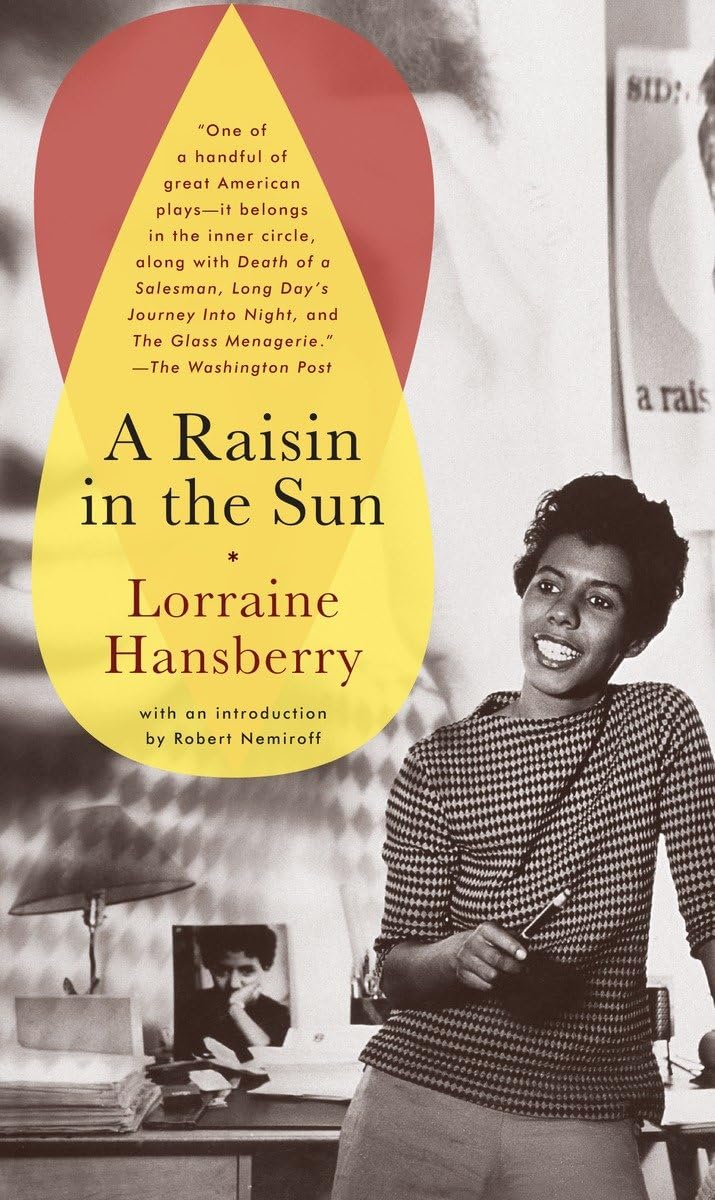
A Raisin in the Sun is a 1959 play by Lorraine Hansberry, widely regarded as one of the most important works in American dramatic literature. Set in a cramped Chicago South Side apartment in the late 1950s, it follows the Younger family as they wrestle over a $10,000 life insurance check—and, more fundamentally, over whose dream deserves to be fulfilled. The first play by a Black woman ever produced on Broadway, it made history the moment it opened and has never left the curriculum or the stage since. This guide covers the play’s reading level, age appropriateness, themes, characters, and teaching resources for high school students, parents, and educators.
For Parents
A Raisin in the Sun is one of the most widely assigned works in American high school English and history classes. The content is appropriate for most readers ages 13 and older—there is no graphic violence or sexual content, though the play deals seriously with racism, housing discrimination, poverty, and one character’s unwanted pregnancy. Its emotional power comes from the truth of its characters, not from shock. It is frequently performed in middle and high school drama departments as well as assigned in English class.
For Teachers
A Raisin in the Sun is a foundational text for units on the Civil Rights era, the African American experience, housing discrimination, and the meaning of the American Dream. It connects directly to Langston Hughes’s poetry (the title comes from “Harlem”) and pairs naturally with historical material on restrictive housing covenants, the Great Migration, and redlining. As a play, it offers unique opportunities for dramatic reading, performance, and analysis of how theatrical form shapes meaning. James Baldwin called it the most truthful depiction of Black life ever seen on the American stage.
A Raisin in the Sun at a Glance
Find on Amazon →| Author | Lorraine Hansberry |
| Published | 1959 (premiered on Broadway March 11, 1959) |
| Grade Level | 8–12 (our assessment) |
| Recommended Age | 13–18 |
| Flesch-Kincaid Grade | 5.1 |
| Word Count | ~38,000 (play script) |
| Pages | ~151 (standard paperback script) |
| Structure | 3 acts, 6 scenes |
| Genre | Drama / realist play |
| Setting | South Side Chicago, late 1950s |
| Awards | New York Drama Critics’ Circle Award for Best Play (1959) |
For official Lexile and AR levels, visit Lexile.com or AR BookFinder. ReadingVine provides independent editorial assessments.
What Reading Level Is A Raisin in the Sun?
ReadingVine places A Raisin in the Sun at a grade 8–12 reading level. Its Flesch-Kincaid score of approximately 5.1 reflects the fact that it is a play script—most of the text is dialogue, rendered in the natural speech rhythms of working-class African American characters in 1950s Chicago, and very accessible at the sentence level. Students who can read at a 5th-grade level can follow the words without difficulty.
The deeper challenge is the play’s thematic and historical complexity. The Younger family’s conflicts are both intimate and representative of a specific moment in American history—the Great Migration, restrictive housing covenants, the early Civil Rights era—and students engage more fully when they understand that context. The play also rewards dramatic reading rather than silent reading: the dialogue is written to be spoken, and many of its most powerful moments depend on what is implied, not said. Most teachers find it works best in grades 8–12, with the richest discussions emerging in grades 9–11 when paired with relevant historical material.
For official Lexile and AR scores, visit Lexile.com or AR BookFinder.
What Age Is A Raisin in the Sun Appropriate For?
ReadingVine recommends A Raisin in the Sun for readers ages 13–18. The play contains no graphic violence, no explicit sexual content, and no strong profanity. Its most sensitive content areas are its frank portrayal of racism and housing discrimination—including a scene in which a white representative offers the Younger family money not to move into a white neighborhood—and the revelation that Ruth is pregnant and has considered an abortion, handled with restraint and emotional honesty. These elements are appropriate for most teenagers with classroom context.
A Raisin in the Sun depicts systemic racism and housing discrimination in period-accurate terms, including a scene in which Karl Lindner offers the Younger family a financial inducement to stay out of his white neighborhood. The play also deals with poverty and its daily humiliations, marital tension, and a subplot in which Ruth reveals she is pregnant and has visited an abortion provider—referenced obliquely but clearly. Walter’s investment in a liquor store is a recurring point of conflict. There is mild period-accurate language. None of this rises to a level that would concern most parents of teenagers, and the play is widely assigned beginning in 8th grade.
What Is A Raisin in the Sun About?
The Younger family lives in a cramped two-bedroom apartment on Chicago’s South Side. Five people share this space: Lena Younger (Mama), the family’s matriarch; her son Walter Lee, who works as a chauffeur; his wife Ruth and their young son Travis, who sleeps on the couch; and Walter’s sister Beneatha, a college student determined to become a doctor. They are waiting for a $10,000 life insurance check following the death of Big Walter, the husband and father who anchored the family. Everyone has a different idea about what that money should do. Mama wants to buy a house—a real house, with a yard, where Travis can grow up with dignity. Walter wants to invest it in a liquor store with two friends, convinced it is the only path to the financial independence and self-respect he has been denied. Beneatha wants it for medical school. Ruth wants whatever will hold the family together.
Mama makes a down payment on a house in Clybourne Park—an all-white neighborhood. Walter, who was not consulted, is furious and devastated. But Mama sees his pain and gives him control of the remaining money, asking him to set aside a portion for Beneatha’s education. Walter’s business partner Willy Harris absconds with all of it, including Beneatha’s share. In desperation and shame, Walter reaches out to Karl Lindner—the white representative of the Clybourne Park Improvement Association who had visited earlier with a polite offer to buy them out before they moved in. Walter tells his family he plans to accept Lindner’s money and not move to the house. In the play’s climactic scene, with Lindner sitting in the living room, Walter faces his family—and his son Travis—and changes his mind. The Youngers will move. The play ends with the family preparing to go, leaving behind the apartment that has contained them for so long.
Hansberry drew directly on her own family’s experience. When she was eight years old, her father Carl Hansberry moved the family into an all-white Chicago neighborhood, triggering violent resistance from neighbors and a legal battle that went to the U.S. Supreme Court (Hansberry v. Lee, 1940). She wrote the play between her 26th and 27th birthdays. When it opened on Broadway in March 1959—the first play by a Black woman ever staged there—it ran for 530 performances and became an immediate landmark of American theater.
A Raisin in the Sun Characters
Is A Raisin in the Sun Banned?
A Raisin in the Sun has been challenged occasionally in school districts, appearing on the ALA’s list of frequently challenged classics. Objections have centered on the play’s frank treatment of abortion (Ruth’s visit to an abortion provider), its portrayal of racism, and its challenge to religious faith through Beneatha’s atheism and questions about God. These challenges have been relatively infrequent given how widely the play is assigned—it is taught in virtually every state and has been a standard text for over six decades. It remains universally available in school and public libraries and is one of the most produced plays in American high school drama programs. More historically notable than any specific ban is the resistance the play’s original Broadway production faced from some critics who viewed its politics as too radical—a concern that subsequent decades have thoroughly refuted.
A Raisin in the Sun Themes and Lessons
The play’s central question is the one Langston Hughes poses in the poem from which it takes its title: what happens to a dream deferred? The Youngers have been deferring their dreams for generations—the dreams of Big Walter, of Mama, of Walter Lee, of Beneatha—and the $10,000 check represents the first real possibility of acting on them. But the play is equally interested in which dreams get taken seriously and whose aspirations are granted legitimacy. Walter’s dream of owning a business is treated by his family as delusion; Beneatha’s dream of becoming a doctor is treated as an indulgence. Mama’s dream of a house is the one that gets realized—but only after a confrontation with Karl Lindner that forces the family to declare, in the plainest possible terms, that they will not be bought out of their dignity.
Hansberry was also writing a play about the specific mechanisms of racism in the mid-twentieth century. The Clybourne Park Improvement Association is not a violent mob—it is a polite, institutional expression of the same racism, one that operates through legal and economic means rather than bricks through windows. That Hansberry’s own family had a brick thrown through their window, and that her father’s legal challenge reached the Supreme Court, gives the play’s restraint its particular power. Discussion questions: Whose dream do you sympathize with most, and why? What does Karl Lindner represent about how racism operates? What does the ending actually promise the Youngers, and what does it leave uncertain?
How Long Is A Raisin in the Sun?
A Raisin in the Sun is a full-length play in three acts and six scenes. The standard Vintage Books paperback edition runs approximately 151 pages. As a play script, its word count of approximately 38,000 words is not directly comparable to prose novels—much of that text is dialogue and stage directions rather than continuous narration. The play runs approximately two and a half hours in a full production. As a classroom reading assignment, most teachers complete it over one to two weeks, typically reading acts aloud in class. It is also among the most commonly performed high school drama productions in the United States, and seeing a filmed production—the 1961 film starring Sidney Poitier and Ruby Dee, or the 2008 television version starring Sean Combs and Phylicia Rashad—alongside or instead of silent reading is a widely used pedagogical approach.
Books Similar to A Raisin in the Sun
About Lorraine Hansberry
Lorraine Vivian Hansberry (1930–1965) was born on Chicago’s South Side into a prominent African American family. Her father, Carl Hansberry, was a successful real estate businessman and NAACP member who, in 1937, deliberately moved his family into an all-white Chicago neighborhood to challenge racial housing covenants. Violent resistance from neighbors followed—including a brick thrown through the window that narrowly missed eight-year-old Lorraine—and the family’s subsequent legal battle reached the U.S. Supreme Court (Hansberry v. Lee, 1940). Hansberry studied at the University of Wisconsin, moved to New York in 1950, and worked as a journalist for Paul Robeson’s newspaper Freedom while writing plays. She wrote A Raisin in the Sun between her 26th and 27th birthdays. When it opened at the Ethel Barrymore Theatre on March 11, 1959, it made her the first Black woman to have a play produced on Broadway, and at age 29 the youngest playwright and first Black dramatist to win the New York Drama Critics’ Circle Award for Best Play. The play ran 530 performances and was translated into 35 languages within two years. Hansberry was diagnosed with pancreatic cancer in 1963. She died on January 12, 1965, at age 34, while her second play, The Sign in Sidney Brustein’s Window, was still running on Broadway. Martin Luther King Jr. sent a written tribute to her funeral. Her husband Robert Nemiroff later compiled her writings into To Be Young, Gifted and Black, the phrase coming from a 1964 speech she gave to young writers that became a touchstone of the civil rights generation.
A Raisin in the Sun: Frequently Asked Questions
What is the reading level of A Raisin in the Sun?
ReadingVine places A Raisin in the Sun at a grade 8–12 reading level, with a Flesch-Kincaid score of approximately 5.1. As a play script, most of the text is dialogue written in natural spoken rhythms, making it highly accessible at the sentence level. The challenge is in the historical and thematic complexity of what the play is about. It is most commonly and productively assigned in grades 8–11.
What awards did A Raisin in the Sun win?
A Raisin in the Sun won the New York Drama Critics’ Circle Award for Best Play in 1959, making Hansberry the youngest playwright and the first Black dramatist ever to receive it. The play was nominated for four Tony Awards in 1960, including Best Play, though it did not win (it lost to The Miracle Worker). Significant revival productions have since won multiple Tony Awards: the 2004 revival won two, and the 2014 revival won three, including Best Revival of a Play. The 1974 musical adaptation Raisin won the Tony for Best Musical.
Where does the title A Raisin in the Sun come from?
The title comes from Langston Hughes’s poem “Harlem” (also known as “A Dream Deferred”), which opens with the question: “What happens to a dream deferred? / Does it dry up / like a raisin in the sun?” Hughes’s poem asks what becomes of hopes and aspirations that are systematically delayed and denied, and Hansberry’s play is her answer: it explores what happens to a family—and to a people—when their most basic dreams have been deferred for generations, and what it looks like when they finally insist on acting on them.
What historical events inspired A Raisin in the Sun?
The play draws directly on Hansberry’s own family history. In 1937, her father Carl Hansberry moved the family into an all-white Chicago neighborhood, triggering violent harassment from white neighbors and a legal challenge from property owners enforcing racial housing covenants. The family’s case, Hansberry v. Lee, was heard by the U.S. Supreme Court in 1940, which ruled in the Hansberrys’ favor on procedural grounds. The broader historical context—restrictive housing covenants, redlining, and the systematic exclusion of Black families from white neighborhoods—was a defining feature of mid-twentieth-century American urban life that Hansberry placed at the center of her play.
What does Karl Lindner represent in A Raisin in the Sun?
Lindner is the representative of the Clybourne Park Improvement Association—a white neighborhood group that offers the Youngers money to stay out of their community. He is soft-spoken, reasonable, and entirely sincere, which makes him more disturbing than an overtly hostile villain would be. Lindner represents the polite, institutional face of racism: the version that operates through property values, neighborhood associations, and financial incentives rather than violence. His scene in the Younger living room dramatizes exactly what the family has been fighting against all their lives—not hatred, exactly, but the calm assumption that Black families belong somewhere else.
How does A Raisin in the Sun end?
When Walter Lee learns that Willy Harris has stolen all the insurance money—including Beneatha’s medical school fund—he calls Lindner and agrees to accept the buyout. With the family watching, and with Travis standing in the room, Walter changes his mind. He tells Lindner that his father was the first Younger to own land, that they come from people with pride, and that they will be moving into the house. The family leaves the apartment together. The ending is not triumphant in an uncomplicated way—they are moving into a neighborhood where they are not wanted, with less money than they started with, and the play does not pretend otherwise. But they are going on their own terms, and that matters.
Is A Raisin in the Sun a true story?
A Raisin in the Sun is fiction, but it is deeply autobiographical in its origins. The Younger family’s situation—and specifically the plot involving the move to an all-white neighborhood and the white association’s attempt to buy them out—mirrors the experience of Hansberry’s own family when they moved into a white Chicago neighborhood in 1937 and faced legal challenges and violent harassment. The play is Hansberry’s artistic transformation of that personal and family history into something universal.
How long is A Raisin in the Sun?
A Raisin in the Sun is a full-length play in three acts and six scenes, running approximately 151 pages in the standard paperback script edition and about 38,000 words. A full stage production runs approximately two and a half hours. As a classroom reading assignment, most teachers complete it in one to two weeks. The 1961 film adaptation starring Sidney Poitier is a widely used companion for classroom study.