
 = Partner Site
Pedro’s Journal Reading Level: A Complete Guide
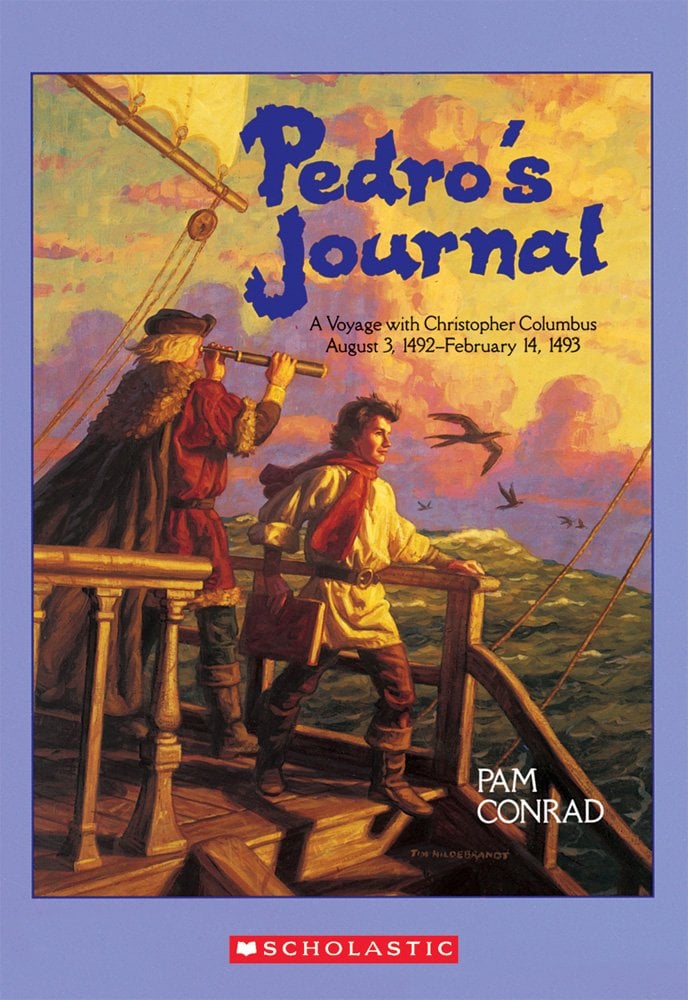
Pedro’s Journal: A Voyage with Christopher Columbus, August 3, 1492–February 14, 1493, written by Pam Conrad and illustrated by Peter Koeppen, is an 81-page historical fiction novel told as the journal of Pedro de Salcedo — a fictional ship’s boy aboard the Santa María who can read and write, a rare skill in 1492, and who is therefore assigned to keep a record of the voyage. From August 3, 1492, when the fleet departs from Palos, Spain, to February 14, 1493, when the Niña at last sails for home, Pedro records what he sees: the thirty-three days crossing the Atlantic with a crew growing mutinous from fear; the first sight of land and the Indigenous Taíno people who greet the ships; Columbus’s increasingly apparent greed and dishonesty; the wreck of the Santa María on Christmas Eve; and the beginning of what the people of the islands cannot yet know is coming. First published in 1991 by Caroline House and later by Scholastic, the book is among the most widely assigned Columbus-era historical fiction novels in American classrooms. It is also, by design, a book that does not teach the Columbus of American mythology but the Columbus of historical evidence — a man whose journals, which Pam Conrad drew on directly, show a person more interested in gold and in empire than in anything that might be called discovery. This complete guide covers Pedro’s Journal‘s reading level, recommended age, content, themes, the Columbus representation question, and similar books — designed for parents, teachers, and students.
For Parents
An 81-page journal-format historical novel told by a fictional ship’s boy on Columbus’s first voyage — one of the most widely assigned Columbus-era classroom texts. Ages 9–13, grades 4–7. Content note: the book does not present Columbus as a hero; it draws directly on his historical journals and depicts his treatment of Indigenous people with period-accurate directness. References to cannibalism and violence appear. A book that may prompt important conversations.
For Teachers
A grades 4–7 classroom staple for Columbus and Age of Exploration units — short enough to read aloud in one to two weeks, historically grounded in Columbus’s own journals, and honest about what the historical record shows regarding his behavior toward Indigenous people. The journal format is excellent for modeling how primary source documents work. Conrad’s author’s note is itself a productive teaching text about the responsibilities of historical fiction.
Pedro’s Journal at a Glance
Find on Amazon →| Author | Pam Conrad (1947–1996) |
| Illustrator | Peter Koeppen |
| Published | 1991 (Caroline House; Scholastic paperback 1992) |
| Grade Level | 4–7 (our assessment) |
| Recommended Age | 9–13 |
| Lexile | 1030L |
| ATOS Level | 5.5 |
| Guided Reading Level | Q |
| Pages | 81 |
| Format | Journal / diary novel |
| Genre | Historical fiction |
| Setting | Atlantic Ocean and the Caribbean; August 1492–February 1493 |
For official Lexile and AR levels, visit Lexile.com or AR BookFinder. ReadingVine provides independent editorial assessments.
What Reading Level Is Pedro’s Journal?
Pedro’s Journal has a Lexile of 1030L and an ATOS level of 5.5, with a Guided Reading Level of Q. The Lexile is notably high — higher, for instance, than My Father’s Dragon (970L, ATOS 5.6) and comparable to Shipwreck at the Bottom of the World (1090L, ATOS 7.3) — and reflects Conrad’s formal, slightly archaic prose style that is appropriate to the journal-of-a-16th-century-boy conceit but that places genuine demands on the reader. The ATOS 5.5 is a more useful practical guide: fifth-grade reading level, comfortable for strong fourth-graders and appropriate through seventh grade.
At 81 pages, the book reads quickly despite the high Lexile: the journal entry format breaks the text into short, manageable dated sections, and the narrative momentum of the voyage keeps the pace moving. Most assigned readers complete it in two to four days of independent reading; classroom read-alouds typically run one to two weeks. For official Lexile and AR scores, visit Lexile.com or AR BookFinder. ReadingVine’s assessments are independent editorial judgments.
What Age Is Pedro’s Journal Appropriate For?
We recommend Pedro’s Journal for readers ages 9–13, grades 4–7. The content considerations are primarily historical:
The book includes references to cannibalism (a report Pedro hears from the Taíno people about neighboring islands) and a brief mention of a basket containing a human head. Neither is depicted graphically; both are recorded by Pedro as reported information. The book’s depiction of Columbus as greedy, dishonest, and increasingly willing to harm the Indigenous people he has encountered is historically grounded but may surprise families who expect a traditional Columbus narrative. The book does not present Columbus as a hero; parents who want to preview this before sharing it with younger readers should be aware of both the content and the perspective.
What Is Pedro’s Journal About?
It is August 3, 1492. Pedro de Salcedo is a ship’s boy assigned to the Santa María — Columbus’s flagship — because he can read and write, which is an unusual skill for a boy of his age and station. He is given a journal and told to keep a record of the voyage. What follows is his account across six months: the departure from Palos, Spain; the long crossing of the Atlantic; the mounting fear and anger of a crew that has been at sea for thirty-three days with no sight of land and no certainty of survival; and then, on October 12, the sight of land — and the first encounter with the Taíno people of the Caribbean.
Pedro records what he sees with the particular honesty of someone who has no reason to manage the historical record. He sees Columbus’s growing obsession with gold. He witnesses the deception Columbus uses with the Taíno — the manipulation, the taking of people as captives, the lies he tells about what the expedition intends. He watches Columbus keep a false log to mislead the crew about how far they have traveled. When the Santa María wrecks on Christmas Eve on the shore of Hispaniola, Pedro transfers to the Niña for the return voyage. By the time he writes his last entry on February 14, 1493, he has seen enough to know that what has been called a discovery was something else for the people who were already there.
Pedro himself is fictional — there is no historical record of a ship’s boy named Pedro de Salcedo who kept a journal of the first voyage. Conrad invented him as a witness: a person with no stake in the official version of events, who can record what he sees without the distortions of official record-keeping. Columbus’s own journal of the first voyage — which has survived only as a summary made by Bartolomé de las Casas — was one of Conrad’s primary sources.
The Journal Format — How It Works and Why
The journal format — dated entries in a first-person voice, illustrated by Koeppen with sketches designed to look like Pedro’s own drawings — is both a narrative choice and a historical education device. The format introduces students to the practice of keeping a ship’s log, which was standard on exploratory voyages; it models how primary source documents are organized; and it allows Conrad to move through six months of events selectively, slowing down at moments of high drama (the first sight of land, the wreck of the Santa María) and covering weeks in a few sentences when little that is notable happens.
The illustrations are deliberately rough and unpolished — watercolors meant to look like the work of a ship’s boy, not a professional artist — which reinforces the journal’s authenticity as a document and invites students to notice how the visual register contributes to the fiction’s credibility. This is excellent material for classroom discussion of how historical fiction creates verisimilitude: the choices that make a fictional document feel real.
Conrad’s author’s note at the end of the book is a productive teaching text in itself. She writes: “I must also make the admission that I am a storyteller and that I had no intention of teaching you anything.” This is a carefully chosen statement that invites students to think about the difference between a storyteller’s intentions and a book’s effects — the book teaches a great deal, regardless of what Conrad intended. What does it mean for an author to claim no educational intention while clearly drawing on historical research and making choices that shape how readers understand historical events?
Columbus in This Book — And the Larger Conversation
Pedro’s Journal does not present the Columbus of American mythology — the heroic discoverer, the visionary navigator, the man who proved the earth was round. It presents a Columbus drawn from his own journal: a man whose primary interest was gold, whose treatment of the Taíno people was exploitative from the first encounter, who kept a false log to deceive his crew, and who consistently prioritized his own interests and ambitions over the wellbeing of the people he encountered.
This portrayal is historically defensible. Columbus’s own account of the first voyage — as summarized by Las Casas — describes the Taíno people in terms of their potential utility as servants and as converts; notes his intention to “take some of them by force” to bring back to Spain as evidence of the voyage’s success; and documents his search for gold with an intensity that left him, at various points, willing to deceive the people offering him hospitality. The book does not invent Columbus’s flaws; it draws on his own words.
For classrooms using this book, the most important discussion question is not “was Conrad right to portray Columbus this way?” but “what does the historical record actually show, and how do we evaluate it?” This leads naturally into discussions of primary sources, of how historical narratives get constructed and revised, and of whose perspective is included in official accounts. Columbus’s own journal is a primary source; Las Casas’s summary of it is a secondary source; Conrad’s fictional account is historical fiction drawing on both. Teaching students to trace the chain of sources is one of the most valuable things a classroom can do with this book.
Parents who are concerned about the book’s critical portrayal of Columbus should know that the portrayal is grounded in evidence rather than invented, and that the classroom conversation the book generates — about historical evidence, about whose perspective counts, about the difference between discovery and conquest — is among the most important available in American history education at this level.
Pedro’s Journal Themes and Lessons
The book’s central contribution to American history education is its insistence on the distinction between the myth of Columbus and the history of Columbus — and its grounding of that insistence in Columbus’s own documented behavior rather than in modern political argument. Pedro is not a modern sensibility transplanted into 1492; he is a 15th-century boy who notices what he sees with his own eyes and records it honestly. His growing discomfort with what Columbus is doing is not anachronistic moralizing; it is the reaction of someone watching a man behave badly toward people who have offered him hospitality.
The Taíno people appear throughout the book as real people with their own generosity, their own culture, and their own growing wariness of the strangers who will not stop asking about gold. They are not background figures; they are the people who teach Pedro to fish, who bring food to the ships, and whose situation at the end of the book — with the Spanish fort established on Hispaniola and Columbus’s intentions becoming clearer — is the most honest account of what “discovery” meant for them.
Discussion questions for classrooms and families: Columbus kept a false log during the crossing — why? What did Pedro observe about Columbus’s behavior toward the Taíno that troubled him? What is the difference between what Columbus told the Spanish monarchs about the voyage and what Pedro’s journal shows? What would the Taíno people’s account of this same period look like? Why did Conrad invent a fictional narrator rather than telling the story from Columbus’s perspective?
Using Pedro’s Journal with Primary Sources
The most productive classroom use of Pedro’s Journal is alongside Columbus’s own journal — the Las Casas summary, which is freely available online and in multiple translations. Students who read passages of the actual journal alongside Conrad’s fiction can observe directly what she drew on, what she invented, and what interpretive choices she made. This exercise is the clearest available demonstration of the difference between primary source, secondary source, and historical fiction.
Passages worth comparing include Columbus’s first description of the Taíno people (his interest in whether they have gold, his assessment of them as potential servants, and his genuine admiration of their beauty and generosity — all present in the actual journal), his account of the false log (which Columbus himself explains in his own journal as a management strategy), and his account of the Santa María wreck. Conrad follows these events closely; the comparison shows students how historical fiction works at the level of the sentence.
How Long Is Pedro’s Journal?
Pedro’s Journal is 81 pages — the shortest novel in this catalog and one of the fastest reads despite its high Lexile. The journal entry format, dated entries, and illustration breaks mean most readers ages 9–13 complete it in one to two sittings. It is most commonly used in grades 4–7 as a class read-aloud or independent novel unit, and at 81 pages it is manageable as a one-week classroom text.
Books Similar to Pedro’s Journal
About Pam Conrad
Pam Conrad was born on June 18, 1947, in New York City and grew up on Long Island. She worked as a bookstore employee, a teacher’s aide, and a journalist before turning to writing for children. Her first novel, Prairie Songs (1985), won the International Reading Association Award and established her as a significant voice in American children’s historical fiction. She went on to write more than twenty books for children, including Stonewords (1990), a time-travel story; Call Me Ahnighito (1995), told from the perspective of a meteorite; and Pedro’s Journal (1991), which remains her most widely assigned classroom text. She died on January 15, 1996, at age forty-eight, of breast cancer — a loss that cut short a career that was still producing significant work.
Conrad’s author’s note in Pedro’s Journal reveals her working method: she consulted two historians and drew directly on Columbus’s journal, but she describes herself as “a storyteller” rather than a historian and acknowledges that Pedro is fictional. This honesty about the book’s imaginative and invented elements alongside its historical grounding is one of the most useful things a historical fiction author can offer a classroom, and Conrad offers it in full.
Pedro’s Journal: Frequently Asked Questions
What reading level is Pedro’s Journal?
Lexile 1030L, ATOS 5.5, Guided Reading Level Q. Our assessment: grades 4–7, ages 9–13. Despite the high Lexile, the 81-page length and journal-entry format make it read quickly — most assigned readers complete it in two to four days. For official Lexile and AR scores, visit Lexile.com or AR BookFinder.
What is Pedro’s Journal about?
A fictional ship’s boy named Pedro de Salcedo keeps a journal of Columbus’s first voyage, August 3, 1492 to February 14, 1493. He records the crossing, the first sight of land, the encounter with the Taíno people, Columbus’s growing obsession with gold and his increasingly troubling treatment of the Indigenous people he meets, the wreck of the Santa María, and the return voyage.
Is Pedro de Salcedo a real person?
No — Pedro is a fictional character invented by Pam Conrad as a witness to events she drew from historical sources, primarily Columbus’s own journal (as summarized by Bartolomé de las Casas). There is no historical record of a ship’s boy named Pedro de Salcedo who kept a journal of the first voyage. Conrad is explicit about this in her author’s note.
Why does the book portray Columbus negatively?
The portrayal is drawn from Columbus’s own documented behavior — his false log, his obsession with gold, his treatment of the Taíno people — as recorded in his own journal. Conrad did not invent Columbus’s flaws; she drew on his own account. The book’s critical portrait of Columbus reflects what the historical record shows when read carefully, rather than what American mythology has traditionally emphasized. Whether this constitutes a “negative” portrayal or simply an honest one is itself a productive classroom question.
What primary sources did Pam Conrad use?
Conrad’s primary source was Columbus’s journal of the first voyage — which survives only as a summary made by Bartolomé de las Casas — along with consultation with two historians she thanks in her author’s note. The journal’s accounts of the Taíno people, the false log, the wreck of the Santa María, and Columbus’s search for gold are all drawn from this historical document.
What is Conrad’s author’s note about?
Conrad writes that she consulted two historians and drew on historical sources, but that “I must also make the admission that I am a storyteller and that I had no intention of teaching you anything.” She is explicit that Pedro is fictional. The note is itself an excellent teaching text about the relationship between historical fiction, primary sources, and the author’s choices — and about the difference between a storyteller’s intentions and a book’s effects.