
 = Partner Site
Percy Jackson and the Olympians: The Lightning Thief Reading Level: A Complete Guide
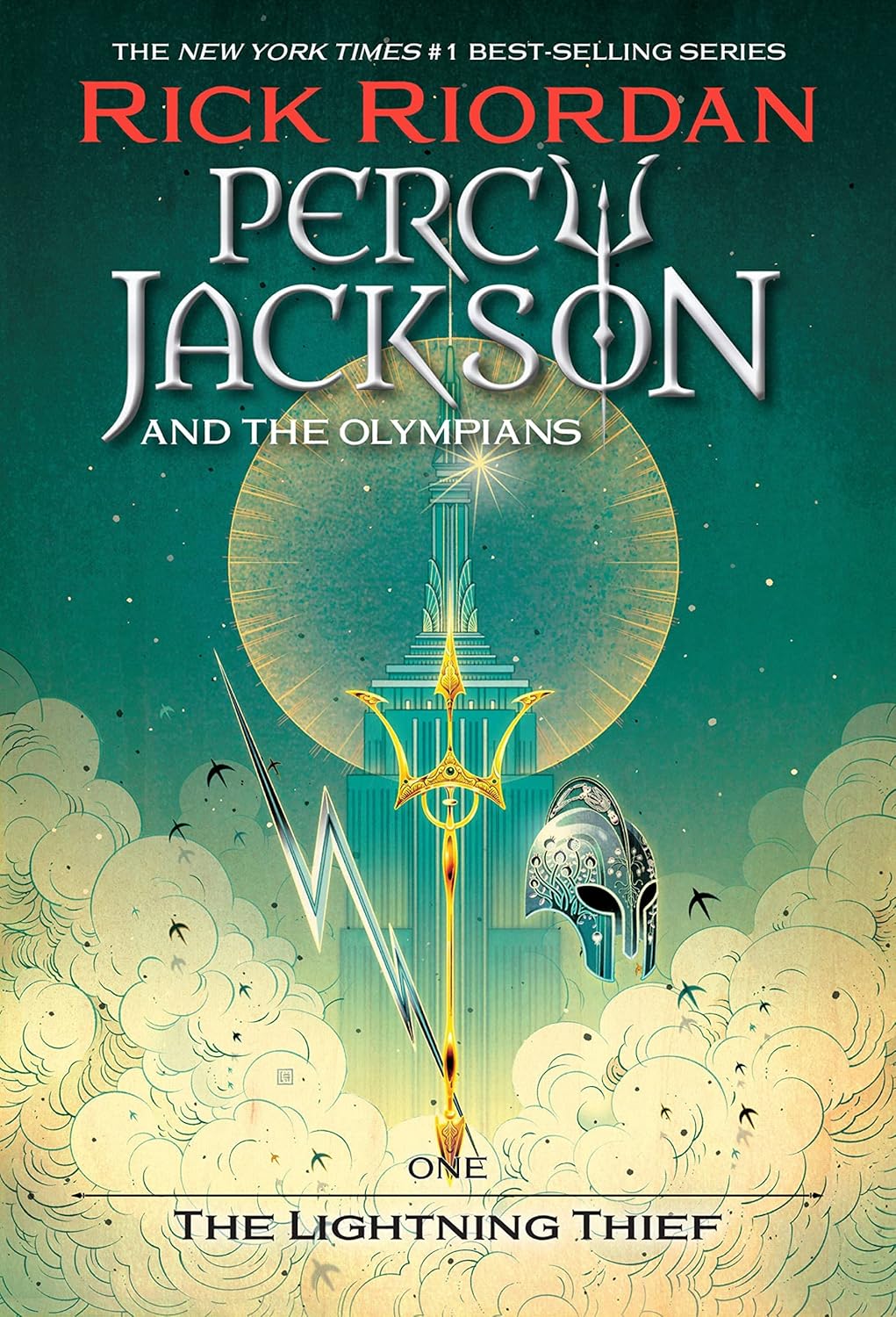
Percy Jackson and the Olympians: The Lightning Thief by Rick Riordan tells the action-packed story of a twelve-year-old boy who discovers he’s the son of Poseidon, the Greek god of the sea, and must prevent a war among the gods by recovering Zeus’s stolen lightning bolt. This guide provides parents and teachers with reading level information, age recommendations, content insights, and discussion questions for the first book in the beloved Percy Jackson series about mythology, friendship, and finding your place in the world.
For Parents
Find the right reading level for your child, understand the book’s themes around identity and friendship, and get conversation starters to help your child explore questions about loyalty, courage, and accepting who you are—even when you’re different.
For Teachers
Access grade-level guidance, reading metrics, character analysis support, and thematic discussion questions perfect for classroom use. This modern classic offers rich opportunities for exploring Greek mythology, ADHD and dyslexia representation, and themes of heroism and loyalty.
Percy Jackson and the Olympians: The Lightning Thief at a Glance
Find on Amazon →| Author | Rick Riordan |
| Published | 2005 |
| Grade Level | 4–7 (our assessment) |
| Recommended Age | 9–13 |
| Flesch-Kincaid Grade | 4.7 |
| Word Count | ~87,000 |
| Pages | 375 (hardcover) |
| Chapters | 22 |
| Genre | Fantasy / adventure / mythology |
| Setting | Modern-day United States, Camp Half-Blood, quest across America |
| Awards | Mark Twain Award, multiple state book awards |
For official Lexile and AR levels, visit Lexile.com or AR BookFinder. ReadingVine provides independent editorial assessments.
What Reading Level Is The Lightning Thief?
The Lightning Thief is appropriate for grades 4–7, with a Flesch-Kincaid grade level of 4.7. The vocabulary is accessible and contemporary, with Greek mythology terms explained through context and Percy’s humorous first-person narration. The sentence structure is straightforward, making the mechanics comfortable for fourth graders, while the plot complexity and thematic depth engage fifth through seventh graders.
Riordan writes in a witty, fast-paced style with Percy as the narrator. Percy’s voice is authentic and relatable—he’s a kid who struggles in school, makes jokes to cope with stress, and doesn’t take himself too seriously even while fighting monsters. The humor and action keep the pages turning, while the first-person perspective helps readers connect immediately with Percy’s confusion, fear, and excitement as he discovers his divine heritage.
While strong fourth graders can handle the reading mechanics, the book resonates most deeply with readers ages 9–13 who can appreciate the clever integration of Greek mythology into modern settings, understand Percy’s struggles with ADHD and dyslexia (which are reframed as demigod traits), and grasp the parallel between Percy’s quest and his emotional journey to accept himself and find where he belongs. It’s an excellent choice for reluctant readers because of its humor, action, and positive representation of learning differences.
What Age Is The Lightning Thief Appropriate For?
The Lightning Thief is most appropriate for readers ages 9–13. The story includes monster battles, some violence, and scary moments, but these are handled with humor and adventure-story style rather than graphic detail. The book balances action and danger with friendship, humor, and ultimately hopeful themes about finding your strengths.
Monster battles and violence: Percy fights monsters including Medusa, the Minotaur, Furies, and others. He decapitates Medusa (though she’s already a monster). The violence is action-adventure style, not graphic or gory.
Parental abandonment: Percy’s father Poseidon left when Percy was a baby and hasn’t contacted him. Percy struggles with feeling abandoned and wondering if his father cares about him.
Death: Percy’s mother appears to be killed by the Minotaur (though she’s actually captured). Percy experiences grief and guilt over this. His stepfather is also abusive.
Bullying: Percy is bullied at school by both peers and a teacher (who turns out to be a monster). He’s also mocked for his ADHD and dyslexia.
Peril and danger: The quest involves constant danger—monsters attacking, nearly drowning, being trapped in the Underworld, etc. Characters face life-threatening situations throughout.
Abusive stepfather: Gabe Ugliano is emotionally abusive to Percy and his mother, though this is not graphically depicted. The situation is resolved at the end.
What’s NOT in the book: No sexual content, minimal profanity (Percy says “gods” as an exclamation, monsters make crude jokes), no graphic violence. The scary moments are balanced with humor and friendship. The ending is triumphant, with Percy saving the day, rescuing his mother, and finding belonging at Camp Half-Blood.
What Is The Lightning Thief About?
Twelve-year-old Percy Jackson has been kicked out of six schools in six years. He has ADHD and dyslexia, which make school impossibly hard. His mom Sally loves him, but his stepfather Gabe Ugliano is a lazy, abusive jerk who treats both Percy and Sally terribly. Percy’s only friend is Grover, a scrawny kid who walks with crutches, and his favorite teacher is Mr. Brunner, who teaches Latin and seems to actually understand Percy.
On a field trip to a museum, Percy is attacked by his pre-algebra teacher Mrs. Dodds, who transforms into a Fury—a monster from Greek mythology. Mr. Brunner throws Percy a pen that becomes a sword, and Percy destroys Mrs. Dodds. But when he tries to tell people what happened, everyone acts like Mrs. Dodds never existed. Percy thinks he’s going crazy.
Strange things escalate. Grover starts acting weird and protective. Percy overhears Grover and Mr. Brunner discussing him urgently. His mom rushes him out of the city to a beach cabin, and Grover shows up to warn them: Percy is in danger and must get to “camp” immediately. A massive storm hits, and they’re attacked by the Minotaur. Percy’s mom disappears in a flash of golden light (apparently killed), and Percy, in grief and rage, kills the Minotaur with its own horn before collapsing.
Percy wakes up at Camp Half-Blood, a secret training ground for demigods—children of Greek gods and mortals. The Greek gods are real and still around, and they’ve been having affairs with mortals, creating half-blood children. Percy learns that his ADHD is actually demigod battle reflexes, and his dyslexia is because his brain is hardwired for ancient Greek, not English. Grover is a satyr (half-goat) assigned to protect him, and Mr. Brunner is actually Chiron the centaur.
At camp, Percy meets other demigods including Annabeth Chase, daughter of Athena, and Luke Castellan, son of Hermes. Percy is claimed by Poseidon, one of the “Big Three” gods (Zeus, Poseidon, and Hades) who supposedly swore an oath after World War II not to have more children because their offspring are too powerful. Percy’s existence has broken that oath.
Meanwhile, Zeus’s master lightning bolt—the most powerful weapon in the world—has been stolen, and Zeus blames Poseidon (suspecting Percy took it). Zeus has given Poseidon until the summer solstice to return the bolt, or there will be war among the gods. A war of the gods would be catastrophic, potentially destroying Western civilization.
Percy receives a prophecy from the Oracle: “You shall go west and face the god who has turned. You shall find what was stolen and see it safely returned. You shall be betrayed by one who calls you a friend. And you shall fail to save what matters most in the end.” Despite the ominous prophecy, Percy accepts the quest to find and return Zeus’s lightning bolt, prevent the war, and hopefully rescue his mother (whom he believes may still be alive).
Percy, Annabeth, and Grover set out on a cross-country quest. They face numerous monsters and challenges: they’re attacked by Furies on a Greyhound bus, tricked by Medusa (whom Percy defeats by decapitating her), trapped in the Lotus Casino (where time moves differently and they lose several days), and hunted by various creatures sent by the gods and monsters.
They eventually make it to Los Angeles and enter the Underworld, believing Hades has the lightning bolt. In the Underworld, they discover that Hades doesn’t have Zeus’s bolt—instead, his own Helm of Darkness has been stolen. Hades has been holding Percy’s mother hostage, planning to trade her for his helm. Hades believes Percy stole both items and accuses him of being a thief and a pawn.
Percy realizes someone is playing all three gods against each other. When he checks his backpack, he finds Zeus’s lightning bolt hidden there—someone planted it on him to frame him as the thief. Percy and his friends barely escape the Underworld (leaving Sally behind for now), and Percy confronts Ares, the god of war, on a beach in Los Angeles.
Ares confesses that he was working with someone to start a war. Percy challenges Ares to single combat and, despite being a twelve-year-old fighting a god, manages to wound Ares with his sword Riptide. Ares reveals that Luke Castellan is the real traitor, working for Kronos, the Titan lord. Ares flees, and Percy recovers both the lightning bolt and Hades’s helm.
Percy flies to Olympus (located on the 600th floor of the Empire State Building) and returns the lightning bolt to Zeus, preventing the war. He then returns to the Underworld, gives Hades back his helm, and negotiates for his mother’s release. Hades agrees, and Sally is freed. When Percy returns to Camp Half-Blood, Luke reveals himself as the traitor and tries to recruit Percy to Kronos’s side. Luke escapes, and Percy realizes that while he’s won this battle, a larger war is coming.
The book ends with Percy returning to the mortal world for the school year but knowing he’ll return to Camp Half-Blood next summer. His mother is free (and uses Medusa’s head to turn Gabe into stone, solving that problem permanently), Percy has found friends and a place where he belongs, and he’s accepted his identity as a demigod. The prophecy’s line about failing to save what matters most proved true—Percy had to leave his mother in the Underworld temporarily—but ultimately everyone is safe, and Percy has proven himself a hero.
The Lightning Thief Characters
The Lightning Thief Themes and Lessons
The Lightning Thief explores identity and self-acceptance through Percy’s journey. He’s spent his life feeling like a failure because of his ADHD and dyslexia, believing something is wrong with him. Discovering he’s a demigod reframes these “disabilities” as strengths—his ADHD is battle reflexes, his dyslexia is his brain reading ancient Greek. The book teaches that what makes you different can be your greatest strength, and that belonging comes from finding people who understand and accept you for who you are.
The book also emphasizes loyalty and chosen family. Percy’s quest group—Percy, Annabeth, and Grover—come from different backgrounds and parent gods, but their friendship becomes family. They protect each other, make sacrifices for each other, and stick together even when things get dangerous. The book shows that friends who choose to stand by you matter as much as (sometimes more than) blood relatives, and that true loyalty means staying even when things are hard.
Discussion questions for families:
- How does Percy’s discovery that he’s a demigod change how he sees his ADHD and dyslexia? What does this teach about disabilities and differences?
- Why does Luke betray Percy and the other demigods? Do you understand his anger even if you don’t agree with his actions?
- Percy has to choose between saving his mother and completing the quest. What does his decision teach about heroism and sacrifice?
- What makes Camp Half-Blood feel like home to Percy when he’s never felt like he belonged anywhere before?
How Many Pages and Chapters in The Lightning Thief?
The Lightning Thief has 375 pages in the hardcover edition and is divided into 22 chapters. The word count is approximately 87,000 words. The chapters average about 17 pages each and typically cover a specific event or location on the quest—the museum attack, arriving at camp, claiming by Poseidon, Medusa’s lair, the Lotus Casino, the Underworld, the battle with Ares, returning the bolt.
For independent readers in the target age range (9–13), the book typically takes 6–8 hours to complete, or about two weeks of reading 30–40 minutes per day. The fast pacing, humor, and action keep most readers engaged and moving quickly through the story. Many reluctant readers who struggle with longer books find The Lightning Thief hard to put down because of Percy’s relatable voice and the constant adventure.
As a read-aloud, The Lightning Thief takes approximately 6–8 hours total. The book works well as a family or classroom read-aloud because Percy’s first-person narration is entertaining when performed, and the chapter structure provides natural stopping points. Teachers commonly use it in fifth and sixth grade, often pairing it with Greek mythology units. The book introduces readers to dozens of Greek myths in an accessible, modern context, making it an excellent gateway to classical mythology.
Books Similar to The Lightning Thief
If your child enjoyed The Lightning Thief, here are six similar books that explore themes of mythology, adventure, identity, and finding where you belong:
About Rick Riordan
Rick Riordan (born 1964) is an American author best known for the Percy Jackson & The Olympians series, which began with The Lightning Thief in 2005. Riordan was a middle school English and social studies teacher in San Antonio, Texas, when he created Percy Jackson. The character was originally invented as bedtime stories for Riordan’s son Haley, who has ADHD and dyslexia. Haley asked his father to tell him stories about Greek mythology, and Riordan invented Percy—a hero who, like Haley, struggled with ADHD and dyslexia but discovered these were actually strengths. When Riordan ran out of myths to retell, Haley encouraged him to write down Percy’s adventures, which became The Lightning Thief. The book’s positive representation of ADHD and dyslexia has made it particularly beloved by students who see themselves in Percy. The original series includes five books: The Lightning Thief, The Sea of Monsters, The Titan’s Curse, The Battle of the Labyrinth, and The Last Olympian. Riordan has since written multiple sequel series including The Heroes of Olympus, The Trials of Apollo, and has expanded to Egyptian mythology (The Kane Chronicles) and Norse mythology (Magnus Chase). All of Riordan’s books feature diverse characters, witty humor, and fast-paced adventure grounded in mythology. The Lightning Thief has sold millions of copies, been translated into numerous languages, and adapted into films and a Disney+ series. Riordan continues to write and has become one of the most popular children’s authors of the 21st century, helping millions of kids discover that being different can be exactly what makes you heroic.
The Lightning Thief: Frequently Asked Questions
Who is Percy Jackson’s father?
Percy’s father is Poseidon, the Greek god of the sea. Poseidon had an affair with Sally Jackson, making Percy a demigod—half human, half god. Poseidon is one of the Big Three gods who swore not to have mortal children, so Percy’s existence breaks this oath. Poseidon cannot openly help Percy due to ancient laws but does care about his son and helps when possible.
What happens to Percy’s mom in The Lightning Thief?
When the Minotaur attacks, Sally appears to be killed but was actually captured by Hades and held hostage in the Underworld. Hades wanted to trade her for his stolen Helm of Darkness. Percy recovers the helm from Ares and exchanges it with Hades for Sally’s freedom. At the end, Sally is alive and free, and she uses Medusa’s head to turn her abusive husband Gabe into stone.
Why does Luke betray Percy?
Luke betrays Percy because he’s angry at the gods for neglecting their demigod children. His father Hermes barely acknowledges him, and Luke feels abandoned. Kronos manipulates Luke’s anger and recruits him. Luke stole Zeus’s bolt and Hades’s helm to start a war among the gods that would weaken them so Kronos could rise. Luke sees himself as fighting for all neglected demigods, though his methods involve betrayal and violence.
How does Percy’s ADHD and dyslexia connect to being a demigod?
Percy’s ADHD is actually heightened battlefield awareness and battle reflexes that help him survive monster attacks. His dyslexia exists because his brain is hardwired to read ancient Greek rather than English. Many demigods have ADHD and dyslexia for these reasons. This reframing shows that being different doesn’t mean being broken—these differences are strengths in the right context.
Who stole Zeus’s lightning bolt?
Luke Castellan stole the lightning bolt on behalf of Kronos, with help from Ares. Luke hid it in Percy’s backpack to frame him as the thief. The plan was to start a war among Zeus, Poseidon, and Hades. Percy recovers the bolt from Ares and returns it to Zeus, preventing the war.
What grade level is The Lightning Thief?
The Lightning Thief is appropriate for grades 4–7 (ages 9–13) with a Flesch-Kincaid grade of 4.7. It’s particularly appealing to reluctant readers and those with ADHD or dyslexia who see themselves represented positively. It’s commonly taught in fifth and sixth grade with Greek mythology units. The series continues for five books, growing slightly more complex.
How many Percy Jackson books are there?
There are five books in the original Percy Jackson & The Olympians series: The Lightning Thief, The Sea of Monsters, The Titan’s Curse, The Battle of the Labyrinth, and The Last Olympian. Riordan has written sequel series including The Heroes of Olympus, The Trials of Apollo, and series exploring Norse and Egyptian mythology. The core Percy story is in the original five books.
What is the main message of The Lightning Thief?
The main message is that what makes you different can be your greatest strength. Percy’s ADHD and dyslexia that made him feel like a failure are actually demigod powers. The book teaches self-acceptance, that belonging comes from finding your people, and that loyalty and courage matter more than conventional success. It emphasizes that found family and friends are as important as blood relatives.