
 = Partner Site
Prince Caspian: The Return to Narnia Reading Level: A Complete Guide
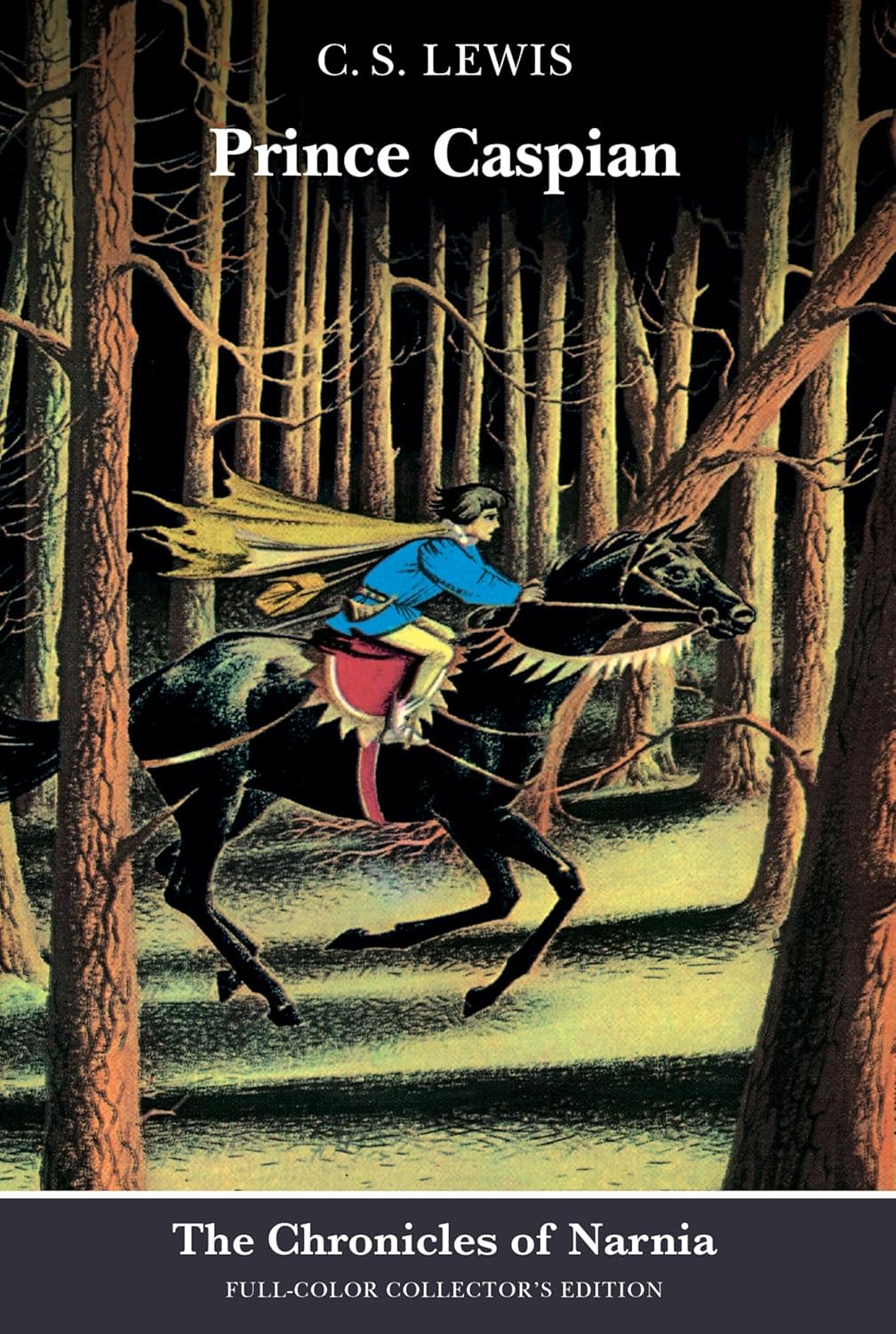
Prince Caspian: The Return to Narnia, written by C.S. Lewis and illustrated by Pauline Baynes, is the second published novel in the Chronicles of Narnia series (published 1951) and the fourth in the series’ internal chronological order. The four Pevensie children — Peter, Susan, Edmund, and Lucy — are pulled back to Narnia through magic while waiting on an English railway platform, arriving near the ruins of Cair Paravel, the castle where they once ruled as kings and queens. What they find is that while only a year has passed in England, 1,300 years have passed in Narnia. The talking animals and mythical creatures of Old Narnia have been driven into hiding or extinction by the Telmarines, a race of men who conquered Narnia and whose king, Miraz, is attempting to murder his nephew Prince Caspian, the rightful heir to the throne. The Pevensies must help Caspian reclaim his birthright and restore the ancient Narnia before it is lost forever. For two of them — Peter and Susan — it is also their last visit to Narnia; they are told at the book’s end that they are too old to return. This complete guide covers Prince Caspian‘s reading level, recommended age, content, key characters, themes, and books similar to Prince Caspian — designed for parents, teachers, and students.
For Parents
A high fantasy adventure about returning to a world you once knew and finding it changed — with battle, political intrigue, and the first real farewell in the Narnia series. Ages 8–12, grades 4–7. Content includes battle scenes with some violence; no gratuitous content. Christian allegorical themes are present but not heavy-handed. Best read after The Lion, the Witch and the Wardrobe.
For Teachers
A grades 4–7 classroom and independent reading text — thematically rich with Lewis’s own stated themes of courage, chivalry, and faith’s restoration after corruption. The Telmarine conquest parallels the Norman Conquest of England in ways that connect to history units. The publication-order versus chronological-order question is itself productive for teaching series structure and authorial intent.
Prince Caspian at a Glance
Find on Amazon →| Author | C.S. Lewis (Clive Staples Lewis, 1898–1963) |
| Illustrator | Pauline Baynes |
| Published | 1951 (Geoffrey Bles; UK); HarperCollins current publisher |
| Grade Level | 4–7 (our assessment) |
| Recommended Age | 8–12 |
| Lexile | ~870–888L (estimated; varies by edition) |
| ATOS Level | 5.7 |
| Pages | ~240 (editions vary) |
| Chapters | 15 |
| Series | The Chronicles of Narnia — Book 2 (publication order); Book 4 (internal chronological order) |
| Genre | High fantasy / children’s literature |
| Setting | Narnia; 1,300 Narnian years after The Lion, the Witch and the Wardrobe |
For official Lexile and AR levels, visit Lexile.com or AR BookFinder. ReadingVine provides independent editorial assessments.
What Reading Level Is Prince Caspian?
Prince Caspian has an ATOS level of 5.7 and an estimated Lexile of approximately 870–888L, with scores varying slightly by edition. These scores are consistent across the Chronicles of Narnia series — all seven books fall in the ATOS 5.0–6.0 range, reflecting Lewis’s clear, slightly formal prose style that is accessible without being simple. The vocabulary is the primary challenge for younger readers: Lewis uses words from classical mythology (Bacchus, Silenus), medieval chivalric tradition (the single combat challenge, the parley, the lists), and his own Narnian taxonomy (Talking Beasts, Dwarfs, Dryads, Naiads) that reward patient reading and pay off in understanding both this book and the series.
Our editorial assessment places it at grades 4–7, ages 8–12. Most readers who loved The Lion, the Witch and the Wardrobe independently are ready for this book on their own. The narrative structure is slightly more complex than the first book — the story is told partly in flashback through Trumpkin’s account of Caspian’s history — but Lewis handles the temporal structure clearly enough that it rarely confuses middle-grade readers. For official Lexile and AR scores, visit Lexile.com or AR BookFinder. ReadingVine’s assessments are independent editorial judgments.
What Order Should I Read the Chronicles of Narnia?
This is the most common question parents and new readers have about the series, and the answer is genuinely contested because there are two legitimate options:
Publication order begins with The Lion, the Witch and the Wardrobe (1950), followed by Prince Caspian (1951), The Voyage of the Dawn Treader (1952), The Silver Chair (1953), The Horse and His Boy (1954), The Magician’s Nephew (1955), and The Last Battle (1956). This is the order Lewis wrote them (approximately) and the order in which they were read by the first generation of Narnia readers.
Chronological order begins with The Magician’s Nephew (which describes the creation of Narnia), followed by The Lion, the Witch and the Wardrobe, The Horse and His Boy, Prince Caspian, The Voyage of the Dawn Treader, The Silver Chair, and The Last Battle. This is the order in which events happen within the Narnia timeline, and it is the order HarperCollins has used since 1994 — which is why the spine numbers in most current editions place Prince Caspian as Book 4.
Lewis himself indicated a preference for chronological order in a 1957 letter to an American child. Most Narnia scholars and longtime fans, however, recommend publication order, arguing that The Magician’s Nephew is more meaningful when read after you already love Narnia, and that The Lion, the Witch and the Wardrobe is the correct emotional and narrative entry point. Our recommendation: start with The Lion, the Witch and the Wardrobe regardless of which order you finish the series, then read Prince Caspian second. The reading order debate is itself worth discussing with older children who notice the discrepancy.
What Age Is Prince Caspian Appropriate For?
We recommend Prince Caspian for readers ages 8–12, grades 4–7. The book contains battle sequences with some violence — the single combat between Peter and Miraz, the battle between the Narnian and Telmarine armies — that are depicted with medieval directness but without gore. Characters die in battle, but deaths are not graphically described. Lewis writes violence the way he writes everything: with a certain narrative briskness that acknowledges what happened without dwelling on it. Younger readers who were comfortable with The Lion, the Witch and the Wardrobe will find the content of Prince Caspian comparable.
Parents who are attentive to the series’ Christian allegorical content should note that Prince Caspian is the most explicitly about religious faith of the early books: Lewis himself named “the restoration of the true religion after a corruption” as one of its two central themes, and the book’s treatment of Aslan (who can only be seen by those who believe, initially) is its clearest statement of the allegorical faith theme. This is not heavy-handed in the text — children reading for adventure will not find it a sermon — but parents who want to discuss the allegory will find Prince Caspian the most productive Narnia book for that conversation.
What Is Prince Caspian About?
Peter, Susan, Edmund, and Lucy Pevensie are pulled from an English railway platform back to Narnia by Susan’s magic horn, which has been blown by someone in desperate need of help. They find themselves on a beach near the ruins of Cair Paravel — the castle where they ruled as High King and Queens of Narnia. Only a year has passed in England; 1,300 years have passed in Narnia. The Narnians they knew are gone; their world has been conquered by the Telmarines. Talking Animals have been driven into hiding; the mythical creatures — fauns, dwarfs, naiads, dryads — are scattered, hunted, or believed to be mere legends.
They rescue a dwarf named Trumpkin, who tells them the recent history: Narnia is now ruled by King Miraz, a Telmarine usurper who murdered his brother and took the throne. His brother’s son — Prince Caspian, the rightful heir — has been raised in Miraz’s court and educated in secret by his tutor Doctor Cornelius about the Old Narnia that the Telmarines have suppressed. When Caspian learns that Miraz plans to kill him now that Miraz has a son of his own, he flees into the forest and falls in with the surviving Old Narnians: talking animals, dwarfs, a badger, and eventually a centaur and other mythical creatures. He sounds Susan’s horn at the most desperate moment, summoning the Pevensies to his aid.
The Pevensies make their way to Caspian’s army at Aslan’s How. The central conflict is not only military: Lucy sees Aslan before the others do and must convince them to follow him even though they cannot yet see him themselves. Peter challenges Miraz to single combat to decide the battle; he defeats Miraz, but treacherous Telmarine lords murder Miraz and launch a general attack. Aslan awakens the trees of Narnia and summons the ancient gods Bacchus and Silenus; the living forest routs the Telmarine army. Caspian is made King of Narnia. Aslan gives the Telmarines the choice of remaining in Narnia or returning to Earth. At the end, as the Pevensies prepare to leave, Aslan tells Peter and Susan privately that they will not return to Narnia — they are growing too old, and their time there is done.
Prince Caspian Characters
Prince Caspian Themes and Lessons
Lewis named the book’s two central themes explicitly in a letter: “courage and chivalry” and “the restoration of the true religion after a corruption.” Both are present in the narrative without being didactic. The chivalric theme runs through Peter’s challenge of single combat to Miraz — an offer to settle the war between two individual champions rather than through mass slaughter, which Miraz accepts partly out of vanity and loses. The faith theme runs through Lucy’s experience of seeing Aslan before the others can, and the specific difficulty of following something you believe is true when the people you trust most cannot yet see it.
The Telmarine conquest of Narnia is modeled, as Lewis acknowledged, on the Norman Conquest of England — specifically the way in which a conquering people suppresses the language, religion, and culture of the conquered and then rationalizes the suppression as simply “how things are.” The Old Narnians’ experience under Telmarine rule — driven into hiding, told their traditions are superstitions, their creatures dismissed as myths — is the book’s most politically sophisticated argument and one that connects naturally to historical discussions about cultural suppression and the preservation of tradition.
The most emotionally significant moment in the book for many readers is the last: Aslan’s private conversation with Peter and Susan, telling them they will not return to Narnia. They are growing up. Narnia was for them when they needed it; they will find their way to Aslan’s country by other means. This is the series’ first great farewell, and it gives the book’s ending a quality of genuine loss that children reading it for the first time often find unexpectedly affecting.
Discussion questions for classrooms and families: Why could Lucy see Aslan before the others? What did Nikabrik’s argument get right — and where did he go wrong? How is the Telmarine conquest of Narnia similar to other historical conquests you know about? Why do you think Peter and Susan are told they can’t return to Narnia? What does it mean to be “too old” for something you love?
The Prince Caspian Film (2008)
The 2008 Disney/Walden Media film, directed by Andrew Adamson, is the second Chronicles of Narnia film after The Lion, the Witch and the Wardrobe (2005). It stars Ben Barnes as Prince Caspian, William Moseley as Peter, Anna Popplewell as Susan, Skandar Keynes as Edmund, and Georgie Henley as Lucy. The film expands the book significantly — most notably through extended battle sequences and a romantic subplot between Caspian and Susan that does not exist in Lewis’s text — and changes the sequence of several plot points. It is rated PG, runs approximately two hours, and was critically mixed despite strong box office performance. A third film adaptation, The Voyage of the Dawn Treader (2010), completed the Disney/Walden series; no further films have been produced as of 2026, though a Netflix adaptation of the series has been in development.
How Long Is Prince Caspian?
Prince Caspian is approximately 240 pages across 15 chapters, with chapter lengths varying significantly — some are very short, some considerably longer, reflecting Lewis’s chapter structure being organized around narrative events rather than uniform length. Most independent readers complete it in one to two weeks; it is somewhat longer and more complex than The Lion, the Witch and the Wardrobe but paced comparably. The Chronicles of Narnia series continues with The Voyage of the Dawn Treader (the next book featuring Lucy and Edmund) and The Horse and His Boy (set during the time of the first book but not featuring the Pevensies). Peter and Susan appear in the series only in the final volume.
Books Similar to Prince Caspian
About C.S. Lewis
Clive Staples Lewis was born on November 29, 1898, in Belfast, Ireland. He was educated at University College, Oxford, where he later taught English literature, and subsequently at Magdalen College, Oxford, and Magdalene College, Cambridge. He was a close friend of J.R.R. Tolkien; both were members of the Inklings, the Oxford literary discussion group that met regularly at the Eagle and Child pub. Lewis was a committed atheist in his youth who converted to Christianity in 1931, and his Christian faith is the explicit foundation of the Narnia series as well as his many works of Christian apologetics, including Mere Christianity, The Screwtape Letters, and The Problem of Pain.
Lewis wrote Prince Caspian in 1949, before The Lion, the Witch and the Wardrobe was even published, completing it as part of a sustained creative period in which he drafted most of the Narnia series. He said the books began with images rather than plot — “a faun carrying an umbrella, a queen on a sledge, a magnificent lion” — and that the allegorical and theological content emerged from the story rather than preceding it. He died on November 22, 1963 — the same day as the assassinations of John F. Kennedy and Aldous Huxley, a coincidence that briefly delayed the news of his death. He never married until late in life; he married Joy Davidman Gresham in 1956, and she died of cancer in 1960. His grief memoir, A Grief Observed, is one of the most honest accounts of loss in the English language.
Prince Caspian: Frequently Asked Questions
What reading level is Prince Caspian?
Prince Caspian has an ATOS level of 5.7 and an estimated Lexile of approximately 870–888L. Our assessment: grades 4–7, ages 8–12. Scores are consistent across the Chronicles of Narnia series. For official Lexile and AR scores, visit Lexile.com or AR BookFinder.
What is Prince Caspian about?
The four Pevensie children are pulled back to Narnia — where 1,300 years have passed since their reign — to help Prince Caspian, the rightful heir to the Narnian throne, defeat his usurping uncle King Miraz and restore the ancient creatures of Old Narnia that Miraz’s people have suppressed. For Peter and Susan, it is their last visit to Narnia; Aslan tells them at the end that they are too old to return.
Should I read Prince Caspian before or after The Lion, the Witch and the Wardrobe?
After. Prince Caspian is a direct sequel that assumes knowledge of Narnia, the Pevensies, and Aslan. Reading it without The Lion, the Witch and the Wardrobe first is possible but significantly diminishes the book’s emotional resonance, particularly at the ending when Peter and Susan learn they will not return. Always start with The Lion, the Witch and the Wardrobe.
What order should I read the Chronicles of Narnia?
The two common orders are publication order (starting with The Lion, the Witch and the Wardrobe) and chronological order (starting with The Magician’s Nephew). Lewis himself expressed a preference for chronological order in 1957. Most Narnia scholars recommend publication order, arguing that the series is emotionally richer when you encounter Narnia the way Lewis first imagined readers discovering it. We recommend starting with The Lion, the Witch and the Wardrobe regardless.
Do Peter and Susan come back to Narnia after Prince Caspian?
No. Aslan tells Peter and Susan at the end of Prince Caspian that they are too old to return — this is their last visit as protagonists. Peter appears briefly in The Last Battle (the final book); Susan does not appear there, and her absence and its implications are one of the most discussed and most contested moments in the entire series. Edmund and Lucy return to Narnia in The Voyage of the Dawn Treader.
Is Prince Caspian a religious allegory?
Yes — C.S. Lewis confirmed this himself, naming “the restoration of the true religion after a corruption” as one of the book’s two central themes. The allegory is present throughout: Aslan visible only to those who believe, the suppression of the Old Narnian religion by the Telmarines paralleling the corruption of true Christianity, and the restoration of Narnia paralleling religious renewal. The allegory is not heavy-handed — children reading for adventure will not find it a sermon — but it is present and worth discussing with readers who are ready for the conversation.
Is there a Prince Caspian movie?
Yes — the 2008 Disney/Walden Media film, directed by Andrew Adamson, starring Ben Barnes, William Moseley, Anna Popplewell, Skandar Keynes, and Georgie Henley. Rated PG, approximately two hours. The film expands the book significantly, adding extended battle sequences and a Caspian-Susan romance not in the text. A Netflix adaptation of the full series has been in development; no episodes have been released as of 2026.