
 = Partner Site
Rebound Reading Level: A Complete Guide
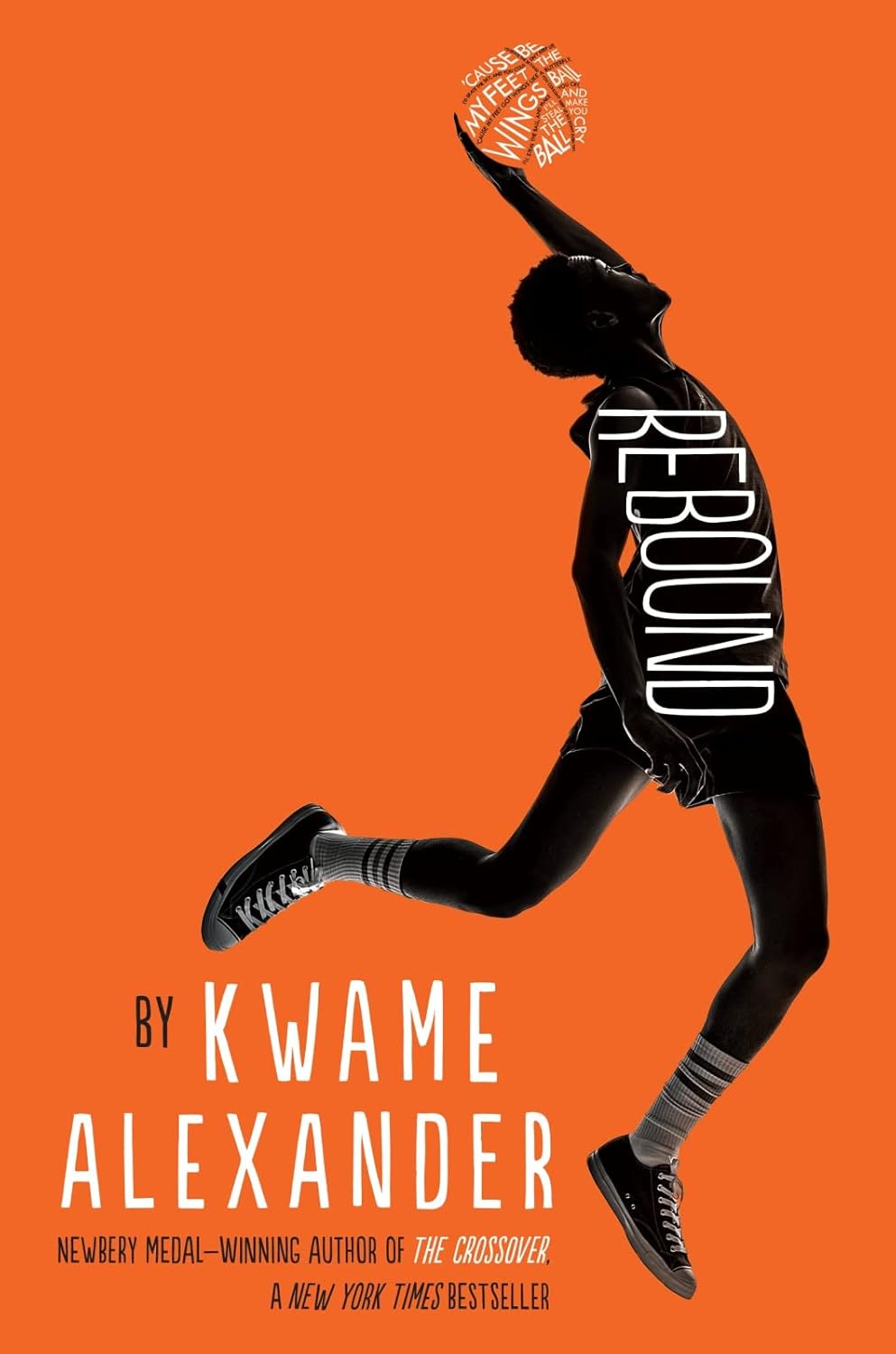
Rebound, written by Kwame Alexander and illustrated with comics-style panels by Emmy-winning artist Dawud Anyabwile, is a 416-page novel in verse and prequel to Alexander’s Newbery Medal-winning The Crossover. Before Josh and Jordan Bell were streaking up and down the court, their father Chuck was a grieving twelve-year-old in Washington, D.C. It is the summer of 1988. Charlie Bell’s father has just died. His mother, unable to manage her own grief and a son whose anger and sadness are making everything harder, sends Charlie to spend the summer with his grandparents in Maryland — his grandfather Granddad and his grandmother Nana — whom he barely knows. Charlie arrives angry and closed-off. Granddad introduces him to basketball. What follows is a summer in which grief, family history, new friendships, jazz, and basketball work on Charlie in ways he doesn’t fully understand until the season turns. A New York Times bestseller, an ALA Notable Book, shortlisted for the Carnegie Medal, and the recipient of a Kirkus starred review (“an eminently satisfying story of family, recovery, and growing into manhood”), it is the story of how Chuck “Da Man” Bell became the man his sons would look up to in The Crossover. This guide covers reading level, age appropriateness, the prequel relationship to The Crossover, themes, and similar books.
For Parents
A novel in verse about a twelve-year-old sent to his grandparents for the summer after his father dies — and how he finds, through basketball and family history, a way back from grief. Ages 10–14, grades 5–7. Content: grief over a parent’s death is the book’s central experience; a minor reference to an uncle’s boyfriend. No other content concerns. Can be read before or after The Crossover, though the final chapter (set in 2018) is best skipped if The Crossover hasn’t been read yet.
For Teachers
A grades 5–7 historical fiction verse novel set in 1988 Washington, D.C. — Kirkus starred; ALA Notable Book; Carnegie Medal shortlist. Dawud Anyabwile’s comics-style illustrations make the book a productive text for visual literacy alongside poetry study. The historical setting (1980s D.C., go-go music, early hip-hop) provides social studies connections. Can be taught standalone or as a Crossover companion.
Rebound at a Glance
Find on Amazon →| Author | Kwame Alexander |
| Illustrator | Dawud Anyabwile |
| Published | 2018 (HMH Books for Young Readers) |
| Grade Level | 5–7 (our assessment) |
| Recommended Age | 10–14 |
| Lexile | 780L (verse format; see below) |
| ATOS Level | 4.3 |
| Word Count | 27,804 |
| Pages | 416 |
| Format | Novel in verse with comics-style illustrations |
| Genre | Historical fiction / sports / verse novel |
| Setting | Washington, D.C. and Maryland; summer 1988 |
| Series | The Crossover (prequel) |
| Awards | ALA Notable Book; Kirkus starred; Carnegie Medal shortlist; NYT bestseller |
For official Lexile and AR levels, visit Lexile.com or AR BookFinder. ReadingVine provides independent editorial assessments.
What Reading Level Is Rebound?
Lexile 780L, ATOS 4.3, interest level grades 5–8. Our assessment: grades 5–7, ages 10–14. As with all Alexander’s verse novels, the formula scores reflect the prose text of the poetry — the 27,804-word count across 416 pages means approximately 67 words per page, which pulls formula scores down while the emotional and thematic content is fully middle-grade. The 780L is higher than Booked (660L) and The Crossover‘s comparable range, reflecting the historical setting and the greater lexical density of some poems. Anyabwile’s comics-style illustrations add a visual layer not captured by any reading level formula. For official scores, visit Lexile.com or AR BookFinder.
Prequel or Companion — Reading Order
Rebound is the prequel to The Crossover — it tells the story of Chuck Bell’s childhood, before the twins Josh and Jordan Bell who narrate The Crossover were born. The two books can be read in either order. Readers who begin with Rebound meet Charlie Bell and discover the roots of the basketball-loving, jazz-playing, family-devoted man his sons will know. Readers who begin with The Crossover already know Chuck as a father and will recognize the seeds of that man in the angry, grieving twelve-year-old of Rebound. One note: the final chapter of Rebound is set in 2018 and contains information that is more meaningful — and makes more sense — to readers who have already read The Crossover. First-time readers who haven’t read The Crossover yet can simply skip that epilogue chapter and return to it after.
What Is Rebound About?
It is the summer of 1988 in Washington, D.C. Twelve-year-old Charlie Bell’s father has just died. Charlie is angry and sad and doesn’t know what to do with either feeling, and his mother is struggling with her own grief. She sends Charlie to spend the summer with his grandparents in Seat Pleasant, Maryland — his mother’s parents, Granddad and Nana, people Charlie barely knows. Charlie arrives with a chip on his shoulder and no interest in being fixed.
Granddad takes him to the basketball court. Not to teach him something, exactly — just to play. And something about the court, and the neighborhood kids who play on it, and the specific rhythms of the game, starts to work on Charlie in ways he can’t quite articulate. He makes a new friend. He gets into trouble. He learns something about his family’s past that reframes his understanding of his father. He listens to jazz. He plays basketball. Slowly, imperfectly, he begins to find his way back from the place grief put him.
Anyabwile’s comics-style panels appear throughout, illustrating Charlie’s basketball fantasies and key emotional moments in a visual register that the poetry alone couldn’t provide. Booklist’s starred review described “a rhythm to each page, whether it’s the snappy give-and-take of dialogue, the throbbing of Charlie’s bottomless melancholy, or the rushing excitement of a basketball game.”
The 1988 Washington, D.C. Setting
Rebound is historical fiction — set specifically in 1988, at a moment in Washington, D.C.’s history when go-go music was the sound of the city, hip-hop was emerging, and the neighborhood landscapes Alexander depicts were specific to that era. For young readers encountering 1988 as history rather than memory, the setting provides context for the music, the cultural references, and the specific texture of a Black neighborhood in D.C. during that period. Alexander doesn’t over-explain the setting — the details are present but not annotated — which means readers who recognize the era will feel its specificity and readers who don’t will absorb it through context. A brief classroom discussion of the era before reading can anchor the experience usefully.
Dawud Anyabwile’s Illustrations
Dawud Anyabwile — Emmy-winning artist and co-creator of the graphic novel series Brotherman: Dictator of Discipline — provides comics-style panels throughout Rebound that illustrate Charlie’s basketball fantasies, his memories, and key emotional moments. These panels are not decorative additions to a verse novel but a genuine third narrative mode: the poetry tells us what Charlie thinks and feels, the prose poems carry the story, and the comics panels show us what Charlie sees when he closes his eyes and imagines himself on the court. The combination makes Rebound the most visually complex of the Crossover-series books and gives it a reading experience that is distinct from both a verse novel and a graphic novel — something in between.
Rebound Themes and Lessons
The novel’s central argument is about how grief moves through a person — not linearly, not tidily, and not on any schedule that grief counselors or mothers or grandparents can predict. Charlie’s anger is not a problem to be solved; it is grief in its early form. The summer doesn’t cure him. What it does is give him a container — the court, the grandparents’ house, the friendships — that is strong enough to hold him while the grief does what grief does. Kirkus called this “an eminently satisfying story of family, recovery, and growing into manhood” — and the satisfaction is genuine because Alexander doesn’t shortcut the process. The ending is hopeful without being resolved.
The family history thread — what Charlie discovers about his father’s own relationship with his grandparents — reframes everything. Understanding where his father came from helps Charlie understand who he himself is and might become. This is the emotional payoff that reading Rebound before The Crossover makes richer: by the time readers meet Chuck Bell as a father in The Crossover, they know exactly what that man cost and how he was made.
Discussion questions: Why is Charlie so angry when he arrives at his grandparents’? What does basketball give him that nothing else does at that point? What does he discover about his father’s past — and how does it change how he sees his father? How is Charlie’s grief different by the end of the summer from how it was at the beginning?
Books Similar to Rebound
About Kwame Alexander
See our Booked guide for a full biography of Kwame Alexander. Rebound was published in April 2018 and represents Alexander’s most historically grounded verse novel — set specifically in 1988 D.C. and drawing on his own memories of the city and the era. The collaboration with Dawud Anyabwile is the most visually ambitious of any Alexander middle-grade title to date.
Rebound: Frequently Asked Questions
What reading level is Rebound?
Lexile 780L, ATOS 4.3, interest level grades 5–8. Our assessment: grades 5–7, ages 10–14. As with all verse novels, formula scores understate the reading experience — 27,804 words across 416 pages is approximately 67 words per page. For official scores, visit Lexile.com or AR BookFinder.
What is Rebound about?
Twelve-year-old Charlie Bell is sent to spend the summer with his grandparents in Maryland after his father dies in 1988, arriving angry and grieving. Granddad introduces him to basketball. Over one summer, through the court, new friends, and family history he didn’t know, Charlie finds a way back from where grief put him — and becomes the foundation of the Chuck “Da Man” Bell his sons will admire in The Crossover.
Do I need to read The Crossover before Rebound?
No — both orders work. Reading Rebound first gives you Charlie’s origins before you meet him as a father; reading The Crossover first makes discovering those origins more resonant. One note: skip the final 2018 epilogue chapter in Rebound if you haven’t read The Crossover yet — return to it after.
Who illustrated Rebound?
Dawud Anyabwile, an Emmy-winning artist and co-creator of the graphic novel series Brotherman: Dictator of Discipline. His comics-style panels illustrate Charlie’s basketball fantasies and key emotional moments throughout the book, adding a visual narrative layer that goes beyond decoration.
When is Rebound set?
The summer of 1988, in Washington, D.C. and Seat Pleasant, Maryland. The setting is specific to that era — go-go music, early hip-hop, the specific texture of a Black neighborhood in D.C. in the late 1980s. Alexander doesn’t over-explain the era; it is present in the details.