
 = Partner Site
Romeo and Juliet Reading Level: A Complete Guide
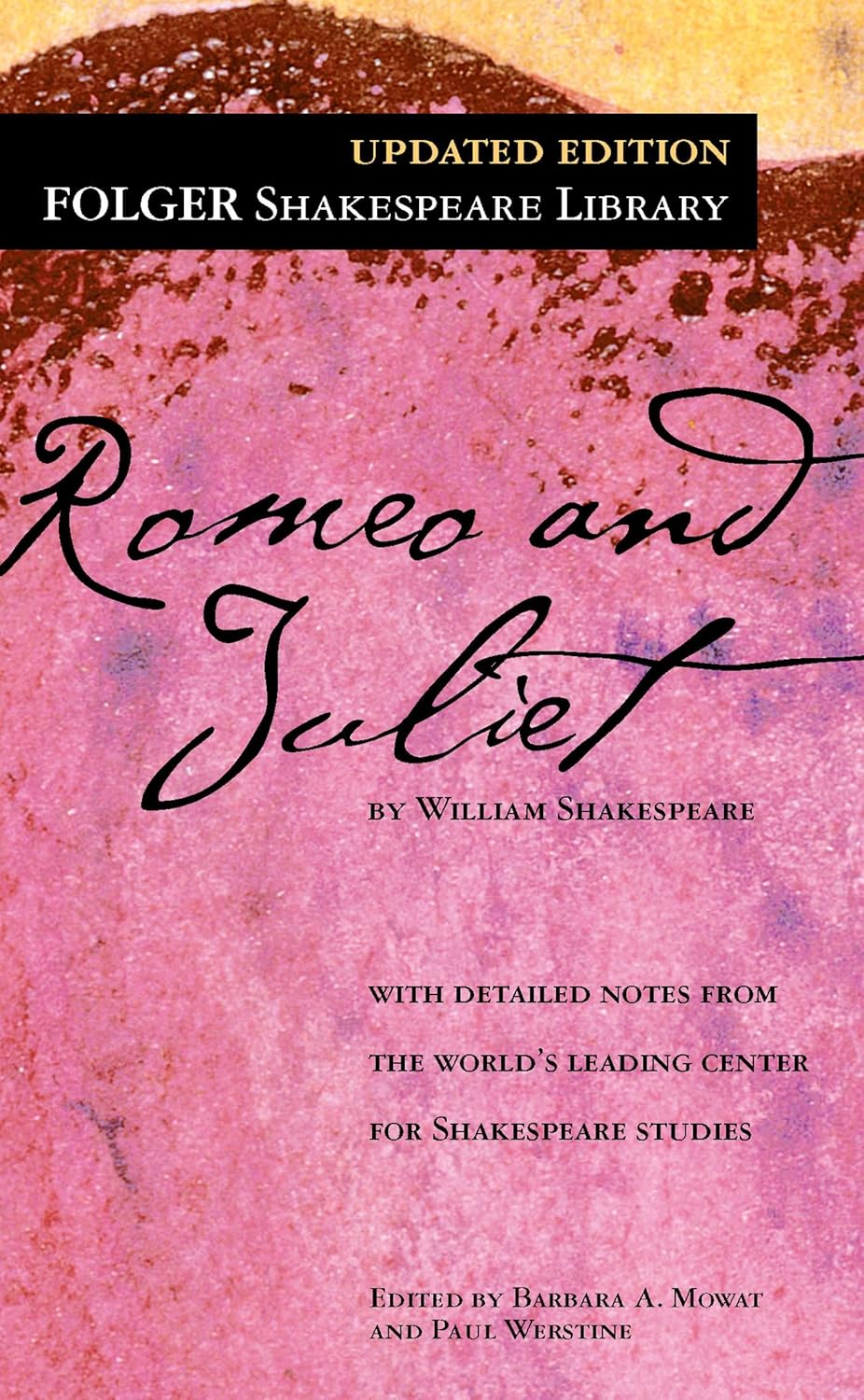
Romeo and Juliet by William Shakespeare is a tragedy about two young people from feuding families in Verona — Romeo Montague and Juliet Capulet — who fall in love at a party, marry in secret, and are destroyed within the space of five days by a cascade of misfortune, bad timing, and the hatred they were born into. Written around 1594–1596 and first performed in the mid-1590s, it is the most frequently produced and most widely taught of Shakespeare’s plays, and the foundational Western story about romantic love as simultaneously transcendent and fatal. This complete guide covers Romeo and Juliet‘s reading level, recommended age, content considerations, characters, themes, and plays and books similar to Romeo and Juliet, designed for parents, teachers, and students.
For Parents
A tragedy about teenage lovers whose secret marriage ends in double suicide — the content is serious but the language is verse, which distances younger readers from its rawest elements. Contains sexual jokes in the early scenes, two sword-fight deaths, and the suicides of both protagonists. Appropriate for ages 12 and up; most commonly assigned in grades 8–10.
For Teachers
The standard Shakespeare introduction text for American secondary schools, with dense curriculum support from the Folger Shakespeare Library and RSC. The play’s compressed five-day timeline and sonnet structure make it ideal for teaching dramatic form alongside poetic language. Consistent challenge history — teen suicide, premarital sex, parental disobedience — makes it a productive text for discussing censorship alongside the play itself.
Romeo and Juliet at a Glance
Find on Amazon →| Author | William Shakespeare |
| First Performed | c. 1594–1596 |
| First Published | 1597 (First Quarto) |
| Grade Level | 7–12 (our assessment) |
| Recommended Age | 12+ |
| ATOS Reading Level | 8.6 |
| Lexile | 560L (see reading level note) |
| Word Count | 25,599 |
| Structure | 5 acts, 25 scenes |
| Genre | Tragedy / drama |
| Setting | Verona and Mantua, Italy; Renaissance period |
For official Lexile and AR levels, visit Lexile.com or AR BookFinder. ReadingVine provides independent editorial assessments.
What Reading Level Is Romeo and Juliet?
Romeo and Juliet has an ATOS reading level of 8.6 and a Lexile of 560L — a gap so large it requires explanation. The Lexile score of 560L places the play at roughly 4th grade, which is obviously wrong for any reader who has tried to open it. The discrepancy exists because the Lexile algorithm was designed for prose and breaks down on verse: Shakespeare’s line lengths, metrical patterns, and the way meaning distributes across a line rather than a sentence produce artificially low scores for all of his plays. The ATOS score of 8.6 is considerably closer to reality, reflecting the actual vocabulary and sentence complexity — though even it does not capture the specific challenge of Early Modern English.
The genuine reading challenge in Romeo and Juliet is linguistic rather than structural. The plot is clear — two young people fall in love, events spiral out of control, they both die — and the emotional logic is transparent. What requires work is the language: archaic vocabulary, dense wordplay (much of it bawdy, which students reading without annotation frequently miss entirely), iambic pentameter, and Shakespeare’s compressed figurative language. The famous lines are famous because they are genuinely beautiful, but getting to them requires readers who can follow verse and who have patience with a language that is recognizably English and also four centuries old.
Most American schools assign the play in grades 8–10 — typically grade 9 — as the standard introduction to Shakespeare. At 25,599 words, it is shorter than most novels in this catalog; a classroom typically spends three to four weeks reading closely and discussing the language in detail. For official Lexile and AR scores, visit Lexile.com or AR BookFinder. ReadingVine’s assessments are independent editorial judgments.
What Age Is Romeo and Juliet Appropriate For?
We recommend Romeo and Juliet for readers ages 12 and up. The play contains sexual jokes and innuendo throughout the early scenes (much of which students reading without annotation miss), two deaths by sword in Act 3, and the suicides of both protagonists in Act 5. Juliet is thirteen years old; the play was written in an era when marriage at that age was legally possible, and no character treats her age as unusual.
Acts 1 and 2 contain significant sexual wordplay, most of it spoken by the Nurse and by Mercutio, that is easy to miss in Early Modern English but explicit in modern translation. Act 3 includes the sword-fight deaths of Mercutio and Tybalt. In Act 5, Romeo drinks poison believing Juliet dead; Juliet wakes to find him dead and kills herself with his dagger. Both suicides are staged. Some school challenges have cited the play as glorifying teen suicide; Shakespeare’s framing treats the deaths as tragic — an outcome caused by identifiable human failures, announced in the Prologue before the play begins — rather than as romantic aspiration. This distinction is worth discussing directly with students rather than assuming they will arrive at it on their own.
What Is Romeo and Juliet About?
The Montagues and the Capulets have been enemies for as long as anyone in Verona can remember, though no one in the play can explain why. The Prince of Verona has threatened both families with death if the feud produces further public violence. Romeo Montague, nursing a hopeless love for a woman named Rosaline, gate-crashes a Capulet party with his friends Benvolio and Mercutio. There he meets Juliet Capulet. They speak — in the form of a shared sonnet — and kiss twice before the party ends and they discover who the other is.
That night Romeo climbs the wall of the Capulet orchard and finds Juliet on her balcony. They declare their love, and Juliet proposes marriage. The following day Romeo and Juliet are secretly married by Friar Lawrence, who hopes the union will end the families’ feud. That same afternoon, Tybalt challenges Romeo; Romeo refuses to fight because Tybalt is now his kinsman by marriage. Mercutio fights in Romeo’s place and is killed. Romeo, in grief and rage, kills Tybalt. The Prince banishes Romeo from Verona.
Romeo and Juliet spend one night together as husband and wife before he must leave for Mantua. In his absence, Capulet arranges for Juliet to marry Paris in three days. Juliet goes to Friar Lawrence for help. His plan: she will drink a potion that mimics death, be laid in the Capulet tomb, and Romeo will be summoned to rescue her when she wakes. The message to Romeo never arrives. He hears she is dead. He buys poison, returns to Verona, and drinks it at her side in the tomb — moments before she wakes. She finds him dead and kills herself with his dagger.
The final scene has the Prince confronting both families over their children’s bodies. The Prologue had already told us this would happen — “a pair of star-cross’d lovers take their life” — and the play’s argument is not about surprise but about inevitability: watching something terrible approach that cannot be stopped, and asking who is responsible for the fact that it could not be.
Romeo and Juliet Characters
Is Romeo and Juliet Banned?
Romeo and Juliet has been challenged in American schools with notable consistency, primarily on four grounds: that it glorifies teen suicide; that it encourages premarital sex and teenage romantic relationships; that it promotes disobedience of parental authority; and that its language contains sexual obscenity. In 2013, the “No Fear Shakespeare” modern-English translation was challenged in South Carolina middle schools on the grounds that making the language easier to read made the sexual content more accessible to younger students.
In 2023, Hillsborough County, Florida, restricted classroom instruction to excerpts from Romeo and Juliet and other Shakespeare plays under guidance related to the state’s Parental Rights in Education Act. The Florida Department of Education subsequently stated it did not believe Shakespeare should be removed from classrooms, and the state’s Education Commissioner simultaneously added Romeo and Juliet to his recommended reading list — illustrating the institutional incoherence that broad censorship laws produce when applied to canonical texts.
The suicide question is worth engaging directly in any classroom: Shakespeare’s framing treats Romeo and Juliet’s deaths as tragic — as the consequence of identifiable failures by specific people and the larger failure of a society that raised two families in pointless mutual hatred — not as romantically aspirational. The Prologue announces the deaths before the play begins precisely so the audience spends its time watching how it happens rather than hoping it won’t. This is arguably the most anti-romanticization structure available in drama.
Romeo and Juliet Themes and Lessons
The play’s most persistent interpretive question is whether Romeo and Juliet are destroyed by fate or by human failure — whether “star-cross’d” means the outcome was determined before they were born, or whether specific decisions by specific people could have gone differently. The Prologue leans toward fate; the action leans toward human responsibility. Friar Lawrence chose to marry them in secret. His message to Romeo failed to arrive due to a plague quarantine. Romeo chose to act immediately on false news rather than waiting. Every step of the catastrophe is both inevitable-feeling and clearly the result of a choice, which is the source of the play’s particular power. Tragedy requires both: the sense that this had to happen, and the knowledge that it didn’t have to.
The feud is the play’s structural condition, and Shakespeare is careful never to explain it. No character in the play accounts for why the Montagues and Capulets hate each other — they simply do, and they require their children to carry it. Romeo and Juliet’s love is destroyed not by anything they do but by the identity they were born into. The Prince’s final words assign blame to both families: “All are punished.” The play’s argument about inherited hatred — that it destroys those who carry it, and most directly the youngest and most innocent — is made through the plot rather than through speeches.
Shakespeare builds the play as a comedy that converts to tragedy the moment Mercutio dies. Acts 1 and 2 have the architecture of romantic comedy: wit, wordplay, secret meetings, young love overcoming obstacles. Mercutio’s death — which comes from a fight Romeo tries to stop — is the genre shift. Students who recognize this structure understand something important about how Shakespeare works: the same events that would produce marriage and celebration in a comedy produce death in a tragedy, and the difference is often a single moment that cannot be undone.
Discussion questions for classrooms and families: Is the tragedy caused by fate, by the feud, or by specific bad decisions — and does Shakespeare give you a single answer? What does it mean that the Prologue tells us how the play ends before it begins? How does Mercutio’s death change the play — what was still possible before it that is impossible after? Is Friar Lawrence responsible for what happens? What does the play argue about who or what is actually responsible for Romeo and Juliet’s deaths?
How Long Is Romeo and Juliet?
Romeo and Juliet is a play in five acts and twenty-five scenes with no chapter divisions. Most standard paperback editions run between 200 and 240 pages depending on the edition and its annotations; word count is 25,599. In performance, the play runs approximately two and a half hours. A classroom reading with close discussion of the language typically takes three to four weeks.
The play’s five-day compressed timeline — everything from the party where Romeo and Juliet meet to their deaths in the tomb occurs within five days — is one of Shakespeare’s most deliberate structural choices. The speed is not coincidence or carelessness; it is the argument. Romeo and Juliet make every major decision under extreme time pressure: they meet, fall in love, get married, and are separated within thirty-six hours. The tragedy moves so fast because youth moves fast, and because the world around them — the feud, Capulet’s marriage plans for Juliet, Romeo’s banishment — gives them no time to be careful.
Plays and Books Similar to Romeo and Juliet
About William Shakespeare
William Shakespeare was born in 1564 in Stratford-upon-Avon, England, and died in 1616. He wrote approximately 37 plays, 154 sonnets, and several longer poems over a career of roughly twenty-five years, most of it based in London as a playwright, actor, and shareholder in the Globe Theatre. Romeo and Juliet was written around 1594–1596, early in his career, during the same period as A Midsummer Night’s Dream and Richard II. He drew the story from earlier sources, primarily Arthur Brooke’s 1562 narrative poem The Tragicall Historye of Romeus and Juliet, which was itself adapted from Italian sources going back to the 1530s.
Shakespeare did not invent the Romeo and Juliet story — the feuding families, the secret marriage, the potion plan, and the tragic ending all existed in earlier versions. What he added was the language, the compression into five days, and the characterization of Mercutio — who does not exist in the earlier sources and who is entirely his invention. The play was first performed around 1596, first published in a pirated quarto edition in 1597, and has been in continuous production worldwide ever since. It has been adapted into ballet (Prokofiev, 1935), opera (Gounod, 1867), musical (West Side Story, 1957), and film more times than any other Shakespeare play.
Romeo and Juliet: Frequently Asked Questions
What reading level is Romeo and Juliet?
Romeo and Juliet has an ATOS reading level of 8.6 and a Lexile of 560L. The Lexile score is misleading because the Lexile algorithm does not work reliably on verse — Shakespeare’s metrical line structure produces artificially low scores. The ATOS score of 8.6 is more useful. Our editorial assessment places it at grades 7–12 (most commonly grades 8–10), ages 12 and up. For official Lexile and AR scores, visit Lexile.com or AR BookFinder.
What grade is Romeo and Juliet appropriate for?
We recommend grades 7–12, ages 12 and up. The play contains sexual wordplay in the early scenes, two on-stage deaths by sword, and the suicides of both protagonists in Act 5. It is most commonly assigned in grade 9 as the standard introduction to Shakespeare.
How long is Romeo and Juliet?
Five acts and twenty-five scenes; word count is 25,599. Standard paperback editions run 200–240 pages depending on annotations. In performance, approximately two and a half hours. A classroom with close reading and discussion typically takes three to four weeks.
What is Romeo and Juliet about?
Two teenagers from feuding families in Verona fall in love at a party, marry in secret the following day, and are both dead within five days — destroyed by a combination of their families’ inherited hatred, adult authority that fails them at every turn, and a cascade of bad timing that begins the moment Romeo kills Tybalt.
Why do Romeo and Juliet die?
The immediate cause is Friar Lawrence’s message failing to reach Romeo — Romeo hears Juliet is dead, returns to Verona, and drinks poison at her side moments before she wakes. The deeper causes are the feud that made their marriage secret in the first place, and the cascade of decisions made in haste: Romeo killing Tybalt, Capulet accelerating the Paris marriage, Romeo acting on false news without waiting to verify it. The play asks whether the tragedy was caused by fate, by the feud, or by specific human failures, and declines to give a single clean answer.
Is Romeo and Juliet based on a true story?
No documented historical basis exists for the Romeo and Juliet story. Shakespeare drew from Arthur Brooke’s 1562 English poem The Tragicall Historye of Romeus and Juliet, which was adapted from Italian prose sources going back to Luigi Da Porto’s 1530 novella. The feuding families and the city of Verona are fictional. Verona does maintain a “Juliet’s house” as a tourist attraction, but it has no verified historical connection to the story.
How old are Romeo and Juliet?
Juliet’s age is specified in the play: she is thirteen, approaching fourteen. Romeo’s age is not stated, but he is generally understood to be a few years older — in his mid-to-late teens. Their youth is part of Shakespeare’s argument: the speed of their decisions, the impossibility of their caution, and the devastation of their deaths are all amplified by how young they are.
What are the most famous lines in Romeo and Juliet?
The balcony scene in Act 2 contains the play’s most quoted lines, including Juliet’s “What’s in a name? That which we call a rose / By any other name would smell as sweet” and Romeo’s descriptions of Juliet as the sun. The Prologue’s “A pair of star-cross’d lovers take their life” frames the entire play. Mercutio’s dying “A plague on both your houses!” is the play’s most bitter line and its most direct statement of who is responsible. Romeo’s last words — “Thus with a kiss I die” — and Juliet’s “O happy dagger” are the play’s final statements of love-as-death.