
 = Partner Site
Show Way Reading Level: A Complete Guide
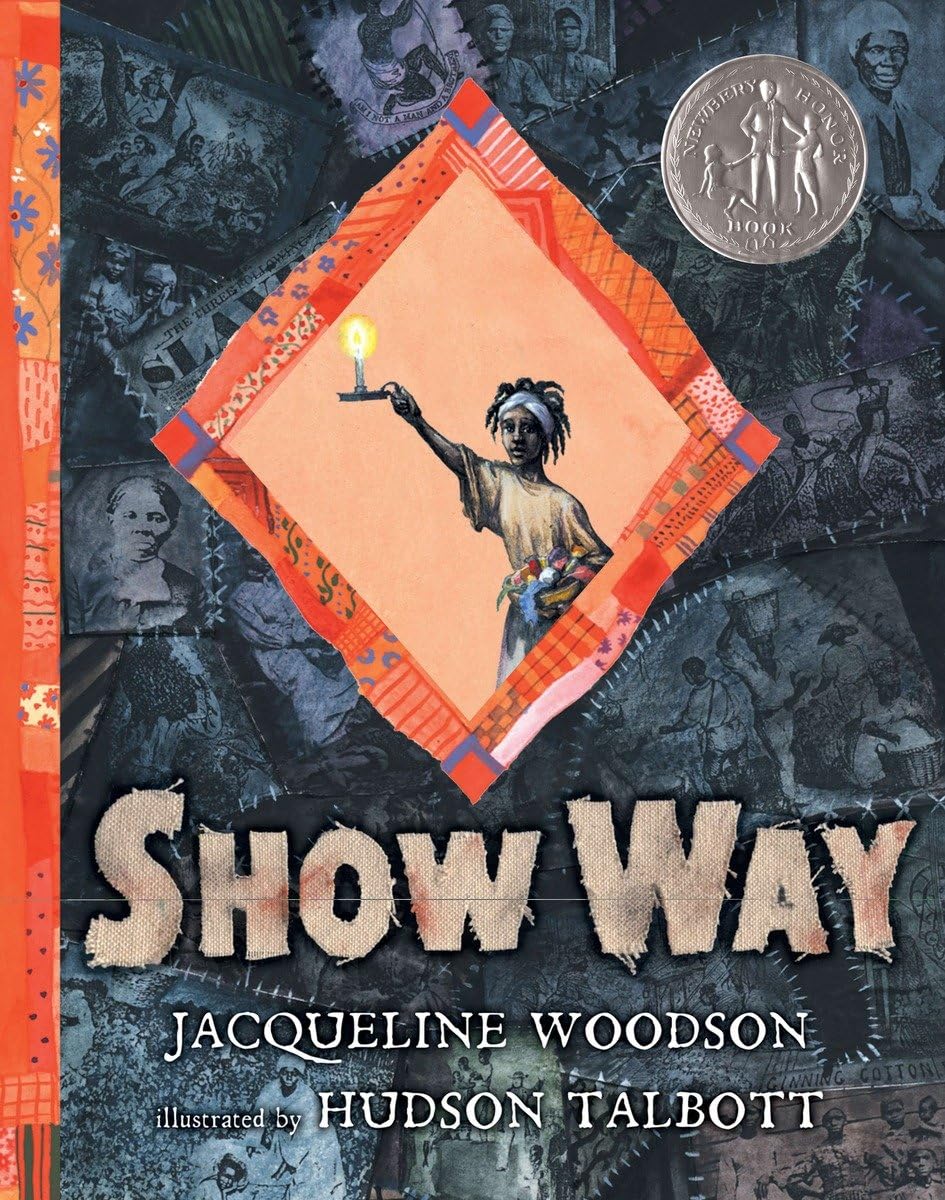
Show Way traces seven generations of women in Jacqueline Woodson’s own family, from a seven-year-old girl sold away from her parents into slavery to Woodson’s own daughter growing up free in Brooklyn. The thread connecting them all is the “Show Way,” a quilt whose patterns are, in the family’s own telling, said to have guided people to freedom. This guide provides parents and teachers with reading level information, age recommendations, content insights, and discussion questions for this Newbery Honor picture book.
For Parents
Find the right reading level for your child, understand the real historical violence depicted in the book’s illustrations, and get conversation starters about family history, resilience, and the meaning passed down through generations.
For Teachers
Access grade-level guidance and discussion questions for classroom use. This Newbery Honor picture book offers a rich entry point into units on slavery, the Underground Railroad, and the civil rights movement, spanning generations in a single family. Note that the idea of quilts as literal coded maps, a tradition this book draws on, is debated among historians and best presented to students as family lore rather than settled fact (see note below).
Show Way at a Glance
Find on Amazon →| Author | Jacqueline Woodson |
| Illustrator | Hudson Talbott |
| Published | 2005 |
| Grade Level | 2–5 (our assessment) |
| Recommended Age | 7–11 |
| Best For | Read-aloud ages 6–9; independent reading ages 8–11 |
| Flesch-Kincaid Grade | ~3.8 |
| Word Count | ~1,060 |
| Pages | 48 (standard picture book) |
| Genre | Picture book / historical fiction |
| Setting | The American South and Brooklyn, New York, spanning slavery through the present |
| Awards | Newbery Honor (2006) |
For official Lexile and AR levels, visit Lexile.com or AR BookFinder. ReadingVine provides independent editorial assessments.
What Reading Level Is Show Way?
Show Way carries an official Lexile measure of 650L (marked “AD,” meaning it’s intended to be read aloud by an adult) and an ATOS level of 3.8. Our editorial Flesch-Kincaid estimate is similar, around 3.8.
Jacqueline Woodson’s text is spare and poetic, with a repeated refrain that ties each generation together, but it moves quickly across seven generations and more than a century of American history, referencing events like slavery, the Civil War, segregation, and the civil rights movement without stopping to explain them in full. Younger children can understand books read aloud to them well above what they could read on their own, and this book is a strong example: a child who can decode the words may still need an adult’s help following the sweep of history it covers.
For official Lexile and AR scores, visit Lexile.com and AR BookFinder.
Is Show Way a Read-Aloud or Independent Read?
This is primarily a read-aloud for ages 6–9, and an independent read for ages 8–11.
Show Way rewards an adult’s guidance both for its historical references and for its illustrations, which are detailed and layered enough to invite close discussion at every spread.
Depicted violence: Hudson Talbott’s illustrations include real historical violence: a silhouette of an enslaved person being shot while attempting to escape, chased by dogs; a collage depicting enslaved people being whipped; and images referencing violent clashes during 1960s-era civil rights protests. None of this is described graphically in the text, but the illustrations are direct enough that we recommend reading this book together with a child rather than leaving them to encounter the images alone.
Separation from family: The book opens with a seven-year-old girl sold away from her parents into slavery, a loss that recurs across an early generation of the family before freedom is won.
What’s NOT in the book: There’s no profanity, and the text itself stays understated even where the illustrations are direct. The book’s overall arc moves from hardship toward freedom, literacy, and opportunity, ending on a hopeful, loving note centered on the author’s own daughter.
What Is Show Way About?
Show Way opens with a seven-year-old girl, Soonie’s great-great-grandmother, sold away from her parents to a plantation with nothing but scraps of fabric, needles, and thread dyed from a chokecherry tree. On the plantation, she learns to sew “Show Way” quilts, patchwork patterns with names like North Star and Crossroads that, according to the family tradition the book is built on, helped show the way to freedom.
The idea that quilts contained secret, coded patterns guiding enslaved people along the Underground Railroad is a popular and moving story, but it’s disputed among historians, who have found little documented evidence to support it as established fact. Show Way presents this idea as part of Woodson’s own family’s oral tradition and personal history rather than as verified history, and we’d encourage families and educators to frame it the same way when discussing the book.
As the book moves forward through each generation, it follows the women in Woodson’s own family: a daughter sold away just as her mother had been; a daughter born free after emancipation, who continues the tradition of quiltmaking and learns to read; and later generations who become teachers, march for civil rights, write poetry, and turn family stories into art.
The book closes with Woodson herself, who grew up loving to read and write, and finally with her own daughter, Toshi, to whom she tells all of these stories, ensuring that the thread connecting seven generations of women continues into the future.
Show Way Themes and Lessons
Show Way is centrally about how family history and identity get passed down, not through official records, but through stories, traditions, and objects like the quilts at the book’s center. Each generation’s “Show Way” looks different, from an actual map to freedom, to a path toward literacy, to a career, to a story told to a daughter, but the book frames all of them as versions of the same inheritance: a way forward, passed from mother to daughter.
The book is also a testament to resilience across profound hardship, tracing a direct line from slavery to freedom without minimizing what that journey cost the women who lived it.
Discussion questions for families: What do you think the author means by everyone having their own “Show Way”? Why do you think quilts were used to hide directions to freedom? What is a story or tradition that’s been passed down in your own family?
How Long Is Show Way?
Show Way is 48 pages long, somewhat longer than a typical 32-page picture book, and approximately 1,060 words in total.
Most adults can read Show Way aloud in about 8–10 minutes, though its detailed, layered illustrations reward a slower pace with room for discussion. A child reading independently at a third- or fourth-grade level will finish it in a similar amount of time.
Books Similar to Show Way
About the Author and Illustrator
Jacqueline Woodson is a four-time Newbery Honor winner and the author of the National Book Award-winning memoir Brown Girl Dreaming. Show Way was inspired directly by her own family history, and she wrote it after the birth of her daughter, wanting to preserve the stories passed down to her by her grandmother. Illustrator Hudson Talbott created the book’s mixed-media artwork using watercolor, chalk, and muslin fabric to reflect the changing eras the story moves through. Woodson has received numerous career honors, including the Hans Christian Andersen Award and the Astrid Lindgren Memorial Award.
Show Way: Frequently Asked Questions
What reading level is Show Way?
Its official Lexile measure is 650L (AD, meaning adult-directed) with an ATOS level of 3.8, and our editorial Flesch-Kincaid estimate is similar. For official Lexile and AR levels, visit Lexile.com or AR BookFinder.
What grade is Show Way appropriate for?
We recommend it for grades 2–5, or roughly ages 7–11, and it works best as a read-aloud given both its historical scope and its illustrated depictions of real violence.
What is Show Way about?
It traces seven generations of women in Jacqueline Woodson’s own family, from a girl sold into slavery who learns to sew quilts said, in her family’s tradition, to have shown the way to freedom, to Woodson’s own daughter, growing up free generations later.
Does Show Way show violent images?
Yes. The illustrations include a depiction of an enslaved person being shot while attempting to escape, images of enslaved people being whipped, and scenes referencing violence during civil rights protests. We recommend reading it together with a child rather than leaving them to look through it alone.
Is Show Way based on a true story?
Yes. It’s based directly on Jacqueline Woodson’s own family history, tracing real women in her family from slavery to the present.
Is the quilt code in Show Way historically accurate?
The idea of quilts as coded maps for the Underground Railroad is disputed among historians, who have found little documented evidence for it. The book presents it as part of the author’s own family tradition rather than verified history.
What award did Show Way win?
Show Way was named a Newbery Honor Book in 2006.