
 = Partner Site
The Lorax Reading Level: A Complete Guide
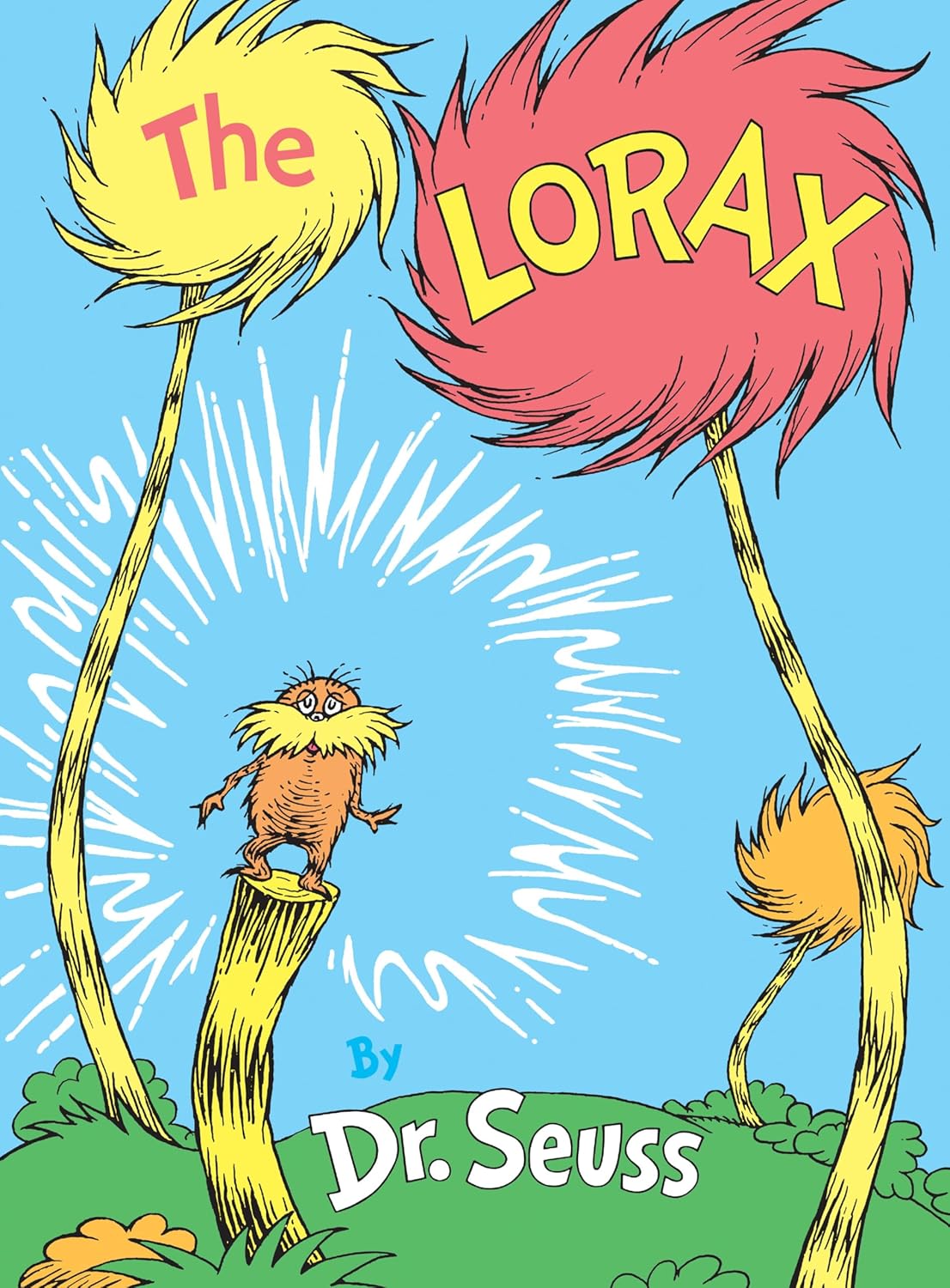
The Lorax by Dr. Seuss is a cautionary tale about environmental destruction — and reportedly his personal favorite of all his books. Published in 1971, years before environmental education became standard classroom practice, it told children that the natural world was worth protecting and that they were the ones who might protect it. More than fifty years later, it remains as urgent and as widely taught as ever. This guide covers the reading level, recommended age, read-aloud vs. independent reading guidance, themes, and everything parents and teachers need to know about sharing this classic with young readers.
For Parents
Find out whether The Lorax works best as a read-aloud or independent read for your child, what age range it suits, and how to talk about its themes of environmental responsibility, greed, and the power of one person — or one child — to make a difference.
For Teachers
Grade-level data, read-aloud timing, key themes, and discussion questions for a book that works equally well in science and SEL units. Essential for Earth Day, environmental literacy, and discussions of cause and effect, advocacy, and what it means to speak for something that cannot speak for itself.
The Lorax at a Glance
Find on Amazon →| Author & Illustrator | Dr. Seuss (Theodor Seuss Geisel) |
| Published | 1971 |
| Grade Level | K–2 (our assessment) |
| Recommended Age | 4–8 |
| Best For | Read-aloud ages 4–8; independent reading ages 6–8 |
| Flesch-Kincaid Grade | 3.7 |
| Word Count | ~1,600 |
| Pages | 72 |
| Genre | Picture book / environmental fable |
| Setting | A once-beautiful valley, now industrial wasteland |
| Awards | NEA Teachers’ Top 100 Books for Children; #1 New York Times Bestseller |
For official Lexile and AR levels, visit Lexile.com or AR BookFinder. ReadingVine provides independent editorial assessments.
What Reading Level Is The Lorax?
The Lorax is a K–2 reading level by our editorial assessment, with a Flesch-Kincaid grade level of approximately 3.7. At around 1,600 words it is one of the longer picture books on this list, and unlike Seuss’s early readers, it was not written to a controlled vocabulary. The text is Seuss’s mature verse — longer sentences, invented words (Truffula, Thneeds, Swomee-Swans, Humming-Fish), and a narrative that spans years of economic and ecological collapse. It sits at the upper end of the K–2 range in reading complexity and at the far end of it in thematic weight.
The FK score reflects the decoding demand accurately but significantly undersells the comprehension challenge. Young children can read the words before they fully grasp what the Once-ler represents, what the Lorax is protecting, or why the ending matters. The book works beautifully as a read-aloud for children as young as four — the rhythm and the visual world of Truffula Trees carry them through — and deepens considerably on subsequent readings and at subsequent ages. It is one of those books that means something new every time you return to it.
For parents who use specific reading level systems: we recommend checking your child’s level on Lexile.com or AR BookFinder for official scores, or asking your child’s teacher for their Guided Reading or DRA level.
Is The Lorax a Read-Aloud or Independent Read?
The Lorax works best as a read-aloud for ages 4–8 and as an independent read for ages 6–8. As a read-aloud, the book’s narrative momentum is considerable — the arrival of the Once-ler, the building of the factory, the progressive disappearance of each species as their habitat is destroyed — and Seuss’s verse keeps the pacing propulsive even as the subject grows darker. Most adults can read it aloud in about 12–16 minutes.
As a read-aloud, the illustrations are essential. Seuss renders the Truffula Valley in full, vivid color when it is beautiful, and the colors drain progressively as the Once-ler’s factory spreads — a visual storytelling technique that children absorb emotionally before they can articulate it analytically. The contrast between the early spreads and the desolate industrial landscape that replaces them is one of the most effective pieces of environmental communication in children’s publishing. Children who look closely at the pictures often feel the loss before the words complete it.
For independent reading, a confident first or second grader can handle the text, though the invented vocabulary will need some contextual support — most of the Seussian words are decodable from context and illustration, but a brief orientation to the story’s world helps. The narrative structure (framed flashback, with the boy paying the Once-ler to tell the story) is more complex than most picture books and benefits from a first read-aloud before independent reading.
A note for parents: The Lorax has a genuinely sad middle. The Lorax warns, is ignored, and eventually disappears. The Brown Bar-ba-loots leave hungry, the Swomee-Swans can’t sing through the smog, the Humming-Fish hum no more. Seuss does not soften this. The book ends hopefully — a single seed, a child who cares — but the desolation that precedes the ending is real and is meant to be felt. Parents of sensitive children may want to be present for the first reading and allow for the feelings it generates.
After the Lorax disappears and only the stone engraved “UNLESS” remains, pause and ask your child: “What do you think ‘UNLESS’ means?” Let them work toward it before you turn the page. Children who arrive at the answer themselves — unless someone like you cares, unless one person decides it matters — feel the weight of the word in a way that being told it doesn’t quite replicate. The ending is most powerful when the child gets there first.
What Is The Lorax About?
A boy visits the Once-ler, a mysterious figure who lives behind a locked door in a desolate, smoggy landscape. He pays fifteen cents, a nail, and the shell of a great-great-great-grandfather snail to hear the story of what happened there. The Once-ler tells him: once, this valley was beautiful, full of Truffula Trees and the animals who lived among them — the Brown Bar-ba-loots, the Swomee-Swans, the Humming-Fish. The Once-ler arrived, cut one Truffula Tree, and knitted its silky tuft into a Thneed — a garment that everyone, he says, needs. The Lorax appeared, speaking for the trees and the animals, warning the Once-ler to stop. The Once-ler did not stop. He built a factory, called in his family, and chopped down the Truffula Trees faster and faster until the last one fell. One by one, the Lorax sent away the animals whose habitat was destroyed. Then the Lorax himself lifted off and was gone, leaving only a small pile of rocks with one word: UNLESS.
The Once-ler has kept the last Truffula seed for all these years. He hands it to the boy. The future of the forest — and everything that lived in it — is now in the child’s hands. Unless someone like you cares a whole awful lot, nothing is going to get better. It’s not.
The Lorax Characters
The Lorax Themes and Lessons
The central theme of The Lorax is the cost of choosing short-term gain over long-term consequences — and the specific challenge of speaking up against that choice when the economic logic feels overwhelming. The Lorax speaks for the trees. He is not wrong. He is also not heard, which is the book’s most honest and most uncomfortable truth. Seuss does not resolve this tension with an easy lesson; instead he puts the seed in the child’s hands and says: it’s up to you now. That ending is both a burden and a gift, and it is what makes The Lorax a more lasting environmental text than most books that simply tell children to be kind to nature.
The book is also a precise portrait of how environmental destruction happens gradually. The Once-ler doesn’t destroy the valley in one act of malice — he does it step by step, each step justified by the previous one, until the final Truffula Tree falls and there is no going back. Children who follow this sequence are receiving an early lesson in cumulative consequence: how small decisions add up, how ignoring warnings compounds them, and how the moment when something becomes irreversible often looks, from the inside, like just another ordinary moment.
For teachers, The Lorax is one of the most versatile books in the K–2 library. It works in science units on ecosystems, food chains, and pollution; in SEL units on speaking up and advocacy; in writing units on persuasion and argument; and in social studies units on economics, community, and responsibility. Seuss’s UNLESS — “unless someone like you cares a whole awful lot” — is one of the most quoted lines in environmental education, and it gives children language for the idea that their choices matter.
Discussion starters for families: Why didn’t the Once-ler listen to the Lorax? What happened to each of the animals when their home was destroyed? What does UNLESS mean at the end of the book? What is one thing you could do to take care of the natural world? Do you think the boy will plant the seed? What do you think the Truffula Valley would look like in ten years if he does?
How Long Is The Lorax?
The Lorax has 72 pages and approximately 1,600 words — one of the longer picture books on the K–2 list. Most adults can read it aloud in about 12–16 minutes. The book’s narrative structure — a framed story told by the Once-ler to the boy — gives it a slightly longer feel than its word count suggests, because each element of the story is given visual space to breathe in Seuss’s illustrations.
A child reading independently at a first- or second-grade level will typically finish in about 15–20 minutes. The Lorax is a book that many children want to discuss immediately after finishing — the ending generates questions and feelings that need somewhere to go — and building time for conversation after the reading is worth planning for.
Books Similar to The Lorax
If your child loves The Lorax, these titles share its environmental themes, its sense of speaking up for something that matters, or its place in the science and nature cluster:
About the Author and Illustrator
Dr. Seuss (Theodor Seuss Geisel, 1904–1991) considered The Lorax his personal favorite of all his books. He was direct about where it came from: “The Lorax came out of me being angry. The ecology books I’d read were dull. In The Lorax I was out to attack what I think are evil things and let the chips fall where they might.” Published in 1971, the book arrived as the American environmental movement was gathering force — the first Earth Day had been observed in April 1970, and Rachel Carson’s Silent Spring had been in print for nearly a decade — but Seuss’s version was angrier, more personal, and more willing to name the economic logic that drives environmental destruction than most children’s books would dare.
The book was not universally celebrated on publication. The logging industry was sufficiently aggrieved by The Lorax that a lumber trade group produced a counter-book called The Truax in the 1990s, featuring a logging-friendly perspective on the same conflict — a measure of how seriously the industry took Seuss’s critique. A single line was later updated by Seuss after researchers wrote to him about the cleanup of Lake Erie, changing a reference that implied the lake was beyond saving: evidence that he took the book’s factual claims as seriously as its emotional ones.
Today The Lorax is consistently listed among the most influential environmental texts in American education. The National Education Association named it one of its Teachers’ Top 100 Books for Children, and it ranks among the top children’s books in School Library Journal’s survey of picture book classics. Seuss’s career awards include the Pulitzer Prize Special Citation, two Caldecott Honors, and eight honorary doctorates, along with three Oscars, three Emmys, three Grammys, and a Peabody for adaptations of his work. His birthday, March 2, has been designated National Read Across America Day by the NEA.
The Lorax: Frequently Asked Questions
What reading level is The Lorax?
The Lorax is a K–2 reading level by our editorial assessment, with a Flesch-Kincaid grade level of approximately 3.7. At around 1,600 words with mature Seussian verse and complex themes, it sits at the upper end of the K–2 range. It works best as a read-aloud for ages 4–8 and as an independent read for ages 6–8. For official Lexile and AR levels, visit Lexile.com or AR BookFinder.
What age is The Lorax for?
The Lorax is appropriate for ages 4–8. As a read-aloud it works from age 4 — the rhythm and the visual world of Truffula Trees carry young children through even when the thematic content is above them. As an independent read it suits confident first and second graders ages 6–8. The book deepens considerably on subsequent readings and at subsequent ages, and many adults find it more affecting than they did as children.
What is the message of The Lorax?
The Lorax’s central message is captured in its most quoted line: “Unless someone like you cares a whole awful lot, nothing is going to get better. It’s not.” The book argues that environmental destruction happens gradually, through choices that each seem small, and that the only thing that reverses it is someone who decides to care — and act. The message is addressed directly to the child reader, who receives the last Truffula seed and the responsibility that comes with it. It is not a comfortable message, and it is not meant to be.
How long does it take to read The Lorax aloud?
Most adults can read The Lorax aloud in about 12–16 minutes. The book benefits from a pacing that allows the progressive deterioration of the Truffula Valley to land — rushing through the middle section, where the animals are sent away one by one, diminishes the emotional impact of the ending. Building time for discussion afterward is worth planning for.
What is The Lorax about?
The Lorax is about a boy who pays to hear the Once-ler tell the story of how a beautiful valley full of Truffula Trees and wildlife was destroyed by the Once-ler’s factory, despite the Lorax’s repeated warnings. One by one the animals left as their habitat was destroyed, and then the last Truffula Tree fell and the Lorax himself was gone, leaving only a stone engraved UNLESS. The Once-ler gives the boy the last Truffula seed. The future of the forest is now in the child’s hands. It is a story about greed, environmental destruction, and the power of a single person — or child — who cares enough to act.
Is The Lorax appropriate for Earth Day?
The Lorax is one of the most widely used Earth Day books in American K–2 classrooms, and with good reason — it was written before Earth Day existed and anticipated its concerns with unusual accuracy. It connects naturally to Earth Day discussions about recycling, pollution, habitat loss, and the relationship between economic choices and environmental consequences. The book’s final message — that one child with one seed can begin to reverse what was lost — is particularly well suited to the Earth Day framing of individual action as the beginning of larger change.