
 = Partner Site
The Night Before Christmas Reading Level: A Complete Guide
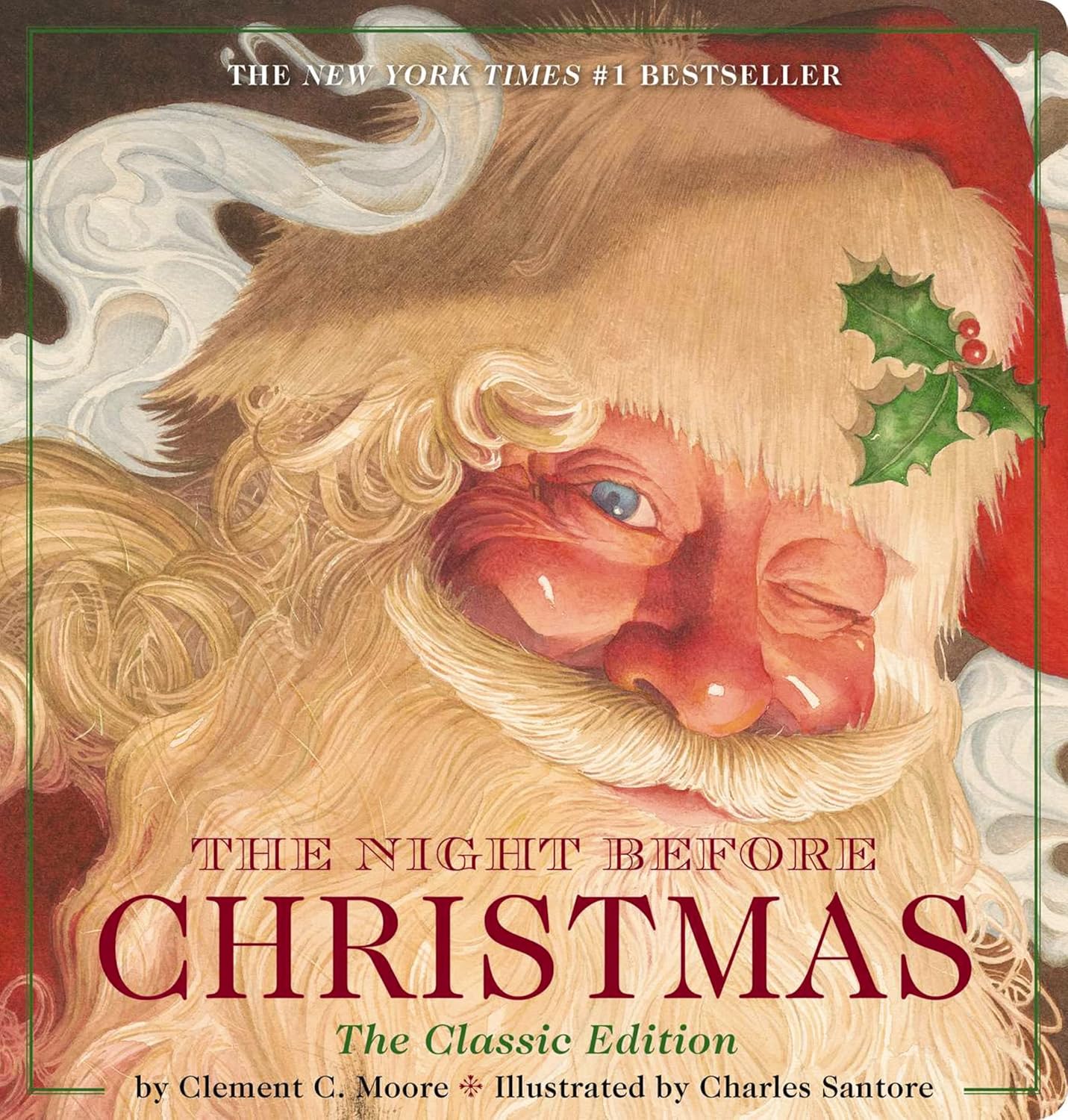
The Night Before Christmas — originally titled “A Visit from St. Nicholas” — is a poem of 56 lines in anapestic tetrameter, first published anonymously in a Troy, New York newspaper on December 23, 1823, and later attributed to Clement Clarke Moore. It is the single most influential text in the history of American Christmas tradition: before this poem, St. Nicholas was a thin, bishop-robed, somewhat stern figure from Dutch and European tradition. After it, he was jolly and rotund, dressed in fur, arriving by sleigh pulled by eight named reindeer, descending through chimneys, filling stockings, and departing with a laugh and a finger laid beside his nose. Moore — or whoever wrote it — invented the modern Santa Claus. The poem has been illustrated in hundreds of editions by artists including Jan Brett, Norman Rockwell, Tasha Tudor, Tomie dePaola, and Charles Santore; it is in the public domain and freely available; and it has been read aloud on Christmas Eve in American homes for more than two hundred years. This guide covers The Night Before Christmas‘s reading level, which illustrated edition to choose, what it’s about, its historical significance, how long it takes to read, and similar books — designed for parents and teachers of K–2 readers.
For Parents
The poem that invented modern Santa Claus — in print for over two hundred years, available in dozens of illustrated editions, and the most widely read Christmas Eve text in American homes. Best for ages 3 and up, any grade. No content concerns. The question is not whether to read it but which edition to choose.
For Teachers
A December classroom staple — ideal for read-aloud, poetry study, and discussions of how literature shapes cultural tradition. The authorship controversy (Moore vs. Henry Livingston Jr.) is excellent material for teaching about historical evidence and attribution. The public domain text is freely available at Project Gutenberg for reproduction in any format.
The Night Before Christmas at a Glance
Find on Amazon →| Author | Attributed to Clement Clarke Moore (1779–1863); authorship disputed |
| First Published | 1823 (Troy Sentinel newspaper, anonymously) |
| Original Title | A Visit from St. Nicholas |
| Grade Level | PreK–3 (our assessment) |
| Recommended Age | 3–8 |
| Lexile | NP (Non-Prose — poem) |
| Word Count | ~530 |
| Length | 56 lines; anapestic tetrameter |
| Genre | Narrative poem / Christmas tradition |
| Availability | Public domain — freely available at Project Gutenberg |
| Pages | Varies by illustrated edition (typically 32–48) |
For official Lexile and AR levels, visit Lexile.com or AR BookFinder. ReadingVine provides independent editorial assessments.
What Reading Level Is The Night Before Christmas?
The Night Before Christmas carries a Non-Prose (NP) Lexile designation because it is a poem — the same situation as The Sneetches, Crown, and other verse texts in this catalog. The Lexile formula is designed for prose and cannot reliably score rhyming narrative. The absence of a numerical Lexile does not indicate difficulty; it indicates form.
The poem’s actual reading demands are unusual: the anapestic tetrameter (“’twas the NIGHT be-fore CHRIST-mas, and ALL through the HOUSE”) is one of the most rhythmically infectious meters in the English language, and children who have heard it read aloud absorb the rhythm instinctively — they can recite lines before they can decode them. The vocabulary includes some archaic or formal words (“coursers,” “lustre,” “tarnished,” “droll”) that may need brief explanation but do not impede comprehension when the poem is read aloud with appropriate expression. As a read-aloud, it is appropriate from age 3 onward. As an independent reader, comfortable independent reading is at approximately grades 2–4, but most encounters with this poem across childhood will be as a shared read-aloud rather than a private reading. For official Lexile and AR scores, visit Lexile.com or AR BookFinder. ReadingVine’s assessments are independent editorial judgments.
Which Edition of The Night Before Christmas Should I Buy?
Because the poem is in the public domain, there are hundreds of illustrated editions — which makes choosing one genuinely confusing. The text is identical across all of them; the choice is entirely about whose illustrations you want to live with. Here are the most celebrated and most commonly recommended editions:
Jan Brett (1998, Putnam): Brett’s signature bordered illustration format applied to the poem, with Ukrainian folk art motifs in the borders and warm, detailed scenes of a Victorian-era household. The same visual richness and foreshadowing border technique as The Mitten. An excellent choice for families who love Brett’s other books. Best for children who respond to detailed, realistic illustration.
Charles Santore (2010, Running Press): Lush, photo-realistic oil paintings in a large-format edition with a gatefold spread — Publisher’s Weekly gave it a starred review and called the gatefold “gorgeous.” Santore is a fine artist whose work hangs in museums; this edition is the most visually stunning available for adult collectors and for children who respond to dramatic, painterly illustration. Also has a Dutch-tradition note about “Donder” as the correct name for the reindeer later called Donner.
Tasha Tudor (1999, Little Simon): Tudor’s delicate, antique watercolors give the poem a warm, nostalgic quality — the illustrations look like 19th-century engravings and are among the most faithful in spirit to the poem’s historical period. Best for families who prefer a quieter, more old-fashioned visual world.
Tomie dePaola (1980, Holiday House): dePaola’s characteristic folk-art style — flat, bold, warm — gives the poem a childlike accessibility that makes it particularly effective for the youngest readers. One of the most widely assigned classroom editions. dePaola is one of the most beloved children’s book illustrators in American history.
All four editions contain identical text. The right choice depends on the child and the family’s visual preferences. Any of these editions makes a gift that will last decades.
Is The Night Before Christmas a Read-Aloud or Independent Read?
This is above all a read-aloud — specifically a Christmas Eve read-aloud, which is how it has been experienced in American homes for two hundred years. The anapestic tetrameter is one of the most performative meters in the English language: it has the rhythm of a gallop, which is exactly right for a poem about reindeer on a rooftop. Read aloud with full commitment to the rhythm, it lifts off the page into something that feels both ancient and absolutely alive.
Independent reading is appropriate for grades 2–4 for children who want to return to the text on their own, but the poem’s power is fundamentally oral — it wants to be heard, and it is best heard in the specific context of Christmas Eve, in a warm room, by someone who loves it.
Read it every Christmas Eve, starting as early as you can — age three, age two, it doesn’t matter. The poem is short enough to read twice. Children who have heard it read aloud every December of their childhood carry it in their bodies; by the time they are eight or nine they are reciting lines alongside you without realizing they have memorized them. The tradition is the point as much as the text.
What Is The Night Before Christmas About?
On Christmas Eve, a father has settled the children in bed and gone to sleep himself, when a clatter on the lawn wakes him. He goes to the window, tears open the shutter, and throws up the sash. In the moonlit snow he sees a miniature sleigh pulled by eight tiny reindeer, driven by a little old driver who is lively and quick. The driver lands on the roof. Down the chimney he comes — and the narrator meets him: a jolly old elf, his clothes covered in ashes and soot, a sack of toys on his back, his eyes all a-twinkle, his cheeks like roses, his nose like a cherry, his belly shaking “like a bowl full of jelly.” He fills the stockings, nods to the narrator, goes up the chimney, and is gone. The narrator hears him exclaim as he drives out of sight: “Happy Christmas to all, and to all a good night.”
The poem is narrated by the father — not the children — and the encounter is intimate and brief. St. Nicholas does not speak until the final couplet. The whole poem takes place in the space of a few minutes and has the quality of a dream: it is vivid, specific, and gone as quickly as it came.
The Poem That Invented Santa Claus
Before “A Visit from St. Nicholas” was published in 1823, St. Nicholas — the Christian bishop whose feast day is December 6 — was depicted in American Christmas tradition as a thin, serious, religious figure in bishop’s robes, associated with modest gift-giving to children who had been good. The Dutch Sinterklaas tradition, which came to America through New York’s Dutch colonial heritage, was somewhat more playful, but still quite different from the Santa Claus most Americans recognize today.
The 1823 poem changed everything. Its St. Nicholas is fat, jolly, and dressed in fur. He travels by sleigh pulled by eight named reindeer. He enters through chimneys. He fills stockings with gifts. He laughs (“Ho ho ho” is the natural reading of his twinkle and his jolliness, though the poem itself doesn’t use those words). He is described with enough physical specificity — the nose, the belly, the cheeks — that he became a visual archetype for American illustrators throughout the 19th century, culminating in the Coca-Cola advertising images of the 1930s that fixed the red suit and white beard as the definitive Santa Claus for the 20th century.
The poem also named eight of the nine reindeer in the modern Santa mythology (Rudolph was added by Robert L. May in 1939). The original names include “Donder” rather than “Donner” — a Dutch word for thunder, consistent with the poem’s New York Dutch cultural roots. Some editions preserve “Donder”; others modernize it to “Donner.”
Who Really Wrote The Night Before Christmas?
The poem was published anonymously in 1823. Clement Clarke Moore — a wealthy New York landowner and professor of classics — claimed authorship in 1836 when the poem was reprinted with his name attached, and included it in an anthology of his own work in 1844. This attribution has been the standard one for most of the poem’s history.
However, the authorship has been disputed, most seriously by scholars who argue that the poem was actually written by Henry Livingston Jr. (1748–1828), a New York poet whose surviving family members claimed he read the poem to his children years before it was published. The stylistic and tonal differences between this poem and Moore’s other known works are significant: Moore’s other poetry is formal, classical, and serious, while “A Visit from St. Nicholas” is light, playful, and vernacular — much more consistent with Livingston’s known work and personality.
The authorship question has never been definitively resolved. Both Moore and Livingston are now dead; no manuscript in either man’s hand has been found; and the historical evidence can be read to support either attribution. Most children’s editions attribute the poem to Moore, because his is the name that has been on it for nearly two centuries. The dispute is noted here for parents and teachers who want to know it, and is genuinely interesting material for older students studying questions of historical evidence and attribution.
The Night Before Christmas Themes and Lessons
The poem’s power is inseparable from repetition across years — it is not primarily a text to be understood but a text to be accumulated. Children who hear it every Christmas Eve carry it in their memory in a way that makes it part of their Christmas itself; the rhythm of the lines becomes associated with the smell of pine and the anticipation of morning in a way that no analysis can fully capture or replace. This is what two hundred years of annual reading does to a text.
For classroom use, the poem is an exceptional introduction to anapestic tetrameter — the bouncing, galloping rhythm that also drives Dr. Seuss’s books and much of the poetry children love. Teaching children to clap or tap the rhythm of “’twas the NIGHT be-fore CHRIST-mas” is a concrete phonological awareness exercise that connects the pleasure of the poem to its formal structure.
Talking with your child: Can you hear the rhythm of the poem — does it sound like hoofbeats? Can you name all eight reindeer? What does St. Nicholas look like in this poem — and does that match the Santa you imagine? Which illustrated edition do you like the most — why?
How Long Is The Night Before Christmas?
The poem is 56 lines — approximately 530 words — and takes about four to five minutes to read aloud at an appropriate pace. Most illustrated editions run 32–48 pages, with the illustrations carrying the visual weight of each stanza. It is the shortest text in this catalog by a significant margin. Reading it twice on Christmas Eve — once slowly, once with full theatrical commitment to the meter — takes under ten minutes and is one of the most satisfying possible uses of ten minutes in December.
Books Similar to The Night Before Christmas
About Clement Clarke Moore (and the Authorship Question)
Clement Clarke Moore was born on July 15, 1779, in New York City, the son of the Episcopal Bishop of New York. He inherited a large estate in what is now the Chelsea neighborhood of Manhattan, much of which he donated to the General Theological Seminary, where he taught Greek, Latin, and divinity for more than twenty-five years. He was a serious scholar and a prolific writer of formal, classical poetry — none of which resembles “A Visit from St. Nicholas” in tone, meter, or spirit. He claimed authorship of the poem in 1836, thirteen years after its anonymous publication, and included it in his 1844 anthology of poems. He died on July 10, 1863.
Henry Livingston Jr. (1748–1828) was a New York landowner, surveyor, and poet who is now the leading alternative candidate for authorship. His surviving family members claimed he read the poem to his children before 1823; his known poetry is playful, vernacular, and metrically similar to the disputed poem in ways that Moore’s other work is not. The authorship dispute has been examined by literary scholars using stylometric analysis, historical research, and handwriting evidence without reaching a definitive conclusion. Most editions continue to attribute the poem to Moore because his attribution is older and more widely known. The truth remains unknown.
The poem is in the public domain and available free of charge at Project Gutenberg (gutenberg.org) and many other sources.
The Night Before Christmas: Frequently Asked Questions
What reading level is The Night Before Christmas?
The Night Before Christmas carries a Non-Prose (NP) Lexile designation — a poem, which the Lexile formula cannot score. Our assessment: appropriate as a read-aloud from age 3 onward; comfortable independent reading at grades 2–4. The anapestic meter makes the rhythm highly accessible even before children can decode the words. For official AR scores, visit AR BookFinder.
Which edition of The Night Before Christmas is best?
The text is identical across all editions — the choice is entirely about illustration style. Jan Brett’s edition offers her distinctive bordered format and detailed folk-art richness. Charles Santore’s edition offers lush oil paintings in a large format with a gatefold spread. Tasha Tudor’s edition has antique watercolor warmth. Tomie dePaola’s edition has bold folk-art accessibility for the youngest readers. Any of these is an excellent choice; the right one depends on your family’s visual preferences.
Who wrote The Night Before Christmas?
The poem was published anonymously in 1823 and later attributed to Clement Clarke Moore, who claimed it in 1836. However, the authorship is disputed — many scholars argue it was actually written by Henry Livingston Jr. (1748–1828), whose known poetry is much more stylistically similar to the poem than Moore’s other work. The question has never been definitively resolved. Most editions attribute it to Moore.
What are the eight reindeer names in The Night Before Christmas?
Dasher, Dancer, Prancer, Vixen, Comet, Cupid, Donder (or Donner), and Blitzen. “Donder” is the original spelling — a Dutch word for thunder, consistent with the poem’s New York Dutch cultural roots. Some editions modernize it to “Donner.” Rudolph was not in the original poem; he was added by Robert L. May in a 1939 Montgomery Ward promotional booklet.
Is The Night Before Christmas in the public domain?
Yes — the poem was written in 1822 or 1823 and has been in the public domain for well over a century. The text is freely available at Project Gutenberg (gutenberg.org) and many other sources. Individual illustrated editions are under the copyright of their respective illustrators, but the text itself is free to reproduce in any format.
How long does it take to read The Night Before Christmas aloud?
About four to five minutes at an appropriate pace. Most families read it on Christmas Eve; it is short enough to read twice, which is often the right choice — once slowly to look at the illustrations, once at full galloping speed to feel the meter. Both readings together take under ten minutes.
What does “Happy Christmas” mean at the end — why not “Merry Christmas”?
“Happy Christmas” is the traditional British and 19th-century American phrasing — “Merry Christmas” as the dominant American greeting came later in the 19th century. The poem uses “Happy Christmas,” which is what Moore (or Livingston) would have said in 1822. Many families read it exactly as written; others modernize it to “Merry Christmas.” Either is fine; knowing the original is interesting.