
 = Partner Site
The Sun Also Rises Reading Level: A Complete Guide
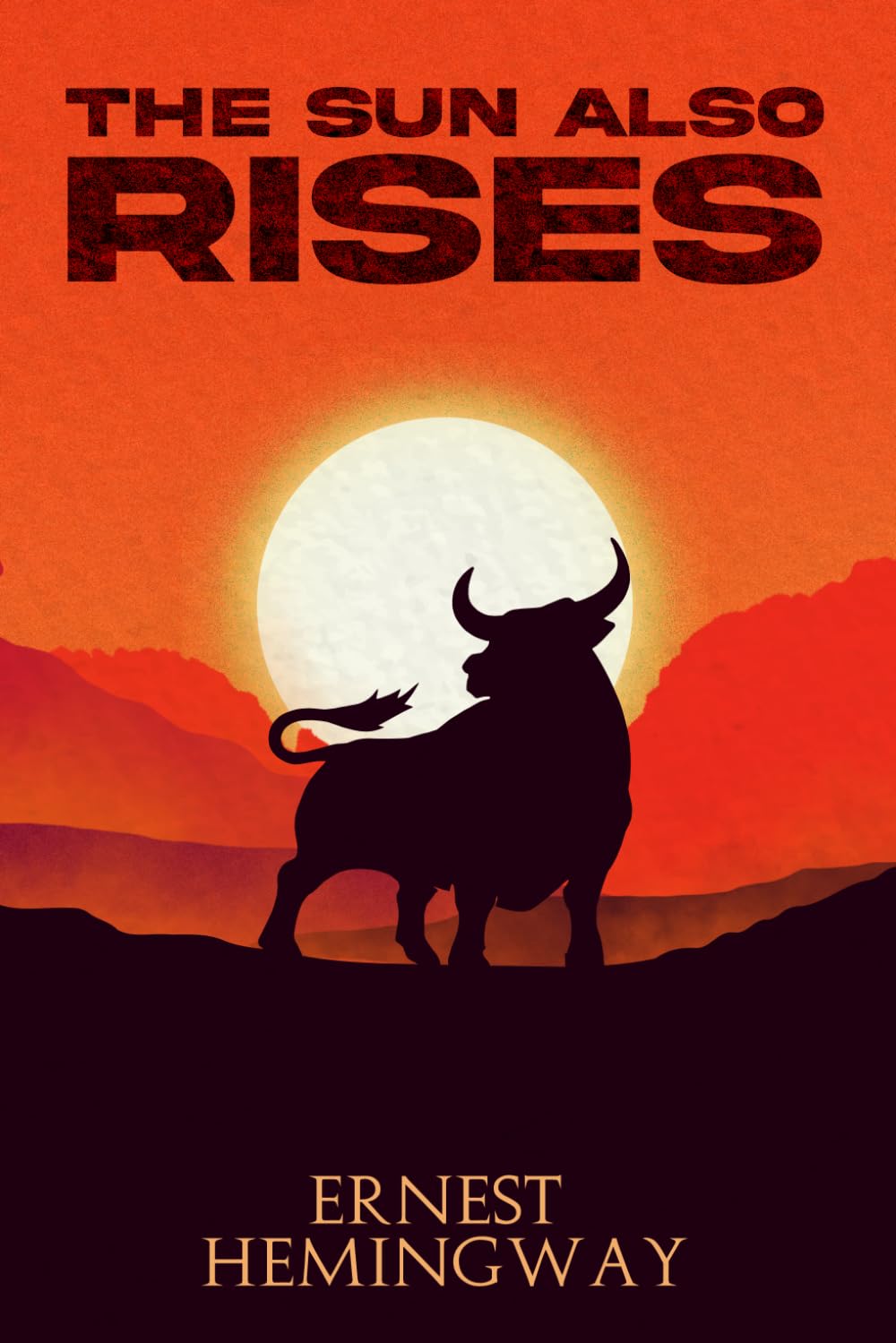
The Sun Also Rises by Ernest Hemingway is a novel about a group of American and British expatriates living in Paris in the mid-1920s — drinking, talking, moving through a social world without purpose or direction — who travel together to Pamplona, Spain, for the Festival of San Fermín and the bullfights. Published in 1926, it was Hemingway’s first novel and the work that defined both his prose style and the literary portrait of the Lost Generation: the men and women who came of age during the First World War and found themselves, after it, unable to believe in the institutions and certainties that the war had destroyed. This complete guide covers The Sun Also Rises‘s reading level, recommended age, content considerations, characters, themes, and books similar to The Sun Also Rises, designed for parents, teachers, and students.
For Parents
A short, technically brilliant, and emotionally restrained novel that operates almost entirely through implication — what the characters don’t say, and what Hemingway doesn’t describe directly, carries more weight than what is on the page. The content concerns are real: sustained drinking, sexual frankness, and the treatment of Robert Cohn, the novel’s Jewish character, require honest discussion. Appropriate for readers ages 14 and up.
For Teachers
A standard grades 9–12 text and Hemingway’s clearest single demonstration of his prose style in operation. The iceberg theory is visible on every page — the surface is almost nothing, and nearly everything important is happening beneath it. Robert Cohn’s treatment by the other characters is a productive and necessary classroom discussion about antisemitism in literature, whether an author endorses the views his characters hold, and what it means to read a classic text that contains prejudice. Pairs naturally with historical context about the Lost Generation, post-WWI Paris, and the 1920s expatriate literary scene.
The Sun Also Rises at a Glance
Find on Amazon →| Author | Ernest Hemingway |
| Published | 1926 (Scribner) |
| Grade Level | 9–12 (our assessment) |
| Recommended Age | 14+ |
| ATOS Reading Level | 4.4 |
| Lexile | 610L |
| Word Count | 67,707 |
| Pages | 256 (Scribner paperback) |
| Chapters | 19 (in 3 books) |
| Genre | Literary fiction / modernist novel |
| Setting | Paris; Pamplona, Spain; mid-1920s |
For official Lexile and AR levels, visit Lexile.com or AR BookFinder. ReadingVine provides independent editorial assessments.
What Reading Level Is The Sun Also Rises?
The Sun Also Rises has an ATOS reading level of 4.4 and a Lexile of 610L — the lowest scores in Hemingway’s catalog, and the widest gap between what the formulas measure and what the novel actually demands. A Lexile of 610L places the novel at roughly 5th grade; it is assigned in grades 9–12. The gap is not exceptional in the way the Hemingway gap always is — plain sentences, Anglo-Saxon vocabulary, minimal description — but it is perhaps most striking here because this is Hemingway at his most stripped down. The Sun Also Rises contains long passages of dialogue that do almost nothing but exist on the page, and the reader is expected to understand what they mean without being told.
The novel’s famous opening chapters — the expatriates in Paris, the bars, the conversations about nothing in particular — require a reader who understands that the apparent aimlessness is the point. Jake Barnes and his friends are people whose capacity for purposeful life was destroyed by the war, and the flatness of the prose — the unweighted catalogue of drinks ordered and glasses emptied — is Hemingway’s formal enactment of their condition. Younger readers who want things to happen often find the Paris section frustrating; older readers recognize it as the novel’s most technically accomplished section. At 67,707 words and 256 pages, the novel reads in three to five hours at a brisk pace; most classroom readers take one to two weeks. For official Lexile and AR scores, visit Lexile.com or AR BookFinder. ReadingVine’s assessments are independent editorial judgments.
What Age Is The Sun Also Rises Appropriate For?
We recommend The Sun Also Rises for readers ages 14 and up. The novel contains sustained alcohol use by every character (drinking is the group’s primary activity), frank sexual content including Brett’s multiple liaisons, and the antisemitic treatment of Robert Cohn that is the novel’s most significant content concern.
The novel’s treatment of Robert Cohn — the only Jewish character — requires explicit attention in any classroom assignment. The other characters in the novel subject Cohn to consistent antisemitic mockery and resentment, characterizing his behavior as specifically Jewish rather than simply personal. The narrating character Jake Barnes participates in this, and Hemingway does not clearly condemn it. Whether Hemingway is satirizing the antisemitism of his characters, reflecting the casual prejudice of the era, or both simultaneously is a genuine critical debate; what is not debatable is that the antisemitism is present and sustained throughout the novel. Teachers assigning the novel should prepare students for this material rather than leaving them to encounter it without context. The novel also depicts Brett Ashley’s sexual independence with the same flat, non-judgmental tone it uses for everything else — which some readers find liberating and others find troubling. There is no graphic sexual description, but the frankness about sex as a feature of the characters’ lives is adult in register.
What Is The Sun Also Rises About?
Jake Barnes is an American newspaper correspondent living in Paris in 1925. He was wounded in the First World War in a way that has left him sexually impotent — Hemingway is oblique about the specifics, as he is about everything — and he is in love with Lady Brett Ashley, an English war widow who loves him back and who cannot be faithful to anyone. The impediment between them is not emotional but physical, and the fact that their love cannot be consummated is the novel’s central wound, felt throughout and never directly acknowledged.
Around Jake and Brett moves a group of expatriates: Robert Cohn, a Jewish-American novelist with whom Brett has briefly had an affair; Mike Campbell, a bankrupt Scottish nobleman to whom Brett is engaged; Bill Gorton, Jake’s friend from New York; and various others who drift through the cafés and bars of 1920s Paris. The group’s life is almost entirely social: they drink, they go to the races, they move from café to café, they argue about small things and avoid the large ones. The first third of the novel — set in Paris — is devoted to this life, and it operates entirely through implication. What is happening is the sustained performance of not dealing with what has happened.
The group travels to Pamplona for the Festival of San Fermín: the running of the bulls through the streets and the bullfights in the afternoon. Pamplona brings their tensions into the open. Cohn, who has been trailing Brett despite her coldness, becomes the object of the group’s combined resentment — Mike’s drunken contempt, Bill’s casual mockery, Jake’s more restrained but real hostility. Brett briefly takes up with a young bullfighter named Pedro Romero, whose traditional skill and self-possession in the ring Hemingway treats as the novel’s primary example of authentic value — a man who knows what he is and does it well, without the Lost Generation’s confusion and drift. The festival ends in fights, humiliation, and dispersal. The final pages follow Jake alone in San Sebastián and then to Madrid, where he receives a telegram from Brett asking him to come. He goes. Their last exchange, in a taxi, is the novel’s last word on whether anything will ever be different between them.
The Sun Also Rises Characters
Is The Sun Also Rises Banned?
The Sun Also Rises was banned in Boston, Massachusetts, in 1930, in Ireland in 1953, and in Riverside and San Jose, California, in 1960 — primarily on grounds of profanity, sexual content, and the overall decadence of its characters. It was burned by the Nazis in Germany in 1933, reportedly for the same quality of accurate war depiction that led to A Farewell to Arms being banned in Italy — a war novel that tells the truth about war is a threat to governments that need war to be glorious. During the 1980s, the ALA listed the novel as persistently challenged for three reasons: sexual content and debauchery, violent death and brutality, and the novel’s implication of a universe indifferent to human suffering.
The antisemitic treatment of Robert Cohn has also generated objections in some school districts, though it has not been the primary stated reason for formal challenges. The antisemitism is real, documented, and worth addressing in any educational context, but removing the novel from curricula does not address it; discussing it does.
The Sun Also Rises Themes and Lessons
Gertrude Stein told Hemingway: “You are all a lost generation.” He used this as an epigraph, alongside a passage from Ecclesiastes about the sun also rising and the earth abiding forever — the latter being his counter-argument to the former. The Stein epigraph describes what the characters are; the Ecclesiastes epigraph suggests what they are set against: something permanent and indifferent that will continue when they are gone, and which they can either orient themselves toward or ignore. The Lost Generation, in Hemingway’s portrait, is a group that cannot find anything to orient itself toward, and the emptiness this produces — the drinking, the movement, the aimless brilliance of the conversation — is what the novel enacts.
The bullfighting sections are the novel’s most discussed formal element in criticism, and they reward patient reading. For Hemingway, bullfighting was an art form rather than a sport — a skilled engagement with death that required the bullfighter to be fully present to what he was doing, with no self-deception and no distance. Pedro Romero’s skill in the ring is presented as a model of the authentic life the expatriates cannot access: he knows exactly what he is doing, he does it with complete technical mastery, and the mortal risk is not hidden but confronted directly. This is Hemingway’s code hero in his clearest form — the person who does their work well, who does not flinch from its cost, and who maintains their integrity under pressure.
Robert Cohn’s antisemitic treatment raises what is now the novel’s most live classroom issue. Hemingway drew Cohn directly from his real friend Harold Loeb, and the portrait is unkind. The critical question — whether Hemingway is satirizing the antisemitism of his characters or simply reproducing the casual prejudice of his era — does not have a settled answer, and teachers should present it as the genuine open question it is. What is settled is that the antisemitism is there, that it is not incidental, and that reading the novel without discussing it is a mistake.
Discussion questions for classrooms and families: What does the Ecclesiastes epigraph add to the Gertrude Stein epigraph — do they contradict each other, or complement each other? What does Hemingway find in bullfighting that his expatriate characters cannot find in their own lives? How does Jake’s impotence function in the novel — is it literal, or also metaphorical, or both? What should readers do with the antisemitism directed at Cohn — is Hemingway endorsing it or depicting it? What is the significance of the novel’s last two lines: “Yes,” I said. “Isn’t it pretty to think so.”
How Many Pages and Chapters in The Sun Also Rises?
The Scribner paperback is 256 pages across 19 chapters organized into three structural sections Hemingway called “books” — Book One covering Paris, Book Two covering Pamplona, Book Three a brief coda following Jake alone. Word count is 67,707. Most readers finish the text in a single long sitting or two short ones; a classroom typically takes one to two weeks to read and discuss it thoroughly.
The novel’s pacing is deliberately uneven: Book One (Paris) moves slowly and requires patience; Book Two (Pamplona) accelerates considerably as the tensions the first section has been building arrive and break; Book Three is very short, almost a coda. This structural rhythm is worth discussing with students — the novel uses pacing itself as part of its argument about what the Lost Generation’s life actually felt like.
Books Similar to The Sun Also Rises
About Ernest Hemingway
Ernest Hemingway was born in 1899 in Oak Park, Illinois. He traveled to Spain for the first time in 1923, attended his first Festival of San Fermín in Pamplona in 1923, and returned in 1924 with a group of friends including Harold Loeb — who became the basis for Robert Cohn — and Lady Duff Twysden, a British socialite who became the basis for Brett Ashley. He began writing what became The Sun Also Rises on his twenty-sixth birthday, during a second Pamplona trip in July 1925, completing a first draft in about eight weeks. On F. Scott Fitzgerald’s advice, he cut the novel’s original opening — several thousand words of Parisian backstory — and began instead with the novel’s third chapter, which is now its first.
The novel was published in October 1926, when Hemingway was twenty-six years old, to immediate controversy and eventual recognition as the defining literary portrait of the Lost Generation. Its epigraph — Gertrude Stein’s remark about the lost generation, paired with the Ecclesiastes passage — was chosen after the draft was complete. Hemingway’s other major works include A Farewell to Arms (1929), For Whom the Bell Tolls (1940), and The Old Man and the Sea (1952). He received the Nobel Prize for Literature in 1954 and died by suicide in 1961.
The Sun Also Rises: Frequently Asked Questions
What reading level is The Sun Also Rises?
The Sun Also Rises has an ATOS reading level of 4.4 and a Lexile of 610L — the lowest scores in Hemingway’s catalog, and the widest gap between formula measurement and actual demands. The plain prose keeps the metrics low, but the novel’s technique — operating almost entirely through implication — requires genuine literary maturity. Our editorial assessment places it at grades 9–12, ages 14 and up. For official Lexile and AR scores, visit Lexile.com or AR BookFinder.
What grade is The Sun Also Rises appropriate for?
We recommend grades 9–12, ages 14 and up. The novel contains sustained alcohol use, frank sexual content, and antisemitic treatment of the character Robert Cohn. Teachers should prepare students for the antisemitism before assigning the novel rather than leaving them to encounter it without context. Most commonly assigned in grades 10–11.
How many pages are in The Sun Also Rises?
The Scribner paperback is 256 pages across 19 chapters in three structural sections. Word count is 67,707. Most readers finish it in three to five hours at a brisk pace; most classrooms take one to two weeks.
What is The Sun Also Rises about?
A group of American and British expatriates living in Paris in 1925 — drinking, talking, drifting through their social world — travel to Pamplona for the bullfights. At the center is Jake Barnes, a journalist in love with Lady Brett Ashley, and the war wound that prevents anything from coming of it. The novel is about the Lost Generation’s inability to find meaning or direction after the First World War destroyed the certainties their lives had been built on.
What is the Lost Generation?
The term — attributed by Hemingway to Gertrude Stein — refers to the generation of Americans (and Europeans) who came of age during the First World War and found themselves, after it, unable to believe in the institutions, ideals, and certainties the war had destroyed. In The Sun Also Rises, the Lost Generation is embodied in a specific group of Paris expatriates whose restless, purposeless social life is Hemingway’s portrait of what it looks like to have lost belief in something and not yet found anything to replace it.
Is The Sun Also Rises antisemitic?
The novel contains sustained antisemitism in the treatment of Robert Cohn, who is repeatedly mocked and resentful by the other characters in ways that attribute his failings specifically to his Jewishness. Whether Hemingway is satirizing the antisemitism of his characters or reflecting the casual prejudice of his era — or both — is a genuine critical debate without a settled answer. What is not debatable is that the antisemitism is present and persistent. It should be discussed directly rather than minimized or explained away.
What does the last line of The Sun Also Rises mean?
The novel’s final exchange: Brett says, “Oh, Jake, we could have had such a good time together.” Jake replies: “Yes. Isn’t it pretty to think so.” The line is Hemingway’s most direct statement of the novel’s central argument: that what Jake and Brett want from each other is not possible, that Brett knows this and is asking Jake to pretend it isn’t true, and that Jake — in the only moment of the novel where he fully refuses the comfortable illusion — declines. “Isn’t it pretty to think so” is simultaneously gentle and devastating; the affection is real and the impossibility is real, and Jake finally says both at once.
What is Jake Barnes’s injury in The Sun Also Rises?
Jake was wounded in the First World War in a way that has left him sexually impotent. Hemingway is deliberately oblique about the specific nature of the injury — it is not directly described. The injury is the novel’s central physical fact: it is what prevents Jake from consummating his love for Brett, and it functions throughout the novel as the physical embodiment of what the war did to the Lost Generation — leaving them alive but incapable of the fullness of life they might otherwise have had.