
 = Partner Site
The Very Busy Spider Reading Level: A Complete Guide
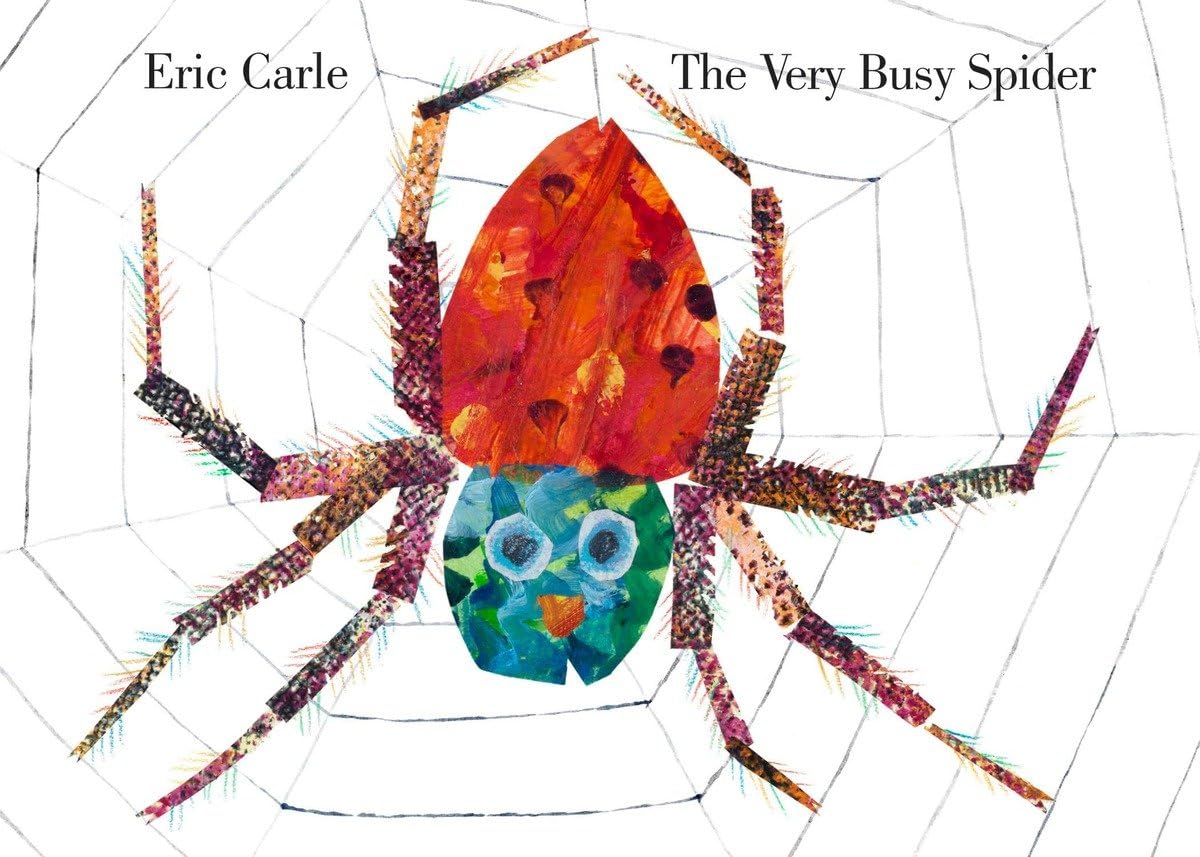
The Very Busy Spider by Eric Carle is a picture book about a spider who arrives at a farm, begins spinning her web, and politely ignores every animal who invites her to play — because she has work to do. Tactile, rhythmic, and quietly purposeful, it is one of Carle’s most beloved books and a natural classroom companion to The Very Hungry Caterpillar. This guide covers the reading level, recommended age, read-aloud vs. independent reading guidance, themes, and everything parents and teachers need to know about sharing this book with young readers.
For Parents
Find out whether The Very Busy Spider works best as a read-aloud or independent read for your child, what age range it suits, and why its repetitive structure and raised-relief illustrations make it one of the most engaging early literacy books for toddlers and preschoolers.
For Teachers
Grade-level data, read-aloud timing, key themes, and discussion questions for a PreK–K classroom favorite. Strong connections to science units on spiders and farm animals, and to early literacy lessons on repetitive text structure and cause-and-effect patterns.
The Very Busy Spider at a Glance
Find on Amazon →| Author & Illustrator | Eric Carle |
| Published | 1984 |
| Grade Level | PreK–K (our assessment) |
| Recommended Age | 3–6 |
| Best For | Read-aloud ages 2–5; independent reading ages 4–6 |
| Flesch-Kincaid Grade | 1.6 |
| Word Count | ~240 |
| Pages | 36 |
| Genre | Picture book / fiction |
| Setting | A farm |
| Awards | ALA Notable Children’s Book |
For official Lexile and AR levels, visit Lexile.com or AR BookFinder. ReadingVine provides independent editorial assessments.
What Reading Level Is The Very Busy Spider?
The Very Busy Spider is a PreK–K reading level by our editorial assessment, with a Flesch-Kincaid grade level of approximately 1.6. At around 240 words it is slightly longer than Goodnight Moon or Brown Bear, Brown Bear, but still among the shortest picture books on this list. The text is built on a repeating structural pattern — each farm animal invites the spider to do something, the spider does not answer and keeps spinning her web — with animal names and sounds as the primary vocabulary challenge.
Like The Very Hungry Caterpillar, the Flesch-Kincaid score accurately reflects the decoding demand but doesn’t capture what makes the book memorable. The raised-relief web on each spread — progressively more complete as the spider works — is one of the most distinctive tactile features in picture book publishing, and children who trace the web with a finger as the story unfolds are engaging in sensory literacy practice that no score can measure. For parents who use specific reading level systems: we recommend checking your child’s level on Lexile.com or AR BookFinder for official scores, or asking your child’s teacher for their Guided Reading or DRA level.
Is The Very Busy Spider a Read-Aloud or Independent Read?
The Very Busy Spider works best as a read-aloud for ages 2–5 and as an independent read for ages 4–6. As a read-aloud, it is one of the most participatory books in the Eric Carle catalog — the repeating pattern invites children to supply the spider’s non-answer (“But the spider didn’t answer. She was very busy spinning her web.”) once they’ve heard it a few times, and the animal sounds on each page are natural call-and-response moments. Most adults can read it aloud in about 5–7 minutes.
As a read-aloud, the book’s tactile dimension is as important as its text. The raised-relief web — created by printing with glue on the page — grows with every spread, and children who are read this book often spend as much time running their fingers over the web as listening to the words. In the standard hardcover edition, this tactile quality is fully present. In some paperback and board book editions it is reduced or absent, which is worth knowing before purchase if the sensory experience matters to your child or classroom.
For independent reading, the repeating structure means that once a child has decoded the first animal’s invitation and the spider’s non-response, the pattern is largely set for the rest of the book. Animal names — horse, cow, sheep, goat, pig, dog, duck, cat, owl, rooster — are the main vocabulary challenge, and most can be verified against Carle’s clearly rendered illustrations. The book is a natural step for children who have mastered Brown Bear, Brown Bear and are ready for a slightly longer repetitive text.
There is nothing in this book that requires parental preparation. The spider works. The animals are friendly. The owl makes a brief nighttime appearance that some very young children find momentarily startling, but it passes quickly and the book ends in warmth and sleep.
Before you read the spider’s non-response on each page, pause and let your child supply it. After two or three repetitions, most children between 2 and 5 have internalized the phrase well enough to say it without prompting. Then, when you reach the final page and the spider finally does answer — with the finished web — the payoff lands harder because children have been waiting for the pattern to break. That moment of “she finally answered!” is one of the small narrative pleasures this book is engineered to deliver.
What Is The Very Busy Spider About?
Early one morning a spider arrives at a farm and begins spinning a web on the fence post. One by one, the farm animals come to invite her to join them — the horse wants to go for a trot, the cow wants to eat some grass, the sheep wants to run in the meadow, and so on through ten animals in all. Each time, the spider doesn’t answer. She is very busy spinning her web. The web grows with each page, raised and tactile against Carle’s warm farm backgrounds, until by the time the owl asks if she wants to catch a pesky fly, the web is done — and this time the spider does answer, catching the fly in her finished web. As evening falls, the spider sits in the center of her completed work. A nearby pig thinks it is the most beautiful thing he has ever seen. The spider falls asleep.
The story is simple and satisfying, built on the pleasure of watching something grow to completion. The spider’s refusal to be distracted is not rude but purposeful — she has work to do and she does it — and the cumulative addition of the web across successive pages gives children a visual record of that work’s progress. The final web, complete and beautiful, is the book’s reward for paying attention.
The Very Busy Spider Characters
The Very Busy Spider Themes and Lessons
The central theme of The Very Busy Spider is the value of focused work — specifically, the satisfaction of completing something you set out to do without being distracted from it. The spider is invited to play ten times and declines ten times, not out of unfriendliness but out of commitment to her task. When the web is finished, it is beautiful — and the pig’s admiration of it gives children the payoff that makes the spider’s single-mindedness feel worthwhile rather than merely stubborn. For young children who are often asked to focus and stay on task, this is a model rendered without lecturing.
The book is also a reliable science entry point for PreK and kindergarten classrooms. The spider spinning a web is an accurate depiction of spider behavior — she works methodically, she catches a fly in the finished web, she rests at the center when it’s done — and the book opens naturally into conversations about how spiders build webs, what spiders eat, and how spiders are different from insects. The farm setting introduces ten additional animals with their corresponding sounds, making it useful for animal vocabulary and classification units as well.
As a literacy tool, the book’s most important lesson is its repetitive cause-and-effect structure. Each animal offers an invitation; the spider declines and spins. The pattern is clear, consistent, and predictable enough for very young children to internalize — and the one variation, when the owl’s invitation finally receives an answer, gives children their first experience of a pattern breaking as a narrative event. Understanding that a pattern can be established and then meaningfully violated is a sophisticated story-structure concept, delivered here in its simplest possible form.
Discussion starters for families: Why didn’t the spider answer the animals? What was she doing instead? Can you name all the animals? What sounds did they make? What did the finished web look like? Have you ever been so busy with something that you didn’t want to stop? Was the spider being rude, or was she just focused?
How Long Is The Very Busy Spider?
The Very Busy Spider has 36 pages and approximately 240 words. Most adults can read it aloud in about 5–7 minutes, though many families linger over the growing web on each spread and extend the reading naturally.
A child reading independently at a PreK or early kindergarten level will typically finish in about 7–10 minutes, often spending additional time tracing the raised web on each page. The sensory engagement with the tactile illustrations is part of the reading experience for this book in a way that is unusual in picture book publishing, and time spent touching the web is time well spent.
Books Similar to The Very Busy Spider
If your child loves The Very Busy Spider, these titles share its Eric Carle artistry, its repetitive structure, or its science and nature themes:
About the Author and Illustrator
Eric Carle (1929–2021) was an American author and illustrator born in Syracuse, New York, who developed the distinctive tissue-paper collage technique that makes his books immediately recognizable: he painted sheets of tissue paper in various colors and textures, then cut and layered them to build his illustrations, giving them a warmth and visual richness that photograph-based or digitally produced illustration rarely achieves. The Very Busy Spider, published in 1984, was his second major book after The Very Hungry Caterpillar (1969) and shares that book’s commitment to grounding a simple story in accurate natural science — the spider in the book behaves like an actual spider, spinning an orb web methodically and using it to catch prey. The raised-relief printing used for the web on each page of The Very Busy Spider was a significant production innovation, requiring a special printing process that added cost but gave the book a tactile dimension unavailable anywhere else in the Carle catalog. Carle went on to write and illustrate more than 70 books, including The Very Quiet Cricket (1990), which features a chirping sound chip on the final page, and The Very Lonely Firefly (1995), which has flashing LED lights on the final spread — a pattern of sensory innovation across the “Very” series that The Very Busy Spider began. He co-founded the Eric Carle Museum of Picture Book Art in Amherst, Massachusetts, which opened in 2002 and remains the only museum in the United States devoted to picture book illustration art.
The Very Busy Spider: Frequently Asked Questions
What reading level is The Very Busy Spider?
The Very Busy Spider is a PreK–K reading level by our editorial assessment, with a Flesch-Kincaid grade level of approximately 1.6. The text is built on a repeating structural pattern with animal names and sounds as the primary vocabulary. It works best as a read-aloud for ages 2–5 and as an independent read for ages 4–6. For official Lexile and AR levels, visit Lexile.com or AR BookFinder.
What age is The Very Busy Spider for?
The Very Busy Spider is appropriate for ages 2–6. As a read-aloud it works well from age 2 — the animal sounds and the tactile web engage very young toddlers immediately. As an independent read, it suits children ages 4–6 who are building early reading skills. It is widely used in PreK and kindergarten classrooms for both its literacy and its science content.
Why does the web feel raised in The Very Busy Spider?
The raised-relief web in The Very Busy Spider was created using a special printing process that applied glue to the page in the pattern of the web, giving it a tactile texture that children can feel with their fingers. This feature is present in the standard hardcover edition and in some board book editions, but may be reduced or absent in paperback versions. It is one of the most distinctive features of the book and a significant reason for its appeal to very young children.
How long does it take to read The Very Busy Spider aloud?
Most adults can read The Very Busy Spider aloud in about 5–7 minutes. Many families spend longer by pausing to let children trace the growing web on each page and supply the spider’s repeating non-response once they’ve learned the pattern. The tactile engagement with the illustrations naturally extends the reading time in a way that is entirely appropriate and useful for young readers.
What is The Very Busy Spider about?
The Very Busy Spider is about a spider who arrives at a farm and begins spinning a web. One by one, ten farm animals invite her to join them — to trot, to eat grass, to run, to wallow, and more — and each time the spider doesn’t answer. She is very busy spinning her web. When the owl asks if she wants to catch a fly, the web is finally done — and this time it catches the fly for her. The book ends with the completed web, the spider asleep at its center, and a pig who thinks it is the most beautiful thing he has ever seen.
How does The Very Busy Spider compare to The Very Hungry Caterpillar?
Both books are by Eric Carle, both use his tissue-paper collage illustration style, and both build a simple story around an animal doing what its nature requires. The Very Hungry Caterpillar (1969) is slightly shorter, slightly more widely known, and features the distinctive die-cut holes. The Very Busy Spider (1984) is slightly longer, features the unique tactile raised-relief web, and has a stronger science grounding in actual spider behavior. Both are essential Eric Carle titles and natural classroom companions — most children who love one are immediately ready for the other.