
 = Partner Site
The Whipping Boy Reading Level: A Complete Guide
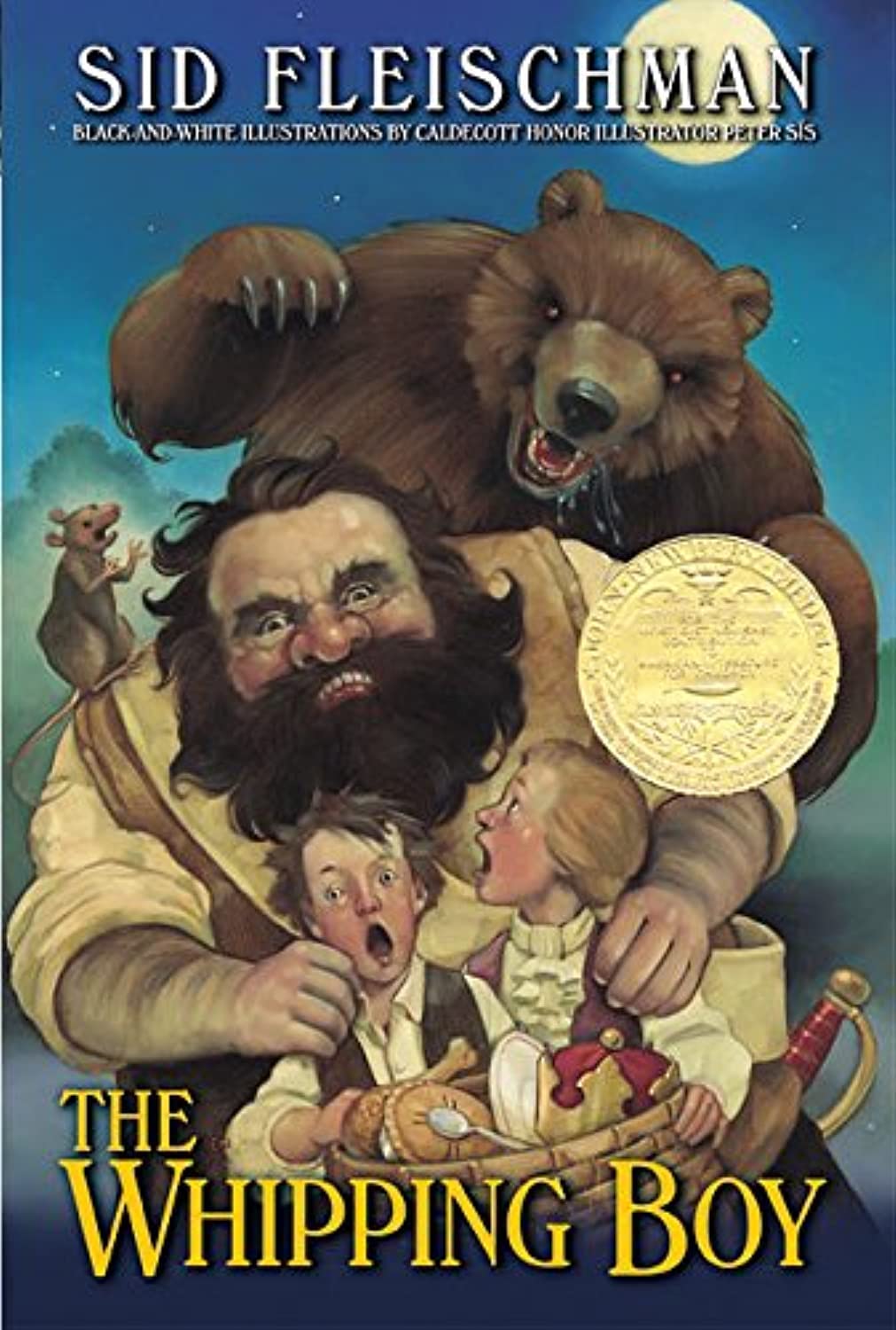
The Whipping Boy by Sid Fleischman is a fast-moving, funny, and surprisingly tender Newbery Medal-winning adventure about a spoiled prince and the orphan boy who takes his punishments for him — thrown together by circumstance into a dangerous journey that changes them both. This complete guide covers the reading level, age appropriateness, themes, characters, and everything parents and teachers need to know about this beloved short novel.
For Parents
The Whipping Boy is a delightful, fast-paced adventure that reads more like a tall tale than a standard historical novel. At under 100 pages, it moves quickly, keeps kids laughing, and delivers genuine warmth and character growth by the end. Best suited for readers ages 8-11, it’s an excellent choice for reluctant readers who need a short, engaging book with real literary merit — and one that doesn’t feel like homework.
For Teachers
A Newbery Medal winner widely assigned in grades 3-5, The Whipping Boy is a classroom staple for good reason. Its short chapters, energetic pacing, and sharp comic voice make it ideal for whole-class read-alouds, and its themes of friendship, fairness, and class difference support rich discussion. The book also works beautifully as a model text for teaching dialogue, scene-setting, and how humor can coexist with genuine emotion.
The Whipping Boy at a Glance
Find on Amazon →| Author | Sid Fleischman |
| Illustrator | Peter Sis |
| Published | 1986 |
| Grade Level | 3-5 (our assessment) |
| Recommended Age | 8-11 |
| Flesch-Kincaid Grade | 4.2 |
| Word Count | ~15,000 |
| Pages | 90 (standard paperback) |
| Chapters | 20 |
| Genre | Historical fiction / adventure / comedy |
| Setting | A medieval European kingdom (fictional) |
| Awards | Newbery Medal (1987) |
For official Lexile and AR levels, visit Lexile.com or AR BookFinder. ReadingVine provides independent editorial assessments.
What Reading Level Is The Whipping Boy?
The Whipping Boy reads at approximately a 3rd-5th grade level by our editorial assessment, with a Flesch-Kincaid grade level of around 4.2. The vocabulary is accessible, the sentences are punchy and short, and the twenty chapters average about four pages each — making the book feel fast and manageable even for readers who struggle with longer texts.
Despite its accessibility, the book is not simple. Sid Fleischman’s prose is tightly crafted, and the humor requires a reader who can pick up on irony and comic timing. The story rewards readers who are paying close attention — much of the fun comes from dramatic irony, where the reader understands something the characters don’t yet grasp. That quality makes it appealing to strong readers as well as struggling ones, and it’s one of the reasons teachers trust it across a fairly wide range of ability levels.
The book is widely used as a read-aloud in grades 3-4 and as an independent reading text in grades 4-5. For official Lexile and Accelerated Reader scores, visit Lexile.com or AR BookFinder.
What Age Is The Whipping Boy Appropriate For?
We recommend The Whipping Boy for readers ages 8-11. The book is a comedy-adventure at heart, and while the premise — a boy whose job is to be beaten in place of the prince — sounds dark, Fleischman handles it with a light touch. The whipping itself is part of the story’s setup and is never depicted graphically. The tone throughout is lively and humorous rather than grim.
The central premise involves a child who is physically punished in place of the prince, and this is referenced throughout the story. Two villainous characters (Hold-Your-Nose Billy and Cutwater) pose a threat to the boys and are somewhat menacing, though the book’s comic tone keeps things from feeling frightening. There is no graphic violence, no strong language, and no mature content. The overall feel is closer to a swashbuckling fairy tale than a dark story, and most readers ages 8 and up will find it funny and exciting rather than upsetting.
What Is The Whipping Boy About?
In a medieval kingdom, it is considered improper to punish a prince — so whenever Prince Brat (as he is known behind his back) misbehaves, the punishment falls on Jemmy, a street orphan brought to the castle to serve as the royal whipping boy. Jemmy has received countless beatings for things he didn’t do, and he dreams of escaping back to the streets. Prince Brat, thoroughly spoiled and genuinely unpleasant, seems indifferent to Jemmy’s suffering.
Then the prince gets a wild idea: he wants to run away. He forces Jemmy to come with him, since Jemmy can read and write and the prince — having refused all his lessons — cannot. The two boys slip out of the castle together and immediately stumble into serious trouble, falling into the hands of two notorious outlaws named Hold-Your-Nose Billy and Cutwater. What follows is a madcap series of escapes, reversals, and narrow scrapes through a sewage-smelling medieval city, a dark forest, and a traveling fair.
The heart of the story is the slow, reluctant shift between the two boys — the street-smart orphan who has survived by his wits and the pampered prince who has never had to fend for himself. As their situations reverse and Jemmy repeatedly has to save them both, Prince Brat begins to see the world — and Jemmy — differently. The comedy never stops, but something genuine grows underneath it.
Sid Fleischman was a former stage magician before becoming a writer, and the book has the structure of a magic trick: fast, precise, surprising, and ending exactly where it needs to. He dedicated it to his son Paul Fleischman, the author of Joyful Noise and Seedfolks.
The Whipping Boy Characters
Is The Whipping Boy Banned?
The Whipping Boy has not been banned or widely challenged and does not appear on lists of frequently challenged books. It is considered a universally appropriate Newbery Medal winner and a classroom staple in the elementary grades. Its humor, brevity, and clean content make it one of the more broadly recommended books in the Newbery catalog, and it has been continuously in print since its publication in 1986.
The Whipping Boy Themes and Lessons
The most obvious theme of The Whipping Boy is fairness — specifically, the deep unfairness of a system in which one person suffers for another’s wrongdoing. Jemmy’s resentment is entirely justified, and the book never asks readers to accept the whipping boy arrangement as normal or okay. But Fleischman is more interested in what happens when two people trapped by an unjust system are forced to actually see each other than he is in making a simple moral argument.
At its heart, the book is about empathy earned through shared experience. Prince Brat has never had to face consequences or witness how other people live — his privilege has made him not just spoiled but genuinely blind. The adventure strips all of that away. Jemmy, meanwhile, has hardened himself against feeling anything for the prince, and he has to unlearn that armor. The comedy keeps things light, but the emotional movement underneath is real: two boys who couldn’t stand each other discover that they need each other, and something like friendship follows.
Discussion starters for families: Why do you think Prince Brat behaves the way he does at the beginning? How does Jemmy change over the course of the story? Is the prince’s transformation believable? What does the story say about what it means to be brave? What would you do if you were Jemmy?
How Many Pages and Chapters Are in The Whipping Boy?
The standard paperback edition of The Whipping Boy is 90 pages, divided into 20 short chapters. The word count is approximately 15,000 words — making it one of the shortest Newbery Medal winners and well within reach of most 3rd-grade readers.
For readers in the target age range of 8-11, expect a reading time of roughly 1.5-3 hours, or 2-3 days of steady reading at around 30 minutes per session. The short chapters make it an excellent choice for readers who need natural stopping points, and for classroom read-alouds it can typically be completed in one to two weeks. As a read-aloud, the book’s comic dialogue and lively pacing make it a genuine pleasure to read aloud — voice acting the villains is strongly encouraged.
Books Similar to The Whipping Boy
About Sid Fleischman
Sid Fleischman (1920-2010) was an American author who spent his early career as a professional stage magician before turning to writing — and the influence of that background shows in his books, which tend to be precisely constructed, full of sleight-of-hand plotting, and committed to the idea that storytelling is a form of performance. He wrote more than fifty books over six decades, many of them rollicking historical adventures for young readers. The Whipping Boy won the Newbery Medal in 1987. Fleischman also received the Children’s Literature Legacy Award for his body of work. He was the father of author Paul Fleischman, whose Joyful Noise: Poems for Two Voices won the Newbery Medal two years later in 1989 — making them one of only two parent-child pairs to each win the award.
The Whipping Boy: Frequently Asked Questions
What reading level is The Whipping Boy?
The Whipping Boy has a Flesch-Kincaid grade level of approximately 4.2. Our editorial assessment places it at grades 3-5 (ages 8-11). The text is accessible and fast-moving, with short chapters that make it manageable for a wide range of readers. For official Lexile and AR scores, visit Lexile.com or AR BookFinder.
What is a whipping boy?
A whipping boy was a boy raised alongside a royal prince in medieval and Renaissance Europe whose role was to receive any physical punishment that the prince deserved, since it was considered improper to strike a member of the royal family. The practice was real, though historians debate how common and formalized it actually was. In Fleischman’s novel, the concept is used as a springboard for a comic adventure story rather than as a strict historical account.
How long is The Whipping Boy?
The Whipping Boy is 90 pages and approximately 15,000 words, divided into 20 short chapters. It is one of the shortest Newbery Medal winners ever. Most readers ages 8-11 will finish it in 1.5 to 3 hours, and it can be completed as a classroom read-aloud in one to two weeks.
What grade is The Whipping Boy typically assigned in?
The Whipping Boy is most commonly used as a whole-class read-aloud in grades 3-4 and as an independent reading text in grades 4-5. Its short chapters and lively pacing make it one of the more popular Newbery books for younger elementary readers, and its humor and themes make it genuinely engaging rather than just a curriculum requirement.
Is The Whipping Boy appropriate for 3rd graders?
Yes — it’s one of the more age-appropriate Newbery Medal winners for younger readers. The content is clean, the tone is comedic, and the short chapters are well-suited to 3rd-grade attention spans. Most 3rd-grade classrooms that use it do so as a read-aloud, which is also the ideal way to experience the book’s comic dialogue and timing. Strong independent readers in 3rd grade can read it on their own.
Are Sid Fleischman and Paul Fleischman related?
Yes — Paul Fleischman, the author of Joyful Noise: Poems for Two Voices and Seedfolks, is Sid Fleischman’s son. Sid dedicated The Whipping Boy to Paul. They are one of only two parent-child pairs in history to each win the Newbery Medal: Sid won in 1987 for The Whipping Boy, and Paul won in 1989 for Joyful Noise.
Does The Whipping Boy have a happy ending?
Yes. The ending is warm and satisfying — the boys’ relationship is genuinely transformed, and the situation at the castle changes in a way that feels earned rather than convenient. Fleischman doesn’t wrap things up too neatly, but readers close the book feeling good. It is not a sad or ambiguous ending.
Why did The Whipping Boy win the Newbery Medal?
The Whipping Boy won the Newbery Medal in 1987 for the precision and vitality of its storytelling. The Medal committee recognized Fleischman’s ability to pack genuine character development, comic timing, and emotional resonance into a very short book — a feat of craft that is harder than it looks. The book demonstrated that humor and literary merit are not in conflict, and that a brief, funny adventure can earn the highest award in children’s literature.