
 = Partner Site
Ungifted Reading Level: A Complete Guide
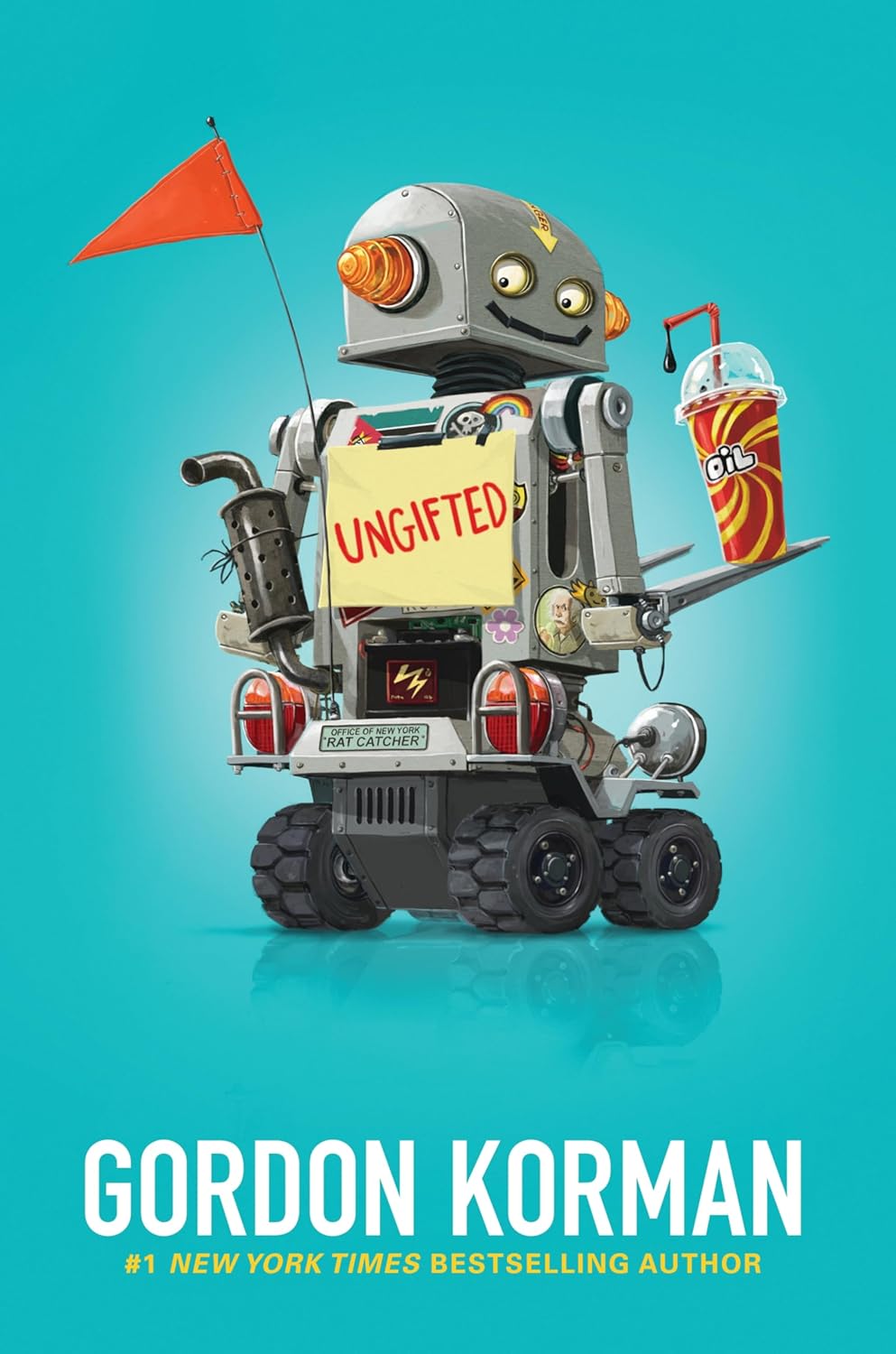
Ungifted by Gordon Korman is one of the funniest, most propulsive, and most genuinely clever middle grade novels of the past decade — a comedy of errors that turns out, almost despite itself, to be a surprisingly moving story about intelligence, identity, and what it actually means to be gifted. When chronic troublemaker Donovan Curtis accidentally destroys the school district’s prized bronze Atlas statue, he is supposed to be sent to disciplinary reassignment. Instead, through a clerical error of magnificent proportions, he ends up enrolled in the Academy for Scholastic Distinction — the district’s elite program for academically gifted students — where he has absolutely no business being and absolutely no intention of leaving. What follows is a comedy that earns every laugh and then earns something more: a genuinely affecting argument that intelligence takes more forms than any standardized test can measure, and that the person who doesn’t belong in the room sometimes turns out to be exactly what the room needed. This complete guide covers the reading level, age appropriateness, themes, characters, and everything parents and teachers need to know about this beloved novel.
For Parents
Ungifted is an ideal novel for readers ages 9-13 — consistently funny, fast-moving, and accessible enough for strong fourth graders while rewarding enough for seventh graders who appreciate the novel’s satirical edge. It is particularly well suited for children who have struggled in school or who feel that their particular talents are not recognized by conventional academic measures, since the novel’s argument — that giftedness takes more forms than school typically acknowledges — is one of the more validating available at this level. There is nothing in the content requiring parental guidance.
For Teachers
Well suited to grades 4-7, Ungifted is exceptional for teaching multiple-perspective narration — the novel cycles through the viewpoints of eight different characters, each with a distinct voice and a distinct relationship to Donovan’s presence in the ASD. It also opens productive discussions about different kinds of intelligence, the limitations of standardized testing as a measure of human capability, and how communities are changed by people who don’t fit their official categories. The novel’s humor makes it highly accessible even to reluctant readers, and its structure — short chapters cycling through multiple voices — is among the most teachable available at this level.
Ungifted at a Glance
Find on Amazon →| Author | Gordon Korman |
| Published | 2012 |
| Grade Level | 4-6 (our assessment) |
| Recommended Age | 9-13 |
| Flesch-Kincaid Grade | 4.8 |
| Word Count | ~50,000 |
| Pages | 280 (standard paperback) |
| Chapters | 34 |
| Genre | Realistic fiction / comedy / coming-of-age |
| Setting | A suburban middle school and its gifted program, present day |
| Awards | Texas Bluebonnet Award; multiple state reading lists |
For official Lexile and AR levels, visit Lexile.com or AR BookFinder. ReadingVine provides independent editorial assessments.
What Reading Level Is Ungifted?
Ungifted reads at approximately a 4th-6th grade level by our editorial assessment, with a Flesch-Kincaid grade level of around 4.8. That score runs slightly low for a novel whose humor and satirical edge reward more sophisticated readers, but it reflects the novel’s genuine accessibility: Korman writes with a comedian’s instinct for pacing and timing, using short chapters, punchy sentences, and scene transitions that keep the novel moving at a clip few comparable books can match. The prose is deliberately plain — Korman’s humor comes from situation and character rather than language — and developing readers will find the surface very easy to navigate.
What the F-K score cannot capture is the structural sophistication of the novel’s multiple-perspective narration. Eight different characters take turns narrating chapters, each with a recognizably distinct voice and a distinct relationship to the novel’s central situation. Keeping track of those perspectives, understanding how each character’s reading of events differs from the others’, and appreciating the irony that arises from the gaps between what different characters think is happening — this is genuine reading work, and it is among the most teachable structural techniques available at this level. The novel is funny enough to work as pure entertainment and complex enough to reward the kind of close reading that discovers how it is constructed.
The book is most commonly recommended for grades 4-6. For official Lexile and Accelerated Reader scores, visit Lexile.com or AR BookFinder.
What Age Is Ungifted Appropriate For?
We recommend Ungifted for readers ages 9-13. It is one of the most content-appropriate novels in its range — a school comedy whose conflicts are social and academic rather than dark or mature, and whose stakes, while real to the characters, never tip into territory requiring parental guidance.
Ungifted has no content requiring parental guidance. The novel’s most significant dramatic element is Donovan’s fear of being discovered and expelled from the ASD — a source of sustained comic tension rather than genuine distress. A subplot involving a pregnant teacher is handled with complete age-appropriateness; her pregnancy is a plot element (the ASD students decide to assist with her childbirth class) rather than a mature content concern. There is no violence, no sexual content, no strong language, and nothing in the thematic content that is not entirely appropriate for the full recommended age range. Ungifted is among the most consistently appropriate middle grade novels available, and one of the most reliably entertaining.
Ungifted is particularly valuable for children who have felt overlooked, misread, or poorly served by conventional academic measures — the novel’s central argument, that Donovan’s particular kind of intelligence is real and valuable even though no test would identify it, is one of the most validating available in middle grade fiction, and it is made with enough humor and enough genuine craft that it never tips into the preachiness that would undermine it. It is also one of the most reliable choices for reluctant readers in the grade range, since the comedy works even for readers who are not engaged by the novel’s deeper argument.
What Is Ungifted About?
Donovan Curtis has always operated on the principle that rules are suggestions and consequences are negotiable — an approach that has served him reasonably well until the day he accidentally sends the school district’s beloved bronze Atlas statue rolling down a hill and into the gymnasium, where it destroys an entire wall during a school assembly. This is not the kind of mistake that gets negotiated. Superintendent Schultz is furious, the district is appalled, and Donovan is facing the most serious disciplinary consequences of his career as a troublemaker.
What actually happens, through a clerical error that Superintendent Schultz makes in his fury, is that Donovan’s name ends up on the transfer list for the Academy for Scholastic Distinction — the district’s elite gifted program — instead of the disciplinary reassignment list. Donovan arrives at the ASD with no idea why he is there and no intention of correcting the mistake. The ASD has small classes, no gym, and no athletics. As far as Donovan is concerned, it is the perfect hiding place.
The ASD students are not what Donovan expected. They are brilliant, yes — genuinely, formidably brilliant — but they are also, in various ways, the least socially functional group of twelve-year-olds Donovan has ever encountered. They have never had a student like Donovan: someone who can talk to other kids, navigate social situations, read a room, and make things happen through personality and improvisation rather than analysis. They find him baffling. He finds them baffling. And then, gradually, something unexpected begins to happen: they start to be useful to each other.
The novel is structured around several overlapping plots. The ASD students are entered in a robotics competition, and Donovan — who has no robotics skills but considerable instinct for what a robot needs to actually perform in competition — turns out to be unexpectedly valuable to the team. A pregnant teacher’s childbirth class becomes an improbable ASD project. Donovan’s sister, who attends his home school and knows exactly what is happening, becomes an increasingly important moral complication. And Superintendent Schultz is getting closer and closer to discovering his mistake.
The novel cycles through the perspectives of eight characters — Donovan, several ASD students, Schultz, and Donovan’s sister — each of whom has a completely different understanding of what is happening and why. The comedy arises from the gaps between those understandings; the emotion arises from the moments when those gaps close. What the novel builds toward is not just Donovan’s exposure and its consequences but a genuine reckoning with what giftedness means, what it misses, and what a community loses when it defines intelligence too narrowly.
Ungifted Characters
Is Ungifted Banned?
Ungifted has not been challenged or banned and does not appear on any lists of challenged books. It is among the most broadly embraced middle grade novels of the past decade — winner of multiple state reading awards and consistently recommended by educators, librarians, and parents as one of the most reliably funny and most genuinely thought-provoking choices available for the middle grade age range.
Ungifted Themes and Lessons
The central theme of Ungifted is the argument that intelligence takes more forms than any standardized test can measure — that there are ways of being smart that school does not select for, does not reward, and often does not recognize at all. Donovan Curtis would score poorly on any assessment the ASD uses. He has no particular aptitude for mathematics, robotics, or academic analysis. What he has is a social intelligence that is, in its own way, remarkable: he reads people accurately, navigates situations fluidly, improvises effectively, and moves through the social world with an ease that none of the ASD students possess. The novel’s argument is not that Donovan is secretly as smart as the ASD students in their terms — he isn’t — but that his kind of intelligence is genuinely valuable, that the ASD is genuinely incomplete without it, and that a system that can only measure one kind of smart is missing something important about what human capability actually looks like.
The limits of institutions — their tendency to define categories too narrowly, to reward what they can measure and ignore what they cannot, and to become less rather than more by excluding the things they cannot classify — is the novel’s second great theme, rendered through the ASD itself. The Academy for Scholastic Distinction is not a villain; it is, in many ways, a genuine good — it serves its students well, it takes their intelligence seriously, it gives them a community where their particular gifts are valued. But it is also, as Donovan’s presence reveals, incomplete. The students who have spent years inside it have developed significant blind spots that their intelligence has not corrected, and the novel’s most interesting moments are the ones where Donovan’s presence begins to address those blind spots in ways that none of them could have predicted or planned.
Honesty and deception run beneath the comedy as a sustained moral thread. Donovan’s presence in the ASD is a deception, and the novel does not let that fact disappear beneath the humor — Abigail’s chapters in particular keep the ethical dimension clearly in view. The novel does not punish Donovan for the deception in simple or obvious ways, but it does require him to reckon with what it cost, and the reckoning is handled with more seriousness than the comedy around it might suggest.
Discussion starters for classrooms: What kind of intelligence does Donovan have that the ASD students don’t? What kind of intelligence do the ASD students have that Donovan doesn’t? Is Donovan gifted? What does the novel say about what school measures and what it misses? Is it ever okay to benefit from a mistake you didn’t correct? How does seeing the same situation from eight different perspectives change how you understand it?
How Many Pages and Chapters Are in Ungifted?
The standard paperback edition of Ungifted is 280 pages, divided into 34 short chapters averaging around eight pages each. The word count is approximately 50,000 words. The short chapters and the multiple-perspective structure make the novel exceptionally accessible as a classroom text — each chapter is a complete unit with a clear narrative purpose, and the cycling between perspectives creates natural discussion points about how the same event looks different from different vantage points. The pace is fast throughout; there is no section of the novel that loses momentum.
For readers in the target age range of 9-13, expect a reading time of roughly 4-6 hours for engaged readers. As a classroom text it works very well in a three-week unit, with particular richness available in discussions of multiple-perspective narration, the definition of intelligence, and the ethics of Donovan’s deception. Ungifted has a companion novel, Showoff (2012), which follows some of the same characters, and a loose follow-up, Linked (2021), which explores similar themes in a new school setting. Korman has also written widely in other series — the Swindle series, the Masterminds trilogy, and many standalone novels — all of which share Ungifted‘s comic energy and propulsive plotting.
Books Similar to Ungifted
About Gordon Korman
Gordon Korman is one of the most prolific and most consistently entertaining authors in middle grade fiction — the author of more than ninety novels, many of them series, and virtually all of them characterized by the comic energy, the propulsive plotting, and the multiple-perspective structure that define Ungifted. Born in Montreal in 1963, Korman published his first novel, This Can’t Be Happening at Macdonald Hall, when he was twelve years old — it began as a seventh-grade English assignment and ended up in print — a biographical fact that is both remarkable and entirely consistent with the Korman brand: a writer who has been doing this since he was approximately the age of his readers, and who has never lost the instinct for what makes middle schoolers laugh. His series include the Swindle books, the Masterminds trilogy, the Island trilogy, and many others. Ungifted, published in 2012, is widely considered among his best work — a novel that demonstrates that the comedy he has always written can carry genuine emotional and intellectual weight when the premise is strong enough and the craft is fully deployed. Its companion, Showoff, followed the same year. Korman lives in New York and continues to publish prolifically, with new novels appearing almost every year.
Ungifted: Frequently Asked Questions
What reading level is Ungifted?
Ungifted has a Flesch-Kincaid grade level of approximately 4.8, which runs slightly low for a novel whose satirical edge and multiple-perspective structure reward more sophisticated readers. The prose is deliberately plain — Korman’s humor comes from situation and character rather than language — making the surface very accessible for developing readers. What the score cannot capture is the structural sophistication of eight distinct narrators cycling through the same central situation. Most commonly recommended for grades 4-6 (ages 9-13). For official Lexile and AR scores, visit Lexile.com or AR BookFinder.
What is the ASD in Ungifted?
The Academy for Scholastic Distinction is the school district’s elite program for academically gifted students — a separate educational environment with smaller classes, advanced curriculum, and a student population selected by standardized assessments for exceptional academic ability. It is the setting for most of the novel and the institution whose definition of giftedness the novel’s central argument interrogates. The ASD is not presented as a villain — it serves its students genuinely well — but it is presented as incomplete, as any institution is that can only value what it can measure.
How does Donovan end up in the gifted program?
Through a clerical error made by Superintendent Schultz in a moment of fury. After Donovan accidentally destroys the district’s prized bronze Atlas statue, Schultz intends to have him transferred to disciplinary reassignment. In his anger, he enters Donovan’s name on the wrong transfer list — the ASD transfer list rather than the disciplinary list — and Donovan arrives at the Academy for Scholastic Distinction with no idea why he is there. Recognizing the mistake and its accidental advantage, Donovan decides not to correct it. The entire novel flows from that decision.
Is Donovan actually gifted?
This is the novel’s central question, and Korman answers it carefully. Donovan would not qualify for the ASD by any measure the program uses. He has no exceptional academic aptitude in the areas the program values. What he has is a social and improvisational intelligence — the ability to read people, navigate situations, make things happen through personality and instinct — that is genuinely remarkable and that the ASD students entirely lack. The novel’s argument is not that Donovan is secretly smart in conventional terms but that his kind of intelligence is real, valuable, and worthy of recognition even though the system cannot see it. Whether that makes him gifted depends on what gifted means, which is exactly the question the novel wants its readers to sit with.
Why does the novel have so many narrators?
Korman uses eight narrators — Donovan, several ASD students, Superintendent Schultz, and Donovan’s sister Abigail — because the novel’s central comedy and central argument both depend on the gap between what different characters understand about the same situation. Schultz is furious at Donovan without knowing he’s enrolled in his best program. The ASD students value Donovan without knowing he doesn’t belong. Abigail knows everything and is watching the deception unfold with a mixture of loyalty and unease. Each perspective adds a layer to the reader’s understanding that no single narrator could provide, and the irony generated by those layers is where the novel’s best humor and its deepest thinking both live.
Is Ungifted part of a series?
Ungifted has a companion novel, Showoff (2012), which follows some of the same characters in a new situation and shares the original’s multiple-perspective structure and comic energy. A thematic follow-up, Linked (2021), explores similar ideas about identity and community in a new school setting with new characters. Both are well regarded, though Ungifted stands fully on its own and is the most widely read. Korman has also written the Swindle series, the Masterminds trilogy, and many other standalones — all recommended for readers who enjoy Ungifted‘s humor and energy.
What grade is Ungifted typically assigned in?
Ungifted is most commonly assigned in grades 4, 5, and 6, both as independent reading and as a classroom text. It is particularly well suited to units on multiple-perspective narration, the definition of intelligence and giftedness, and the ethics of deception and its consequences. Its humor makes it one of the most reliable choices for reluctant readers in the grade range, and its structural sophistication makes it equally rewarding for strong readers who can appreciate how the multiple perspectives work together. It pairs naturally with Fish in a Tree or Out of My Mind for a unit on different kinds of intelligence, and with Wonder for a unit on multiple-perspective narration about a student who changes a school community.