
 = Partner Site
CCSS Standard R.5 Worksheets (Literature & Informational Texts for ELA and Literacy)
Below you’ll find materials aligned to Common Core State Standards (CCSS). This page houses print-ready PDFs and digital PDF worksheets, packets, and lessons aligned to the CCSS standards for English Language Arts. Reading: Literature or Informational Texts, Standard 5 (R5) is “Analyze the structure of texts, including how specific sentences, paragraphs, and portions of the text (e.g., a section, chapter, scene, or stanza) relate to each other and the whole.” This standard applies to grades K-12.
(Click to browse all Common Core sheets and Next Generation Learning Standards worksheets by filterable standards. View our helpful Common Core Standard Alignment Menu.)
An internal rhyme is when two words within the same line rhyme because of the sound each word makes. Internal rhymes will repeat a sound between and within a verse. Internal rhymes can include words placed at the end of a verse. An internal rhyme will create more connection through…
What is an end rhyme? End rhyme is when two words at the end of separate verses rhyme. In particular, the final syllable of each of those two words is what makes those verses rhyme. Some people also refer to end rhymes as “tail rhymes.” It’s important to note that…
Welcome to ReadingVine’s library of resources for alliteration examples and activities! What is alliteration? Alliteration is the repetition of an initial sound at the beginning of words that exist within close proximity to one another. These often appear in “tongue twisters” that pose a challenge for our expression and rate…
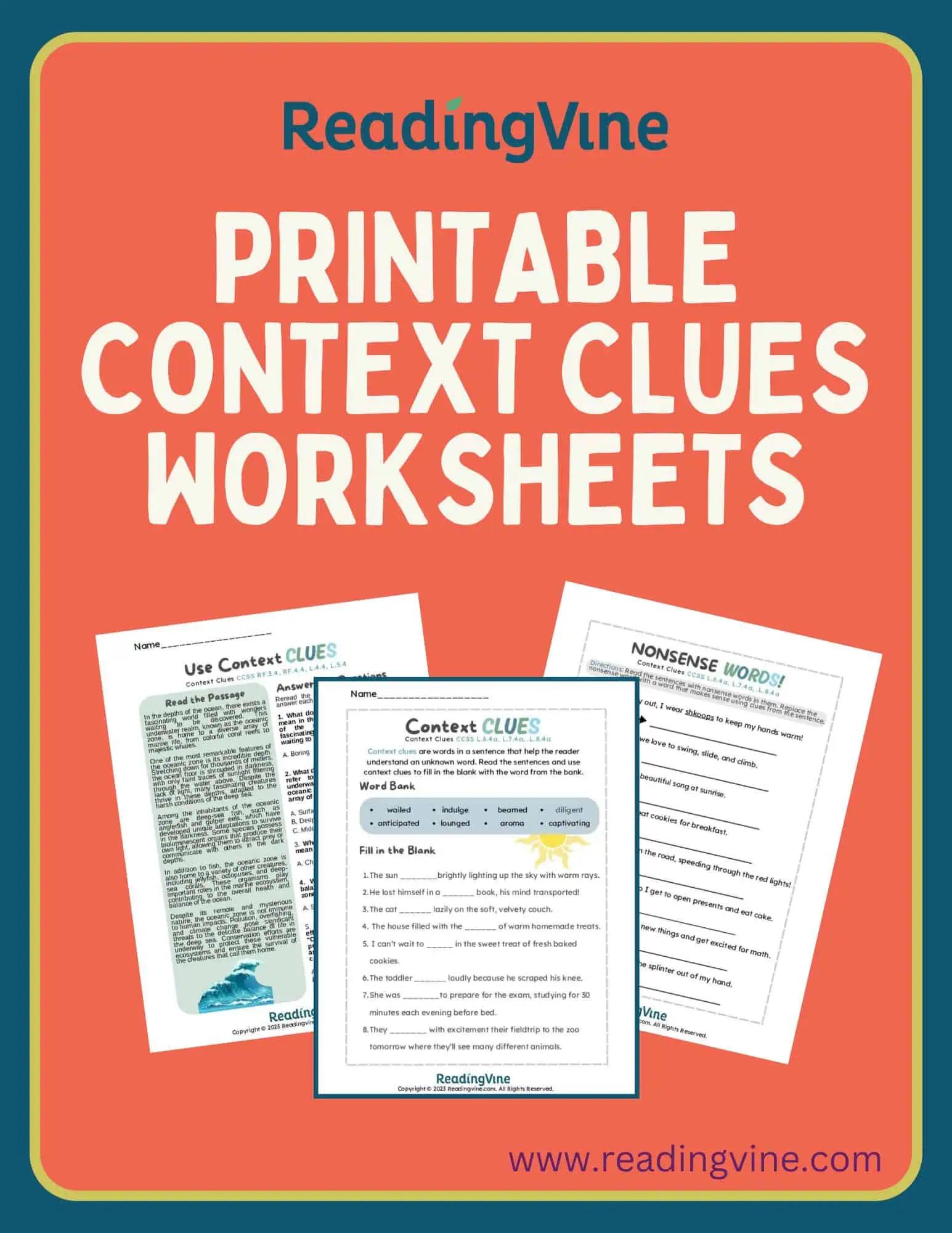
Welcome to our context clues worksheets and instruction page! Learning vocabulary can be challenging. For early literacy students and high school students, it may feel that there is always more to learn. While vocabulary instruction can be delivered in a variety of ways, one of the most critical skills for…
Unleash your students’ creativity with our Mapping and Planning a Story extension activity packet! These activities spark imagination and allow learners to understand the structure of stories and other text types. Through visual aids and guides, students will learn about how a story is arranged in order to reveal information,…
Need to help students understand certain features like graphs, charts, and maps? Us, too! Use this Text Feature Skills Extension Activity Packet to guide student practice and assess their understanding of these informational figures. Perfect for differentiation, these tools cater to diverse learning styles, ensuring every student becomes adept at…
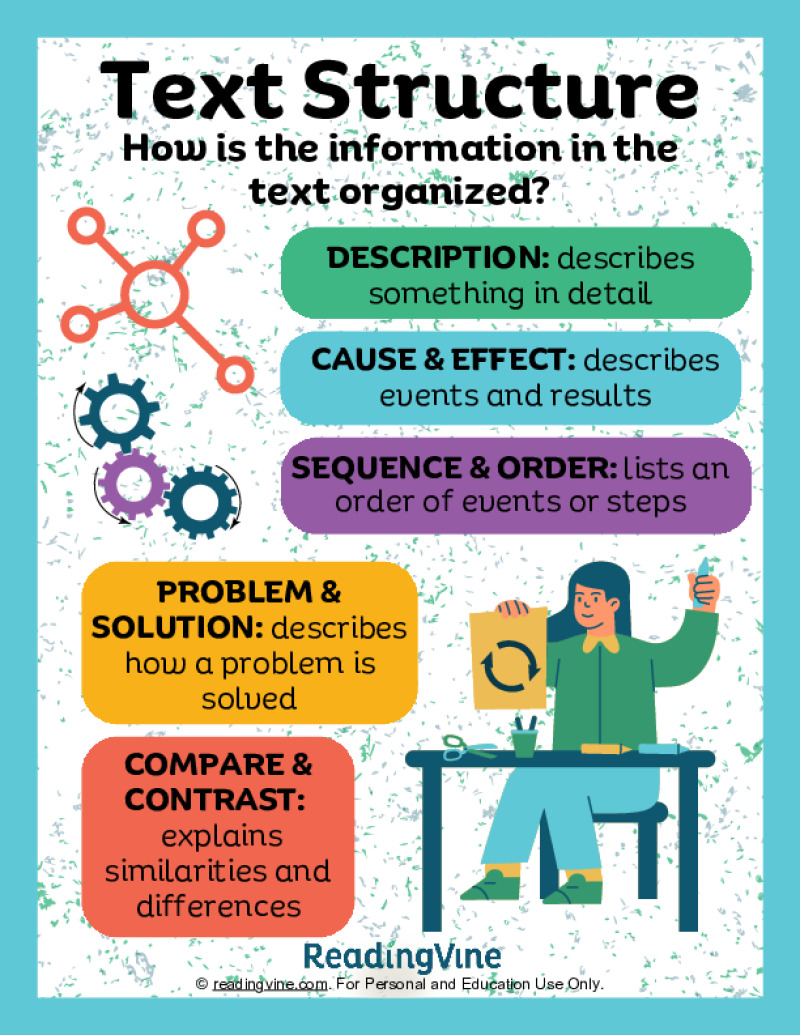
Welcome to our text structure anchor chart resource page. When we analyze a story or any other text, it’s easy to become focused on the characters or information that’s relayed. However, anticipating and understanding a text’s structure is a critical skill that can make approaching genres, especially nonfiction, more meaningful.…
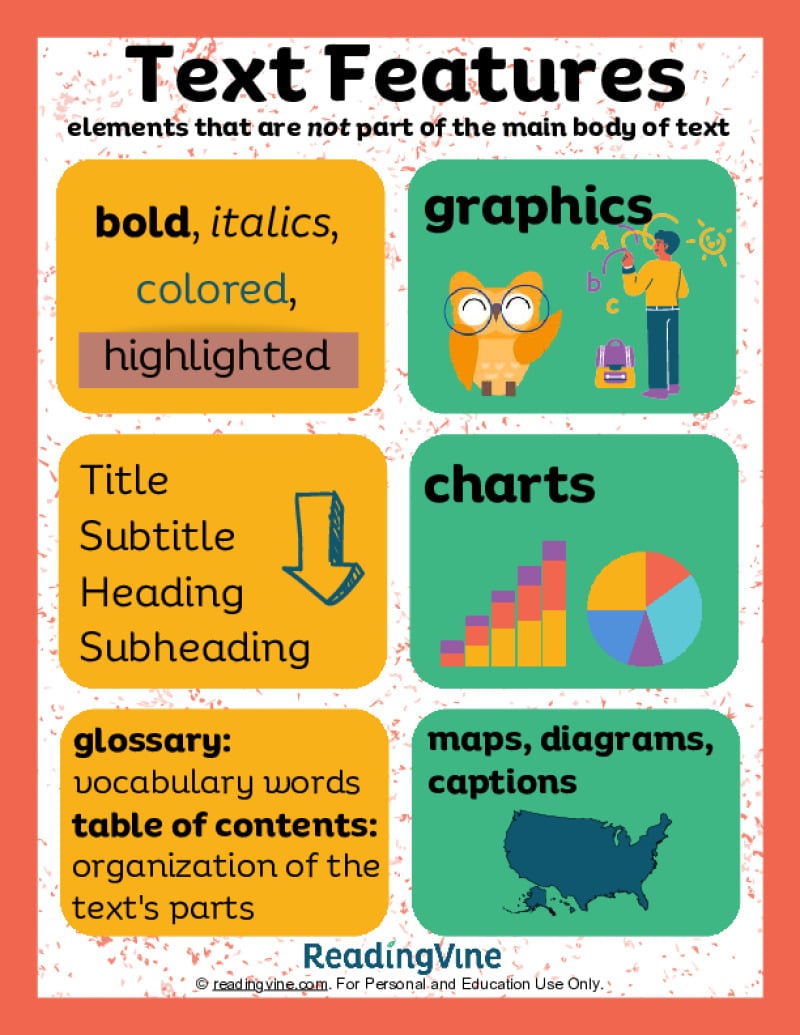
We’ve created helpful text features anchor chart resources below. Text features can sometimes be overlooked as we read the main body of a work, but these figures, diagrams, headings, and other elements are meant to help us understand the organization of a piece or provide us with a visual representation.…
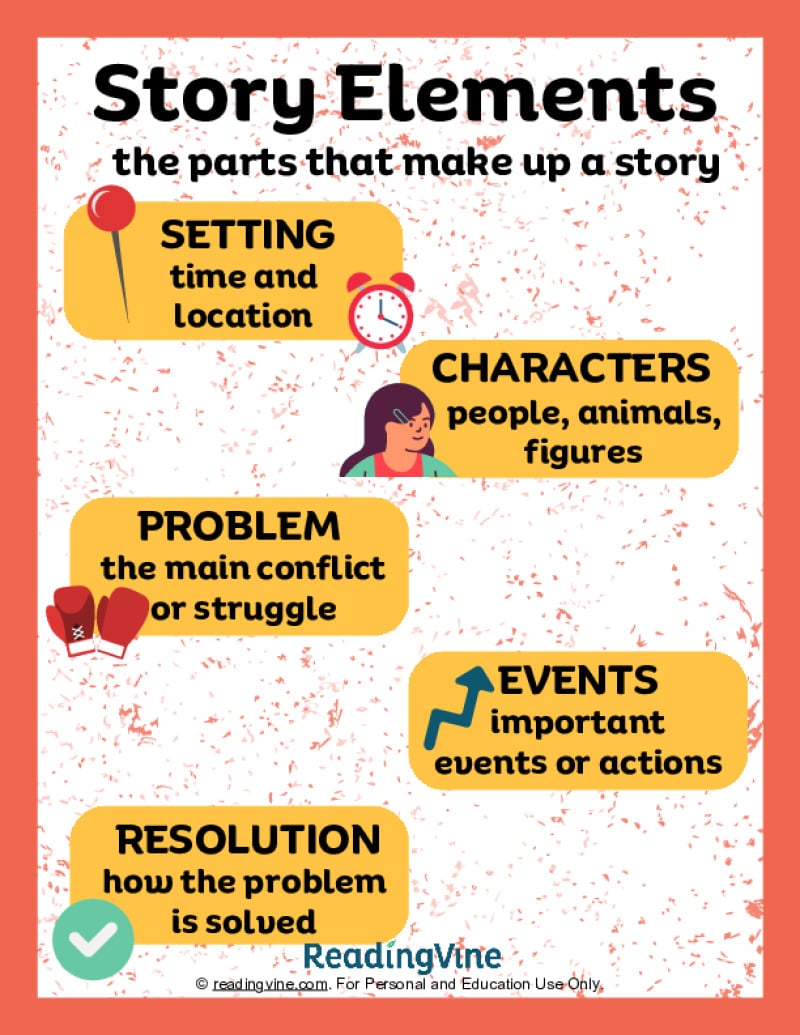
Below you’ll find printable story elements anchor chart resources. As both readers and writers, it’s important to understand story elements. This can help readers comprehend the depth of work that goes into crafting a story and provide multiple avenues for analysis. With characters, setting, symbols, and themes, there’s much to…
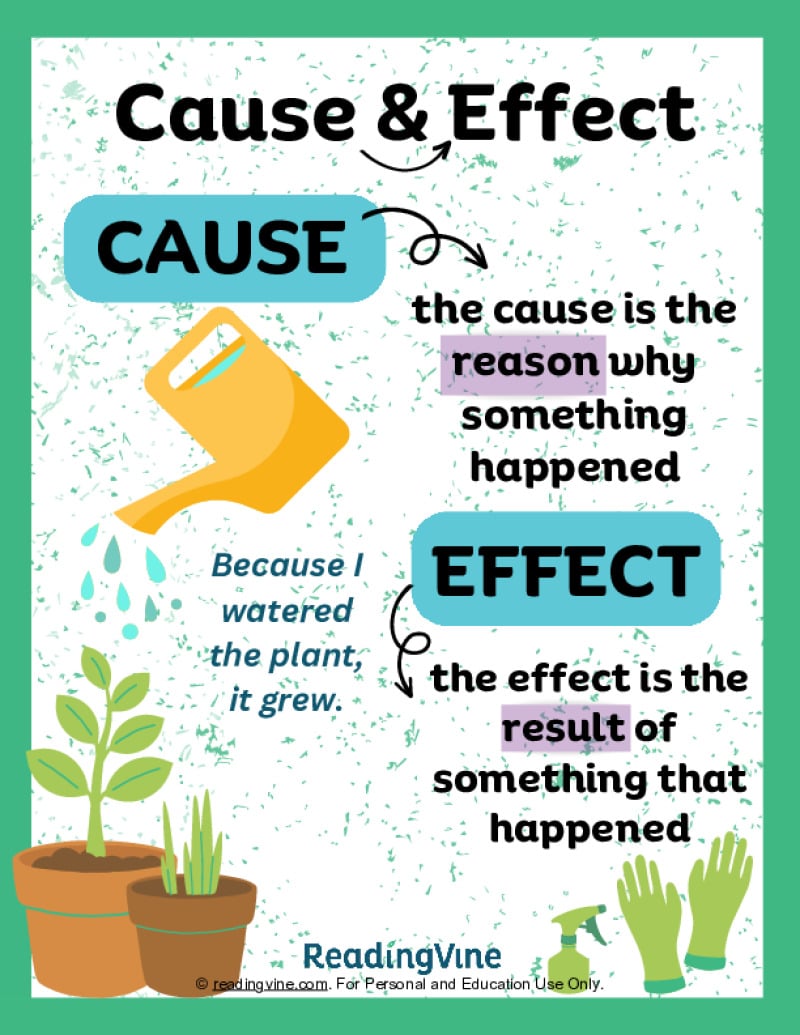
Here you’ll find our cause and effect anchor chart resources! Across many genres, understanding the connections between actions and consequences is an important part of unlocking the details of a text’s organizations and the implications of an event or other force (“cause”). Additionally, 21st century learners must be especially attuned…
