
 = Partner Site
Anansi the Spider: A Tale from the Ashanti Reading Level: A Complete Guide
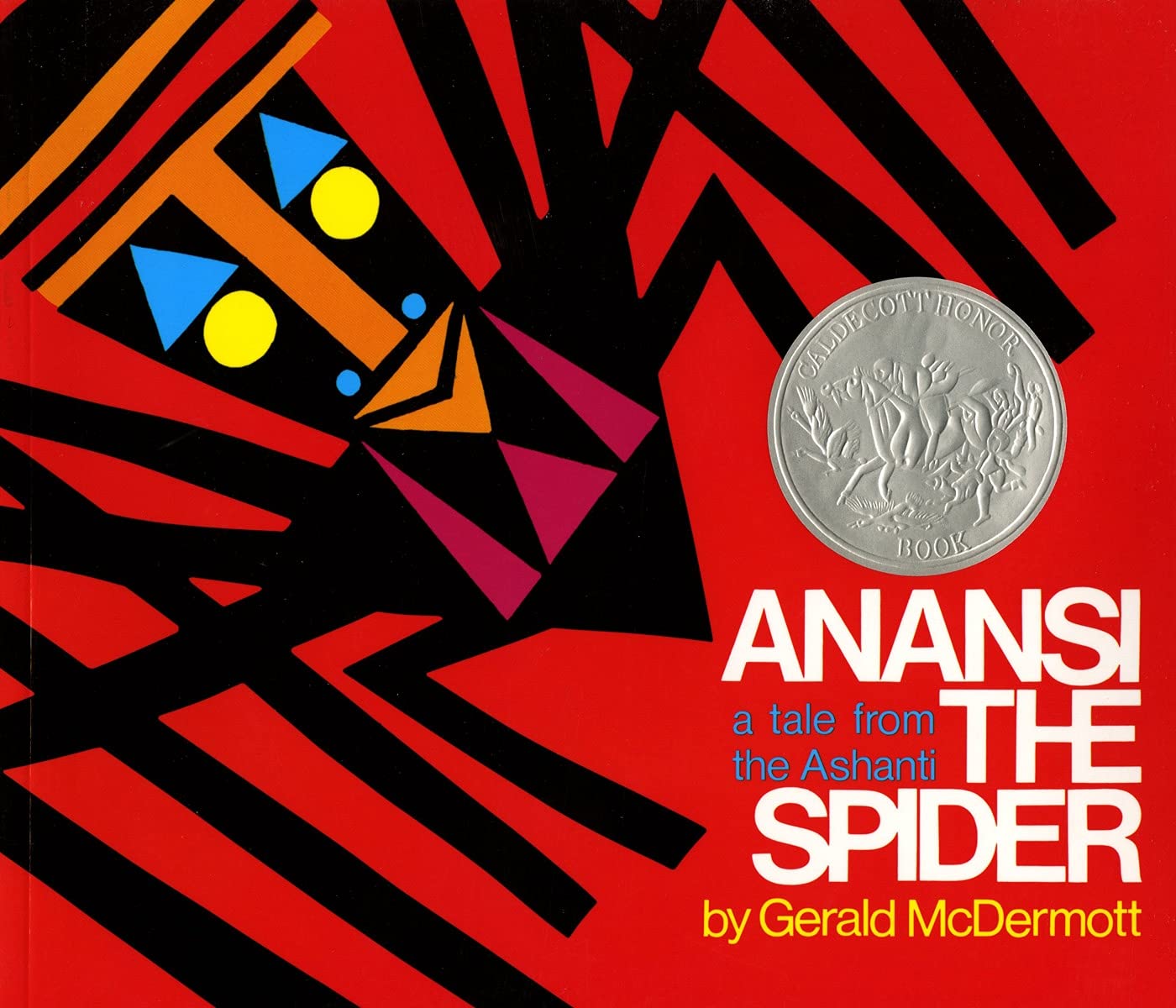
Anansi the Spider: A Tale from the Ashanti, retold and illustrated by Gerald McDermott, is one of the most visually stunning picture books in the K–2 canon — a West African folktale about a spider, his six remarkable sons, and how the moon came to be in the sky, told in bold geometric shapes and rich primary colors that feel unlike any other picture book on the shelf. A 1973 Caldecott Honor Book, it is McDermott’s first and most celebrated work, and widely used introduction to African folklore in American children’s publishing. This guide covers the reading level, recommended age, read-aloud vs. independent reading guidance, themes, and everything parents and teachers need to know about sharing this classic with young readers.
For Parents
Find out whether Anansi the Spider works best as a read-aloud or independent read for your child, what age range it suits, and why this Caldecott Honor Book is one of the richest and most distinctive picture books available for introducing children to the folklore and visual traditions of West Africa.
For Teachers
Grade-level data, read-aloud timing, key themes, and discussion questions for a Caldecott Honor Book that works equally well in cultural literacy, identity and belonging, art, and folktale units. An essential title for diverse classroom libraries and for any unit on trickster tales, mythology, or African storytelling traditions.
Anansi the Spider at a Glance
Find on Amazon →| Author & Illustrator | Gerald McDermott |
| Published | 1972 |
| Grade Level | K–2 (our assessment) |
| Recommended Age | 4–8 |
| Best For | Read-aloud ages 4–8; independent reading ages 6–8 |
| Flesch-Kincaid Grade | 3.8 |
| Word Count | ~500 |
| Pages | 48 |
| Genre | Picture book / folktale / myth |
| Setting | Ashanti land (present-day Ghana) |
| Awards | Caldecott Honor Book (1973); Lewis Carroll Shelf Award (1973) |
For official Lexile and AR levels, visit Lexile.com or AR BookFinder. ReadingVine provides independent editorial assessments.
What Reading Level Is Anansi the Spider?
Anansi the Spider is a K–2 reading level by our editorial assessment, with a Flesch-Kincaid grade level of approximately 3.8. The book is unusual in that its text is quite short — around 500 words — while its FK score is relatively high for a picture book of this length. The explanation is in the sentence structure: McDermott writes in a literary, somewhat formal register that echoes oral storytelling tradition, with longer sentences, embedded clauses, and rhythmic repetition that is more complex than the conversational prose typical of picture books at this level.
The FK score reflects real comprehension demands. The story has more moving parts than most K–2 picture books — six named sons, each with a distinct ability, working together in sequence — and the framing as an origin myth (explaining how the moon came to be in the sky) adds a layer of conceptual content that rewards discussion. McDermott’s illustrations carry significant narrative weight: his bold geometric shapes and pure primary colors are not decorative but structural, conveying character, emotion, and cultural context in ways that extend and deepen the text. A child who looks closely at the pictures gets considerably more of the story than one who follows only the words. For parents who use specific reading level systems: we recommend checking your child’s level on Lexile.com or AR BookFinder for official scores, or asking your child’s teacher for their Guided Reading or DRA level.
Is Anansi the Spider a Read-Aloud or Independent Read?
Anansi the Spider works best as a read-aloud for ages 4–8, and can work as an independent read for ages 6–8 with some prior context. As a read-aloud, the book’s formal, rhythmic prose sounds particularly good when read aloud — McDermott writes in a way that honors the oral tradition the story comes from, and the language has a cadence that rewards being heard rather than only read silently. Most adults can read it aloud in about 8–12 minutes.
As a read-aloud, the illustrations are the book’s most immediately striking feature and deserve genuine looking time on every spread. McDermott’s visual language draws on traditional Ashanti design motifs — bold geometric shapes, interlocking patterns, pure blocks of color — rendered in a graphic style that reflects his background in animation and film design. Each son is visually distinguished by color and shape, which helps children track the story’s six-part structure. Pausing to identify each son and his special ability before turning the page gives children the scaffolding they need to follow the sequence clearly.
For independent reading, a confident first or second grader can handle the vocabulary, though the story’s structure — six sons, each used once in sequence, culminating in an origin-myth resolution — is more complex than most picture books at this level and benefits from at least one read-aloud experience first. Children who have heard it read aloud are significantly better positioned to read it independently, because they have the narrative scaffold in place before they have to decode and comprehend simultaneously.
There is nothing in this book that requires parental preparation. Anansi encounters genuine danger — he is swallowed by a fish, snatched by a hawk — but the peril is handled swiftly and the tone throughout is the matter-of-fact seriousness of traditional folktale rather than the tension of suspense fiction. The book’s ending is warm and satisfying.
Before the first reading, introduce each son by name and ability: See Trouble, Road Builder, River Drinker, Game Skinner, Stone Thrower, Cushion. Ask your child to remember which son does what — then, as you read, pause before each rescue and ask “Which son do we need now?” Children who are tracking the sons actively follow the story with considerably more engagement and retention, and arrive at the origin-myth ending understanding exactly why Anansi cannot choose between them.
What Is Anansi the Spider About?
Anansi is a spider — and one of the great folk heroes of the Ashanti people of West Africa. He sets out on a long journey and falls into trouble: first he is swallowed by Fish, then snatched from Fish by Falcon. His six sons, each named for his special ability, work together to rescue him: See Trouble knows Anansi is in danger, Road Builder builds a road to reach him, River Drinker drinks the river so Game Skinner can retrieve him from Fish, Stone Thrower drives away Falcon, and Cushion catches Anansi safely as he falls.
Rescued and grateful, Anansi wants to reward the son who saved him — but he cannot choose. Each son contributed something essential. Then Anansi finds a beautiful globe of white light and decides it will be the reward. But still he cannot decide which son deserves it. He brings the problem to Nyame, the God of All Things. Nyame resolves the dilemma in the most elegant possible way: he takes the glowing ball and puts it in the sky for everyone to see. That is how the moon came to be. And that is why the moon belongs to all of Anansi’s children — which means all of us.
Anansi the Spider Characters
Anansi the Spider Themes and Lessons
The central theme of Anansi the Spider is the value of collective contribution — the idea that when every member of a group uses their unique ability toward a shared purpose, the result belongs to all of them equally. Each son contributes something the others cannot; none could have rescued Anansi alone. Nyame’s decision to give the moon to everyone rather than to any one son is the Ashanti folktale tradition’s elegant answer to the question of ownership: some things are too good, too beautiful, and too needed to belong to one person. The moon is for all of Anansi’s children, which the story quietly implies means all of us.
For teachers, Anansi the Spider is one of the most versatile books in the K–2 library for introducing African cultural traditions. The Anansi stories come from the Ashanti people of present-day Ghana, where Anansi — also called Kwaku Anansi — is one of the most beloved figures in the oral storytelling tradition. His stories, carried across the Atlantic by enslaved people from West and Central Africa, are woven into the folklore of the Caribbean, the American South, and Black American storytelling more broadly. McDermott’s version introduces children to this tradition with both visual and narrative authenticity, and it opens naturally into conversations about whose stories are told, how stories travel, and why a spider became one of the great heroes of human folklore.
The book is also an excellent introduction to the concept of an origin myth — a story that explains how a feature of the natural world came to be. The moon in the sky is the book’s origin-myth payload, and it connects naturally to science discussions about the moon as well as to comparisons with other origin myths from different cultures. The form itself — a story that ends by explaining something we can see every night — is one of the oldest and most universal structures in human storytelling.
Discussion starters for families: Which son do you think helped Anansi the most? Why couldn’t Anansi choose? Was Nyame’s decision fair? Can you think of something that belongs to everyone? Why do you think Anansi is a spider — what do spiders do that might make them good heroes? Do you know any other stories that explain how something in the natural world came to be?
How Long Is Anansi the Spider?
Anansi the Spider has 48 pages and approximately 500 words — a short text relative to its page count, because McDermott’s illustrations carry much of the narrative weight and each spread rewards extended looking. Most adults can read it aloud in about 8–12 minutes, though pausing to examine the illustrations and discuss the sons’ abilities as they appear adds meaningfully to the experience.
A child reading independently at a first- or second-grade level will typically finish in about 10–14 minutes. The relatively high FK score means the text requires more careful reading than the word count alone suggests, and children who read slowly enough to look at the illustrations alongside the text will comprehend considerably more than those who rush through it.
Books Similar to Anansi the Spider
If your child loves Anansi the Spider, these titles share its cultural richness, its folktale tradition, or its place in the Identity and Belonging cluster:
About the Author and Illustrator
Gerald McDermott (1941–2012) was an American filmmaker, illustrator, and children’s book author who spent his career bringing the folktales and mythologies of cultures around the world to picture book audiences with visual and narrative integrity. He began studying art at the age of four, when he was admitted to Saturday workshops at the Detroit Institute of Arts, and continued throughout his education at Cass Technical High School and Pratt Institute in New York. It was at Pratt that he began directing animated films on folklore, work that eventually brought him into contact with the mythologist Joseph Campbell, who served as consultant on four of McDermott’s films. That collaboration shaped McDermott’s entire career: his picture books are grounded in the same conviction Campbell brought to mythology — that folktales from every culture express universal human truths, and that bringing those stories to children is a form of genuine cultural inheritance.
Anansi the Spider was McDermott’s first picture book, adapted from an animated film he had made in 1969. It was published in 1972 and named a Caldecott Honor Book the following year — immediate recognition for a first book that spoke to the book’s quality and significance. The illustrations draw on traditional Ashanti geometric design motifs and use pure, unmixed primary colors in a graphic style that reflects both McDermott’s animation background and the visual traditions of the culture whose story he was telling. Two years after Anansi, his picture book Arrow to the Sun: A Pueblo Indian Tale won the Caldecott Medal outright, making him one of the few illustrators to receive both a Caldecott Honor and the Caldecott Medal in consecutive years for books drawn from different cultural traditions.
McDermott went on to create more than 25 books and animated films across his career, including trickster tales from Native American, Japanese, Irish, and other traditions. His work is held in museum collections internationally, and his collaboration with Joseph Campbell’s foundation continued until his death in 2012. Anansi the Spider remains his most widely read and most frequently taught book, and it is recognized by librarians, teachers, and scholars as one of the most important introductions to West African storytelling tradition in American children’s publishing.
Anansi the Spider: Frequently Asked Questions
What reading level is Anansi the Spider?
Anansi the Spider is a K–2 reading level by our editorial assessment, with a Flesch-Kincaid grade level of approximately 3.8. Though the text is short (around 500 words), the literary prose style, complex six-part story structure, and rich illustrations that carry significant narrative content make it more demanding than its word count suggests. It works best as a read-aloud for ages 4–8 and as an independent read for ages 6–8. For official Lexile and AR levels, visit Lexile.com or AR BookFinder.
What age is Anansi the Spider for?
Anansi the Spider is appropriate for ages 4–8. As a read-aloud it works from age 4, though the six-son story structure benefits from some active scaffolding — pausing to introduce each son before reading helps young children follow the sequence. As an independent read it suits confident first and second graders ages 6–8, particularly those who have already heard the story read aloud.
Who is Anansi the Spider?
Anansi — also called Kwaku Anansi — is one of the most beloved trickster figures in world folklore, originating with the Ashanti people of present-day Ghana in West Africa. In traditional Ashanti belief, Anansi is the keeper of all stories, having purchased them from the sky god Nyame. His stories were carried across the Atlantic by enslaved people from West and Central Africa and became woven into the folklore of the Caribbean, the American South, and Black American storytelling traditions. He appears in many forms across many cultures, but his defining qualities — cleverness, adaptability, the ability to triumph over larger and more powerful opponents through wit — remain consistent. McDermott’s retelling is one of the most celebrated and widely read American introductions to this tradition.
How long does it take to read Anansi the Spider aloud?
Most adults can read Anansi the Spider aloud in about 8–12 minutes. Pausing to examine McDermott’s illustrations and to help children track which son has which ability — a worthwhile investment for comprehension — extends the reading naturally. The first read-aloud typically runs longer than subsequent ones as children become familiar with the sons and the story structure.
What is Anansi the Spider about?
Anansi the Spider is about a spider whose six sons — each named for his special ability — rescue him from danger on a long journey. When Anansi finds a beautiful globe of white light and wants to reward the son who saved him most, he cannot choose, because each son was essential. The God of All Things, Nyame, solves the dilemma by placing the light in the sky as the moon, where it belongs to all of Anansi’s children. It is a folktale of the Ashanti people of West Africa, and it explains both how the moon came to be in the sky and why some things belong to everyone.
What are the names of Anansi’s six sons?
Anansi’s six sons are named for their abilities: See Trouble (who can see when Anansi is in danger), Road Builder (who builds a path to reach him), River Drinker (who drinks the river dry), Game Skinner (who retrieves Anansi from the fish), Stone Thrower (who drives away the hawk), and Cushion (who catches Anansi as he falls). Each son contributes one essential step in the rescue, and none could have saved Anansi alone — which is precisely why Anansi cannot choose which one deserves the reward.