
 = Partner Site
Animal Farm Reading Level: A Complete Guide
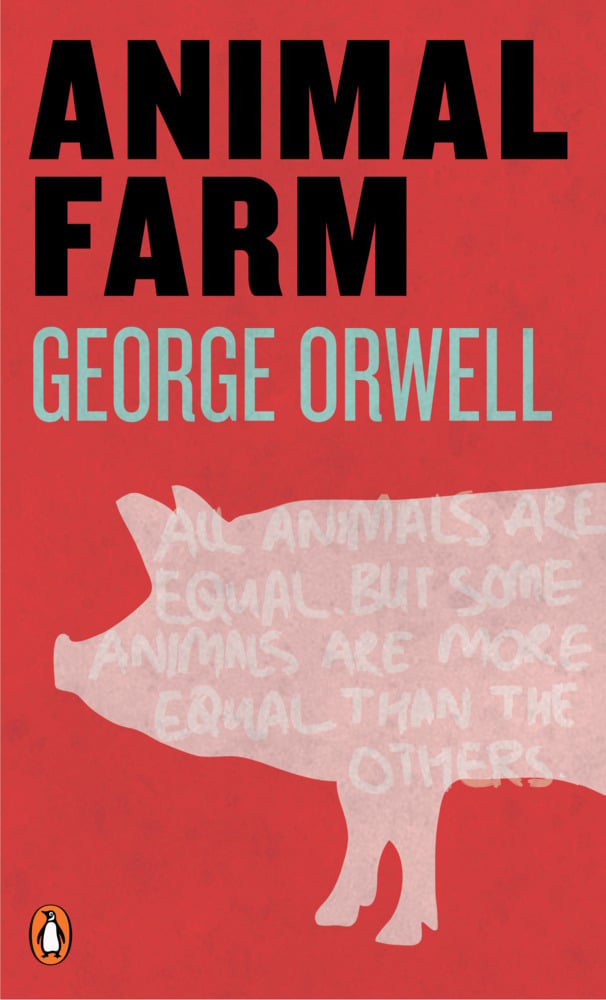
Animal Farm is a 1945 satirical allegorical novella by George Orwell in which the overworked animals of Manor Farm overthrow their drunken human farmer, establish a new society founded on principles of equality and solidarity—and watch those principles slowly corrupted by the pigs who seize power. Originally subtitled A Fairy Story, it is one of the most widely read and taught works of political literature in the English language. This guide covers the book’s reading level, age appropriateness, themes, characters, and teaching resources for students, parents, and educators.
For Parents
Animal Farm is one of the most commonly assigned texts in middle and high school, and one of the most accessible works of serious political satire ever written. The animal fable format makes it engaging and relatively gentle in its content—there is some violence, including the execution of animals who confess to crimes, but nothing graphic. The real challenge for young readers is understanding what Orwell is actually saying beneath the story, which is why classroom context matters. It is appropriate for most readers ages 11 and older.
For Teachers
Few texts do more work in fewer pages than Animal Farm. Its allegory maps directly onto the Russian Revolution and Stalinist Soviet Union, making it an ideal bridge between literature and history. It is also a masterclass in rhetorical manipulation—Squealer’s propaganda techniques are among the most teachable examples of persuasive language in any assigned text. The novella pairs naturally with units on totalitarianism, propaganda, the mechanics of political language, and the history of the twentieth century.
Animal Farm at a Glance
Find on Amazon →| Author | George Orwell |
| Published | 1945 |
| Grade Level | 7–10 (our assessment) |
| Recommended Age | 11–16 |
| Flesch-Kincaid Grade | 4.7 |
| Word Count | ~30,000 (novella) |
| Pages | 112–144 (varies by edition) |
| Chapters | 10 |
| Genre | Satirical allegory / political novella |
| Setting | Manor Farm, rural England (allegorical) |
| Awards | Retrospective Hugo Award (1996) |
For official Lexile and AR levels, visit Lexile.com or AR BookFinder. ReadingVine provides independent editorial assessments.
What Reading Level Is Animal Farm?
ReadingVine places Animal Farm at a grade 7–10 reading level. Its Flesch-Kincaid score of approximately 4.7 reflects Orwell’s famously plain, direct prose—short sentences, simple vocabulary, and a conversational clarity that was entirely intentional. Orwell believed that good political writing should be as clear as a pane of glass, and Animal Farm is a demonstration of that principle. A confident reader in grade 5 or 6 can decode the text without difficulty.
The challenge, and the reason it belongs in the 7–10 range, is the allegory. Students who read the story as a straightforward fable about farm animals miss everything Orwell is doing. Understanding the book fully requires some knowledge of the Russian Revolution, the rise of Stalin, and the mechanics of totalitarian propaganda—context that most students begin to acquire in middle school history. Teachers often find that Animal Farm works best when taught alongside or immediately after relevant historical content, so students can track the real-world parallels as they read. It is one of the few texts that genuinely works at both grade 7 and grade 10, deepening considerably with each additional year of historical and political knowledge.
For official Lexile and AR scores, visit Lexile.com or AR BookFinder.
What Age Is Animal Farm Appropriate For?
ReadingVine recommends Animal Farm for readers ages 11–16. The fable format keeps the content relatively gentle compared to other canonical high school texts: there is no sexual content, no strong profanity, and the violence, while present and intentional, is not graphic. The most disturbing scene—in which Napoleon’s dogs tear apart animals who confess to crimes—is brief and written in Orwell’s typically restrained prose. The emotional weight of the book comes not from shock but from the quiet, systematic way in which hope and justice are destroyed. For younger readers, that subtlety may land less powerfully; for older readers, it hits harder.
Animal Farm contains scenes of political violence: animals are executed by Napoleon’s dogs after confessing to fabricated crimes, and Boxer the horse is eventually sent to the slaughterhouse when he is no longer useful—a moment of understated cruelty that many readers find the book’s most emotionally devastating. There is also depiction of systematic deception and propaganda as tools of oppression. None of this is graphic, but it is morally serious. The book is widely considered appropriate for readers ages 11 and older, and the content aligns with the maturity level of most middle and high school students who encounter it in class.
What Is Animal Farm About?
The animals of Manor Farm, led by a vision from the wise old boar Old Major, rise up and drive out the drunken and neglectful farmer Mr. Jones. They rename the property Animal Farm and establish a set of governing principles called Animalism, distilled into Seven Commandments and a single guiding maxim: “Four legs good, two legs bad.” The revolution is genuine and its early days are hopeful—the animals work together, share the harvest, and dare to imagine a future of equality and freedom.
But the pigs—Napoleon, Snowball, and the silver-tongued propagandist Squealer—quickly consolidate control over the farm’s decision-making. When Napoleon drives Snowball out of the farm with his privately trained pack of dogs, the last check on his authority is gone. From that point, the Seven Commandments are rewritten one by one as Napoleon finds it convenient, with Squealer always on hand to explain why the animals’ memories are wrong and the pigs are acting in everyone’s best interest. The loyal cart-horse Boxer works himself to exhaustion on Napoleon’s windmill projects, sustained by his motto “I will work harder” and his unshakeable faith that Napoleon is always right—a faith that Napoleon ultimately repays by selling him to the knacker when his strength gives out.
By the novel’s end, the pigs walk on two legs, carry whips, and trade with the neighboring human farmers. The Seven Commandments have been reduced to one: “All animals are equal, but some animals are more equal than others.” Looking through the farmhouse window at the pigs playing cards with the humans, the other animals can no longer tell the difference between them. Orwell wrote the book between November 1943 and February 1944, drawing on his experiences during the Spanish Civil War and his firsthand observation of how Stalinist propaganda had distorted the British left’s understanding of what was happening in the Soviet Union. It was rejected by multiple publishers—including one of his own—before Secker & Warburg published it in August 1945.
Animal Farm Characters
Is Animal Farm Banned?
Animal Farm has been banned or restricted in numerous countries since its publication, particularly in the Soviet Union and other communist states that recognized themselves in its pages. In the United States, it has been challenged in school districts on a variety of grounds over the decades—some objectors found its politics too explicitly anti-communist, while others objected to its depictions of violence, its discussion of alcohol (Mr. Jones’s drunkenness), and its use of the word “masses” in a political context. It appeared on the American Library Association’s list of the most challenged books of the 1990s.
Ironically, the book was also suppressed briefly in the United Kingdom during World War II because Stalin was a wartime ally of Britain and the government considered the novella’s satire of Soviet leadership politically inconvenient. Orwell had difficulty finding a publisher willing to take it for exactly this reason. Today, Animal Farm is freely available and widely assigned throughout the English-speaking world, though it remains officially banned or restricted in several countries where governments may recognize uncomfortable parallels to their own systems of power.
Animal Farm Themes and Lessons
The novella’s central theme is the inevitability of revolutionary betrayal—the way power, once seized, corrupts those who hold it regardless of the ideals they began with. Orwell is not arguing against the desire for a more equal society; he is arguing that any revolution which does not build structural safeguards against the concentration of power will simply produce new oppressors in place of the old ones. The pigs do not begin as cynical exploiters—they begin as genuine believers. The corruption is gradual, rationalized, and almost imperceptible to those living through it.
Equally central is Orwell’s analysis of how language is used as a tool of political control. Squealer’s constant revisions of the Seven Commandments—always accompanied by the threat that Mr. Jones might return—demonstrate how those in power manipulate memory and meaning to maintain compliance. The sheep’s mindless bleating of “Four legs good, two legs bad” (later updated to “Four legs good, two legs better”) shows how slogans can replace thought entirely. Orwell’s 1946 essay “Politics and the English Language,” written around the same time, elaborates these ideas at length and pairs productively with the novella in the classroom. Discussion questions: How does Squealer persuade the animals to accept things they know are wrong? What parallels can you draw between the pigs’ techniques and political rhetoric you encounter today? What is Boxer’s mistake, and what does it cost him?
How Many Pages and Chapters Are in Animal Farm?
Animal Farm is divided into 10 chapters. Its page count varies significantly by edition—some paperbacks run as short as 96 pages, while others reach 144 pages depending on font size, margins, and included supplementary material. The Signet Classics edition (the most commonly used in American schools) is typically 144 pages. The word count of approximately 30,000 firmly classifies the book as a novella. An average reader will complete it in 2–3 hours, making it one of the shortest major texts assigned in any grade level. Most teachers nonetheless spread it over one to two weeks to allow thorough discussion of each chapter’s allegorical content. It is also an excellent candidate for a single, continuous class read-aloud, which can be completed in two or three class periods.
Books Similar to Animal Farm
About George Orwell
George Orwell was the pen name of Eric Arthur Blair (1903–1950), born in Bengal, India, to a British colonial family and educated at Eton on a scholarship. Rather than proceeding to university, he served five years with the Indian Imperial Police in Burma—an experience that left him profoundly opposed to imperialism and gave him material for his first novel, Burmese Days (1934). He spent years in voluntary poverty in Paris and London, working manual jobs and documenting what he saw, before finding his literary voice as a political essayist and novelist. He fought in the Spanish Civil War with an anti-Stalinist militia and was shot through the throat by a sniper—an experience that radicalized his opposition to Soviet communism and directly inspired Animal Farm. The novella, written in 1943–44, was rejected by several publishers who did not want to offend Britain’s wartime Soviet ally; when it was finally published in 1945, it became an immediate and enduring success. His final novel, Nineteen Eighty-Four (1949), completed while he was dying of tuberculosis, extended the same themes into a full-length dystopian vision that gave the language the words “doublethink,” “thoughtcrime,” and “Big Brother.” Orwell died in London in January 1950 at the age of 46.
Animal Farm: Frequently Asked Questions
What is the reading level of Animal Farm?
ReadingVine places Animal Farm at a grade 7–10 reading level, with a Flesch-Kincaid score of approximately 4.7. Orwell’s prose is intentionally plain and accessible, but understanding the novella’s full meaning requires knowledge of the Russian Revolution and Stalinist Soviet Union that most students begin to acquire in middle school. It works well at grade 7 and deepens considerably with each additional year of historical context.
What awards did Animal Farm win?
Animal Farm won a Retrospective Hugo Award in 1996, recognizing its enduring significance as a work of speculative and political fiction. It is ranked No. 31 on the Modern Library’s editors’ list of the 100 Best Novels of the twentieth century, and was named one of Time magazine’s 100 Best English-Language Novels published between 1923 and 2005. Orwell died in 1950 and did not live to receive major lifetime literary prizes, but he is consistently ranked among the greatest English writers of the twentieth century.
What does Animal Farm represent as an allegory?
Animal Farm is a direct allegory of the Russian Revolution of 1917 and its aftermath under Joseph Stalin. Old Major represents Karl Marx (and partly Vladimir Lenin), whose revolutionary vision inspires the uprising. Napoleon represents Stalin, who seized power after Lenin’s death and ruled through terror. Snowball represents Leon Trotsky, Stalin’s rival who was expelled and subsequently vilified. Squealer represents Soviet state propaganda and controlled media. Boxer represents the loyal Soviet working class—hardworking, trusting, and ultimately betrayed. The farm itself represents the Soviet Union, and the neighboring farms represent the capitalist nations that both feared and eventually traded with it.
What happens to Boxer in Animal Farm?
Boxer, the farm’s most devoted and powerful worker, collapses from overwork while hauling stone for the windmill. Napoleon announces that he is being sent to a veterinary hospital to recover. In fact, the van that arrives to collect Boxer belongs to a horse slaughterer—Benjamin reads the words on the side and tries to warn the others, but it is too late. Boxer is sold to be killed and rendered into glue and dog food. Napoleon uses the money from the sale to buy whisky. It is the novella’s most emotionally devastating moment, and the most explicit statement of how completely the revolution has betrayed the working class it claimed to serve.
What does “All animals are equal, but some animals are more equal than others” mean?
This is the final, corrupted version of the Seven Commandments—the single rule that replaces all others by the novel’s end. It is Orwell’s most famous sentence, and it captures the central contradiction of totalitarian systems that claim to represent equality while entrenching new hierarchies. The phrase exposes how language can be used to say the opposite of what it appears to mean: the word “equal” is retained while its meaning is completely destroyed. It has since passed into general usage as a description of any system that proclaims universal equality while practicing systematic discrimination.
Is Animal Farm appropriate for middle school?
Yes. Animal Farm is widely assigned in grades 7 and 8 and is appropriate for most readers ages 11 and older. The content is relatively mild compared to other canonical texts assigned at this level—there is no sexual content, no strong profanity, and the violence, while present, is not graphic. The main consideration is whether students have enough historical context to understand the allegory, which is why many teachers pair it with instruction on the Russian Revolution.
How long does it take to read Animal Farm?
At approximately 30,000 words across 10 chapters, Animal Farm is one of the shortest major texts assigned in any grade level—shorter even than Of Mice and Men. An average reader will complete it in 2–3 hours. Most teachers spread it over one to two weeks to allow thorough discussion of each chapter’s allegorical content, and it can be completed as a class read-aloud in just two or three sessions.
Why was Animal Farm initially rejected by publishers?
Orwell completed Animal Farm in early 1944, but it was rejected by multiple publishers—including Victor Gollancz, T.S. Eliot at Faber & Faber, and Jonathan Cape—largely for political reasons. The Soviet Union was a wartime ally of Britain, and publishers were reluctant to release a book that so clearly savaged Stalin and Soviet communism at a moment when public opinion was favorable to the USSR. One rejection famously suggested the market for animal stories was too limited. Secker & Warburg eventually published it in August 1945, by which time the war was over and the Cold War was beginning—a shift in geopolitical mood that turned the novella into an immediate bestseller.