
 = Partner Site
Cinder Reading Level: A Complete Guide
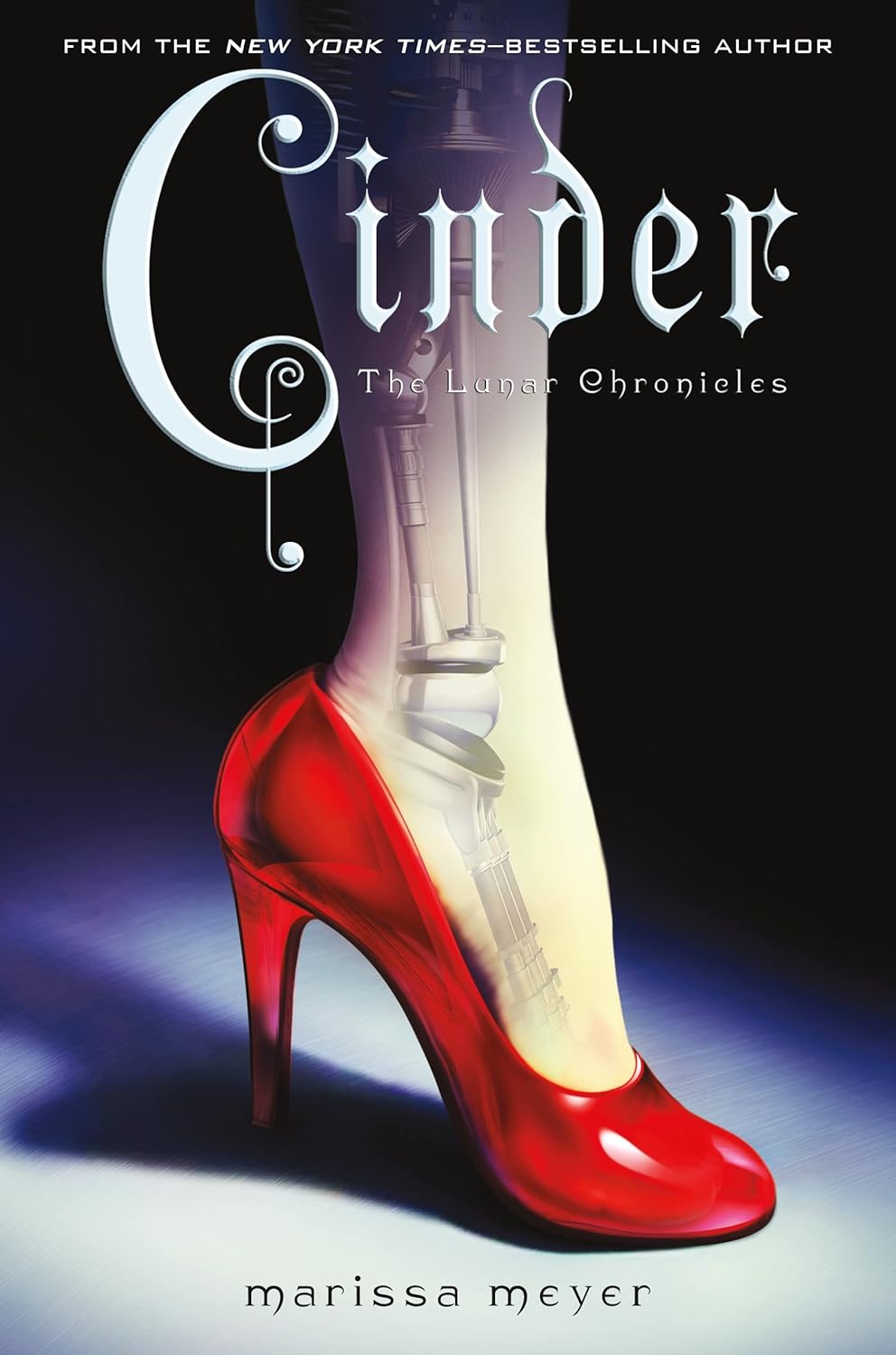
Cinder by Marissa Meyer is a fast-paced, inventive science fiction retelling of Cinderella set in a future Beijing where cyborgs are second-class citizens, a deadly plague is ravaging humanity, and a lunar queen with mind-control powers threatens war with Earth — starring a teenage cyborg mechanic who may be the key to saving the world. This complete guide covers Cinder’s reading level, recommended age, content considerations, characters, themes, and books similar to Cinder, designed for parents, teachers, and students.
For Parents
Cinder is a propulsive, imaginative young adult-leaning fantasy that reimagines Cinderella with science fiction scaffolding — cyborg mechanics instead of glass slippers, a lunar queen instead of a wicked witch, and a pandemic instead of a ball. The familiar fairy tale structure gives it immediate accessibility, while the world-building and plot complexity give it genuine substance. Content is appropriate for middle school and above: there is action-adventure violence, a plague that kills major characters, and mild romantic tension, but nothing graphic. A reliable choice for readers ages 11 and up who enjoy science fiction, fantasy, and fairy tale retellings.
For Teachers
Cinder works well in grades 6–8 as an independent reading selection, particularly for units on science fiction, fairy tale adaptation, or dystopian fiction. The novel’s explicit engagement with the Cinderella source material makes it an excellent text for discussions of how classic stories are reinterpreted across cultures and eras, and what gets changed and what stays the same. Themes of prejudice, disability, identity, and political power support substantive classroom discussion. The book is the first in a series, which motivates continued reading and provides natural opportunities for independent reading projects across a full unit.
Cinder at a Glance
Find on Amazon →| Author | Marissa Meyer |
| Published | 2012 |
| Grade Level | 6–8 (our assessment) |
| Recommended Age | 11–15 |
| Flesch-Kincaid Grade | 5.8 |
| Word Count | ~87,000 |
| Pages | 387 (standard paperback) |
| Chapters | 36 |
| Genre | Science fiction / fairy tale retelling / dystopian |
| Setting | New Beijing, the Eastern Commonwealth; a futuristic Earth; post-World War IV |
| Awards | — |
For official Lexile and AR levels, visit Lexile.com or AR BookFinder. ReadingVine provides independent editorial assessments.
What Reading Level Is Cinder?
Cinder reads at approximately a 5th- to 6th-grade word level by standard readability measures (Flesch-Kincaid grade 5.8), but it is most appropriately placed in grades 6–8 for independent reading. Our editorial assessment reflects the book’s thematic complexity, its young adult pacing and sensibility, and its length — 387 pages with a narrative that builds sustained political intrigue across a full novel-length arc — rather than just its sentence-level difficulty. The prose itself is clean, fast, and accessible; Meyer is a highly readable writer who prioritizes momentum and clarity.
What gives Cinder its upper middle-grade to young adult positioning is primarily the scale and sophistication of its world-building and political plot. Meyer builds an entire post-apocalyptic future Earth, invents a society on the moon with its own political structure and supernatural abilities, and manages a cast of characters across multiple storylines — all while maintaining the propulsive forward motion that makes the book so readable. Readers who are comfortable with the complexity of long fantasy series will handle it easily in 6th grade; readers who are still building stamina with sustained narrative may find it more naturally suited to 7th or 8th. For official Lexile and AR scores, visit Lexile.com or AR BookFinder.
What Age Is Cinder Appropriate For?
We recommend Cinder for readers ages 11–15, with the strongest fit at ages 12–14. The science fiction world-building, the fairy tale framework, and the strong female protagonist make it broadly appealing across the middle and early high school range. Strong readers as young as 10 who are comfortable with young adult fiction can engage with it fully. The series has particularly devoted fans among readers who have already worked through the Harry Potter and Hunger Games series and are looking for something similarly immersive and serialized.
Cinder contains a deadly plague — called letumosis — that kills characters including ones the reader has come to care about, and the threat of mass death is a sustained element of the book’s atmosphere. There is action-adventure violence including combat scenes, though nothing is graphic. A major character undergoes medical procedures against their will, and themes of bodily autonomy and the rights of cyborgs as second-class citizens run throughout the novel. There is mild romantic tension between Cinder and Prince Kai but no sexual content. The book ends on a significant cliffhanger — it is emphatically the first installment of a longer story — which some readers and parents find frustrating to know in advance. There is no profanity beyond mild exclamations.
Cinder has a strong crossover appeal — it reads as young adult in sensibility and plot sophistication while remaining entirely appropriate in content for mature middle school readers. The Cinderella framework gives it an immediate accessibility that draws in readers who might be more hesitant about pure science fiction, and the world-building is inventive enough to reward readers who are already devoted genre fans.
What Is Cinder About?
In the futuristic Eastern Commonwealth, centered on the teeming city of New Beijing, Cinder is a teenage cyborg mechanic — part human, part machine, with a prosthetic hand and foot and a computer system integrated into her brain. Cyborgs are second-class citizens, considered less than fully human by much of society and legally subject to being conscripted for medical research without their consent. Cinder lives with her stepmother Adri and two stepsisters, working as a mechanic in the market to support the household she is not truly welcome in. She is the best mechanic in the city, but her earnings go to Adri, and her mechanical parts mark her as an outsider wherever she goes.
When Prince Kai — the handsome, earnest crown prince of the Eastern Commonwealth — brings his broken android to Cinder’s market stall for repair, their lives become unexpectedly entangled. The prince is dealing with an escalating crisis: letumosis, a plague that has no cure and is killing millions, is spreading across Earth, and the politically powerful Queen Levana of Luna — the moon — is using the threat of war to force an alliance that would give her control over Earth. Into this web of politics and plague, Cinder finds herself pulled deeper, carrying secrets she doesn’t fully understand about her own origins that turn out to be central to everything.
Marissa Meyer conceived Cinder as the first book in a four-novel retelling of classic fairy tales — Cinderella, Red Riding Hood, Rapunzel, and Snow White — all set in the same future world and ultimately converging in a shared storyline. She began the project as a short story for a fairy tale retelling contest, and the world expanded from there into the four-book Lunar Chronicles series. The Cinderella parallels are explicit and affectionately maintained throughout: the ball, the prince, the midnight deadline, the lost shoe — all find inventive science fiction equivalents in the plot.
Cinder Characters
Cinder Themes and Lessons
Cinder uses its science fiction setting to explore questions about prejudice and the construction of difference in ways that are pointed without being heavy-handed. Cyborgs in the Eastern Commonwealth are treated as lesser — their earnings can be taken, their bodies conscripted for medical research, their humanity questioned — not because of anything they have done but because of what they are. Meyer draws clear parallels between this treatment and real-world histories of discrimination, and Cinder’s experience of moving through a society that has decided she is worth less than fully human people mirrors experiences of othering that resonate well beyond the genre.
The novel is also, at its core, a story about identity — specifically about the gap between who we are and who the world has told us we are. Cinder has internalized much of what her society thinks of cyborgs: she is ashamed of her mechanical parts, uncomfortable in her own body, reluctant to let anyone see her clearly. Her arc across the novel is a gradual movement toward self-recognition — toward the discovery that the qualities her society dismisses are precisely what make her capable of what the plot requires. This is the Cinderella story stripped to its most meaningful bones: the question of whether the girl who has been told she is nothing will come to understand that she is something. Discussion questions worth exploring: How does the treatment of cyborgs in this world parallel forms of discrimination in the real world? Why does Cinder hide who she is, and what does it cost her? What does Queen Levana’s power — the ability to alter how others perceive reality — suggest about the nature of political manipulation? How does Meyer update the Cinderella story while keeping its essential meaning intact?
How Many Pages and Chapters Are in Cinder?
Cinder is 387 pages in the standard paperback edition, divided into 36 chapters. The word count is approximately 87,000 words — a full-length novel at the upper end of the middle-grade to young adult range. At an average reading pace of around 250 words per minute for readers in the target age range, most will finish the book in roughly 8–10 hours of total reading time, typically two to three weeks of 30–45 minute daily reading sessions — though Meyer’s propulsive pacing means many readers move considerably faster once the plot accelerates in the second half. The chapters are short by young adult standards, most running 9–12 pages, and the book’s momentum builds steadily toward a climax that ends with a significant revelation and an unmistakable setup for the sequel.
Books Similar to Cinder
About Marissa Meyer
Marissa Meyer was born in 1984 in Tacoma, Washington, and studied creative writing and Japanese at Pacific Lutheran University before earning a master’s degree in publishing from Pace University. She worked as an editor before turning to full-time writing. She conceived the Lunar Chronicles series — a four-book retelling of fairy tales in a science fiction setting — while working on a short story submission for a fairy tale retelling contest, and the world she built for Cinderella expanded far beyond that original brief. Cinder, published in 2012, was her debut novel and was immediately acquired as part of a multi-book deal. The Lunar Chronicles ran to four main novels: Cinder (2012), Scarlet (2013), Cress (2014), and Winter (2015), each centering on a different fairy tale retelling — Cinderella, Red Riding Hood, Rapunzel, and Snow White respectively — all set in the same future world and converging in the fourth book. A companion novel, Fairest (2015), tells the backstory of Queen Levana, and Stars Above (2016) is a collection of companion short stories. Meyer has subsequently published the Renegades trilogy (2017–2019) and the standalone Instant Karma (2020). She lives in Tacoma with her family.
Cinder: Frequently Asked Questions
What grade level is Cinder?
By standard readability measures, Cinder reads at approximately a 5th- to 6th-grade word level (Flesch-Kincaid grade 5.8). Our editorial assessment is grades 6–8 for independent reading, reflecting the book’s thematic complexity, young adult sensibility, and length rather than its sentence-level difficulty. The prose is clean and fast; the world-building and political plot are more sophisticated than the word-level score suggests.
Is Cinder part of a series?
Yes. Cinder is the first of four main novels in the Lunar Chronicles series by Marissa Meyer. The sequels are Scarlet (2013), Cress (2014), and Winter (2015), each centering on a different fairy tale retelling — Red Riding Hood, Rapunzel, and Snow White respectively — all set in the same world and converging in the final installment. A companion novel, Fairest (2015), tells Queen Levana’s backstory and is best read between Cress and Winter. Stars Above (2016) is a short story collection set in the same world. Cinder ends on a significant cliffhanger, and readers who love it will find the sequels expand the world and cast considerably.
Is Cinder a retelling of Cinderella?
Yes — explicitly and affectionately so. Meyer maintains the essential structure and many of the specific details of the Cinderella fairy tale while transposing them into a science fiction future: the stepmother and stepsisters, the prince, the royal ball, the midnight deadline, and the lost shoe all have inventive equivalents in the plot. Part of the book’s pleasure is recognizing how Meyer has translated each fairy tale element — the glass slipper becomes a prosthetic foot, the fairy godmother becomes a mechanic’s tools and a friend’s intervention, the pumpkin carriage becomes a hover car. Readers who know the fairy tale well will enjoy catching the parallels; readers who don’t will find a complete story regardless.
What are Lunars, and what is their power?
Lunars are the inhabitants of Luna — the human colony established on the moon generations before the events of the novel. Over time, Lunars have developed a hereditary ability called the Lunar gift: the power to manipulate bioelectricity, which allows them to alter how others perceive them (making themselves appear more beautiful, more threatening, or invisible) and to control the thoughts and actions of others. The gift makes Lunars extremely dangerous in political and personal interactions, since they can essentially override free will. Queen Levana is the most powerful Lunar of her generation, and her ability to bend reality to her perception is the primary source of her political power over Earth.
What is letumosis?
Letumosis is a deadly plague that has been devastating Earth’s population for over a decade in the world of the novel — a disease with no known cure that spreads rapidly and kills within days of the appearance of its distinctive blue-black bruising. It is one of the central crises driving the novel’s plot: Prince Kai’s father is dying of it, the Eastern Commonwealth’s medical system is overwhelmed by it, and Queen Levana is using Earth’s desperation for a cure as leverage in her political demands. The letumosis plotline gives the novel its urgency and its stakes, and its resolution across the series is central to the Lunar Chronicles’ larger story.
Is Cinder appropriate for a 6th grader?
Yes, for most 6th graders. The reading level is accessible, the content is appropriate for ages 11 and up, and the combination of science fiction world-building and fairy tale framework makes it particularly appealing at this age. The plague and death of beloved characters may be emotionally significant for some readers, and the cliffhanger ending can be frustrating if the sequels aren’t immediately available. Overall, 6th grade is squarely in the target zone for this book.
Is there a movie or TV adaptation of Cinder?
As of this writing, no film or television adaptation of Cinder or the Lunar Chronicles series has been released, though the series’ popularity has generated significant fan interest in an adaptation. Check current entertainment news sources for updates on any announced projects.
How does Cinder compare to The Hunger Games?
Both books feature a resourceful young woman in a dystopian future who becomes unexpectedly entangled in the political fate of her world, and both are fast-paced, plot-driven novels with genuine emotional stakes. The key differences: Cinder’s world is more explicitly science fiction and more directly built on an existing story (Cinderella), while The Hunger Games is an original dystopia; The Hunger Games is darker and more brutal in its content; and Cinder has a more prominent romantic thread. Readers who love one consistently enjoy the other, and the two books are among the most common companion recommendations in the young adult science fiction space.