
 = Partner Site
Criss Cross Reading Level: A Complete Guide
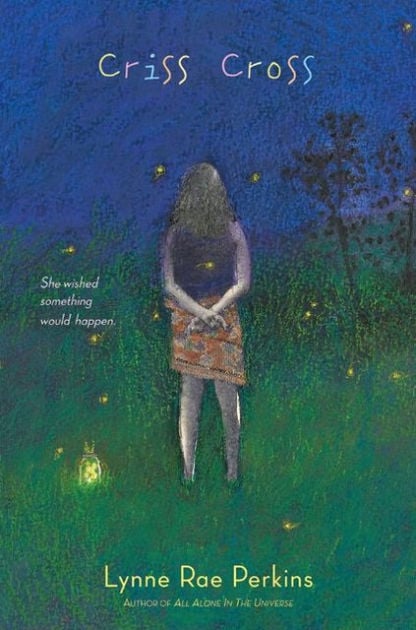
Criss Cross by Lynne Rae Perkins is a Newbery Medal-winning novel about a group of teenagers in a small town during one summer — a quietly observed, gently funny, and surprisingly moving book about the moment in adolescence when you first start wondering who you are and who you might become. This complete guide covers the reading level, age appropriateness, themes, characters, and everything parents and teachers need to know about this distinctive and literary novel.
For Parents
Criss Cross is a gentle, thoughtful novel with no dramatic plot — instead it offers a carefully observed portrait of teenage life in a small American town, full of small moments, dry humor, and genuine insight. Best suited for readers ages 10-13, it rewards patient readers who enjoy character over action. There is no mature content; the book’s challenges are entirely literary rather than age-related.
For Teachers
A Newbery Medal winner that is sometimes surprising to teachers encountering it for the first time, Criss Cross is formally inventive — it uses multiple narrators, shifting perspectives, poetry, Q&A sections, and haiku alongside conventional prose. This makes it an exceptional text for teaching narrative structure, point of view, and how writers make intentional formal choices. Best suited to grades 5-7, it works well in literature circles and writing workshops.
Criss Cross at a Glance
Find on Amazon →| Author | Lynne Rae Perkins |
| Published | 2005 |
| Grade Level | 5-7 (our assessment) |
| Recommended Age | 10-13 |
| Flesch-Kincaid Grade | 5.8 |
| Word Count | ~48,000 |
| Pages | 337 (standard paperback) |
| Chapters | 25 |
| Genre | Realistic fiction / literary fiction |
| Setting | Seldem, a small American town, early 2000s |
| Awards | Newbery Medal (2006) |
For official Lexile and AR levels, visit Lexile.com or AR BookFinder. ReadingVine provides independent editorial assessments.
What Reading Level Is Criss Cross?
Criss Cross reads at approximately a 5th-7th grade level by our editorial assessment, with a Flesch-Kincaid grade level of around 5.8. The prose itself is accessible — Perkins writes with clarity and a dry wit that most middle-grade readers can follow without difficulty. What makes the book genuinely challenging is its structure and its lack of conventional plot momentum.
Unlike most novels, Criss Cross does not have a driving storyline or a clear central conflict pushing toward resolution. It moves associatively, following several teenagers through a summer in the way that summer actually feels — drifting, looping back, small things becoming briefly significant and then fading. Perkins also shifts freely between prose, poetry, haiku, and Q&A interview format. Readers accustomed to plot-driven fiction may find this disorienting at first. Those who give it patience tend to find it quietly absorbing.
The book is most commonly assigned in grades 5-7 and works especially well with readers who already enjoy literary fiction. For official Lexile and Accelerated Reader scores, visit Lexile.com or AR BookFinder.
What Age Is Criss Cross Appropriate For?
We recommend Criss Cross for readers ages 10-13. The book deals with the ordinary concerns of early adolescence — crushes, identity, friendship, family, boredom, longing — in an honest and thoughtful way. There is nothing graphic or mature in terms of content; the challenges are literary rather than age-related.
There is no significant content to flag in Criss Cross. The teenage characters experience mild romantic feelings and crushes, handled with complete age-appropriateness. One character’s older brother has been in a minor accident, and there is a brief, non-graphic reference to injury. There is no violence, no strong language, and no sexual content. This is one of the gentler Newbery Medal winners in the catalog.
Parents sometimes find the book’s slow pace a concern for younger or reluctant readers — not because of content, but because without a strong plot engine, readers who need narrative momentum to stay engaged may struggle. For readers ages 10-13 who enjoy observational, character-driven fiction, it is an excellent match.
What Is Criss Cross About?
It is summer in Seldem, a small, quiet American town, and fourteen-year-old Debbie is waiting for something to happen. She’s not sure what — just something, a change, a sign that her life is going somewhere. Her neighbor Hector is similarly adrift, spending his days tinkering with a motorcycle he can’t quite get running, picking up a guitar for the first time, and noticing things he’s never noticed before. Around them, a loose constellation of friends and acquaintances — Lenny, Phil, Meadow, Patty — move through their own small dramas and discoveries.
The novel follows these teenagers over the course of a summer, catching them in moments of connection and near-connection: conversations that almost say something important, crushes that bloom and shift, an afternoon that feels meaningful without being explainable. The title refers to the way lives intersect — the crisscrossing paths of people in a small town, the way a chance encounter can change what you think about yourself, the way influence moves between people without anyone quite planning it.
Perkins tells the story through multiple perspectives and multiple forms. Some chapters follow Debbie, some follow Hector, some follow secondary characters. Some sections are written as haiku. One extended section is formatted as a Q&A interview. The variety is not random — each formal choice reflects the inner world of the character it’s describing — but it asks readers to shift gears more often than a conventional novel does.
Lynne Rae Perkins grew up in a small town in Pennsylvania and has spoken about drawing on the particular quality of small-town adolescent summers — the mix of boredom and heightened feeling, the sense that everything matters and nothing is happening — as the emotional foundation of the book. She also illustrated the novel herself, and the small pen-and-ink drawings scattered throughout add to its handmade, intimate quality.
Criss Cross Characters
Is Criss Cross Banned?
Criss Cross has not been banned or challenged and does not appear on lists of frequently challenged books. It is considered a gentle and literary Newbery Medal winner with no content concerns. It is sometimes a surprising Newbery pick to teachers and librarians unfamiliar with it — its quiet, non-plot-driven nature makes it less commonly assigned than some other Medal winners — but it has never attracted controversy of any kind.
Criss Cross Themes and Lessons
The central theme of Criss Cross is the experience of early adolescence as a state of becoming — not having arrived anywhere yet, but feeling the pull of somewhere. Debbie’s opening wish is the book’s thesis: something should happen, something should change, but she can’t say what. Perkins takes that inchoate longing seriously and follows it carefully through a summer of small accumulations. By the end, something has happened — not dramatically, but genuinely. Both Debbie and Hector are slightly different people than they were, shaped by experiences that wouldn’t make headlines in anyone’s life but mattered anyway.
A related theme is the way people influence each other without intending to — the crisscross of the title. A guitar chord overheard from a neighbor. A piece of advice from someone older. A conversation that goes sideways and leaves a residue. Perkins is interested in the invisible web of connection in a small community, and the novel’s multiple-perspective structure enacts that interest: you see the same summer from several angles, and each angle reveals something the others miss.
Discussion starters for families: What do you think Debbie was really wishing for at the beginning of the book? How did the summer change her? Why do you think Perkins uses so many different formats — poetry, haiku, Q&A — instead of just regular chapters? Which character did you feel closest to, and why? What does the title mean to you after finishing the book?
How Many Pages and Chapters Are in Criss Cross?
The standard paperback edition of Criss Cross is 337 pages, divided into 25 chapters of varying length, interspersed with haiku, a Q&A section, and Perkins’s own pen-and-ink illustrations. The word count is approximately 48,000 words — moderate for a middle grade novel, though the page count runs longer than the word count suggests due to the white space created by the poems and illustrations.
For readers in the target age range of 10-13, expect a reading time of roughly 4-7 hours, or about a week of steady reading at 30 minutes per session. The varied format means pacing feels uneven in places — some sections move quickly, others ask readers to slow down considerably. As a classroom text, it works best in a two-to-three week unit that allows time for discussion of both the content and the formal choices Perkins makes.
Books Similar to Criss Cross
About Lynne Rae Perkins
Lynne Rae Perkins is an American author and illustrator who grew up in a small town in Pennsylvania — an upbringing that shaped the setting and sensibility of Criss Cross directly. She studied art at Penn State and the University of Pittsburgh and worked as a graphic designer before turning to children’s books. Criss Cross won the Newbery Medal in 2006; she is also the author and illustrator of the Newbery Honor book All Alone in the Universe, which shares Criss Cross‘s interest in the interior lives of teenage girls in quiet American towns. Perkins illustrates her own novels with pen-and-ink drawings, and her visual sensibility — precise, warm, slightly eccentric — is as distinctive as her prose. She lives in Michigan.
Criss Cross: Frequently Asked Questions
What reading level is Criss Cross?
Criss Cross has a Flesch-Kincaid grade level of approximately 5.8. Our editorial assessment places it at grades 5-7 (ages 10-13). The prose is accessible, but the book’s non-linear structure and multiple formats make it more challenging than its word-level score alone suggests. For official Lexile and AR scores, visit Lexile.com or AR BookFinder.
What happens in Criss Cross? Is there a plot?
Criss Cross is a character-driven novel without a conventional plot. There is no central conflict driving toward resolution — instead, the book follows several teenagers through an ordinary summer in a small town, catching them in small moments of connection, discovery, and change. If you are looking for a book with a clear storyline and dramatic events, this is not that book. If you are looking for a book that captures what it actually feels like to be fourteen, it is very much that book.
Why does Criss Cross use haiku and different formats?
Lynne Rae Perkins uses multiple formats — prose chapters, haiku, poetry, a Q&A interview section, pen-and-ink illustrations — because each format reflects a different way of seeing and experiencing the world. The haiku, for instance, capture moments of sudden, crystalline perception — the way certain instants feel complete in themselves. The Q&A section captures a different kind of self-consciousness, the way teenagers perform themselves in conversation. The formal variety is intentional and meaningful, not decorative.
What grade is Criss Cross typically assigned in?
Criss Cross is most commonly assigned in grades 5-7, often in literature circles or as an independent reading choice rather than a whole-class novel. Its non-conventional structure makes it particularly well suited to writing workshops and discussions about craft, and some teachers use individual chapters or sections as mentor texts for student writing.
Why did Criss Cross win the Newbery Medal?
Criss Cross won the Newbery Medal in 2006, and its selection was somewhat surprising to some readers — the book is quiet, plotless by conventional standards, and formally unconventional. The Medal committee recognized it for the originality and care of Perkins’s writing, her ability to render the inner lives of teenagers with precision and empathy, and her inventive use of multiple narrative forms. It is a book that trusts its readers completely, and that trust was what the committee honored.
Is Criss Cross good for reluctant readers?
Probably not — at least not as a first choice. Criss Cross asks a lot of its readers in terms of patience and willingness to engage with a story that doesn’t deliver conventional plot rewards. Reluctant readers typically need narrative momentum and clear stakes to stay engaged, and Criss Cross provides neither in the usual way. It is an excellent book for readers who already love literary fiction and are ready for something that operates differently from most middle grade novels.
Does Criss Cross have a romance?
There are mild romantic elements — crushes, awareness of attraction, moments of almost-connection — but nothing that could be called a romance in any developed sense. The book is more interested in the inner experience of noticing someone than in the mechanics of a relationship. Everything is handled with complete age-appropriateness, and the romantic elements are a minor thread in a much larger tapestry.
Who illustrated Criss Cross?
Lynne Rae Perkins illustrated the book herself, as she does with all her novels. The pen-and-ink drawings scattered throughout are small, precise, and quietly funny — they function as a kind of visual commentary on the text rather than straightforward illustrations of scenes. Perkins trained as a visual artist before becoming a writer, and the integration of word and image in her books is one of their most distinctive qualities.