
 = Partner Site
Flora & Ulysses Reading Level: A Complete Guide
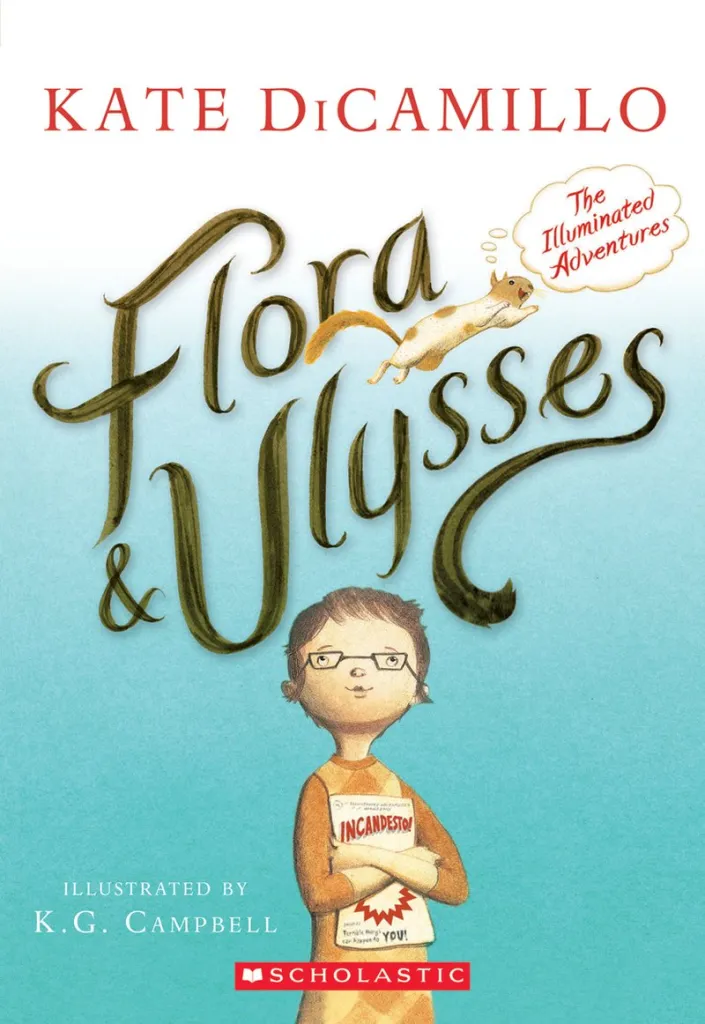
Flora & Ulysses by Kate DiCamillo tells the delightful story of a cynical girl and a poetry-writing squirrel with superpowers who help each other discover hope and heroism. This guide provides parents and teachers with reading level information, age recommendations, content insights, and discussion questions for this Newbery Medal-winning novel about friendship, family, and finding the extraordinary in ordinary life.
For Parents
Find the right reading level for your child, understand the book’s themes about divorce and cynicism, and get conversation starters to help your child explore questions about hope, heroism, and believing in possibilities.
For Teachers
Access grade-level guidance, reading metrics, character analysis support, and thematic discussion questions perfect for classroom use. This Newbery Medal winner offers rich opportunities for exploring graphic novel elements, magical realism, and character transformation.
Flora & Ulysses at a Glance
Find on Amazon →| Author | Kate DiCamillo |
| Illustrated by | K.G. Campbell |
| Published | 2013 |
| Grade Level | 3–5 (our assessment) |
| Recommended Age | 8–11 |
| Flesch-Kincaid Grade | 4.5 |
| Word Count | ~24,000 |
| Pages | 231 (standard hardcover) |
| Chapters | 60 short chapters plus illustrated comic sequences |
| Genre | Fantasy / humor / illustrated novel |
| Setting | Contemporary suburban neighborhood |
| Awards | Newbery Medal (2014) |
For official Lexile and AR levels, visit Lexile.com or AR BookFinder. ReadingVine provides independent editorial assessments.
What Reading Level Is Flora & Ulysses?
Flora & Ulysses is appropriate for grades 3–5, with a Flesch-Kincaid grade level of 4.5. The vocabulary is accessible with some sophisticated words that add humor and depth. Kate DiCamillo’s prose is clear and engaging, mixing traditional narrative with comic book-style illustrations that help visual learners follow the story. The short chapters and illustrated sequences make the reading experience feel fast-paced and dynamic.
DiCamillo’s writing style in this book is distinctive, combining prose chapters with illustrated comic sequences drawn by K.G. Campbell. The comic panels show key moments (like Ulysses being sucked into the vacuum cleaner) in visual form, making dramatic scenes more accessible and adding humor. The vocabulary includes comic book words like “incandesto” (made up but clear from context) and references to superhero tropes that children familiar with comics will recognize and enjoy.
While strong third graders can handle the reading mechanics, the story resonates most deeply with readers ages 8–11 who can appreciate the humor in Flora’s cynicism, understand the references to superhero comics, and relate to her feelings about her parents’ divorce and her mother’s emotional distance. The book rewards readers who enjoy quirky humor, illustrated novels, and stories about finding hope when you’ve stopped believing in happy endings.
What Age Is Flora & Ulysses Appropriate For?
Flora & Ulysses is most appropriate for readers ages 8–11. The story deals with divorce, parental emotional neglect, and a child’s disillusionment with the world, but handles these topics with warmth and humor. DiCamillo balances Flora’s cynicism with genuine hope, and the fantastical elements (a squirrel with superpowers) keep the tone light even when addressing serious family issues.
Divorce and separated parents: Flora’s parents are divorced. Her father has moved out, and Flora misses him. The divorce is handled matter-of-factly as part of Flora’s reality.
Emotionally distant mother: Flora’s mother is self-absorbed and emotionally neglectful. She’s more interested in her romance novels than in Flora, which creates real pain for Flora though this is treated with understanding rather than blame.
Near-death of animal: Ulysses is sucked into a vacuum cleaner and appears to die. He’s revived, but the scene is dramatic and could upset younger animal lovers.
Attempted harm to animal: Flora’s mother tries to get rid of Ulysses and at one point threatens him. This creates conflict but is resolved without real harm.
Cynicism and disillusionment: Flora is cynical and doesn’t believe in happy endings. While this cynicism is ultimately overcome, some children might find her initial worldview sad.
What’s NOT in the book: No graphic violence, no serious trauma beyond the divorce. The vacuum incident is dramatic but Ulysses recovers quickly with superpowers. The ending is happy—Flora’s family situation improves, she gains friends and confidence, and Ulysses is safe. The book’s message is hopeful: even cynics can learn to believe in possibilities again, and sometimes the extraordinary happens in ordinary life.
What Is Flora & Ulysses About?
Ten-year-old Flora Belle Buckman is a self-proclaimed cynic. Her parents are divorced, her mother writes romance novels and ignores her, and Flora has learned not to expect much from life. She reads superhero comics, particularly “The Illuminated Adventures of the Amazing Incandesto,” and considers herself prepared for anything because the comics have taught her “Do not hope for anything. Expect nothing.” Flora believes in being realistic, which means expecting the worst.
One day, Flora witnesses a squirrel being sucked into a neighbor’s vacuum cleaner—a powerful Ulysses 2000X. The squirrel appears dead. Flora, imitating what she has seen in her superhero comics, performs mouth-to-mouth resuscitation on the squirrel. Miraculously, the squirrel revives. But something has changed—the vacuum has given the squirrel superpowers. He can lift the vacuum cleaner above his head with super strength, he can fly, and most amazingly, he can type poetry on Flora’s mother’s typewriter.
Flora names the squirrel Ulysses, after the vacuum that transformed him. She takes him home and keeps him hidden from her mother, who hates squirrels and writes romance novels with titles like “Terrible Things Can Happen to You!” Flora’s mother, Phyllis Buckman, is so absorbed in her writing and her own problems that she barely notices Flora most of the time. Flora’s father has moved into an apartment and seems defeated and sad. Flora feels alone except for her comics and now, this remarkable squirrel.
Ulysses begins typing poetry. His first poem is simply the word “squirrel” over and over, but Flora recognizes it as profound—Ulysses is declaring his identity. As Ulysses types more poems, Flora realizes he’s not just a superhero squirrel; he’s an artist, someone who sees beauty and expresses it despite being small and seemingly insignificant.
Flora meets William Spiver, a boy who lives nearby. William wears sunglasses all the time because he claims to be “hysterically blind”—his vision comes and goes based on his emotional state. William is quirky, intellectual, and lonely. He and Flora become friends, bonding over Ulysses and over being kids who don’t quite fit in. William’s great-aunt Tootie lives with him; she’s warm and kind, everything Flora’s mother isn’t.
When Flora’s mother discovers Ulysses, she’s horrified. She tries to get rid of him, seeing him as a rodent rather than the superhero Flora knows him to be. This creates conflict between Flora and her mother. Flora must protect Ulysses from her mother’s schemes while also dealing with her own growing realization that she’s been hurt by her mother’s emotional absence.
The story escalates when Flora’s mother tries to get rid of Ulysses, believing she is protecting Flora from disappointment, leading to a climactic confrontation. Flora’s father gets involved, and ultimately Flora must decide whether to keep believing in Ulysses’s heroism and in the possibility of good things happening, or to retreat into cynicism. Through a series of adventures—including Ulysses flying, writing increasingly profound poetry, and demonstrating unexpected bravery—Flora learns to hope again.
By the end, Flora’s relationship with her parents improves. Her mother begins to see Flora for who she really is and starts paying attention. Her father becomes more present and engaged. Flora has friends in William and Tootie. Most importantly, Flora has learned that being open to wonder and believing in possibilities—even impossible things like a poetry-writing superhero squirrel—makes life richer and more beautiful than cynicism ever could.
The book ends with Flora transformed from a cynic who expects nothing into someone who believes in hope, love, and the extraordinary potential in ordinary life. Ulysses remains her companion, a daily reminder that amazing things can happen if you’re paying attention and willing to believe.
Flora & Ulysses Characters
Flora & Ulysses Themes and Lessons
At its heart, Flora & Ulysses is about learning to hope again after disappointment and loss have made you cynical. Flora has protected herself from more hurt by expecting nothing and believing in nothing. Her mantra “Do not hope” keeps her safe but also keeps her from experiencing joy, connection, and wonder. Ulysses—this impossible, poetry-writing superhero squirrel—forces Flora to reconsider her cynicism. If a squirrel can have superpowers and write poetry, then maybe other impossible things can happen too. Maybe her mother can change. Maybe her family can heal. Maybe she can be happy. The book teaches that cynicism is a defense mechanism that protects you from disappointment but also closes you off from life’s possibilities.
The book also explores what true heroism means. Flora is obsessed with superhero comics and their lessons about being prepared and expecting the worst. But through Ulysses, she learns that real heroism isn’t about strength or invulnerability—it’s about being open to love and connection despite vulnerability. Ulysses writes poetry (an act of emotional vulnerability) and cares about Flora (emotional connection) even though he could get hurt. His heroism comes from his heart, not just his superpowers. Similarly, Flora’s heroism is in choosing to open her heart again, to believe in her parents’ love despite their failures, and to let people in despite the risk of being hurt again.
Discussion questions for families:
- Why does Flora call herself a cynic? What experiences made her that way? Can you understand why she felt safer not hoping?
- How does Ulysses help Flora change from cynical to hopeful? What does his poetry teach her?
- What kind of hero is Ulysses? How is he different from traditional superheroes like the Incandesto character Flora reads about?
- How do the comic book illustrations add to the story? Do they make it easier or more fun to read?
How Many Pages and Chapters in Flora & Ulysses?
Flora & Ulysses has 231 pages in the standard hardcover edition and is divided into 60 very short chapters, plus illustrated comic book sequences. The word count is approximately 24,000 words. The chapters average about 3–4 pages each, making them extremely quick to read and providing constant stopping points. The illustrated sequences break up the text and add visual interest.
For independent readers in the target age range (8–11), the book typically takes 3–4 hours to complete, or about a week of reading 30 minutes per day. The short chapters, illustrations, and humor make the book feel fast-paced and accessible. The blend of text and images appeals to reluctant readers and visual learners. The comic book references and superhero elements engage children who love that genre.
As a read-aloud, Flora & Ulysses takes approximately 2.5–3 hours total. The short chapters work perfectly for reading sessions, and the illustrations can be shown and discussed. The book provides excellent opportunities to talk about divorce, dealing with emotionally distant parents, and the difference between cynicism and healthy realism. Many families enjoy it because it addresses serious topics (divorce, neglect, disillusionment) with warmth and humor rather than heavy-handedness. Teachers often use it to teach illustrated novels, magical realism, and character transformation.
Books Similar to Flora & Ulysses
If your child enjoyed Flora & Ulysses, here are six similar books that explore themes of quirky friendships, family challenges, and finding magic in everyday life:
About Kate DiCamillo
Kate DiCamillo wrote Flora & Ulysses in 2013, and it won the Newbery Medal in 2014—her second Newbery Medal, following The Tale of Despereaux in 2004. This makes DiCamillo one of only a handful of authors to win the Newbery Medal twice. DiCamillo was inspired to write about a squirrel with superpowers after thinking about superheroes and what makes someone heroic. She decided that true heroism isn’t about physical strength but about emotional courage—the willingness to be vulnerable, to love, and to hope despite the risk of being hurt. Flora’s journey from cynicism to hope reflects DiCamillo’s belief that opening your heart, even after disappointment, is the bravest thing you can do. The character of Flora was partly inspired by DiCamillo’s own tendency toward worry and expecting the worst—she wanted to write about a child who protects herself through cynicism but learns that this protection also cuts her off from joy and connection. The illustrated format was a deliberate choice to make the superhero elements visual and immediate. DiCamillo worked with illustrator K.G. Campbell to create comic book-style sequences that would appeal to visual learners and reluctant readers while also adding humor and drama to key scenes. The poetry that Ulysses writes was important to DiCamillo as a way of showing that art and beauty matter, that expressing what’s in your heart—even if it’s as simple as repeating the word “squirrel”—is meaningful and brave. DiCamillo has said that Flora & Ulysses is ultimately about paying attention to the world around you and being open to wonder. If you go through life expecting nothing, you might protect yourself from disappointment, but you’ll also miss the extraordinary moments that make life worth living—like witnessing a squirrel gain superpowers and write poetry. The book’s humor and lightness belie its serious themes about divorce, emotional neglect, and childhood loneliness. DiCamillo wanted to address these real struggles that many children face while keeping the tone hopeful and showing that healing is possible. The reconciliation between Flora and her mother shows that parents can change and grow, and that even damaged relationships can improve if people are willing to try. DiCamillo has written many beloved books, including Because of Winn-Dixie, The Tiger Rising, The Miraculous Journey of Edward Tulane, and others. She served as the National Ambassador for Young People’s Literature. However, Flora & Ulysses holds a special place for many readers because of its unique blend of humor, heart, illustrated storytelling, and its message that cynicism is a cage and hope is the key that sets you free.
Flora & Ulysses: Frequently Asked Questions
What are Ulysses’s superpowers in Flora & Ulysses?
Ulysses gains three main superpowers after being sucked into the Ulysses 2000X vacuum cleaner: super strength (he can lift the vacuum cleaner above his head), the ability to fly, and most remarkably, the ability to type poetry on a typewriter. His super strength and flight are traditional superhero powers, but his poetry-writing ability is what makes him truly special. Through his poems, Ulysses expresses profound truths and beauty despite being a small squirrel. His poetry shows that he’s not just physically powerful but emotionally and artistically powerful as well. The combination of physical superpowers and poetic sensitivity makes Ulysses a different kind of superhero—one who embodies both strength and vulnerability, action and reflection. His powers represent the extraordinary potential hidden in seemingly ordinary creatures and the idea that art and beauty are superpowers in their own right.
Is Flora & Ulysses a graphic novel?
Flora & Ulysses is not a full graphic novel, but it’s an illustrated novel that incorporates comic book-style sequences. The majority of the book is traditional prose text organized in very short chapters. However, key scenes are illustrated in comic book panels drawn by K.G. Campbell. These illustrated sequences show dramatic moments like Ulysses being sucked into the vacuum, his first flight, and other important events. The blend of prose and comics makes the book accessible to different types of readers—those who prefer traditional novels can focus on the text, while visual learners and graphic novel fans can enjoy the illustrations. The format also serves the story’s themes, since Flora is obsessed with superhero comics, particularly “The Amazing Incandesto.” The comic book elements aren’t just decoration; they’re integral to how Flora sees and understands the world. This hybrid format has become increasingly popular in children’s literature, appealing to reluctant readers while maintaining literary quality.
What grade level is Flora & Ulysses?
Flora & Ulysses is appropriate for grades 3–5 (ages 8–11). The reading level (4.5 Flesch-Kincaid) is accessible to third graders, and the very short chapters (60 chapters in 231 pages) make the book feel manageable even for reluctant readers. The illustrated comic sequences provide visual support for comprehension. However, the themes—divorce, emotional neglect, cynicism, and learning to hope—require some emotional maturity to fully appreciate. Strong third graders can read it independently, though they might focus more on the humor and superhero elements than the deeper themes about family healing. Fourth and fifth graders typically connect more fully with Flora’s emotional journey and understand the significance of her transformation from cynic to believer. The book works well for a wide range of readers because the humor and illustrations make it accessible while the themes provide depth for more mature readers. It’s particularly good for children dealing with divorce or feeling overlooked by parents.
Does Flora & Ulysses have a happy ending?
Yes, Flora & Ulysses has a happy ending. By the conclusion, Flora has transformed from a cynical girl who expects nothing into someone who believes in hope, love, and possibilities. Her relationship with her mother improves significantly—her mother begins to truly see Flora and pay attention to her needs and feelings. Her father becomes more present and engaged in her life. Flora has gained friends in William Spiver and Tootie, giving her a support system beyond her immediate family. Most importantly, Ulysses remains safe and becomes Flora’s beloved companion, a daily reminder of the extraordinary in ordinary life. The ending isn’t unrealistically perfect—Flora’s parents don’t get back together, and her mother doesn’t become a completely different person overnight—but there’s genuine healing and growth. Flora has learned that being open to wonder and willing to hope makes life richer than cynicism ever could. The final message is hopeful and affirming: amazing things can happen if you pay attention and believe in possibilities.
What is the main message of Flora & Ulysses?
The main message is that hope is more powerful than cynicism, and opening your heart to possibilities—even impossible ones—makes life worth living. Flora begins the story as a self-proclaimed cynic who believes in expecting nothing to avoid disappointment. But Ulysses, an impossible poetry-writing superhero squirrel, forces her to reconsider whether protecting yourself through cynicism is worth the cost of missing out on wonder, connection, and joy. The book teaches that true heroism isn’t about physical strength or invulnerability; it’s about emotional courage—the willingness to hope, to love, and to believe in possibilities despite the risk of being hurt. The story also explores how paying attention to the world around you reveals extraordinary moments in ordinary life. If Flora hadn’t been watching when the squirrel was vacuumed up, she would have missed witnessing and participating in something amazing. Finally, the book addresses healing from family pain, showing that parents can change and grow, and that even damaged relationships can improve when people make an effort to truly see and value each other.
Why is Flora cynical in Flora & Ulysses?
Flora is cynical because she’s been hurt and disappointed by her family situation and has learned to protect herself by expecting nothing. Her parents are divorced, which has disrupted her family life. Her mother is emotionally distant and self-absorbed, more interested in writing romance novels than in Flora’s life and feelings. Flora feels unseen and unimportant to her mother, which is deeply painful for a child. Her father has moved out and seems sad and defeated, unable to provide the stability and engagement Flora needs. To protect herself from further disappointment, Flora has adopted cynicism as a defense mechanism. She reads superhero comics that teach her to “Do not hope. Expect nothing.” If you don’t hope for anything, you can’t be disappointed when it doesn’t happen. This cynicism keeps Flora safe from more hurt but also isolates her and prevents her from experiencing joy, connection, and wonder. Her journey in the book is about learning that while cynicism protects you, it also imprisons you, and that opening yourself to hope—despite the risk—is ultimately more fulfilling than staying closed off.
Is Flora & Ulysses appropriate for 2nd grade?
Flora & Ulysses can work for advanced second-grade readers, especially as a read-aloud, but third grade is generally more appropriate for independent reading. The reading level (4.5 Flesch-Kincaid) is slightly above typical second grade, though strong second-grade readers can handle the mechanics. The very short chapters and comic book illustrations help make it accessible. However, the emotional content—divorce, a mother’s emotional neglect, Flora’s cynicism and disillusionment—may be difficult for some second graders to fully understand or process. Second graders might enjoy the humor, the superhero elements, and the quirky squirrel without fully grasping the deeper themes about hope versus cynicism or the significance of Flora’s family healing. As a family or classroom read-aloud with adult guidance to discuss the themes, it can work well for mature second graders. For independent reading, third grade and up is typically better, as children that age can better appreciate both the humor and the emotional depth.
Who wrote Flora & Ulysses?
Kate DiCamillo wrote Flora & Ulysses, published in 2013. The book was illustrated by K.G. Campbell, who created the comic book-style sequences that appear throughout the text. DiCamillo is one of the most celebrated contemporary children’s authors, known for emotionally rich stories that balance serious themes with warmth and hope. Flora & Ulysses won the Newbery Medal in 2014, making it DiCamillo’s second Newbery Medal (her first was for The Tale of Despereaux in 2004). She is one of only a handful of authors to win this prestigious award twice. DiCamillo’s other beloved books include Because of Winn-Dixie (a Newbery Honor book), The Tiger Rising, The Miraculous Journey of Edward Tulane, and many others. She served as the National Ambassador for Young People’s Literature. DiCamillo’s books are known for addressing real childhood struggles—loneliness, divorce, loss, feeling different—with honesty and compassion while maintaining hope and humor. Her writing celebrates the power of love, friendship, and opening your heart even when you’ve been hurt.