
 = Partner Site
Gathering Blue Reading Level: A Complete Guide
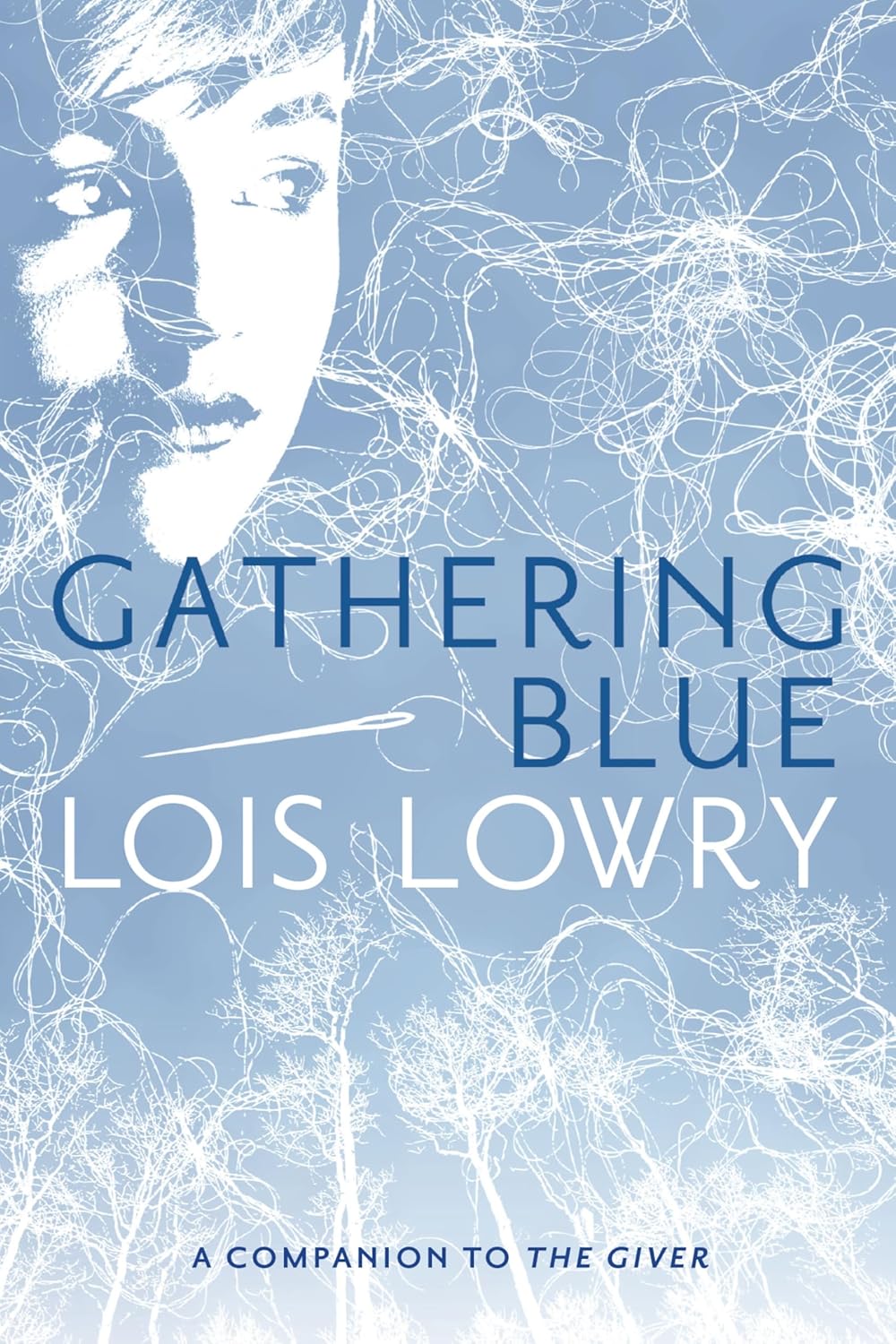
Gathering Blue by Lois Lowry is a compelling, quietly disturbing, and beautifully crafted companion novel to The Giver — set not in Jonas’s ordered, technological Community but in a very different kind of controlled society: a primitive, brutal village where the weak are left to die and a young girl named Kira, born with a twisted leg, survives only because of an extraordinary gift. Where The Giver explored a society that had eliminated pain through technology, Gathering Blue explores one that enforces control through fear, tradition, and the careful management of beauty. The second book in Lois Lowry’s Quartet, it stands fully on its own as a novel about art, power, and the specific courage required to use a gift in service of truth rather than in service of those who want to own it. This complete guide covers the reading level, age appropriateness, themes, characters, and everything parents and teachers need to know about this essential companion novel.
For Parents
Gathering Blue is a novel about a girl who is kept alive only because she is useful — and who must discover, carefully and at considerable risk, whether the people who have chosen to keep her alive are worthy of her loyalty. Best suited for readers ages 10-13, it is darker in atmosphere than The Giver in some respects — the village’s cruelty is immediate and physical rather than bureaucratic and clinical — but its protagonist is warmer, its world more tangible, and its central argument about art and power is one of the most important available in middle grade fiction. Parents who have read The Giver with their children will find it a rich companion; those who have not will find it entirely accessible on its own.
For Teachers
A widely taught companion novel well suited to grades 5-7, Gathering Blue is an exceptional text for teaching how authors build dystopian worlds through accumulated detail, the relationship between art and political power, and the specific narrative technique of the protagonist who knows less than the reader and whose growing knowledge drives the plot. It also opens essential discussions about disability and worth, about what societies value and what they discard, and about the specific danger of beauty in the hands of those who want to use it to tell lies. It pairs most naturally with The Giver but stands entirely on its own as a teaching text.
Gathering Blue at a Glance
Find on Amazon →| Author | Lois Lowry |
| Published | 2000 |
| Grade Level | 5-7 (our assessment) |
| Recommended Age | 10-13 |
| Flesch-Kincaid Grade | 5.0 |
| Word Count | ~43,000 |
| Pages | 215 (standard paperback) |
| Chapters | 22 |
| Genre | Dystopian fiction / fantasy |
| Setting | A primitive fictional village, indeterminate future or distant past |
| Awards | ALA Notable Children’s Book; ALA Best Book for Young Adults |
For official Lexile and AR levels, visit Lexile.com or AR BookFinder. ReadingVine provides independent editorial assessments.
What Reading Level Is Gathering Blue?
Gathering Blue reads at approximately a 5th-7th grade level by our editorial assessment, with a Flesch-Kincaid grade level of around 5.0. That score runs somewhat low for a novel most strongly associated with grades 5-7 — Lowry writes in Kira’s voice with a warmth and directness that contrasts deliberately with the controlled affectlessness of The Giver‘s prose, reflecting the difference between the two societies: one sterilized, one raw. The vocabulary is accessible, the sentences clear, and the world-building is accomplished through specific sensory detail — the textures of thread and dye, the smells of the village, the particular quality of light in the Edifice — rather than through expository summary.
What makes the novel more demanding than its word-level score suggests is the architecture of dramatic irony Lowry builds with considerable patience. Kira understands her situation less fully than the reader does for most of the novel, and the accumulating gap between what she knows and what the reader suspects — about the Council of Guardians, about what happened to the previous Threader, about what Kira’s embroidery is actually for — is one of the novel’s primary sources of tension. Readers who engage with this gap, who feel the weight of what Kira is not yet seeing, will find the novel considerably richer than its surface warmth suggests.
The book is most commonly recommended for grades 5-7. For official Lexile and Accelerated Reader scores, visit Lexile.com or AR BookFinder.
What Age Is Gathering Blue Appropriate For?
We recommend Gathering Blue for readers ages 10-13. The novel depicts a primitive, brutal village society with honesty — the weak are left to die in the Field, violence is normalized, and the political structure is one of organized cruelty dressed in tradition. Parents should be prepared for a book that is darker in its physical world than The Giver, though its emotional register is warmer.
The village practices exposure of the weak and disabled: people who cannot contribute are left in the Field to die, and Kira’s survival from birth has been extraordinary given her twisted leg. Her mother has just died at the novel’s opening — the immediate grief of that loss is the novel’s emotional starting point. The village is violent and the violence is casual: physical confrontations, threats, and the threat of the Field are present throughout. A subplot involves the mysterious disappearance of artisans before Kira — their disappearance is mysterious for much of the novel, and the truth about where they have gone is revealed near the end. The Council of Guardians is a portrait of bureaucratic evil that is not cartoonish: these are people who genuinely believe they are maintaining order and who are not wrong that order requires maintenance. There is no sexual content and no strong language. The novel’s difficulty is atmospheric and political, and every difficult element serves the story’s argument.
Gathering Blue is widely taught as a companion to The Giver and is broadly recommended for its age range. Its portrait of disability — Kira’s twisted leg as simultaneously her vulnerability and, in a different world, irrelevant to her worth — opens discussions about what societies value and discard that are among the most important available at this level.
What Is Gathering Blue About?
Kira has a twisted leg — the result of a birth injury that, in her village, should have meant death. Children born with defects are not kept. The Field takes them. But Kira’s mother fought for her survival, and Kira has grown up in the village as a girl who walks with difficulty and who has, in place of physical strength, an extraordinary gift: she can thread colors into fabric with a skill that goes beyond training, that seems almost to predict futures and see the past. When her mother dies of a sudden illness, Kira is immediately threatened: without a mother’s protection and without the physical capacity to build or farm, she has no obvious claim to survival in a village organized around strength and usefulness.
Instead of the Field, Kira is brought before the Council of Guardians and given an extraordinary assignment: she will restore and extend the Robe of the Singer, the great ceremonial garment that depicts the history of the people and that is worn each year at the Gathering. It is the most important textile in the village, and Kira’s skill is the only skill adequate to its restoration. She will live in the Edifice, the seat of the Council’s power, and she will be fed and sheltered and given access to dyes and threads she has never seen.
It seems like salvation. Kira accepts it. And as she settles into the Edifice, she begins to notice things that do not fit the story the Council tells about itself and about the village: the boy Thomas, a carver of extraordinary skill who was also brought to the Edifice as a child and who has been there ever since; a small girl named Jo with a voice of unearthly beauty who is being kept in the Edifice and trained, without her full understanding, for a purpose Kira cannot yet name; and the absence of the previous Threader, who was also skilled, who worked on the Robe before Kira, and who is gone in a way that no one will explain.
The mystery Kira is assembling — about what the Council is, what the Robe is for, what happens to the artisans when they are no longer needed, and what the future that the Robe depicts actually shows — is the novel’s central narrative engine. And the question she must answer when the mystery is complete — whether to stay in the Edifice and use her gift in service of the Council’s lies, or to leave and use it in service of the truth — is its moral center.
A thread that connects Gathering Blue to The Giver appears near the novel’s end, confirming that these stories take place in the same world, at different points and in different forms. Lowry has spoken about Gathering Blue as exploring a different answer to the same question The Giver asked: what does a society sacrifice in order to maintain control? In Jonas’s world, the sacrifice was memory and feeling. In Kira’s world, it is truth itself — the true history that the Robe could tell, covered over by the false history the Council has embroidered into it.
Gathering Blue Characters
Is Gathering Blue Banned?
Gathering Blue has not been widely challenged on its own, though it is sometimes caught in challenges directed at The Giver as part of the Quartet. Its portrait of a society that abandons the weak and disabled, and its depiction of a Council that uses art to enforce ideological conformity, have occasionally generated parental questions in communities that have found The Giver difficult. These questions have not typically resulted in sustained challenges. The novel is widely available and widely taught, and most educators and librarians who have reviewed challenges to the Quartet have defended all four books’ inclusion in curricula.
Gathering Blue Themes and Lessons
The central theme of Gathering Blue is the relationship between art and power — specifically, the argument that art in the hands of those who want to use it to enforce a false history is not art at all but propaganda, and that the artist’s responsibility is to the truth rather than to the patron. The Robe that Kira embroiders depicts the history of the people — but the history it depicts has been shaped by those in power to tell the story they want told, omitting what does not serve them and embroidering what does. Kira’s gift could be used to extend and elaborate that false history, or it could be used, in ways she is only beginning to understand, to tell the true one. What she chooses, and the conditions under which she chooses it, is the novel’s moral resolution.
Disability and worth are the novel’s second great themes, rendered through Kira’s twisted leg and the village’s explicit policy of discarding those who cannot contribute physically. The novel’s argument is not made through sentiment but through Kira herself: a girl whose physical limitation is entirely irrelevant to the extraordinary thing she can do, whose worth is not diminished by what she cannot do but is inseparable from what she can. The village’s calculus of worth — strength and usefulness in the narrow physical sense — is shown to be not just cruel but stupid: it discards exactly the people whose gifts it most needs.
Truth and official history are the novel’s third great themes, and the ones that connect it most directly to The Giver. Both novels are about societies that control their members through the management of what is known and remembered. Jonas’s Community managed this by quarantining all memory in a single individual. Kira’s village manages it by controlling what the Robe shows — by making the official history of the people a work of embroidery that only a Council-controlled Threader can touch. In both cases, Lowry’s argument is the same: a community that cannot know its own history cannot make genuine choices about its future.
Discussion starters for classrooms: Why does the Council want Kira to work on the Robe? What is the Robe for, and what does it tell the people who see it? Why is it significant that the Robe shows the future as well as the past? What does the village’s treatment of the disabled tell us about what it values? What choice does Kira make at the end, and is it the right one? How does Kira’s situation compare to Jonas’s?
How Many Pages and Chapters Are in Gathering Blue?
The standard paperback edition of Gathering Blue is 215 pages, divided into 22 chapters averaging around ten pages each. The word count is approximately 43,000 words — similar in length to The Giver and similarly compact given the fullness of the world it builds. The novel moves in a clear arc: Kira’s vulnerability and threat, her installation in the Edifice, her growing unease, her investigation, and her resolution — a structure that makes it easy to track as a classroom text and that gives teachers natural points for discussion between sections.
For readers in the target age range of 10-13, expect a reading time of roughly 4-5 hours, or about a week and a half of comfortable reading at 30 minutes per session. As a classroom text it works best in a two-to-three week unit. When taught alongside The Giver, it rewards comparative discussion: the two novels ask the same fundamental question about social control but answer it through very different worlds, and the contrast between Jonas’s technologically ordered Community and Kira’s physically brutal village is one of the richest comparative discussions available at this level. Messenger (2004) and Son (2012) continue the Quartet, with Messenger beginning to bring the two novels’ worlds into contact in ways that enrich both.
Books Similar to Gathering Blue
About Lois Lowry
Lois Lowry is one of the most celebrated American children’s authors of the past fifty years, the winner of two Newbery Medals — for Number the Stars (1990) and The Giver (1994) — and the author of more than forty books for young readers. Gathering Blue, published in 2000, was the second book in what became her Quartet, extending the world of The Giver into a different kind of dystopian society and introducing a protagonist whose relationship to art and power is at the center of the novel’s argument. Lowry has spoken about Gathering Blue as her exploration of a different answer to the central question of The Giver: if Jonas’s world suppressed feeling and memory, Kira’s world suppresses truth and history — two different instruments of control producing two different but related kinds of diminished life. The Quartet continues with Messenger (2004), which begins to bring the two worlds into contact, and concludes with Son (2012), which returns to Jonas’s story and provides resolution for both narrative threads. Lowry lives in Maine.
Gathering Blue: Frequently Asked Questions
What reading level is Gathering Blue?
Gathering Blue has a Flesch-Kincaid grade level of approximately 5.0, which runs somewhat low for a novel most associated with grades 5-7 (ages 10-13). Lowry writes in Kira’s voice with warmth and directness, and the world-building comes through sensory detail rather than exposition. What makes the novel more demanding than the score suggests is the dramatic irony — the gap between what Kira knows and what the reader suspects about Jamison, the Council, and the fate of the previous Threader. For official Lexile and AR scores, visit Lexile.com or AR BookFinder.
Do I need to read The Giver before Gathering Blue?
No — Gathering Blue is designed to stand entirely on its own. It takes place in the same world as The Giver but in a completely different setting, with different characters, and without requiring any knowledge of the first novel. Readers who come to Gathering Blue first will find it fully accessible and fully satisfying. That said, readers who have read The Giver will find an additional layer of meaning in the thread that connects the two novels near the end — a moment that is resonant rather than confusing for those who know the first book, and simply a warm moment of hope for those who do not. Most teachers who use both novels teach The Giver first, but the order can be reversed without significant loss.
What is the Robe of the Singer?
The Robe of the Singer is the great ceremonial garment worn at the Gathering — the annual community ceremony at which the Singer performs the history of the people. The Robe is embroidered with that history in thread so detailed and so specific that it functions as a kind of illustrated chronicle, depicting events from the people’s past and, in the portion that Kira is assigned to extend, their future. It is the most important artifact in Kira’s village, and the Council’s control over who embroiders it — and what they are permitted to show — is the central mechanism of their historical and ideological control. The Robe is what art becomes in the hands of power: a beautiful lie maintained by the most gifted hands available.
What does “gathering blue” mean?
Blue is the one color Kira cannot produce from the natural dyes available in her village — every other color she can find or make, but blue has no natural source she has been able to locate. The title refers to her search for that missing color: the dye plant that produces blue, which Matt eventually finds in the place he travels to on her behalf. Blue is also, in the context of the novel’s argument about art and truth, the color of sky and water and distance — the color of the world beyond the village, of possibility, of the true history the Robe could tell if Kira were free to tell it. The title is both literal (the search for a dye) and metaphorical (the search for what is missing, what has been withheld, what would complete the picture).
How does Gathering Blue connect to The Giver?
The connection between the two novels is revealed near the end of Gathering Blue, when Matt returns from his journey to a distant place and describes what he found there — including a detail that readers of The Giver will immediately recognize as connecting to Jonas’s story. Lowry does not make the connection explicit or dramatic; she trusts readers who know the first novel to feel it, and lets readers who do not take it simply as a hopeful image. The two novels are most fully understood in relation to each other — Jonas’s world and Kira’s world are two different dystopian answers to the same question — but neither requires the other to be complete. Messenger (2004) begins to make the connection explicit and brings characters from both novels into the same narrative.
What happens at the end of Gathering Blue?
Kira learns the full truth about the Council of Guardians — about what happened to the artisans before her, about what Jamison’s role in those events was, and about what her own embroidery is intended to produce. She is offered a choice: stay in the Edifice in comfort and safety, using her gift in service of the Council’s false history, or leave with knowledge she did not have before. Her choice — and the specific terms on which she makes it — is the novel’s moral resolution, and it reflects the same question The Giver asked from a different angle: whether the comfortable life maintained by a system that requires dishonesty and cruelty is a life worth having. Readers of The Giver will recognize the structural echo; readers who have not read it will find the ending complete on its own terms.
What grade is Gathering Blue typically assigned in?
Gathering Blue is most commonly assigned in grades 5, 6, and 7, both as a companion to The Giver and as an independent reading text. When taught alongside The Giver, it rewards comparative discussion about the two different forms of social control — technological suppression of feeling versus physical enforcement of a false history — and the two different kinds of courage the protagonists must find. Many teachers use both novels in a two-to-three week unit on dystopian fiction, with the comparison between Jonas’s world and Kira’s as the unit’s central analytical frame. It is also widely taught independently in units on art and power, disability and worth, and the politics of official history.