
 = Partner Site
I Know Why the Caged Bird Sings Reading Level: A Complete Guide
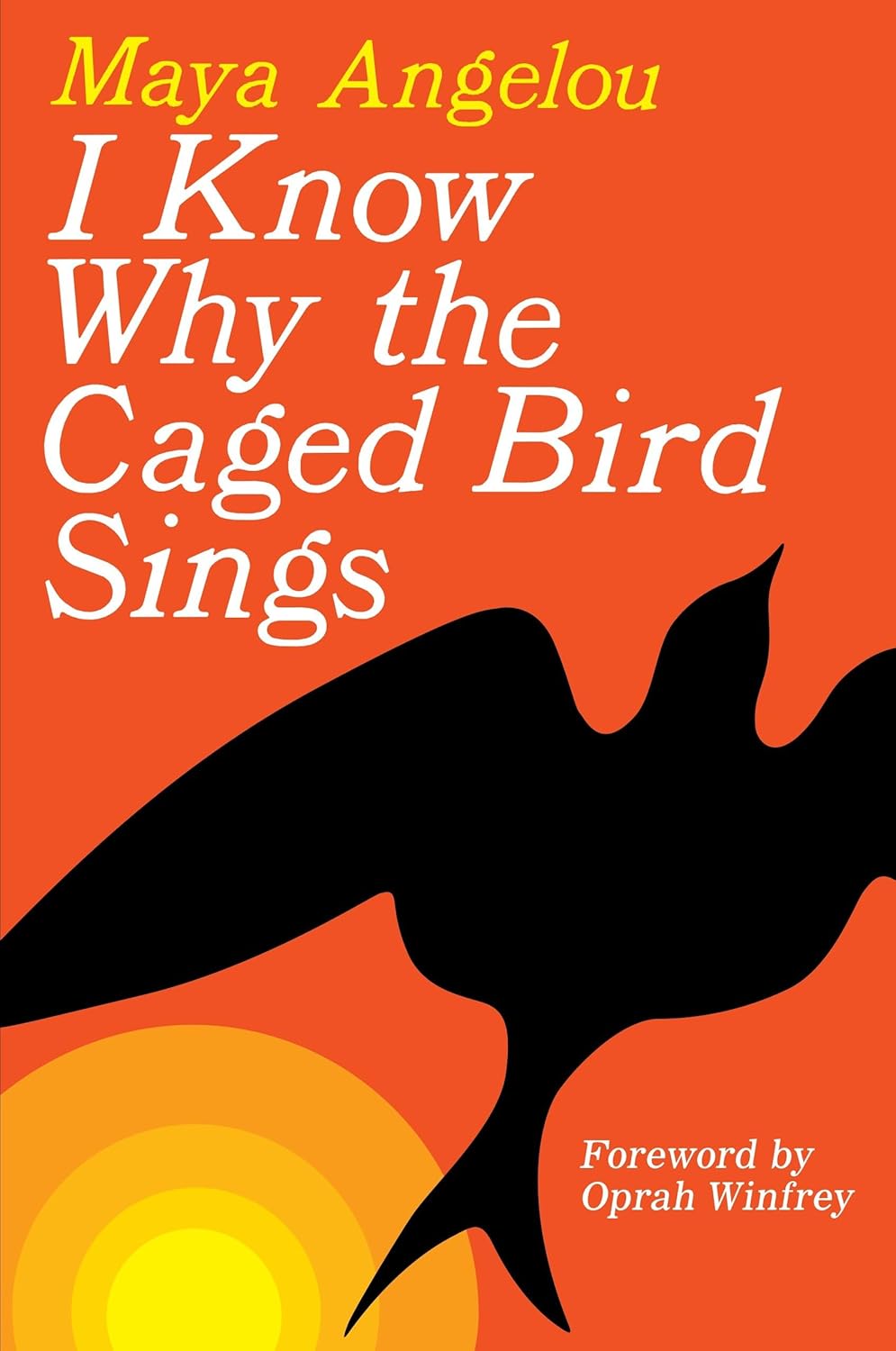
I Know Why the Caged Bird Sings is a 1969 autobiography by Maya Angelou, the first in a seven-volume memoir series, covering the first seventeen years of her life—from her childhood in Stamps, Arkansas, where she and her brother Bailey were raised by their grandmother, through her adolescence in St. Louis and San Francisco. It is one of the most celebrated, most taught, and most frequently challenged books in American literary history: nominated for the National Book Award in 1970, named one of TIME magazine’s 100 best and most influential books written in English, and ranked by the American Library Association among the most challenged books for four consecutive decades. Angelou’s account of surviving racism, sexual violence, and displacement—and of finding, through language and literature, the resources to build a life of dignity and self-possession—transformed American memoir and gave a generation of readers language for experiences they had never seen reflected in print. This guide covers the book’s reading level, age appropriateness, themes, characters, and teaching resources for students, parents, and educators.
For Parents
I Know Why the Caged Bird Sings contains a frank depiction of the rape of an eight-year-old child by her mother’s boyfriend, as well as the psychological aftermath of that assault. It also depicts racism in the Jim Crow South with unflinching specificity, includes some profanity, and addresses adolescent sexuality and teen pregnancy. These elements are not gratuitous—they are the substance of Angelou’s actual life and the source of the memoir’s moral and emotional authority. It is most commonly assigned in grades 9–11, to readers ages 14 and up, and is considered by educators and literary organizations to be one of the most important American memoirs of the twentieth century. Parents who are aware of the content and engage with it alongside their students often find the book opens significant and valuable conversations.
For Teachers
I Know Why the Caged Bird Sings is a foundational text for courses in American literature, African American literature, women’s memoir, and the literature of the South. Angelou’s prose operates at the intersection of autobiography and literary craft—poetic, rhythmic, and carefully structured around thematic rather than strictly chronological development. It pairs naturally with Frederick Douglass’s Narrative, Zora Neale Hurston’s Their Eyes Were Watching God, the poetry of Paul Laurence Dunbar (whose poem gives the book its title), and contemporary discussions of trauma-informed literature and the ethics of reading difficult material. The book is also unusually well-suited to units on the power of language itself: Angelou’s passion for words, her encounter with Shakespeare, her year of voluntary mutism after the assault—all make language and its relationship to identity explicit teachable subjects.
I Know Why the Caged Bird Sings at a Glance
Find on Amazon →| Author | Maya Angelou |
| Published | 1969 |
| Grade Level | 9–11 (our assessment) |
| Recommended Age | 14–18 |
| Flesch-Kincaid Grade | 6.7 |
| Word Count | ~78,000 |
| Pages | ~289 (standard paperback) |
| Chapters | Prologue + 36 chapters |
| Genre | Autobiography / memoir |
| Setting | Stamps, Arkansas; St. Louis, Missouri; San Francisco, California; 1930s–1940s |
| Awards | National Book Award nominee (1970) |
For official Lexile and AR levels, visit Lexile.com or AR BookFinder. ReadingVine provides independent editorial assessments.
What Reading Level Is I Know Why the Caged Bird Sings?
ReadingVine places I Know Why the Caged Bird Sings at a grade 9–11 reading level, with a Flesch-Kincaid score of approximately 6.7 and a Lexile of 1010L. These numbers reflect a pattern familiar from several other canonical memoirs and novels written in deliberately accessible voices: the score reflects the clarity and directness of Angelou’s prose, not its depth. Angelou writes with the rhythmic control of a poet, and her memoir is organized thematically and imagistically as much as chronologically—a structure that rewards close, attentive reading rather than quick summary. Individual passages are accessible; the book as a whole requires the kind of sustained analytical engagement that is best suited to grades 9–11.
The Lexile of 1010L places it alongside A Separate Peace and Their Eyes Were Watching God in the upper range of high school reading complexity—a score that accurately reflects Angelou’s literary ambition if not always her sentence-level accessibility. Teachers frequently find that students who read the book only as a personal narrative miss the careful craft underneath it, and that the memoir rewards re-reading with more attention to structure and language. For official Lexile and AR scores, visit Lexile.com or AR BookFinder.
What Age Is I Know Why the Caged Bird Sings Appropriate For?
ReadingVine recommends I Know Why the Caged Bird Sings for readers ages 14–18. The memoir contains a frank account of the rape of an eight-year-old child, depicted with clarity and emotional truth rather than clinical detachment. It is the most significant content consideration and the primary basis for the book’s extensive challenge history. The memoir also depicts the racist violence of the Jim Crow South with unflinching specificity, addresses adolescent sexuality, and ends with a teen pregnancy. None of this material is presented gratuitously—it is Angelou’s actual life, and her refusal to euphemize or minimize it is precisely what makes the memoir so powerful and so important.
I Know Why the Caged Bird Sings contains a direct depiction of the rape of an eight-year-old girl by her mother’s adult boyfriend. The assault is described from the child’s perspective and is central to the memoir’s narrative and thematic structure—Angelou’s year of near-total mutism following the assault is one of the book’s most important episodes. The memoir also contains: sustained depictions of racial violence and humiliation in the Jim Crow South; some profanity; frank treatment of adolescent sexuality; and a teen pregnancy at the end of the book. The book is most commonly assigned in grades 9–11, to students ages 14 and up, and teachers typically provide content preparation before assigning the assault chapters.
What Is I Know Why the Caged Bird Sings About?
The memoir begins when Maya Angelou—born Marguerite Johnson in St. Louis in 1928—is three years old and she and her brother Bailey are sent by their parents to Stamps, Arkansas, to live with their paternal grandmother, Annie Henderson, whom they call Momma. Momma runs a general store and is a pillar of the Black community in Stamps—devout, financially stable, and possessed of a quiet, fierce dignity that becomes one of the memoir’s central moral reference points. Maya grows up in Stamps under the double weight of her grandmother’s exacting standards and the relentless, grinding humiliations of life in the segregated South. These humiliations accumulate through the book in specific, vivid vignettes—white girls mocking Momma, a dentist who refuses to treat Maya because she is Black, the looming presence of the Ku Klux Klan.
When Maya is eight, she and Bailey are sent to St. Louis to live with their mother, Vivien Baxter—a beautiful, charismatic, and somewhat terrifying woman who is the opposite of Momma in almost every way. In St. Louis, Maya is raped by her mother’s boyfriend, Mr. Freeman. He is convicted and sentenced; he is then killed—likely by Vivien Baxter’s brothers—shortly after his release. Maya, believing that her telling of what happened has caused his death, stops speaking almost entirely for the next year. She and Bailey are sent back to Stamps, where a teacher named Bertha Flowers—the most refined Black woman Maya has ever seen—coaxes Maya back into speech by introducing her to the power of literature: Dickens, Shakespeare, Poe, Douglas Johnson. It is one of the most celebrated passages in American memoir.
The final third of the book moves Maya through early adolescence in San Francisco, where her mother has relocated. Maya graduates as the first Black female streetcar conductor in San Francisco, wins a scholarship to study dance and drama, and at sixteen, following a deliberately initiated sexual encounter she undertakes to prove to herself that she is not a lesbian, becomes pregnant. The memoir ends with Maya holding her newborn son and discovering, unexpectedly, that she possesses the capacity to be a good mother—a moment of quiet self-discovery that closes the first chapter of a life Angelou will spend seven volumes chronicling.
I Know Why the Caged Bird Sings Characters
Is I Know Why the Caged Bird Sings Banned?
I Know Why the Caged Bird Sings is one of the most extensively challenged books in American history. The American Library Association ranked it number three on its list of the most challenged books for 1990–2000, and number six for 2001–2010. Since 1983, the book has accumulated more than thirty-nine documented public challenges and bans, and the ALA’s Office for Intellectual Freedom has received a substantially larger number of confidential reports. The ALA’s Banned Books Week, launched in 1982, was inspired in part by the early censorship campaigns against this book—when the American Booksellers Association displayed it and other targeted titles in a cage outside their annual conference.
The challenges have come from multiple directions. The most common objection is to the memoir’s depiction of the rape of an eight-year-old child, which challengers have described as “sexually explicit” and “inappropriate for students.” In Alabama, the State Textbook Committee sought to reject the book in 1983 on the grounds that it encouraged “bitterness and hatred toward white people.” In Fairfax, Virginia, a parent group succeeded in having it removed from a school district, citing profanity, drug use, sexually explicit content, and torture. In 1994, it was challenged in Maryland as a “lurid tale of sexual perversion.” The book was removed from five Iowa school districts in 2024 under Senate File 496, a state law requiring removal of books depicting sexual acts from school libraries; enforcement of that law was enjoined in early 2025 due to constitutional concerns. In 2021, the Matanuska-Susitna Borough School Board in Alaska voted to remove it from the curriculum alongside The Things They Carried, Catch-22, and several other titles; the board rescinded that decision after community protest. Angelou responded to the banning campaigns throughout her life with characteristic directness: “I’m always sorry that people ban my books. Many times I’ve been called the most banned. And many times my books are banned by people who never read two sentences.”
I Know Why the Caged Bird Sings Themes and Lessons
The memoir’s title comes from Paul Laurence Dunbar’s 1899 poem “Sympathy,” in which the caged bird sings not from joy but from pain and longing—its song a cry of protest against captivity. Angelou’s title is her answer to that poem: she knows why the caged bird sings because she has been the caged bird, caged by racism, sexual violence, poverty, and the internalized diminishment that results from growing up in a world that insists you are less than you are. The memoir is the song. Its very existence as a work of literature is a form of escape from every cage that was built around the child it describes.
The memoir is also, unusually among its contemporaries, explicitly about language as a tool of liberation and identity. Maya’s year of near-total mutism after the assault is not simply a psychological symptom but a philosophical crisis: she has learned that her words can cause harm, so she stops using them. Mrs. Flowers’s gift—the insistence that language is beautiful, that poetry is meant to be spoken, that the great writers belong to Maya as much as to anyone—is what begins to bring her back. Maya’s subsequent passion for literature, her encounter with Shakespeare and Dickens and Dunbar, becomes the through-line connecting her childhood self to the adult writer who will eventually produce this memoir. Discussion questions: Why does Maya stop speaking after Mr. Freeman’s death? What role does language play in Maya’s recovery of self? How does Angelou use the structure of episodic vignettes rather than strict chronology to tell her story?
How Many Pages and Chapters in I Know Why the Caged Bird Sings?
I Know Why the Caged Bird Sings is approximately 289 pages in the standard Ballantine Books paperback and approximately 78,000 words. It consists of a short prologue and 36 chapters, most of which are brief vignettes of a few pages rather than extended narrative sequences. This episodic structure reflects Angelou’s deliberate choice to organize the memoir thematically—by experience, relationship, and insight rather than strict chronology—rather than as a conventional linear autobiography. An average high school reader will complete it in 5–7 hours. Most teachers assign it over two to three weeks, often pairing individual vignettes with close reading and discussion before moving on.
Books Similar to I Know Why the Caged Bird Sings
About Maya Angelou
Maya Angelou was born Marguerite Annie Johnson on April 4, 1928, in St. Louis, Missouri. After the traumatic childhood described in Caged Bird, she went on to a career of remarkable breadth: she worked as a dancer, actor, singer, playwright, journalist, and civil rights activist, serving as the Northern Coordinator for the Southern Christian Leadership Conference under Martin Luther King Jr. She wrote I Know Why the Caged Bird Sings at the challenge of her friend James Baldwin and her editor Robert Loomis, who dared her to write an autobiography that was also a work of literature. She was forty years old when it was published in 1969. The book was nominated for the National Book Award the following year and launched a literary career that would produce six more volumes of autobiography, five collections of poetry, and numerous essays and plays. Angelou read her poem “On the Pulse of Morning” at President Bill Clinton’s inauguration in 1993, the first poet to read at a presidential inauguration since Robert Frost in 1961. She received the National Medal of Arts in 2000 and the Presidential Medal of Freedom in 2011. She was awarded Grammy Awards for Best Spoken Word Album in 1993, 1995, and 2002. TIME magazine named her among the 100 most influential people of the twentieth century. She died on May 28, 2014, in Winston-Salem, North Carolina, at the age of eighty-six, and was mourned as one of the defining voices of American literature.
I Know Why the Caged Bird Sings: Frequently Asked Questions
What reading level is I Know Why the Caged Bird Sings?
ReadingVine places I Know Why the Caged Bird Sings at a grade 9–11 reading level, with a Flesch-Kincaid score of approximately 6.7 and a Lexile of 1010L. The lower F-K score reflects the clarity and directness of Angelou’s prose, not the depth and complexity of the memoir’s thematic structure. The book rewards attentive, analytical reading and is most commonly assigned in grades 9–11, to students ages 14 and up.
Is I Know Why the Caged Bird Sings a memoir or a novel?
It is an autobiography—a memoir of the first seventeen years of Maya Angelou’s life. However, reviewers and critics have often described it as “autobiographical fiction” because Angelou uses literary techniques normally associated with fiction: thematic rather than strictly chronological structure, richly imagined scenes, dialogue reconstructed from memory, and a poetic prose style that prioritizes emotional and thematic truth over documentary precision. Angelou herself was explicit that the events described were real, and she wrote in the tradition of the Black American autobiography pioneered by Frederick Douglass. The literary techniques are in service of truth rather than in contradiction of it.
Why does Maya stop speaking in I Know Why the Caged Bird Sings?
After Maya tells her family about the rape and Mr. Freeman is tried and convicted, he is killed shortly after his release from prison—almost certainly by Vivien Baxter’s brothers. Maya, eight years old, concludes that her speaking his name was what caused his death: that her voice is so powerful it can kill. Out of guilt, and out of terror of her own power, she stops speaking almost entirely for nearly a year. Her silence is both a psychological response to trauma and, in the memoir’s larger logic, a philosophical statement about the danger and responsibility of language. Mrs. Bertha Flowers’s patient work to coax her back into speech—through literature and poetry—becomes the memoir’s central healing narrative.
What does the title I Know Why the Caged Bird Sings mean?
The title comes from Paul Laurence Dunbar’s 1899 poem “Sympathy,” in which a caged bird beats its wings against the bars until it bleeds, and then—exhausted, unable to escape—sends up a prayer that Dunbar calls “a plea, that upward to Heaven he flings.” The bird sings not from joy but from longing and protest. Angelou’s title is a direct response: she knows why the caged bird sings because she has been that bird—caged by racism, sexual violence, poverty, and the systematic diminishment of Black life in Jim Crow America. The memoir is itself the song: an act of witness, protest, and self-reclamation.
Why is I Know Why the Caged Bird Sings so frequently banned?
The book has been challenged more than thirty-nine times since 1983 and ranked among the ALA’s most challenged books for four consecutive decades. The most common objections are to the frank depiction of child sexual assault, described as “sexually explicit,” and to the memoir’s unflinching account of racism in the Jim Crow South, which some challengers have called “anti-white.” Additional challenges have cited profanity, references to homosexuality, and teen pregnancy. Defenders of the book—including the ALA, PEN America, and educators across the country—argue that these are precisely the experiences that students need literature to help them understand, and that shielding young readers from honest accounts of sexual violence and racial oppression leaves them less equipped to recognize and resist both.
What is the significance of Mrs. Bertha Flowers in the memoir?
Mrs. Flowers is the pivotal figure in Maya’s recovery from her year of near-total mutism. She is the most cultivated and refined Black woman Maya has encountered—proof that beauty, intelligence, and grace can coexist with Blackness in a world that insists otherwise. She introduces Maya to poetry as a spoken art, makes her read aloud, gives her books, and tells her that language is a gift that belongs to her. In the memoir’s larger argument about the relationship between language and selfhood, Mrs. Flowers is the person who gives Maya back her voice—and with it, the possibility of becoming the writer who will eventually tell this story.
How does I Know Why the Caged Bird Sings end?
The memoir ends with the birth of Maya’s son Clyde, whom she had conceived at age sixteen. She is terrified that she will be a bad mother, but in the final scene her own mother places the sleeping baby beside Maya in her bed, and Maya realizes—watching herself not crush the baby, feeling herself instinctively adjust to hold him safely—that she already knows how to be his mother. It is an ending of quiet, hard-won self-trust: not triumph or resolution, but the discovery that the capacity for love and care survived everything that was done to her.
How many pages and chapters is I Know Why the Caged Bird Sings?
I Know Why the Caged Bird Sings is approximately 289 pages and 78,000 words, with a prologue and 36 chapters. The chapters are mostly brief episodic vignettes rather than extended narratives. An average high school reader will complete it in 5–7 hours. Most teachers assign it over two to three weeks.