
 = Partner Site
Jabari Jumps Reading Level: A Complete Guide
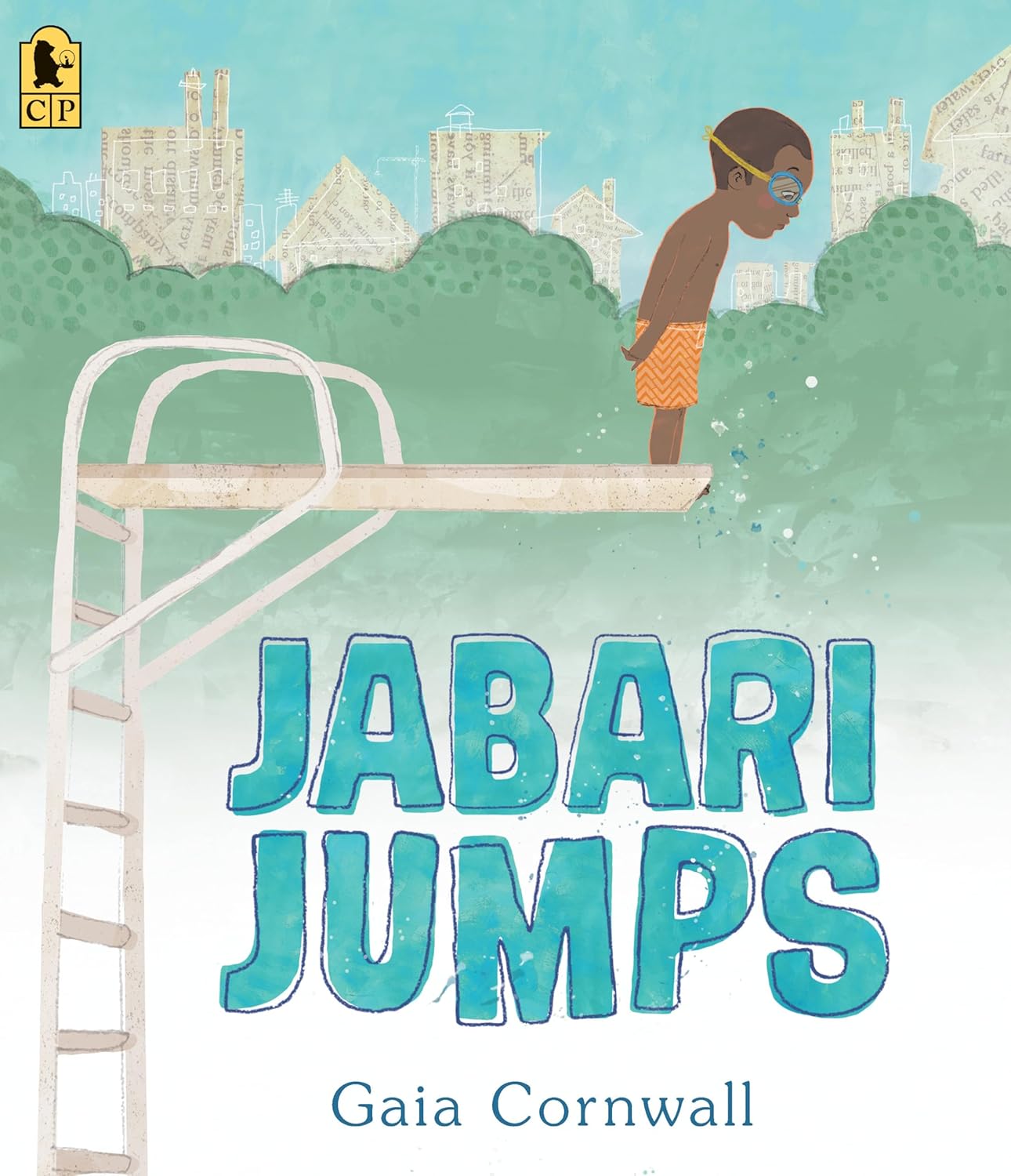
Jabari Jumps by Gaia Cornwall is a warm, precisely observed picture book about a small boy, a diving board, and the gap between knowing you can do something and actually doing it. Published in 2017 as Cornwall’s debut, it won the Charlotte Zolotow Honor Award, an ALA Notable Children’s Book designation, and a starred review from the Bulletin of the Center for Children’s Books. The story follows Jabari and his father through an afternoon at the pool — Jabari has passed his swim test, is definitely ready to jump, is absolutely not scared — as he finds every reason to wait just a little longer before he climbs the ladder. This guide covers the reading level, recommended age, read-aloud vs. independent reading guidance, themes, and everything parents and teachers need to know about sharing Jabari Jumps with young readers.
For Parents
Find out whether Jabari Jumps works best as a read-aloud or independent read for your child, what age range it suits, and why this story — about the particular internal work of talking yourself into something you both want and fear — speaks directly to children who have stood at the edge of something daunting and needed one more moment before they could go.
For Teachers
Grade-level data, read-aloud timing, key themes, and discussion questions for a warm classroom book on courage, patience, and the role a trusted adult plays in helping a child reach a hard goal. Strong for discussions of fear and bravery, for the start of school, and for any unit on persistence and self-belief.
Jabari Jumps at a Glance
Find on Amazon →| Author & Illustrator | Gaia Cornwall |
| Published | 2017 |
| Grade Level | K–1 (our assessment) |
| Recommended Age | 4–7 |
| Best For | Read-aloud ages 3–7; independent reading ages 5–7 |
| Flesch-Kincaid Grade | 1.8 |
| Word Count | ~400 |
| Pages | 32 |
| Genre | Picture book / realistic fiction / social-emotional |
| Setting | A city swimming pool |
| Awards | Charlotte Zolotow Honor Award; ALA Notable Children’s Book |
For official Lexile and AR levels, visit Lexile.com or AR BookFinder. ReadingVine provides independent editorial assessments.
What Reading Level Is Jabari Jumps?
Jabari Jumps is a K–1 reading level by our editorial assessment, with a Flesch-Kincaid grade level of approximately 1.8. At around 400 words it is a short picture book text with simple, conversational vocabulary and short sentences that suit beginning readers. The language is direct and natural — it sounds like a child talking, which is fitting — and the few emotionally charged moments (Jabari squeezing his father’s hand back, his father saying “it’s okay to feel a little scared”) carry weight well beyond the simplicity of the words used to express them.
Cornwall’s mixed-media illustrations carry a significant share of the story’s emotional content. The viewing angles she chooses — a vertiginous downward look from the end of the board showing how far the water is below, a view from behind as Jabari stands at the edge against a backdrop of city skyscrapers — give readers the physical feeling of being in Jabari’s position without a single word of description. Children who look closely at the images are reading the story’s tension alongside its text. For parents who use specific reading level systems: we recommend checking your child’s level on Lexile.com or AR BookFinder for official scores, or asking your child’s teacher for their Guided Reading or DRA level.
Is Jabari Jumps a Read-Aloud or Independent Read?
Jabari Jumps works well as both a read-aloud for ages 3–7 and an independent read for ages 5–7. As a read-aloud, the comedy of Jabari’s stalling — he needs to decide on the right kind of jump, he should probably do some stretches, he might as well wave at his sister one more time — is immediately recognizable to any child who has ever talked themselves into and out of something, and it generates both laughter and the warm relief of recognition. Most adults can read it aloud in about 5–8 minutes.
As a read-aloud, the quiet moments deserve as much attention as the funny ones. When Jabari’s dad squeezes his hand and Jabari squeezes back — saying nothing, needing nothing except to know his father is there — that moment communicates something the text alone does not fully articulate: that the presence of someone who loves you and believes in you is itself a form of courage, borrowed until you have enough of your own. Reading it slowly, letting that squeeze land, gives the subsequent jump its full emotional weight.
For independent reading, a confident kindergartner or early first grader can handle the text. The sentences are short and clear, the vocabulary is accessible, and the visual story support is strong — children who are not yet fully fluent can follow the narrative largely through the illustrations. The book’s structure (stall, stall, stall, climb, jump) is clear and satisfying, and the payoff — Jabari flying and splashing and swimming back up, triumphant — arrives exactly when it should.
There is nothing in this book that requires parental preparation. Jabari is briefly scared of the diving board. Then he jumps. Everything is fine and wet and wonderful.
Before the jump, pause and ask your child: “What do you think Jabari is feeling right now?” Children who have stood at the edge of something difficult — a new school, a high platform, a scary slide — will name that feeling from their own experience. Then, after the jump, ask: “Why do you think he was finally ready?” The answer is not simply that his dad encouraged him; it is that Jabari decided to be ready, which is different and more important. That distinction is worth naming for children who are working toward their own version of the diving board.
What Is Jabari Jumps About?
Jabari has passed his swimming lessons. He has passed his swim test. He is a great jumper. He is absolutely not scared. Today is the day he will jump off the diving board. He is definitely almost ready.
At the pool with his father and his small sister Nia, Jabari watches other children jump. He notes that he should probably decide what kind of special jump to do first. And stretch. He waves at Nia. He tells his dad he might need a snack. His dad, patient and unhurried, does not push. When Jabari finally admits — without quite admitting — that he might be a tiny bit scared, his father says: “It’s okay to feel a little scared. When I feel scared, I take a deep breath and tell myself I am ready.” He squeezes Jabari’s hand. Jabari squeezes back.
Jabari climbs the ladder. He stands at the edge. He looks down — a long way down — and jumps. He flies. He splashes. He sinks and swims back up. He is magnificent. At the bottom of the ladder, he tells his father he is ready to jump again. “Maybe a backflip,” he says.
Jabari Jumps Characters
Jabari Jumps Themes and Lessons
The central theme of Jabari Jumps is the internal work of courage — the specific process of knowing you can do something, being afraid anyway, and finding your way to actually doing it. Jabari does not need to be told he can jump; he already knows. What he needs is time, a patient witness, and the permission to be scared while he gets there. His father provides all three. The book is precise about this distinction: the courage Jabari demonstrates is not the absence of fear, but the decision to act despite it, and the story honors the difficulty of that decision by showing every stall and delay in full, without judgment.
The book is also a portrait of patient, present fathering that is rendered with particular care. Jabari’s dad is not performing patience; he is genuinely unhurried. He does not tell Jabari to stop stalling or that his fear is silly. He says: I feel scared sometimes too. Here is what I do. And he waits. This is a portrait of a Black father and son in a loving, warm relationship that is centered and normalized rather than exceptional — the family is simply at the pool on a summer day, and Jabari’s father is simply doing what good parents do. Cornwall places this family at the heart of the story with ease and specificity, using the digitally collaged newsprint and minty urban pool colors of her illustrations to root the story in a particular place and community.
For teachers, Jabari Jumps opens a productive conversation about fear as a normal part of doing hard things. The book does not suggest that fear is a problem to be eliminated; it shows fear as a companion on the way to doing something worth doing. Children who discuss Jabari’s stalling often identify their own version of it — the moment before a presentation, the hesitation before a new activity — and the father’s advice (“take a deep breath and tell yourself you are ready”) is practical and portable in a way that children can actually use.
Discussion starters for families: Have you ever felt the way Jabari felt on the diving board? What did you do? Was Jabari lying when he said he wasn’t scared? What do you think made him finally ready to jump? What would you want your dad or mom to say if you were feeling like Jabari? What is your own version of the diving board right now?
How Long Is Jabari Jumps?
Jabari Jumps has 32 pages and approximately 400 words. Most adults can read it aloud in about 5–8 minutes. The pacing builds with Jabari’s stalling — each new reason to wait adding to the tension — then releases quickly and joyfully with the jump itself. Children who have been holding their breath a little find the final pages genuinely satisfying.
A child reading independently at a kindergarten or early first-grade level will typically finish in about 6–10 minutes. Like many books with a strong emotional payoff, Jabari Jumps is often requested again immediately after the first reading — children who have just experienced the jump want to go back and watch the stalling again with the knowledge of how it ends, which changes the comedy into something slightly warmer.
Books Similar to Jabari Jumps
If your child loves Jabari Jumps, these titles share its themes of courage, family support, or its place in the Identity and Belonging cluster:
About the Author and Illustrator
Gaia Cornwall is an American author-illustrator who worked as a surface designer and illustrator for magazines, products, and film before publishing Jabari Jumps as her debut picture book in 2017. The book draws on her interest in the specific interior experience of a child standing at the edge of something daunting — the gap between capability and willingness, between knowing you can do something and choosing to do it — and on her commitment to centering a loving Black family in an everyday story told without exceptional framing. She has said that she wanted Jabari’s father’s patience to be visible and real: not a teaching moment performed for the reader, but a genuine way of being with a child.
Cornwall’s mixed-media illustration style for Jabari Jumps uses digitally collaged faded newsprint for the city’s buildings, minty hues for the water and pool surroundings, and muted warm tones for the family. The result is an urban visual palette that grounds the story in a specific and recognizable place while keeping the emotional focus on Jabari’s face and body. The perspective choices — the vertiginous downward look from the diving board, the view from behind as Jabari stands at the edge — are the book’s most striking technical achievement: they put the reader physically in Jabari’s position in a way that words alone could not. Cornwall followed Jabari Jumps with Jabari Tries (2020), in which Jabari attempts to build a flying machine and encounters a different kind of courage: the willingness to fail, start over, and keep going.
Jabari Jumps: Frequently Asked Questions
What reading level is Jabari Jumps?
Jabari Jumps is a K–1 reading level by our editorial assessment, with a Flesch-Kincaid grade level of approximately 1.8. At around 400 words with short, conversational sentences and accessible vocabulary, it works best as a read-aloud for ages 3–7 and as an independent read for ages 5–7. Cornwall’s mixed-media illustrations carry significant story content alongside the text. For official Lexile and AR levels, visit Lexile.com or AR BookFinder.
What age is Jabari Jumps for?
Jabari Jumps is appropriate for ages 3–7. As a read-aloud it works from age 3 — Jabari’s stalling is immediately funny to very young children who recognize it in themselves, even before they can fully articulate the fear it represents. As an independent read it suits children ages 5–7 who are building early reading confidence. The story resonates particularly for children ages 4–6 who are regularly confronted with new challenges that require gathering themselves before they can proceed.
Is Jabari actually scared in Jabari Jumps?
Yes — the book is precise about this in a way children find satisfying. Jabari insists repeatedly that he is not scared at all. The first hint that this is not entirely true comes when he squeezes his father’s hand back at the side of the pool — an action that says what he cannot quite say out loud. His father gently names it: “It’s okay to feel a little scared.” The honesty of this moment, and Jabari’s eventual acknowledgment that he was indeed a little scared, is part of what makes the book useful for children who are also performing not-scared while feeling scared. Jabari’s courage is not the absence of fear; it is the decision to jump anyway.
How long does it take to read Jabari Jumps aloud?
Most adults can read Jabari Jumps aloud in about 5–8 minutes. The pacing builds with Jabari’s stalling and releases quickly with the jump — the entire diving board sequence moves fast once he finally decides to climb the ladder. The book almost always generates an immediate request for a second reading, which goes faster because children anticipate the stalling jokes and the jump.
What is Jabari Jumps about?
Jabari Jumps is about a boy who is definitely ready to jump off the diving board at his neighborhood pool — he has passed his swim test, he is a great jumper, he is absolutely not scared — and who proceeds to find every possible reason to wait just one moment longer before doing it. His father waits patiently beside him. When Jabari finally, quietly admits to being a little scared, his father offers one piece of practical wisdom: take a deep breath and tell yourself you are ready. Jabari climbs the ladder. He jumps. He is magnificent. The book is about the internal work of courage and the difference a patient, loving presence makes.
Is there a sequel to Jabari Jumps?
Yes — Gaia Cornwall published Jabari Tries in 2020, in which Jabari sets out to build a flying machine with the same determination and considerably more difficulty than the diving board required. Jabari Tries explores a different dimension of courage: the willingness to fail, adjust, and keep trying when a project is not going right. It features the same warm family dynamic and Cornwall’s distinctive mixed-media illustration style, and suits the same age range as Jabari Jumps.