
 = Partner Site
Kira-Kira Reading Level: A Complete Guide
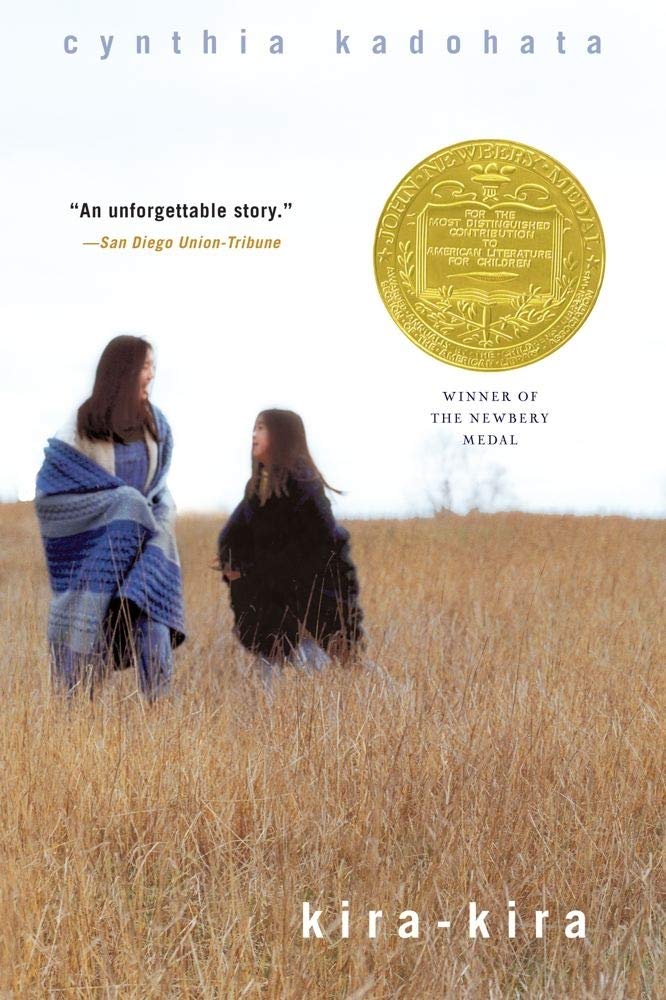
Kira-Kira by Cynthia Kadohata is a Newbery Medal-winning novel about a Japanese American girl named Katie Takeshima growing up in Georgia in the late 1950s and early 1960s — a story of family, sisterhood, grief, and the quiet resilience required to make a life in a place that does not always welcome you. Tender, unsentimental, and deeply moving, it is one of the most emotionally honest novels in the Newbery catalog. This complete guide covers the reading level, age appropriateness, themes, characters, and everything parents and teachers need to know about this beautiful and important book.
For Parents
Kira-Kira is a quiet, deeply felt novel about a girl losing her older sister to illness and finding her way through grief. It is also a story about what it meant to be Japanese American in the rural South during the Jim Crow era — a history rarely represented in children’s literature. Best suited for readers ages 10-13, it is not a difficult or frightening book, but it is a genuinely sad one, and it earns every emotion it asks readers to feel.
For Teachers
A Newbery Medal winner well suited to grades 5-7, Kira-Kira is rich territory for teaching point of view, the relationship between narrator reliability and age, and how authors handle grief and loss with honesty and restraint. The novel’s historical setting — Japanese Americans in the Jim Crow South, the labor conditions in poultry processing plants, the civil rights era — opens substantial historical discussions that most curricula overlook. It pairs well with other novels about minority experiences in mid-century America.
Kira-Kira at a Glance
Find on Amazon →| Author | Cynthia Kadohata |
| Published | 2004 |
| Grade Level | 5-7 (our assessment) |
| Recommended Age | 10-13 |
| Flesch-Kincaid Grade | 4.9 |
| Word Count | ~54,000 |
| Pages | 244 (standard hardcover) |
| Chapters | 11 |
| Genre | Realistic fiction / historical fiction |
| Setting | Georgia, late 1950s to early 1960s |
| Awards | Newbery Medal (2005) |
For official Lexile and AR levels, visit Lexile.com or AR BookFinder. ReadingVine provides independent editorial assessments.
What Reading Level Is Kira-Kira?
Kira-Kira reads at approximately a 5th-7th grade level by our editorial assessment, with a Flesch-Kincaid grade level of around 4.9. The prose is clear and unadorned — Kadohata writes in Katie’s child voice, which is simple on the surface but carries enormous emotional weight underneath. The sentences are short, the vocabulary accessible, but the emotional demands of the novel are considerable.
The book is narrated by Katie at different ages, from early childhood through early adolescence, and the voice shifts subtly as she grows — a technique that rewards readers who are paying attention. Much of what makes the novel affecting happens in the space between what Katie says and what the reader understands. Young readers who are primarily tracking plot may miss some of this; those who read slowly and feel their way through a narrator’s perspective will get far more from it.
The historical context — Japanese Americans in the Jim Crow South, the specific labor conditions of the poultry processing industry in 1950s Georgia — adds a layer of demand that the word-level score does not capture. The book is most commonly assigned in grades 5-7. For official Lexile and Accelerated Reader scores, visit Lexile.com or AR BookFinder.
What Age Is Kira-Kira Appropriate For?
We recommend Kira-Kira for readers ages 10-13. The novel’s central subject is the terminal illness and death of a beloved older sister, and this is handled with honesty and without sentimentality. Parents should know before giving this book to a child that it is genuinely sad — not hopeless, but sad in the way that true loss is sad.
The novel’s older sister Lynn is diagnosed with lymphoma and dies in the course of the story. Her illness and decline are depicted with restraint but honesty — readers experience Katie’s helplessness and grief in real time. The family also faces economic hardship and racial prejudice: their father works in a poultry processing plant under conditions that Kadohata depicts as exhausting and exploitative, and the family encounters racial hostility in their Georgia community. A dog dies. There is no violence, no strong language, and no sexual content. The emotional difficulty is the entire content concern, and it is handled with care.
For children who have experienced loss — of a sibling, a parent, a grandparent — Kira-Kira can be a validating and genuinely comforting read, because it renders grief with such honesty and does not rush toward recovery. Parents of children who have not experienced significant loss should simply be prepared for a book that will move their child, and perhaps themselves.
What Is Kira-Kira About?
Katie Takeshima is the younger of two Japanese American sisters growing up first in Iowa and then in rural Georgia, where her parents have moved to work in the poultry processing industry. The novel is narrated by Katie, beginning when she is very young and her older sister Lynn is her entire world. Lynn is the one who teaches Katie the word “kira-kira” — a Japanese word meaning “glittering” or “shining” — and who shows her how to see the world as full of beauty worth noticing. Lynn is brilliant, magnetic, and deeply loving, and Katie worships her without reservation.
When Lynn falls ill with lymphoma, the family’s world contracts around her illness. Their parents work brutal hours at the poultry plant — their father on the processing line, their mother eventually too — in order to afford Lynn’s medical bills, leaving Katie and their younger brother Sammy largely to fend for themselves. Katie watches her sister decline with a child’s mixture of denial, fear, and helpless love, and the novel renders that watching with unflinching honesty.
But Kira-Kira is not only a novel about dying. It is also a novel about what Japanese Americans experienced in the South during the Jim Crow era — the particular strangeness of being neither white nor Black in a rigidly segregated society, the labor exploitation of immigrant workers, the difficulty of making a home in a place that views you as an outsider. The Takeshima family navigates all of this with quiet dignity, and the novel honors that dignity without making it easy or painless.
Cynthia Kadohata has spoken about drawing on her own family’s experience as Japanese Americans in the South, as well as on research into the specific conditions of the poultry industry in 1950s and 1960s Georgia, which employed many Japanese American workers during that period. The book is dedicated to her brother, and the closeness between sisters that it depicts has the quality of something lived and remembered rather than imagined.
Kira-Kira Characters
Is Kira-Kira Banned?
Kira-Kira has not been banned or widely challenged and does not appear on lists of frequently challenged books. It is considered a distinguished and appropriate work of children’s historical fiction, and it has been widely embraced by educators and librarians since winning the Newbery Medal in 2005. Its emotional difficulty is not the kind that generates formal challenges — it is the difficulty of honest feeling rather than of objectionable content. The book is commonly shelved and assigned in schools and libraries across the country.
Kira-Kira Themes and Lessons
The central theme of Kira-Kira is the particular love between sisters — the way an older sibling can shape a younger one’s entire way of seeing the world — and what survives that love when one of the sisters is gone. Lynn’s gift to Katie is not just affection but a way of being: the practice of noticing beauty, of saying “kira-kira” for things that catch the light. That practice becomes Katie’s inheritance, the thing she carries forward. The novel asks, quietly and persistently, what it means to keep someone alive in the way you live after they are gone.
A second major theme is the experience of Japanese Americans in mid-century America — specifically in the rural South, where the Takeshima family occupies a strange, precarious position in the racial geography of the Jim Crow era. They are not white and therefore not privileged, but they are also not Black and therefore not subject to the specific violence of segregation as their Black neighbors are. Kadohata depicts this in-between status with honesty, showing a family that is tolerated more than welcomed, that works within a system that exploits them, and that maintains dignity without pretending the situation is other than it is.
The novel also has much to say about labor and sacrifice — the specific cost to the body and spirit of the work Katie’s parents do, and the way that cost is absorbed quietly so that the children can have something better. This is rendered without sentiment or melodrama, which makes it more affecting than a more heightened treatment would be.
Discussion starters for families: What does “kira-kira” mean, and why does Lynn teach it to Katie? How does Katie’s understanding of her family’s situation change as she gets older? What do Katie’s parents sacrifice for their children, and does Katie understand what they’re doing? How does the family’s experience as Japanese Americans in Georgia differ from both white and Black experiences in the South? What do you think Katie will carry forward from Lynn for the rest of her life?
How Many Pages and Chapters Are in Kira-Kira?
The standard hardcover edition of Kira-Kira is 244 pages, divided into just 11 chapters — unusually few for a novel of this length, which means the chapters are long, averaging around twenty-two pages each. The word count is approximately 54,000 words. The long chapters give the novel an immersive, unhurried quality: rather than stopping and starting at frequent intervals, the reader settles into extended stretches of Katie’s world.
For readers in the target age range of 10-13, expect a reading time of roughly 5-7 hours, or about a week of steady reading at 30 minutes per session. As a classroom text, the long chapters mean that class reading sessions will typically cover portions of chapters rather than complete ones, so teachers should plan stopping points in advance. The novel works well as a read-aloud — Kadohata’s simple, precise sentences land with particular force when spoken aloud — and it can be completed in two to three weeks of classroom use.
Books Similar to Kira-Kira
About Cynthia Kadohata
Cynthia Kadohata is an American author of Japanese descent whose fiction for both adults and children draws on her family’s history and the broader experience of Japanese Americans in 20th-century America. She was born in Chicago and grew up in several states across the South and West, an itinerant childhood that shaped her interest in displacement, community, and the experience of being an outsider. Kira-Kira won the Newbery Medal in 2005; she later received a second Newbery Honor for The Thing About Luck (2013), another novel about a Japanese American family navigating rural America. Her other novels include Weedflower, about a Japanese American girl in an internment camp during World War II, and Cracker!, about a military dog in the Vietnam War. Kadohata is considered one of the essential voices in Japanese American children’s literature, and her work consistently brings to light experiences and communities that mainstream American fiction has overlooked.
Kira-Kira: Frequently Asked Questions
What reading level is Kira-Kira?
Kira-Kira has a Flesch-Kincaid grade level of approximately 4.9. Our editorial assessment places it at grades 5-7 (ages 10-13). The prose is clear and accessible, written in a child narrator’s voice, but the emotional complexity and historical context make it more demanding than the word-level score alone suggests. For official Lexile and AR scores, visit Lexile.com or AR BookFinder.
What does “kira-kira” mean?
“Kira-kira” is a Japanese word meaning “glittering” or “shining” — the quality of light catching on something and making it sparkle. In the novel, Lynn teaches this word to her younger sister Katie and uses it to describe the things in the world worth noticing: the shimmer on water, the way certain moments catch the light. The word becomes the sisters’ shared language for beauty and wonder, and after Lynn dies, it becomes the thing Katie carries forward — a way of seeing that is also a way of remembering.
Does Lynn die in Kira-Kira?
Yes. Lynn is diagnosed with lymphoma and dies in the course of the novel. This is not a spoiler the book withholds — readers understand relatively early that Lynn is seriously ill and that the novel is moving toward her death. The story is about how Katie experiences and ultimately survives that loss, not about whether the loss will happen. Parents should know this before giving the book to a child, particularly one who is sensitive to the deaths of characters they have come to love.
What is the historical setting of Kira-Kira?
The novel is set in Georgia in the late 1950s and early 1960s — the Jim Crow era, just as the Civil Rights Movement was beginning. The Takeshima family are Japanese Americans who have moved south to work in the poultry processing industry, which employed many Japanese American workers during this period. They occupy an unusual position in the rigidly segregated social order of the South: not white, and therefore not privileged, but also not Black, and therefore not subject to the same legal segregation laws directed at Black communities. Kadohata depicts this in-between status with care, showing a family that is tolerated more than welcomed and that navigates quietly rather than confrontationally.
What grade is Kira-Kira typically assigned in?
Kira-Kira is most commonly assigned in grades 5, 6, and 7, often as part of a historical fiction unit or a unit on the Asian American experience. It also appears regularly on Newbery reading lists and independent reading recommendations for this age group. The novel’s treatment of labor, racial prejudice, and family gives it strong cross-curricular value in social studies and history classes covering mid-century America.
Why did Kira-Kira win the Newbery Medal?
Kira-Kira won the Newbery Medal in 2005 for the quality and originality of its writing — specifically for the precision and honesty of Kadohata’s child narrator, the emotional restraint with which she handles grief and loss, and the book’s illumination of a corner of American history — Japanese Americans in the rural South — that children’s literature had almost entirely overlooked. The Medal committee recognized a novel that trusted its young readers with a genuinely difficult emotional experience and delivered it with clarity, warmth, and literary care.
Is Kira-Kira appropriate for a child who has experienced loss?
Many parents, teachers, and librarians find Kira-Kira particularly valuable for children who have experienced the death of a sibling, parent, or other close family member. The novel’s portrayal of grief is honest and validating — it does not rush toward recovery or suggest that sadness is something to get over quickly. For children who have felt the specific helplessness of watching someone they love become ill, Katie’s experience may feel deeply recognizable and comforting in its honesty. As with any book dealing with loss, reading it together and allowing time to talk afterward is recommended.
What does the poultry plant represent in the novel?
The poultry processing plant where Katie’s parents work is one of the novel’s most important settings, even though Katie does not spend much time inside it. It represents the economic reality that underlies the family’s life — the exhausting, body-breaking labor that her parents perform so that their children can have something better. Kadohata depicts the conditions of the plant with factual honesty: the long hours, the physical toll, the lack of union protection, the way workers are treated as expendable. For teachers, the plant is a productive entry point for discussions of labor history and the specific economic conditions facing immigrant workers in mid-century America.