
 = Partner Site
Little Women Reading Level: A Complete Guide
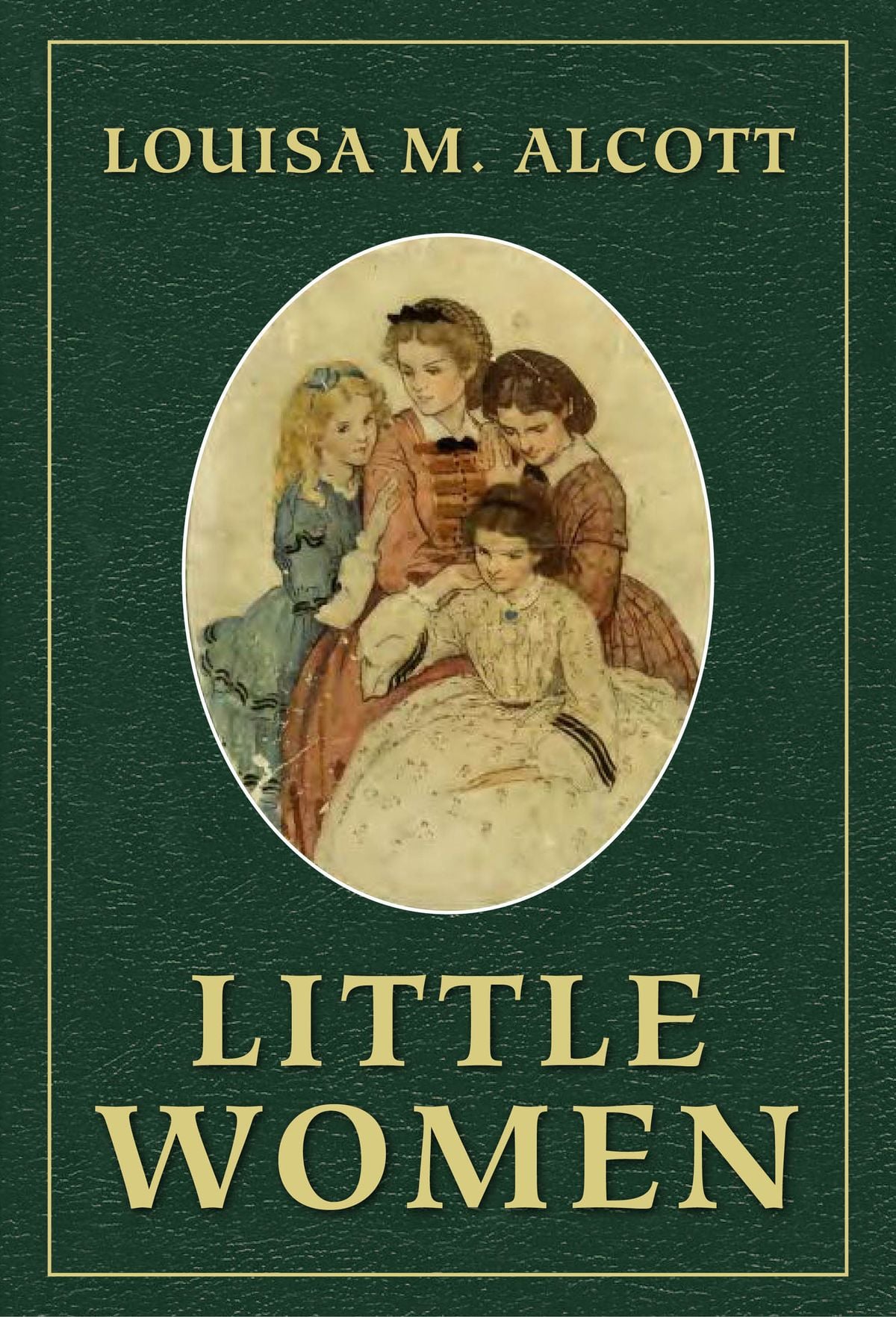
Little Women by Louisa May Alcott follows the lives of the four March sisters—Meg, Jo, Beth, and Amy—as they grow up during and after the Civil War, navigating love, loss, ambition, and what it means to become a woman. This guide provides parents and teachers with reading level information, age recommendations, content insights, and discussion questions for this enduring classic about family, friendship, and finding your own path.
For Parents
Find the right reading level for your child, understand the book’s themes about growing up and grief, and get conversation starters to help your child explore questions about ambition, love, and what matters most in life.
For Teachers
Access grade-level guidance, reading metrics, character analysis support, and thematic discussion questions. This Alcott classic offers rich opportunities for exploring Civil War America, women’s roles in the 19th century, and timeless questions about identity and belonging.
Little Women at a Glance
Find on Amazon →| Author | Louisa May Alcott |
| Published | 1868 (Part 1); 1869 (Part 2) |
| Grade Level | 5–8 (our assessment) |
| Recommended Age | 10–14 |
| Flesch-Kincaid Grade | 7.1 |
| Word Count | ~185,000 |
| Pages | 449 (standard paperback, combined edition) |
| Chapters | 47 |
| Genre | Classic fiction / coming-of-age |
| Setting | Concord, Massachusetts, 1860s |
| Awards | Classic (one of the best-selling children’s novels of all time) |
For official Lexile and AR levels, visit Lexile.com or AR BookFinder. ReadingVine provides independent editorial assessments.
What Reading Level Is Little Women?
Little Women is appropriate for grades 5–8, with a Flesch-Kincaid grade level of 7.1. The vocabulary reflects 19th-century American English and is more formal and complex than contemporary middle-grade fiction. Sentences tend to be long and layered, and the novel’s considerable length—nearly 185,000 words in the combined edition—requires sustained reading stamina. That said, Alcott’s narrative voice is warm and engaging, and the story moves at a satisfying pace once readers settle into its rhythms.
Alcott’s writing style is intimate and character-driven. She draws readers deeply into the inner lives of all four sisters, shifting focus gracefully between them. The humor, particularly in scenes involving Jo and Amy, feels surprisingly fresh and modern. Period vocabulary and references (to Civil War events, 19th-century domestic life, and classical literature) may require occasional context from parents or teachers, but these enrich rather than impede the story.
The story resonates most deeply with readers ages 10–14 who can appreciate the sisters’ distinct personalities and ambitions, follow the romantic subplots, and reflect on the tensions between individual desire and societal expectation that drive much of the plot. Strong fifth graders can manage the reading level, but the emotional and social themes are best appreciated by readers in middle school.
What Age Is Little Women Appropriate For?
Little Women is most appropriate for readers ages 10–14. The book deals with the death of a beloved character, the hardships of wartime poverty, and the tensions between a young woman’s ambitions and the expectations placed on her. These themes are handled with warmth and wisdom rather than darkness.
Death of a major character: Beth March becomes seriously ill and dies in the second half of the book. Her illness and death are portrayed with tenderness but are genuinely sad, and readers who grow to love Beth will feel the loss deeply.
Father’s wartime absence: The girls’ father is serving as a Union Army chaplain. He becomes seriously ill, creating real fear for the family. He recovers, but the danger feels real.
Romantic subplots: Meg marries, Jo navigates her feelings for Laurie and eventually for Professor Bhaer, and Amy and Laurie fall in love. The romance is entirely innocent but central to the second half of the book.
Period attitudes: The book reflects 19th-century expectations about women’s roles. Marmee and other characters sometimes encourage the girls toward domesticity and self-sacrifice in ways that feel dated. These moments can spark valuable discussions.
What’s NOT in the book: No inappropriate content, no violence beyond the offstage Civil War. The book is deeply moral and family-oriented. Beth’s death is the most difficult content, and it’s handled with beauty and grace. The book’s overall message celebrates love, generosity, and the importance of being true to yourself within your relationships and community.
What Is Little Women About?
The March family is struggling. Father is away serving as a chaplain in the Civil War, and Marmee (as the girls call their mother) is managing the household with warmth and wisdom but limited means. The four daughters—responsible Meg (sixteen), fiery writer Jo (fifteen), gentle Beth (thirteen), and artistic Amy (twelve)—are each distinct in personality and aspiration, and their daily lives form the heart of the first half of the book.
Part One follows a year in the girls’ lives as they grow and learn through everyday experiences—putting on amateur plays, celebrating holidays, and forming a close friendship with their wealthy neighbor Laurie and his grandfather, Mr. Laurence. When a telegram arrives saying Father has fallen ill while serving in the war, Marmee travels to Washington, D.C., leaving the girls to take on greater responsibility at home. During this time, Beth contracts scarlet fever after caring for a sick neighbor and becomes dangerously ill, though she eventually recovers. As the year passes, the sisters begin to mature, and the first part concludes with Meg’s marriage to John Brooke, marking a turning point as the family moves from childhood into a new stage of life.
Part Two jumps ahead three years. The girls are growing up, and each must find her path. Meg marries John Brooke, Laurie’s tutor, and discovers that domestic life brings its own challenges alongside its joys. Jo, who desperately wanted Meg to stay home and was heartbroken at the thought of the family scattering, refuses Laurie’s marriage proposal—she loves him as a friend and brother, she says, not as a husband—and eventually heads to New York to write and board with a family. There she meets Professor Friedrich Bhaer, a kind, intellectual German teacher who challenges her and becomes deeply important to her.
Amy, sent to Europe with Aunt March, grows in artistry and self-knowledge. There she reconnects with Laurie, who has been traveling after Jo’s rejection. Their friendship deepens into love, and they eventually marry. Beth, meanwhile, never fully recovers her health. She declines slowly and peacefully, and her death—anticipated well in advance and handled with quiet grief—is one of the most memorable passages in American literature. Jo, bereft, throws herself into writing until Professor Bhaer arrives, and the novel ends with Jo and Bhaer engaged, Meg happily settled with her growing family, and Amy and Laurie returned from Europe.
The novel’s final image—Marmee surrounded by her daughters and their families at Plumfield, the school Jo and Bhaer establish—celebrates chosen community, love, and the particular richness of a life built on relationships rather than wealth or fame.
Little Women Characters
Little Women Themes and Lessons
At its heart, Little Women is about what it means to grow up with integrity—to become your best self while remaining connected to the people you love. Each sister represents a different set of values and struggles: Meg learns that love is more sustaining than glamour; Jo wrestles with ambition and independence in a world that expected women to subordinate those things to domesticity; Beth embodies pure goodness and shows that a quiet, loving life is no less meaningful than an ambitious one; and Amy learns to discipline her natural self-centeredness into genuine grace and generosity. Together they model a vision of womanhood that, even across 150 years, speaks to readers.
The book is also a profound meditation on family as a chosen and tended relationship—not something that simply exists but something that requires constant work and love. Marmee’s guidance, the sisters’ arguments and reconciliations, the grief of Beth’s death and the joy of Meg’s wedding, are all part of Alcott’s portrait of a family that chooses each other over and over. The novel’s treatment of women’s ambitions, though rooted in its era, remains surprisingly resonant: Jo’s struggle to write on her own terms, her refusal to marry someone she doesn’t truly love, and her eventual creation of a school where she can teach and write, feel genuinely modern.
Discussion questions for families:
- Which March sister do you most identify with, and why?
- How does Marmee guide her daughters differently than typical parents? What makes her approach work?
- Do you think Jo made the right decision refusing Laurie? Why or why not?
- How does the book show that Beth’s quiet life is as valuable as Jo’s ambitious one?
How Many Pages and Chapters in Little Women?
Combined editions of Little Women (Parts One and Two) typically run approximately 449 pages with 47 chapters and nearly 185,000 words—making it one of the longer books in the classic children’s canon. Some editions publish the two parts separately, with Part One (often titled Little Women) running about 230 pages and Part Two (often titled Good Wives in the UK) running about 220 pages.
For independent readers ages 10–14, the full novel typically takes 12–15 hours to read. Many readers find the first part absorbing and the second more emotionally demanding. Reading 30–45 minutes per day, most readers complete it in three to four weeks. The book rewards readers who give it time—the characters deepen considerably over the full length. As a read-aloud, the full book takes approximately 10–12 hours, and can be a wonderful family project read in installments over several weeks.
Books Similar to Little Women
About Louisa May Alcott
Louisa May Alcott (1832–1888) was born in Concord, Massachusetts, into a family of intellectuals and reformers. Her father, Bronson Alcott, was a philosopher and educator; her family were friends with Emerson and Thoreau and deeply involved in the abolitionist movement. Alcott worked from a young age to support her family, writing sensation fiction under pseudonyms before turning to the autobiographical story that became Little Women. Her editor at Roberts Brothers, Thomas Niles, suggested she write a story for girls—something Alcott was initially reluctant to do. Little Women was published in 1868, drew on her own childhood with her three sisters, and became an immediate bestseller. The March family’s home is based on Orchard House in Concord, now a museum. Jo March is widely understood to be autobiographical—Alcott, like Jo, was a tomboy who resisted societal expectations of femininity and never married. She continued writing sequels: Little Men (1871) and Jo’s Boys (1886). Alcott was a committed abolitionist and suffragist; the progressive values woven into Little Women reflect her lifelong convictions. She died in 1888, two days after her father.
Little Women: Frequently Asked Questions
Does Beth die in Little Women?
Yes, Beth March dies in the second half of Little Women. She first becomes seriously ill with scarlet fever in Part One after nursing a sick neighborhood family, and though she recovers, she never regains her former health. In Part Two, Beth declines slowly and peacefully over several years, and her death—anticipated well in advance—is one of the most famous and moving passages in American literature. Alcott handles Beth’s death with great tenderness; the emphasis is on the beauty and peace of her passing rather than its pain. Many readers who love Beth find her death genuinely heartbreaking, and it’s worth preparing younger readers who might be caught off guard.
Who does Jo marry in Little Women?
Jo March marries Professor Friedrich Bhaer, a kind and intellectually serious German teacher she meets while boarding in New York City. Many readers, both historical and contemporary, have wished Jo had married Laurie instead, and Jo’s refusal of Laurie’s marriage proposal remains one of the most debated moments in classic literature. Alcott herself, who drew heavily on her own life for Jo’s character, did not want Jo to marry at all—her publisher and readers pressured her to provide a romantic ending. She resisted pairing Jo with Laurie because she felt it would be too predictable, and created Professor Bhaer as a figure who challenges Jo intellectually and respects her writing ambitions. Whether readers find this satisfying or frustrating often depends on how much they’ve fallen for the Jo-and-Laurie friendship.
What grade level is Little Women?
Little Women is appropriate for grades 5–8 (ages 10–14). The Flesch-Kincaid grade level of 7.1 reflects 19th-century sentence complexity and vocabulary. The novel’s considerable length—nearly 185,000 words—requires reading stamina appropriate for middle school. Strong fifth graders can manage the reading level, but the romantic subplots, themes about women’s roles and ambition, and the emotional weight of Beth’s death are best appreciated by readers in sixth grade and up. The book is widely taught in middle school and is a rewarding challenge for strong readers. Many families read it aloud in installments, which works beautifully given the novel’s chapter structure and Alcott’s warm, conversational narrative voice.
Is Little Women based on a true story?
Little Women is not a memoir, but it is closely autobiographical. Alcott based the March family directly on her own family: she is Jo; Meg is her older sister Anna; Beth is her sister Elizabeth (Lizzie), who did die young, though of a different illness; and Amy is her youngest sister May. The family’s home in the novel is based on Orchard House in Concord, Massachusetts, where the Alcotts lived. Marmee is based on Alcott’s own mother, Abigail May Alcott, and the father away at war echoes the Alcotts’ abolitionist commitments. Laurie is thought to be a composite figure. The wartime setting, the genteel poverty, and the intellectual, reform-minded household are all drawn from Alcott’s real experience. Readers interested in the true story behind the novel will find the Alcott family’s history fascinating.
Why is Little Women considered a classic?
Little Women is considered a classic because it was groundbreaking at the time of publication and has remained emotionally resonant for over 150 years. When it was published in 1868, it was revolutionary in treating girls and young women as full human beings with inner lives, ambitions, and moral complexity—not just future wives and mothers. Jo March in particular was unlike any previous female protagonist in American fiction: she was ambitious, funny, flawed, and refused to simply conform to what was expected of her. The book’s warmth, its gallery of vivid characters, and its honest engagement with grief, love, and growing up have made it beloved across generations and cultures. It has been adapted for film and television numerous times, most recently in Greta Gerwig’s acclaimed 2019 film. It remains one of the best-selling children’s novels of all time.
Does Little Women have a sequel?
Yes, Alcott wrote two sequels. Little Men (1871) follows the children of Plumfield, the school Jo and Professor Bhaer establish at the end of Little Women. Jo’s Boys (1886) continues the story into the next generation, following the Plumfield students as they grow up. Neither sequel is as beloved as the original—Little Men is the closer companion, focusing on the same warm, domestic world. Some editions of Little Women include the second part (sometimes published separately as Good Wives in the UK), which covers the sisters’ marriages and Beth’s death; this is considered part of the original story rather than a separate sequel. Readers who love Little Women most often move directly to Little Men, which shares its warmth and domestic focus.
Is Little Women appropriate for 5th grade?
Little Women can be appropriate for strong fifth graders, particularly as a read-aloud or with parental guidance. The reading level (FK 7.1) is slightly above typical fifth grade, and the length requires stamina. Content-wise, the book is wholesome—the most difficult content is Beth’s death, which is sad but handled with great tenderness. Fifth graders who love classic literature, long character-driven stories, and historical settings will find Little Women deeply satisfying. Those who prefer faster-paced contemporary fiction may struggle with the slower, more episodic structure of the first half. Many families begin it in fifth grade and find it becomes a treasured annual reread. For classroom use, sixth grade and up is the more typical placement.
How long does it take to read Little Women?
For independent readers in the target age range of 10–14, Little Women typically takes 12–15 hours to read the complete combined edition of approximately 185,000 words. Reading 30–45 minutes per day, most readers complete it in three to four weeks. Some readers take longer, savoring the domestic details and character development; others read faster, pulled along by the emotional momentum of the second half. The book is long but not difficult to read continuously once readers settle into Alcott’s rhythms. As a family read-aloud, it takes approximately 10–12 hours and works wonderfully in installments—the chapter structure and episodic plot make it easy to read a chapter or two at a time over several weeks. Many families make reading Little Women a beloved tradition.