
 = Partner Site
Narrative of the Life of Frederick Douglass Reading Level: A Complete Guide
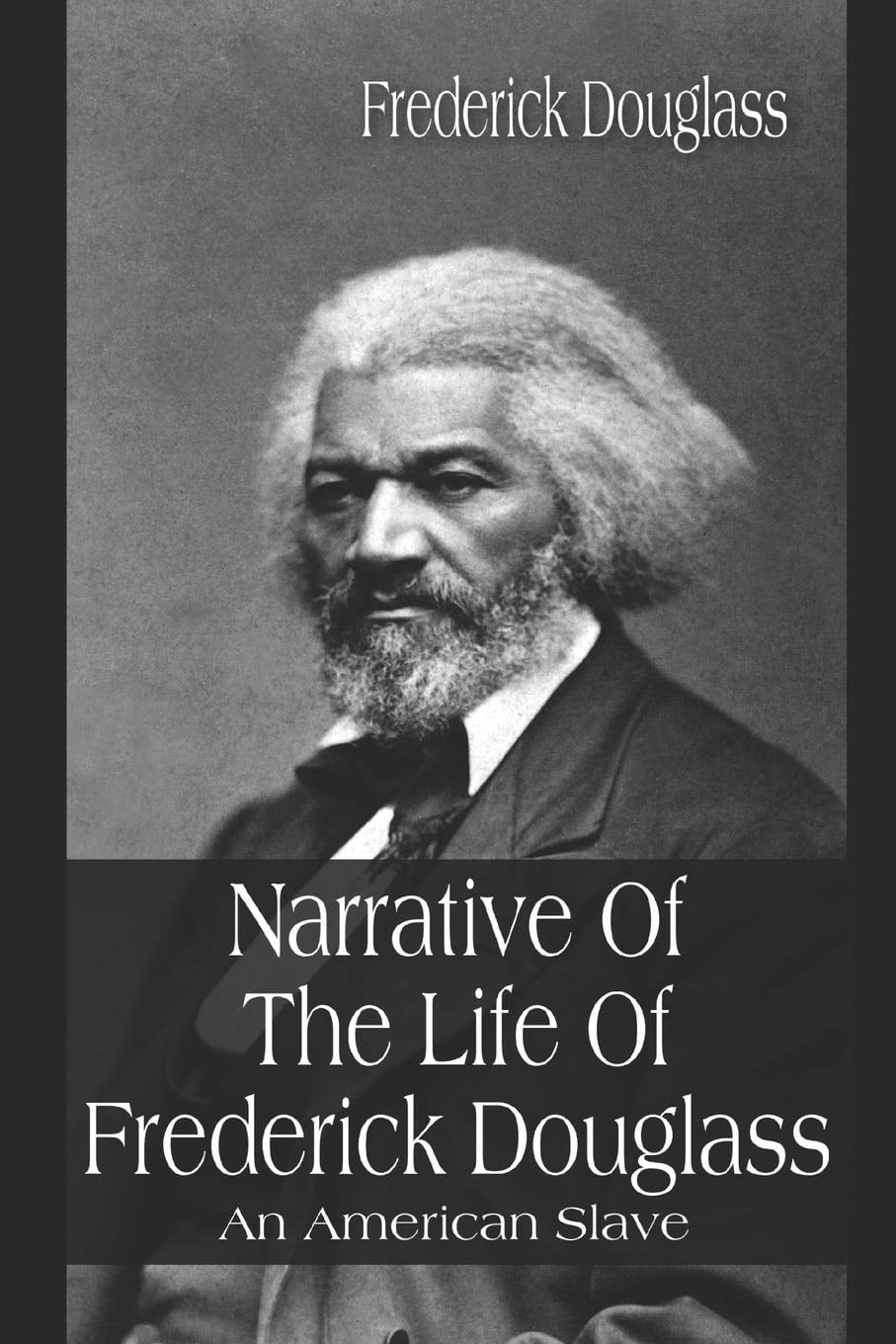
Narrative of the Life of Frederick Douglass, an American Slave, Written by Himself is the 1845 autobiography of Frederick Douglass — who was born into slavery in Maryland around 1818, was separated from his mother as an infant, watched his aunt beaten while he hid behind a barrel, taught himself to read in defiance of laws that prohibited educating enslaved people, and escaped to the North in 1838. He wrote the Narrative at the age of approximately twenty-seven, two years after beginning to lecture for the Massachusetts Anti-Slavery Society, as proof that he was who he said he was — a formerly enslaved person speaking from direct experience — against those who doubted that any enslaved person could speak and write as he did. It is the most widely read slave narrative in American literature, a Common Core Text Exemplar, and one of the most consequential documents in the history of American antislavery argument. This complete guide covers the Narrative‘s reading level, recommended age, content considerations, key figures, themes, and books similar to the Narrative of the Life of Frederick Douglass, designed for parents, teachers, and students.
For Parents
A short, densely argued 19th-century memoir about slavery — its mechanics, its violence, and its systematic destruction of human beings. Contains graphic descriptions of beatings and whippings, the murder of enslaved people, and the sexual exploitation of enslaved women. Appropriate for ages 13 and up; most commonly assigned in grades 8–10 and as a Common Core exemplar. No sexual content involving the narrator.
For Teachers
A cornerstone American text for grades 8–10 — the most direct, most rhetorically sophisticated firsthand account of slavery available for secondary school use. Douglass’s prose is 19th-century oratory translated to the page: complex, carefully argued, and worth teaching as rhetoric as well as history. The text is in the public domain and freely available online. The recent removal of this text from Florida prisons and schools under anti-CRT laws is itself an essential teaching topic for understanding both the text and contemporary politics.
Narrative of the Life of Frederick Douglass at a Glance
Find on Amazon →| Author | Frederick Douglass |
| Published | 1845 (Anti-Slavery Office, Boston) |
| Grade Level | 8–10 (our assessment) |
| Recommended Age | 13+ |
| ATOS Reading Level | 7.9 |
| Lexile | 1040L–1120L (varies by edition) |
| Word Count | 40,412 |
| Pages | ~158–160 (standard editions) |
| Structure | Preface, Introduction, 11 chapters |
| Genre | Autobiography / slave narrative / primary historical document |
| Setting | Maryland plantation country; Baltimore; New Bedford, Massachusetts; 1818–1838 |
| Availability | Public domain — freely available at Project Gutenberg and other sources |
For official Lexile and AR levels, visit Lexile.com or AR BookFinder. ReadingVine provides independent editorial assessments.
What Reading Level Is the Narrative of the Life of Frederick Douglass?
The Narrative has an ATOS reading level of 7.9 and a Lexile of 1040L–1120L depending on edition. The ATOS 7.9 is the highest in the catalog’s nonfiction memoir section and is accurate: Douglass writes in the rhetorical tradition of 19th-century American oratory — long, architecturally complex sentences with carefully embedded subordinate clauses, a vocabulary that draws on the Bible and on the antislavery rhetoric of the Enlightenment, and a prose style designed to be heard as well as read. The Narrative was written at a moment when Douglass was arguing not just for abolition but for his own credibility as an author — against people who insisted that no enslaved person could write with such sophistication — and the prose is itself evidence in that argument.
The reading challenge is primarily linguistic and historical. Students who have not encountered formal 19th-century prose before will find the sentence structure unfamiliar; students who have read Hawthorne, Irving, or the essays of the American Founding period will find it more accessible. The historical context — the mechanics and legal structures of American slavery, the geography of Maryland and the Chesapeake, the role of the abolitionist movement — rewards preparation. The book is a Common Core Text Exemplar, assigned in grades 8–12 in most state curricula. Our editorial assessment places it at grades 8–10, ages 13 and up. At approximately 40,412 words and 158 pages across eleven chapters, most classroom readers complete it in one to two weeks. The text is in the public domain and freely available at Project Gutenberg, the Internet Archive, and many other sources. For official Lexile and AR scores, visit Lexile.com or AR BookFinder. ReadingVine’s assessments are independent editorial judgments.
What Age Is the Narrative of the Life of Frederick Douglass Appropriate For?
We recommend the Narrative for readers ages 13 and up. The text contains graphic descriptions of slavery’s violence that are among the most disturbing passages in American literature — and that are disturbing by design. Douglass wrote for a Northern audience that had largely been shielded from the physical reality of slavery, and his detailed accounts of beatings, whippings, and killings served a specific rhetorical purpose: to make the abstraction of slavery into something readers could not dismiss as merely unfortunate. The violence is not gratuitous; it is the argument.
The Narrative‘s most graphic passage describes the repeated whipping of Douglass’s Aunt Hester by their enslaver Captain Anthony — a scene Douglass describes as his “entrance into the hell of slavery” and that he returns to with the specificity of a witness who has carried the image for twenty years. He also describes the murder of an enslaved man named Demby, shot in the head by an overseer named Austin Gore for moving from a whipping position; the whipping of an elderly enslaved woman named Barney in front of her son; and numerous other acts of violence that he witnessed or experienced. The narrative also references the sexual exploitation of enslaved women by enslavers — the practice of fathering children by enslaved women, then selling those children — without explicit depiction. Douglass notes that he believes his own father was his enslaver, a common condition he describes matter-of-factly. There is no sexual content involving Douglass himself. The violence is historical, witnessed, and necessary to the text’s argument; it cannot be excerpted away without destroying what the text is doing.
What Is the Narrative of the Life of Frederick Douglass About?
Douglass begins with the facts of his birth: he does not know his exact age, having never seen a record of it; he suspects his father is his white enslaver; he was separated from his mother before he was old enough to remember her. These opening sentences are the Narrative‘s first argument — that slavery works by denying enslaved people the basic facts of their own existence. To not know your birthday is not a trivial deprivation; it is part of a systematic project of dehumanization that extends from the denial of knowledge to the denial of family to the denial of freedom.
The Narrative traces Douglass’s life across several Maryland plantations and through his time in Baltimore, where he was sent as a child to work in the household of Hugh Auld. It was there that Mrs. Auld, Hugh’s wife, began teaching him the alphabet before her husband forbade it — telling her that literacy would make an enslaved person “unfit to be a slave.” Douglass describes this prohibition as the most clarifying moment of his early life: he understood, immediately, that literacy was the path to freedom, precisely because the people who enslaved him understood the same thing and were afraid of it. He devised strategies — trading bread to white boys in exchange for reading lessons, practicing letters in the margins of the letters he was sent to copy — to continue learning in secret.
The Narrative‘s central transformation comes when Douglass, around age twelve, obtains a copy of The Columbian Orator — an anthology of antislavery rhetoric, speeches, and dialogues. Reading a dialogue in which an enslaved person argues for his freedom and is granted it by a convinced enslaver, he understands for the first time that slavery can be argued against. He understands what he is and what has been done to him. The knowledge is devastating and liberating simultaneously: he calls it his first “clear conception of the injustice and wickedness of slavery.” He also describes reading as making him more aware of his misery rather than less: there are passages in which he envies enslaved people who cannot think about their condition because thinking about it makes it unbearable.
The narrative climaxes in two key episodes. The first is his fight with the slave-breaker Edward Covey, to whom he was sent after showing too much intellectual independence. Covey’s method was to break the spirit through physical humiliation and overwork; Douglass had been broken by him for six months when, at sixteen, he decided to fight back. He fought Covey for two hours and was not punished — Covey would have had to admit that an enslaved person had resisted him. Douglass writes that this fight “revived within me a sense of my own manhood.” The second is his organization of a secret Sunday school for forty enslaved people in the area — caught, he was imprisoned; escaped punishment by refusing to name the others. He eventually escaped to the North in 1838, making his way to New Bedford, Massachusetts, where he took the name Douglass and began his career as an abolitionist speaker. The Narrative does not describe the method of his escape — he could not do so without endangering those who helped him and the routes they used.
Narrative of the Life of Frederick Douglass: Key Figures
Is the Narrative of the Life of Frederick Douglass Banned?
The Narrative does not appear on the ALA’s annual most challenged lists in the same way as contemporary fiction. Its challenge history is different in nature and more recent in its most significant manifestation: it has been removed from Florida prison libraries, restricted in schools in states with anti-“Critical Race Theory” legislation, and placed under review in school districts that have broadly targeted books about race and racism as “divisive.”
As of September 2023, Florida led the nation in the number of books banned from prison libraries with 22,825 titles — and the Narrative is among them. The same legislative and administrative impulses that produced Florida’s school book review processes have produced prison library bans that target books about slavery, civil rights, and Black history. The irony is not subtle: laws enacted during American slavery explicitly prohibited teaching enslaved people to read, specifically to prevent them from reading books like The Columbian Orator that helped Douglass understand his own condition. The prohibition against teaching literacy to enslaved people was a direct precursor to the prohibition against the books that resulted from that hard-won literacy. A 2023 National Council of Teachers of English article stated plainly: “Douglass did not liberate himself and countless others from enslavement by learning to read and write just for us to ban his autobiography in the places that need it the most.”
The political invocation of Douglass is worth noting directly: conservative politicians have repeatedly cited Douglass as a figure they admire while supporting policies that restrict the teaching of the history he documented. In 2022, a Maryland Republican gubernatorial candidate explained his opposition to critical race theory by invoking his “love of Frederick Douglass.” The texts in which Douglass documents what he actually thought about America — “for revolting barbarity and shameless hypocrisy, America reigns without a rival,” from his 1852 Fourth of July address — are not the texts being invoked. The selective Douglass available to these politicians is not the Douglass who wrote the Narrative. Reading the Narrative produces the full Douglass.
Narrative of the Life of Frederick Douglass Themes and Lessons
The Narrative‘s central argument is that slavery is maintained by enforced ignorance — that the systematic denial of literacy, of family knowledge, of legal personhood, and of historical consciousness is not incidental to slavery but its fundamental mechanism. Hugh Auld’s accidental candor makes this explicit: an enslaved person who can read can access arguments, laws, and the perspectives of people who are not enslaved; an enslaved person who cannot read is more completely enclosed in the world the institution has built for them. This is why literacy laws were necessary; this is why reading The Columbian Orator was the beginning of Douglass’s freedom rather than its culmination. The freedom came from the knowledge that freedom was available and arguable.
The Narrative‘s treatment of religion is one of its most carefully constructed arguments. Douglass was a Christian and a deeply religious man; his antislavery argument was explicitly grounded in Christian ethics. But the text is devastatingly critical of American Christianity as practiced in slaveholding states, where preachers justified slavery through biblical argument and enslaved people were taught that obedience to their enslavers was obedience to God. Douglass’s appendix — added to the 1845 edition to clarify that his criticism was of slaveholding Christianity specifically rather than Christianity as he understood it — is one of the most instructive documents in the text. It shows him navigating the rhetorical conditions of his argument: he cannot simply attack Christianity, because his primary audience is Christian, and because his own faith is genuine. He must distinguish between the Christianity he believes in and the Christianity being used against him.
The fight with Covey is the Narrative‘s most directly political passage. Douglass does not fight because he calculates that he can win; he fights because not fighting has already destroyed something in him that he cannot afford to lose. The argument he makes from that fight is that the will to resist slavery — even when resistance is costly, even when it succeeds only partially — is not simply a reaction to oppression but an assertion of personhood. He resolved, he writes, that however long he remained enslaved, he would not be a slave in the sense that mattered: he would not consent to the redefinition of himself as property.
Discussion questions for classrooms and families: What does Douglass mean when he says Hugh Auld’s prohibition against his literacy was the most instructive thing that happened to him? How does the Narrative argue that slavery harms enslavers as well as the enslaved — and what does Sophia Auld’s transformation illustrate about this argument? What is the relationship between the fight with Covey and Douglass’s understanding of freedom — what did the fight give him that no escape could have given him? How does Douglass use the appendix to navigate his argument about religion — and what does the appendix tell us about the rhetorical conditions in which the Narrative was written? What does it mean that laws prohibiting literacy for enslaved people were a direct precursor to modern attempts to remove Douglass’s own writing from schools and prisons?
How Many Pages and Chapters in the Narrative of the Life of Frederick Douglass?
The Narrative is approximately 158–160 pages across eleven chapters, preceded by a preface by William Lloyd Garrison and a letter by Wendell Phillips. Word count is 40,412 — making it the shortest book in this catalog. Most classroom readers complete it in one to two weeks; the short length makes it practical for reading alongside other texts in a unit on slavery, American history, or 19th-century literature. It is in the public domain and available for free at Project Gutenberg (gutenberg.org), the Internet Archive, and many other sources. When purchasing a classroom edition, the Penguin Classics edition edited by Deborah McDowell and the Bedford/St. Martin’s edition with scholarly apparatus are the most widely used for classroom purposes.
Books Similar to the Narrative of the Life of Frederick Douglass
About Frederick Douglass
Frederick Douglass was born enslaved in Talbot County, Maryland, in approximately 1818 — the exact date is unknown because his birth was not recorded. His given name was Frederick Augustus Washington Bailey. He was separated from his mother in infancy and raised primarily by his grandmother; he saw his mother only a handful of times before her death when he was around seven years old. He was sent to Baltimore at age eight to work in the household of Hugh Auld, where he began the process of educating himself. He was returned to the plantation in 1833 and sent to Edward Covey for a year of “slave-breaking” in 1834, followed by several more years of plantation work before his escape in September 1838 — posing as a free Black sailor, using borrowed papers — from Baltimore to New York and then to New Bedford, Massachusetts. There he took the name Douglass, from a character in Walter Scott’s The Lady of the Lake.
He began lecturing for the Massachusetts Anti-Slavery Society in 1841, attracting enormous audiences with his combination of personal testimony and rhetorical skill. The Narrative was published in 1845 in part as evidence against those who doubted his story — its detail and its author’s name were its authentication. After its publication, fearing re-enslavement (the Narrative named his enslaver and his escape route in enough detail to allow him to be found), he fled to Britain for two years, where he lectured to great reception. British friends raised enough money to purchase his freedom; he returned to the United States in 1847 as a legally free man and founded the abolitionist newspaper The North Star in Rochester, New York.
He published two further autobiographies: My Bondage and My Freedom (1855) and Life and Times of Frederick Douglass (1881, revised 1892). He was a leading figure in the abolitionist movement, an advocate for women’s suffrage, a diplomat and public official during and after the Civil War, and one of the most influential Americans of the 19th century. He died in Washington, D.C., on February 20, 1895, at approximately seventy-seven years old. His home, Cedar Hill, in Anacostia, Washington, is now a National Historic Site.
Narrative of the Life of Frederick Douglass: Frequently Asked Questions
What reading level is the Narrative of the Life of Frederick Douglass?
ATOS 7.9 and Lexile 1040L–1120L, reflecting the formal 19th-century oratorical prose that is the text’s most significant linguistic challenge. It is a Common Core Text Exemplar. Our editorial assessment places it at grades 8–10, ages 13 and up. For official Lexile and AR scores, visit Lexile.com or AR BookFinder.
What grade is the Narrative of the Life of Frederick Douglass appropriate for?
We recommend grades 8–10, ages 13 and up. The text contains graphic descriptions of beatings, whippings, and murder of enslaved people — depicted with deliberate directness as part of an antislavery argument. The violence is historical and purposeful, not gratuitous. The rhetorical complexity of 19th-century prose makes it more accessible to students who have encountered that register before.
How many pages are in the Narrative of the Life of Frederick Douglass?
Approximately 158–160 pages across eleven chapters plus a preface and introduction. Word count is 40,412 — the shortest book in this catalog. The text is in the public domain and freely available at Project Gutenberg and other sources. Most classroom readers complete it in one to two weeks.
What is the Narrative of the Life of Frederick Douglass about?
Frederick Douglass’s account of his life from birth into slavery in Maryland through his escape to the North in 1838 — tracing the systematic dehumanization of American slavery, his self-education in defiance of laws prohibiting literacy for enslaved people, his intellectual awakening through The Columbian Orator, his physical resistance to the slave-breaker Covey, and his eventual escape. Written at age twenty-seven as evidence that he was who he said he was: a formerly enslaved person speaking from direct experience.
Is the Narrative of the Life of Frederick Douglass in the public domain?
Yes — it is freely available online at Project Gutenberg (gutenberg.org), the Internet Archive, and many other sources. Classroom editions from Penguin Classics, Bedford/St. Martin’s, and other publishers add scholarly introductions and apparatus that may be useful for teaching; the text itself requires no purchase.
Why is the Narrative of the Life of Frederick Douglass being banned?
Under anti-CRT and anti-Black history legislation, it has been removed from Florida prison libraries and placed under review or restricted in school libraries in states that have passed laws targeting books about race and racism as “divisive.” It does not appear on traditional content-challenge lists (no sexual content, no profanity concerns). The challenge is political: Douglass’s direct account of slavery’s violence and ideology is being restricted under laws that prohibit teaching content that might make students “uncomfortable” about race. The irony — laws prohibiting literacy for enslaved people were a direct precursor to the prohibition against the books those formerly enslaved people wrote — is the text’s own most relevant contemporary context.
What is The Columbian Orator?
An anthology of speeches, dialogues, and rhetorical exercises first published in 1797 that was widely used in American schools throughout the early 19th century. Douglass obtained a copy around age twelve and found in it, among other things, a dialogue in which an enslaved person argues for freedom and convinces his enslaver to grant it. Reading this was the beginning of his understanding that slavery was an argument, not a natural condition — and that arguments could be made against it. The book gave him both the intellectual framework and some of the rhetorical tools he would use as an abolitionist speaker.
Why does Douglass not describe how he escaped?
Douglass explains this directly in the Narrative: publishing the specific method of his escape would endanger the people who helped him and the routes and systems they used. He escaped in September 1838 by posing as a free Black sailor using borrowed sailor’s papers, traveling by train from Baltimore to New York. He did not disclose this in the 1845 edition; the details became public much later. The decision to withhold this information was itself an act of protection for others still enslaved who might use similar methods.