
 = Partner Site
Son Reading Level: A Complete Guide
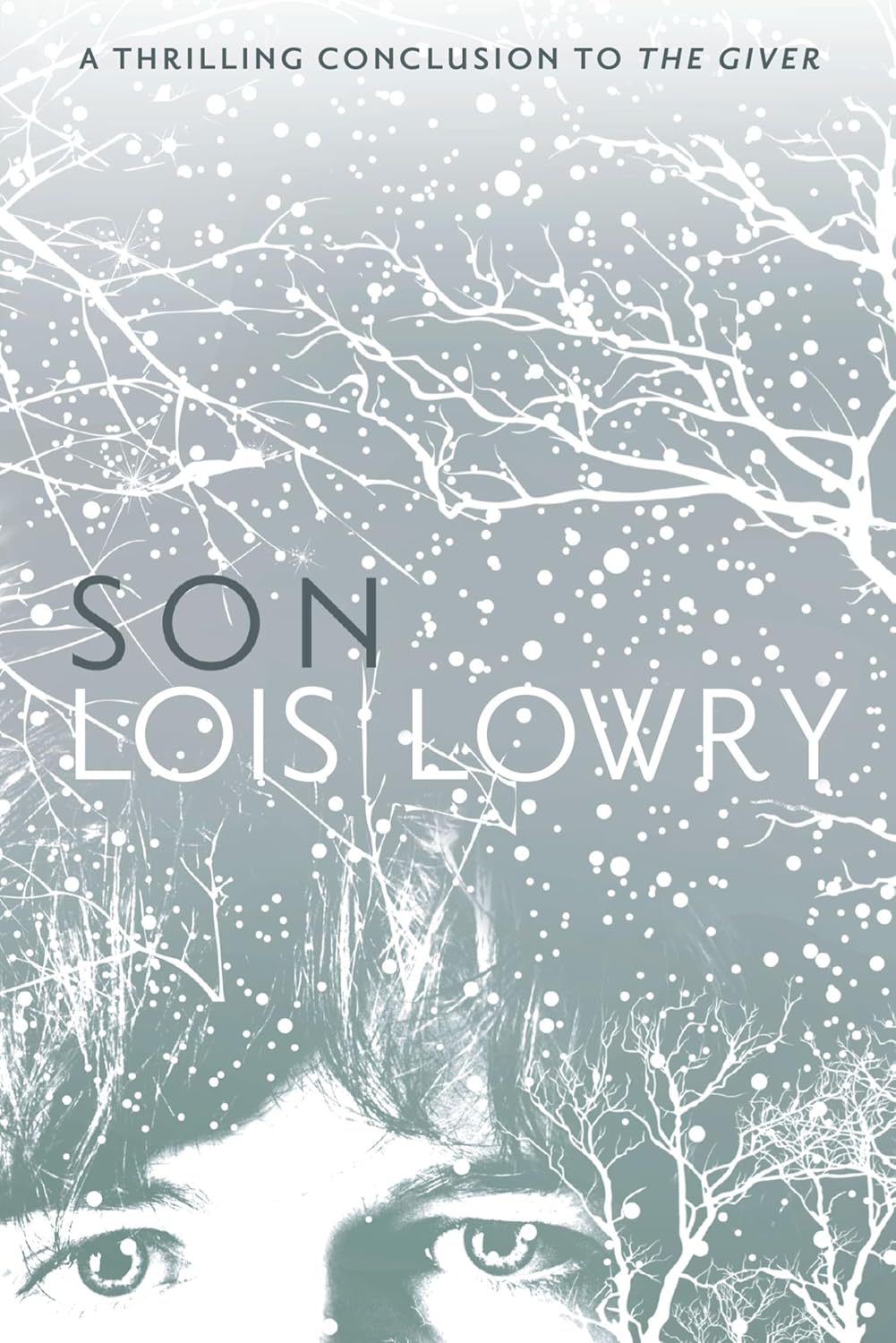
Son by Lois Lowry is the fourth and final book in the Quartet that began with The Giver — a novel in three parts that returns to Jonas’s Community, follows a young woman named Claire whose story was never told in the first book, and brings the Quartet’s deepest themes to their fullest resolution. More ambitious in structure and more emotionally expansive than the three books that precede it, Son is a novel about the specific and indestructible nature of a mother’s love, about what a person will do and what they will sacrifice to find their child, and about the oldest enemy in story: a figure of pure malevolence who trades in despair. It is the Quartet’s most complete statement of everything Lowry has been building across four books and twenty years. This complete guide covers the reading level, age appropriateness, themes, characters, and everything parents and teachers need to know about this final installment.
For Parents
Son is the Quartet’s longest, most structurally complex, and most emotionally complete novel — a book whose three-part structure takes Claire from the Community of The Giver, through a coastal village that recalls the most lyrical passages of Gathering Blue, and finally to Village, where the Quartet’s threads converge. Best suited for readers ages 11-14, it rewards everything that came before it and provides the resolution that The Giver‘s famously ambiguous ending left open. Parents who have read the Quartet with their children will find it a deeply satisfying conclusion; those who have not may want to begin at the beginning.
For Teachers
Well suited to grades 5-7, Son is an exceptional text for teaching three-act structure, the convergence of multiple narrative threads across a series, and how authors use the return to a familiar setting to generate dramatic irony and emotional resonance. The novel’s antagonist — Trademaster, a figure who offers people what they most desire in exchange for something they cannot afford to give — is one of the most teachable embodiments of the Faust bargain available at this level. It also provides the richest discussion of motherhood, sacrifice, and the relationship between love and cost available in the Quartet.
Son at a Glance
Find on Amazon →| Author | Lois Lowry |
| Published | 2012 |
| Grade Level | 5-7 (our assessment) |
| Recommended Age | 11-14 |
| Flesch-Kincaid Grade | 5.3 |
| Word Count | ~93,000 |
| Pages | 393 (standard paperback) |
| Chapters | 48 |
| Genre | Dystopian fiction / fantasy |
| Setting | The Community; a coastal fishing village; Village — the same world as the three preceding Quartet novels |
| Awards | ALA Notable Children’s Book; ALA Best Book for Young Adults |
For official Lexile and AR levels, visit Lexile.com or AR BookFinder. ReadingVine provides independent editorial assessments.
What Reading Level Is Son?
Son reads at approximately a 5th-7th grade level by our editorial assessment, with a Flesch-Kincaid grade level of around 5.3. That score runs somewhat low for the novel’s actual demands — at nearly 400 pages and 93,000 words, it is by far the Quartet’s longest book, and its three-part structure requires readers to carry the weight of the previous novels’ worlds while following a new protagonist through settings they have never seen. Lowry’s prose varies across the three sections: precise and affectless in the Community sections, which deliberately recall The Giver‘s style; warmer and more physical in the coastal village, where Claire comes into herself as a person; and increasingly urgent in the final section, where the Quartet’s convergence demands a pace that matches its stakes.
The novel is accessible to strong 5th grade readers but most rewarding for those at the upper end of the recommended range — readers who have grown up with the Quartet, who know Jonas’s story and Kira’s and Matty’s, and who bring that accumulated investment to a novel that is counting on it. First-time readers of the series will find the Community sections somewhat disorienting without the context of The Giver, and are strongly encouraged to begin there. The Quartet is most fully itself when read in order, and Son is the installment that most requires that foundation.
The book is most commonly recommended for grades 5-7. For official Lexile and Accelerated Reader scores, visit Lexile.com or AR BookFinder.
What Age Is Son Appropriate For?
We recommend Son for readers ages 11-14. The novel deals with birth, maternal love, aging, and a figure of pure malevolence whose trades leave people hollowed out — none of it graphic, all of it emotionally serious.
The novel opens in the Community of The Giver, where Claire has been assigned as a Birthmother — a role the Community treats as purely functional, in which young women carry and deliver babies who are immediately removed and assigned to family units. Claire’s birth experience goes wrong in ways she does not understand, and her longing for the baby she briefly glimpsed — a baby readers of The Giver will recognize as Gabe — is the novel’s emotional engine from its first pages. The birth and its complications are handled with tact and without graphic detail. Trademaster, the novel’s antagonist, is a figure of genuine malevolence who offers people their deepest desires in exchange for years of their life — those who trade with him age rapidly and catastrophically, which is depicted with the specificity the horror requires. Claire ages dramatically in her final ascent of the cliff, which is one of the novel’s most physically difficult sequences to read. The novel’s climax involves direct confrontation with Trademaster and a sacrifice that resolves the Quartet’s central themes. There is no sexual content beyond the novel’s frank treatment of birth and its aftermath as a physical experience. There is no strong language. The novel’s difficulty is structural, emotional, and philosophical, and every demanding element is in service of the Quartet’s conclusion.
Son is the most complete and most emotionally expansive novel in the Quartet, and parents who have read the first three books with their children will find it a profoundly satisfying conclusion. The resolution of Jonas’s story — his fate, which The Giver‘s ambiguous ending left open for nearly twenty years — is handled with the quiet precision that characterizes Lowry’s best work, and the reunion at the novel’s heart is one of the most affecting moments in the entire series.
What Is Son About?
Son is structured in three parts, each of which constitutes something close to a complete narrative arc in its own right.
Part One: Before. Claire is a fourteen-year-old Birthmother in the Community of The Giver — one of the young women selected to carry and deliver babies for assignment to family units. Her Product Number is Thirty-six. The birth goes wrong in ways the Community’s medical staff address efficiently and without explaining to Claire, who is left with a cesarean scar she does not understand and a persistent, bewildering longing for the baby she was told not to think about. She requests and receives a reassignment from Birthing, and is assigned to the Fish Hatchery — where she meets, regularly, the boy who tends the fish: a boy with pale eyes who is raising an infant with unusual vitality named Gabe. Readers of The Giver will recognize this boy immediately. Claire watches Jonas and Gabe with the specific, wordless hunger of a mother who does not yet have language for what she is feeling, because the Community has never given her that language. When Jonas and Gabe disappear — the night of The Giver‘s climax, played out here from Claire’s perspective — Claire follows them to the river and is caught in the current. She is swept out to sea.
Part Two: Between. Claire washes ashore in a remote coastal fishing village — a community that is nothing like the Community and nothing like Village, a small, practical, warm place that has been entirely cut off from the outside world by the cliffs that surround it on every side. She has lost her memory. The villagers take her in, name her, teach her their work, and give her, without quite meaning to, the first genuine family she has ever had. Over years, her memory returns in pieces. She learns, finally, what she lost — who she is, what she was, whose mother she is. She learns that there is a way out of the village: up the cliffs. No one has ever succeeded. She begins to train.
Part Three: After. Claire arrives in Village — years older than she should be for reasons the cliff climb has made catastrophic, her youth given to the ascent. She finds her son: a young man named Gabriel who has grown up in Village with Jonas and who has a gift she is not yet aware of. She finds Jonas. She finds, in Village’s history, the mark of Trademaster — a figure introduced in Son who is connected to the corrupt trading system that damaged Village in Messenger, trading in desires and leaving the community diminished. And she learns that Trademaster has come for her son, as he has come for others before him, and that the only way to face him requires something that Gabe has and that only Gabe can give.
The Quartet’s convergence — Jonas’s fate settled, Matty’s sacrifice honored, Kira’s world connected, Claire’s search completed — is the most ambitious thing Lowry attempted across the series, and it works because every element of it has been earned by the three books that precede it.
Son Characters
Is Son Banned?
Son has not been widely challenged on its own and does not appear regularly on lists of challenged books. It is occasionally caught in challenges directed at The Giver as part of the Quartet, but its own content has not generated specific objections beyond those sometimes raised against the Quartet as a whole. It is widely available and recommended for its age range, and is embraced by the same educators and librarians who have long defended The Giver as one of the most important novels in the middle grade canon.
Son Themes and Lessons
The central theme of Son is the specific and indestructible nature of maternal love — the argument, made across the novel’s entire arc, that the bond between a mother and child is not a product of conditioning or circumstance but something that persists through loss of memory, through years of separation, through physical transformation, through every obstacle a world organized to suppress it can produce. The Community conditioned Claire to feel nothing for the baby she bore. The conditioning did not work. And everything Claire does from that failure onward is in service of a love the Community insisted she could not have and that she refused, without quite knowing she was refusing, to give up.
The Quartet’s final confrontation with Trademaster is its most direct statement of what all four novels have been about at their deepest level: the struggle between forces that want to own, diminish, and extinguish human connection, and the specific quality — love, in its fullest and most costly form — that those forces cannot ultimately defeat. Trademaster trades in despair. He offers people what they want and leaves them emptied. What he cannot offer, and what he cannot take, is the love that does not calculate its cost — the love that Claire embodies across thirty years of searching, that Matty embodied in his sacrifice, that Jonas embodied in his flight with Gabe.
Identity and memory are the novel’s second great themes, rendered through Claire’s years in the coastal village with no knowledge of who she is. Her gradual recovery of memory — the pieces that return, the ones that stay lost, the self she has built in the village laid against the self she was in the Community — is one of the novel’s richest narrative threads and one of the most productive discussions it opens: who are we when we cannot remember where we came from? What persists when memory fails? And is the self Claire builds in the village more truly hers than the conditioned self the Community produced?
Discussion starters for classrooms: Why does Claire’s conditioning fail where every other Birthmother’s presumably succeeded? What does Trademaster want, and why does he want it? What does Claire give up in the cliff climb, and what does she gain? How does Jonas’s fate — the resolution of The Giver‘s ending — change your understanding of the first novel? What does the Quartet, taken as a whole, say about what human beings most need to live a full life?
How Many Pages and Chapters Are in Son?
The standard paperback edition of Son is 393 pages, divided into 48 chapters across three numbered parts. The word count is approximately 93,000 words — by far the longest novel in the Quartet and roughly twice the length of The Giver. The three-part structure gives the novel a clear shape: Part One in the Community (~100 pages), Part Two in the coastal village (~150 pages), and Part Three in Village (~140 pages), with each section having a distinct atmosphere and pacing that reflect the different worlds Claire moves through.
For readers in the target age range of 11-14, expect a reading time of roughly 8-10 hours, or about two weeks of comfortable reading at 30 minutes per session. As a classroom text it works best as the culmination of a full Quartet unit — students who arrive at it having read the first three novels will find the convergence of narrative threads one of the most satisfying experiences available in middle grade series fiction. The resolution of The Giver‘s ending is the single moment most classroom readers have been waiting for, and discussing how Lowry handles it — quietly, without drama, as a detail that lands because of everything that preceded it — is a rich craft exercise. Many teachers who do not have time for the full Quartet teach The Giver alone and recommend Son for independent reading for students who want the ending resolved.
Books Similar to Son
About Lois Lowry
Lois Lowry is one of the most celebrated American children’s authors of the past fifty years, the winner of two Newbery Medals — for Number the Stars (1990) and The Giver (1994) — and the author of more than forty books for young readers. Son, published in 2012, completed the Quartet she had begun nearly twenty years earlier with The Giver — a project that grew, book by book, from a single novel about a boy who receives memories into a four-volume exploration of what human beings most need, most fear, and most love. Lowry has spoken about Son as the novel that surprised her most across the Quartet’s writing: Claire appeared, she has said, as a character she had not planned, a young woman in the background of The Giver‘s world whose story insisted on being told. The result is the Quartet’s most emotionally complete novel and the one that most fully answers the questions the first book raised. Lowry lives in Maine.
Son: Frequently Asked Questions
What reading level is Son?
Son has a Flesch-Kincaid grade level of approximately 5.3, which runs somewhat low for a novel most associated with grades 5-7 (ages 11-14). At nearly 400 pages and with a three-part structure spanning multiple worlds, it is by far the Quartet’s most demanding read in terms of length and structural complexity. It is most rewarding for readers who have completed the first three Quartet novels and bring that context to its convergences. For official Lexile and AR scores, visit Lexile.com or AR BookFinder.
Do I need to read the other Quartet books before Son?
Yes — more than any other book in the Quartet, Son requires its predecessors. Part One takes place in the Community of The Giver and assumes familiarity with that world; readers who have not read the first novel will find it significantly disorienting. The convergence of the Quartet’s narrative threads in Part Three — the resolution of Jonas’s fate, the connection to Matty’s sacrifice, the context of the corrupt trading system’s presence in Messenger and Trademaster’s emergence here — is most fully meaningful to readers who have followed the full sequence. Son can be read after The Giver alone if time does not permit the full Quartet, but is most complete when read fourth.
What happens to Jonas at the end of The Giver? Does Son resolve it?
Yes — Son is the Quartet’s definitive answer to the question The Giver‘s ending raised in 1993. Jonas survived. He and Gabe found Village. He grew up, became Leader, and built a life. The specific details of how that happened are not provided — Lowry trusts the reader’s imagination and the resonance of the reunion rather than the mechanics of the journey — but the fact of Jonas’s survival and his life in Village is rendered with quiet certainty. For readers who have spent years wondering, it is one of the most satisfying resolutions in middle grade series fiction.
Who is Claire, and how does she connect to The Giver?
Claire is a Birthmother in the Community during the events of The Giver — a background figure whose existence the first novel does not acknowledge but whose presence there is entirely consistent with what The Giver established about how the Community operates. She is Gabe’s mother: the young woman who carried and bore the infant that Jonas fought to save and that Gabe grew up to be. Her story is the one The Giver never told, and her perspective on the Community’s events — watching Jonas at the Fish Hatchery, witnessing the night of his departure from a different angle entirely — is one of the novel’s most affecting structural pleasures.
Who is Trademaster?
Trademaster is the Quartet’s central antagonist — introduced and named in Son, where he is connected to the corrupt trading system that shadowed Village in Messenger, and confronted directly here. He is a figure of pure malevolence who trades in human desires: he offers people what they most want in exchange for years of their life, leaving them aged and hollowed and robbed of the capacity for love and hope that made their desire meaningful in the first place. He is, in the Quartet’s terms, the embodiment of everything the four novels have been arguing against: the force that wants to own what cannot be owned, that trades in despair, that is most threatened by the specific and indestructible quality of love that does not calculate its cost.
Why does Claire age so dramatically in Part Three?
The cliff climb that ends Part Two costs Claire years of her life — she arrives at the top dramatically older than she was at the bottom, a cost exacted by the physical extremity of the ascent but also, the novel suggests, by something less explicable: the price of crossing from one world into another, of spending yourself completely in a single irreversible act of will. Claire arrives in Village as an old woman though she is not yet forty, and the gap between her age and her son’s — Gabe, who has grown up while she was climbing — is one of the novel’s most affecting ironies. What she has lost in years she has gained in the certainty of having done what she set out to do.
What grade is Son typically assigned in?
Son is most commonly assigned in grades 5, 6, and 7, almost always as the concluding volume of a Quartet unit. It is particularly well suited to discussion of three-act structure, the Faust bargain as a narrative archetype (Trademaster’s trades), and the relationship between maternal love and sacrifice as the Quartet’s central argument. Many teachers who teach only The Giver recommend Son as independent reading for students who want the ending resolved — it functions well as a two-book pairing with The Giver even without the middle volumes, though the full Quartet is the richer experience.