
 = Partner Site
Swindle Reading Level: A Complete Guide
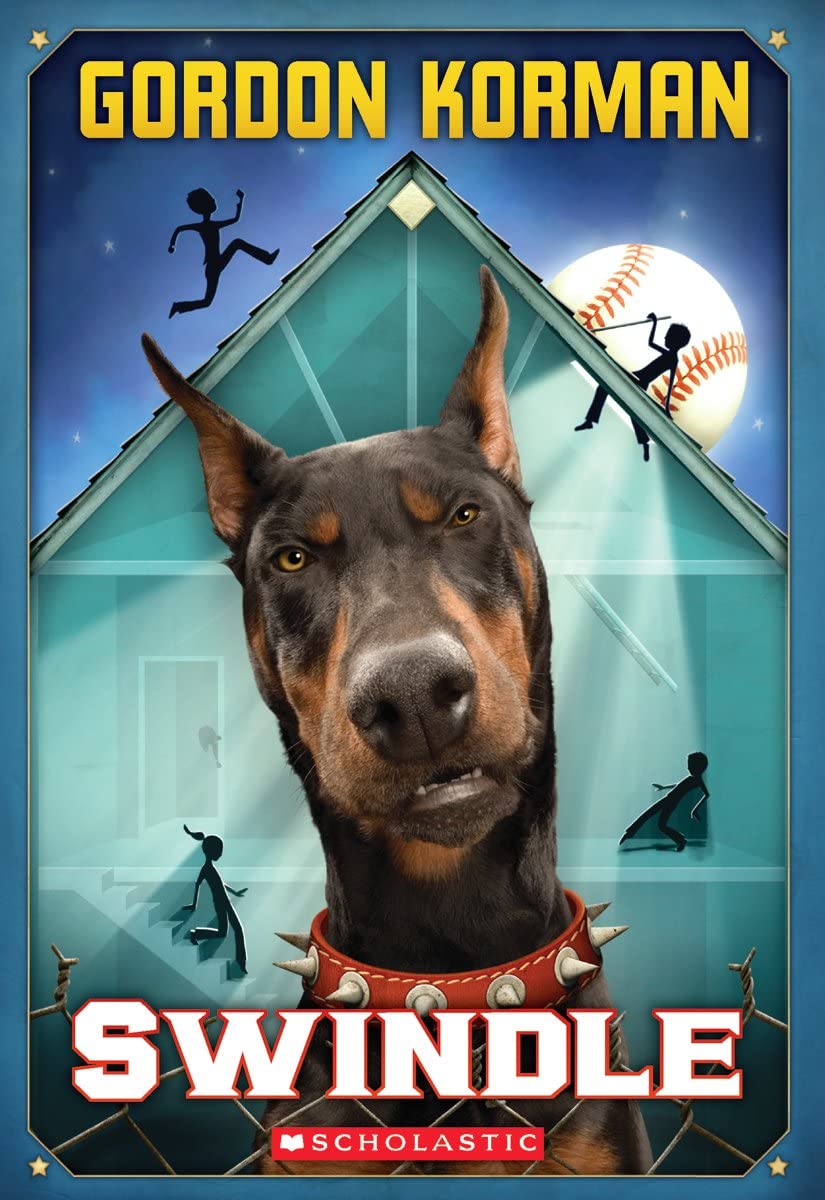
Swindle by Gordon Korman is the novel that launched one of the most popular series in middle grade fiction — a heist comedy so precisely engineered and so consistently funny that it reads like a middle school Ocean’s Eleven, complete with a rotating cast of specialists, an impossible plan, and a con artist villain whose comeuppance the reader is rooting for from page one. When Griffin Bing is cheated out of a fortune by a dishonest memorabilia dealer named S. Wendell Palomino — the Swindler — he assembles a team of classmates, each with a specific skill, to break into the dealer’s house and recover what is rightfully his. It is an entirely impractical plan executed by sixth graders, and Korman makes every step of it both completely believable and genuinely hilarious. Propulsive, warm, and constructed with the comic precision of a writer who has been making middle schoolers laugh since he was one himself, Swindle is one of the most reliable page-turners in its grade range and the entry point to a series that has earned devoted readers across multiple generations. This complete guide covers the reading level, age appropriateness, themes, characters, and everything parents and teachers need to know about this beloved novel.
For Parents
Swindle is an ideal novel for readers ages 8-12 — fast-moving, consistently funny, and built around an ensemble of kids whose distinct personalities and complementary skills make every chapter enjoyable. It is particularly well suited for children who love heist movies, caper stories, or any narrative organized around a team pulling off an impossible plan. The content is entirely appropriate for the full recommended age range, and the novel is one of the most reliable choices for reluctant readers at this level. Parents should be aware that the novel involves children breaking and entering, but this is presented as a comic adventure in the Robin Hood tradition rather than a model for real behavior, and the novel’s moral framing is clear throughout.
For Teachers
Well suited to grades 4-6 as an independent reading choice or classroom text, Swindle is exceptional for teaching plot structure — the heist genre has one of the most clearly defined narrative architectures available, and Korman executes it with a precision that makes the structure easy to analyze and discuss. The novel also opens productive conversations about fairness, what it means to take something back rather than steal it, and whether a good outcome justifies a dubious method. Its ensemble structure makes it well suited for character analysis assignments, since each team member’s function is clearly defined and their individual voices are distinct.
Swindle at a Glance
Find on Amazon →| Author | Gordon Korman |
| Published | 2008 |
| Grade Level | 4-6 (our assessment) |
| Recommended Age | 8-12 |
| Flesch-Kincaid Grade | 4.6 |
| Word Count | ~50,000 |
| Pages | 252 (standard paperback) |
| Chapters | 24 |
| Genre | Realistic fiction / heist comedy / adventure |
| Setting | A suburban town, present day |
| Awards | Multiple state reading award lists; one of the bestselling middle grade series of the past decade |
For official Lexile and AR levels, visit Lexile.com or AR BookFinder. ReadingVine provides independent editorial assessments.
What Reading Level Is Swindle?
Swindle reads at approximately a 4th-6th grade level by our editorial assessment, with a Flesch-Kincaid grade level of around 4.6. That score accurately reflects the novel’s accessibility — Korman writes with a comedian’s instinct for pace, using short chapters, punchy dialogue, and scene transitions that keep the story moving at a speed that makes 252 pages feel like considerably fewer. The prose is clean and direct, and the novel is one of the most reliable choices for reluctant readers in its grade range: the heist plot creates forward momentum that is very difficult to put down once established.
What the score does not capture is the structural pleasure the novel offers to readers who engage with it at the level of craft. The heist genre has a precise architecture — the team assembly, the plan, the rehearsal, the execution, the complications, the improvised recovery — and Korman executes each phase with the confidence of a writer who knows exactly what he is doing. Readers who notice how the novel is built, how each team member’s skill is introduced before it is needed, how the complications arrive at exactly the moments that create maximum comic effect, are experiencing a masterclass in plot construction. The novel works as pure entertainment and rewards craft-level attention simultaneously.
The book is most commonly recommended for grades 4-6. For official Lexile and Accelerated Reader scores, visit Lexile.com or AR BookFinder.
What Age Is Swindle Appropriate For?
We recommend Swindle for readers ages 8-12. It is one of the most content-appropriate novels in its range — a comic adventure whose conflicts are entirely external and whose stakes, while real to the characters, never approach anything requiring parental guidance.
The novel’s central plot involves sixth graders planning and executing a break-in at the antagonist’s home and business to recover a baseball card that was fraudulently obtained from Griffin. This is presented squarely in the Robin Hood / caper comedy tradition — the children are recovering something that was taken from them by deception, the antagonist is clearly and completely in the wrong, and the novel’s moral framing never treats the break-in as a model for behavior. There is no violence, no sexual content, no strong language, and no content that would concern most parents of children in the recommended age range. The novel is among the most broadly appropriate middle grade comedies available, and its moral universe — in which cheats get their comeuppance and kids with ingenuity and loyalty to each other can right a wrong — is entirely wholesome even when the methods are technically criminal.
Swindle is particularly well suited for children who have felt powerless against an adult who treated them unfairly — the novel’s central fantasy, that a group of resourceful kids can outmaneuver a dishonest grown-up and recover what was taken from them, is one of the most satisfying available in middle grade fiction, and Korman delivers it with enough comic invention that it never feels like wish fulfillment at the expense of plausibility.
What Is Swindle About?
Griffin Bing and his best friend Ben Slovak spend the night in an abandoned house on a dare and discover, among the junk left behind, a valuable Babe Ruth baseball card — a card worth, as Griffin eventually discovers, upwards of a million dollars. Before Griffin can properly investigate the find, he is talked into selling it to S. Wendell Palomino, a local memorabilia dealer who examines the card, tells Griffin it is a worthless fake worth at most a hundred dollars, and pays him accordingly. Griffin, trusting an adult’s expertise, accepts the deal.
Days later, Griffin learns what the card was actually worth. Palomino — whose nickname among his victims is the Swindler — knew exactly what he had and lied about it to acquire a million-dollar card for one hundred dollars. Griffin has been cheated, cleanly and completely, and there is no legal remedy available to him: he sold the card voluntarily, the contract is valid, and Palomino is about to sell it at auction for its true value.
Griffin’s response is to plan a heist. He will assemble a team, infiltrate Palomino’s house, and recover the card before the auction. The plan is audacious, logistically complex, and dependent on every team member executing their role perfectly. It is also the only option Griffin can see, and his commitment to it — total, inventive, and entirely undeterred by the many ways it could go wrong — is the novel’s engine.
The team Griffin assembles is one of the great pleasures of the novel and the series: Ben Slovak, Griffin’s loyal best friend and the operation’s lookout; Savannah Drysdale, the animal expert whose particular skill becomes essential in ways Griffin didn’t anticipate; Darren Vader, the class bully whose involvement is complicated and whose loyalty is uncertain; Logan Kellerman, a drama kid whose acting ability turns out to be the team’s most important asset; Pitch Benson, an expert climber; and Melissa Dukakis, a technology specialist whose hacking skills open doors — literally and figuratively — that no other team member could. Each specialist is introduced with their skill, their personality, and the specific reason Griffin needs them, and each plays their role in the heist with the comic competence that makes the genre so satisfying.
The heist itself goes wrong in exactly the ways that heist plots require — unexpected complications, improvised adjustments, near-disasters averted by resourcefulness and luck — and Korman manages the comedy and the tension simultaneously with the ease of a writer entirely in command of his material. The resolution is satisfying in every dimension: the Swindler gets what he deserves, Griffin gets what is his, and the team emerges intact, having done something genuinely difficult together.
Swindle Characters
Is Swindle Banned?
Swindle has not been challenged or banned and does not appear on any lists of challenged books. It is among the most broadly embraced middle grade adventure novels of the past decade, consistently recommended by educators, librarians, and parents as one of the most reliably entertaining choices available for the middle grade age range. Its status as a gateway novel for reluctant readers is well established, and its series popularity reflects a broad institutional confidence in its appropriateness and quality.
Swindle Themes and Lessons
The central theme of Swindle is justice — specifically the gap between what is legal and what is right, and what a person does when those two things are not the same. Griffin was cheated by Palomino in a transaction that is legally valid and morally fraudulent. The system offers him no remedy. What Korman does with that premise is give Griffin — and the reader — the satisfaction of a justice the system could not deliver, while being clear-eyed about the methods required to get it. The novel does not pretend that breaking into someone’s house is the recommended response to being cheated; it presents it as the only response available to a sixth grader with no legal standing and a very good reason to want what’s his back. The moral framing is honest enough that the heist feels like justice rather than simple wish fulfillment.
Teamwork as the combination of distinct and complementary skills is the novel’s second great theme — and the argument that makes the series so enduring. Griffin could not pull off the heist alone. Each team member brings something no one else has, and the plan only works because every skill is deployed at the right moment. Korman takes this seriously enough that the skills are all genuinely distinct and genuinely necessary — Savannah’s animal expertise is not interchangeable with Melissa’s technology skills, Logan’s acting ability is not interchangeable with Pitch’s climbing — and the team assembly sequence is one of the novel’s great pleasures because each addition to the team makes the plan slightly more plausible and the ensemble slightly richer.
Loyalty — what it means to stand by a friend when the plan is dangerous and the outcome uncertain — is the third great theme, embodied most clearly in Ben’s relationship to Griffin. Ben is not a true believer in the heist; he is a loyal friend who helps because Griffin needs him and the cause is just. The distinction between those two kinds of commitment is one the novel handles with more nuance than its comedy might suggest, and Ben’s steady, skeptical, unconditional presence is one of the warmest things about the book.
Discussion starters for classrooms: Is what Griffin does stealing, or is it recovering what’s his? What does each team member contribute, and why is no one skill sufficient on its own? What does the novel say about what to do when the legal system can’t help you? Is Griffin a good planner? What would you have done in his situation?
How Many Pages and Chapters Are in Swindle?
The standard paperback edition of Swindle is 252 pages, divided into 24 chapters averaging around ten pages each. The word count is approximately 50,000 words. The chapters are well paced and consistently end with hooks that make the novel difficult to put down at the assigned stopping point — a quality that makes it both an excellent independent reading choice and a slightly challenging classroom text for teachers who need students to stop at chapter breaks. The heist structure means the second half of the novel moves considerably faster than the first, as the plan moves from assembly and preparation into execution.
For readers in the target age range of 8-12, expect a reading time of roughly 4-5 hours for engaged readers. The Swindle series currently includes nine books, all featuring the same core team in new capers: Zoobreak (2009), Framed (2010), Showoff (2012), Hideout (2013), Jackpot (2014), Unleashed (2015), Jingle (2016), and Sting (2019). Each novel stands on its own — readers can enter the series at any point — but the characters deepen across the series, and readers who start with Swindle and continue find that the ensemble becomes increasingly rich and satisfying with each installment. The series is one of the most successful in contemporary middle grade fiction and has introduced more reluctant readers to the pleasure of books than almost any comparable series of the past decade.
Books Similar to Swindle
About Gordon Korman
Gordon Korman is one of the most prolific and most consistently entertaining authors in middle grade fiction — the author of more than ninety novels and the writer most responsible for the heist comedy as a middle grade genre. Born in Montreal in 1963, Korman published his first novel at age twelve as a seventh-grade English assignment that ended up in print, a fact that is both remarkable and entirely consistent with his approach: a writer who has never lost the instinct for what makes kids his readers’ age laugh, and who has spent forty years refining a comic craft that looks effortless because it is so thoroughly practiced. The Swindle series, launched in 2008, became one of his most popular, combining the heist genre’s narrative architecture with his characteristic ensemble comedy and producing nine novels that have introduced more reluctant readers to the pleasure of books than almost any comparable series of the past decade. His other notable series include Masterminds, Island, and Dive; his standalones include Ungifted, Restart, and Linked, all of which demonstrate that the comedy he has always written can carry genuine emotional and intellectual weight when the premise is strong enough. Korman lives in New York and continues to publish prolifically.
Swindle: Frequently Asked Questions
What reading level is Swindle?
Swindle has a Flesch-Kincaid grade level of approximately 4.6, which accurately reflects its accessibility — Korman’s clean, direct prose and comedian’s pacing make the surface very easy to navigate and the 252 pages move faster than most comparable novels. What the score cannot capture is the structural pleasure of the heist genre’s precise architecture, which Korman executes with real craft. Most commonly recommended for grades 4-6 (ages 8-12). For official Lexile and AR scores, visit Lexile.com or AR BookFinder.
What is the baseball card worth in Swindle?
The card Griffin finds a Babe Ruth card — worth approximately one million dollars at the time of the novel’s events. Palomino tells Griffin it is a worthless fake and pays him one hundred dollars for it, knowing its true value and lying about it to acquire a million-dollar card for essentially nothing. The enormous gap between what Griffin was paid and what the card is worth is the source of the novel’s central injustice and the reason the heist feels morally justified rather than simply criminal: Griffin was not just underpaid, he was actively deceived.
Who is on Griffin’s team in Swindle?
Griffin assembles six teammates, each with a specific skill the heist requires. Ben Slovak is his best friend and lookout, whose narcolepsy under stress is both a liability and a running joke. Savannah Drysdale is the animal expert, whose knowledge of animal behavior becomes essential at exactly the wrong moment. Logan Kellerman is the drama kid whose acting ability serves as the team’s most flexible asset. Pitch Benson is the climber, responsible for accessing areas no one else can reach. Melissa Dukakis is the technology specialist and hacker. Darren Vader is the class bully, whose involvement is complicated from the start. The team assembly sequence — Griffin identifying each person’s skill and recruiting them one by one — is one of the novel’s great pleasures.
Is it okay that Griffin breaks into Palomino’s house?
Korman handles this question honestly rather than avoiding it. Griffin was cheated through a legally valid but morally fraudulent transaction, and the system offers him no remedy — he is a sixth grader with no legal standing against a licensed dealer. The novel presents the break-in as Griffin’s only available option rather than his preferred one, and frames it clearly in the Robin Hood tradition: recovering what was taken by deception rather than stealing something that was never his. The moral framing is consistent throughout — Palomino is fully and clearly in the wrong, and the novel never pretends that what Griffin does is the recommended response to being cheated. Most readers, and most parents, find the framing honest enough that the heist feels like justice.
How many books are in the Swindle series?
The Swindle series currently includes nine books: Swindle (2008), Zoobreak (2009), Framed (2010), Showoff (2012), Hideout (2013), Jackpot (2014), Unleashed (2015), Jingle (2016), and Sting (2019). Each novel features the same core team — Griffin, Ben, Savannah, Logan, Pitch, and Melissa — in a new caper, and each stands on its own. Readers can enter the series at any point, though starting with Swindle gives the fullest introduction to the characters and their dynamics. The team deepens across the series, and readers who continue find the ensemble increasingly rich with each installment.
What does “Swindle” refer to in the title?
The title has two meanings that the novel plays with deliberately. Most directly, it refers to what Palomino does to Griffin — a swindle, a con, a fraudulent transaction designed to take something valuable from someone who doesn’t know its worth. But it also refers to what Griffin’s team does in response — a counter-swindle, a heist organized around recovering what the original swindle took. The word names both the injustice and the remedy, which is characteristic of Korman’s precision: the title contains the novel’s entire moral argument in six letters.
What grade is Swindle typically read in?
Swindle is most commonly read in grades 4, 5, and 6, both as independent reading and as a classroom text. It is one of the most reliable gateway novels for reluctant readers in this range — the heist plot creates forward momentum that is very difficult to resist once established, and the short chapters and punchy pacing mean that readers who start it tend to finish it. As a classroom text it is particularly well suited to units on plot structure, the heist genre’s narrative architecture, character function in ensemble stories, and the relationship between legal and moral in narratives of justice. It pairs naturally with Hoot for a unit on kids taking on dishonest adults, and with From the Mixed-Up Files for a unit on children’s heist and caper narratives.