
 = Partner Site
The Land of Stories: The Wishing Spell Reading Level: A Complete Guide
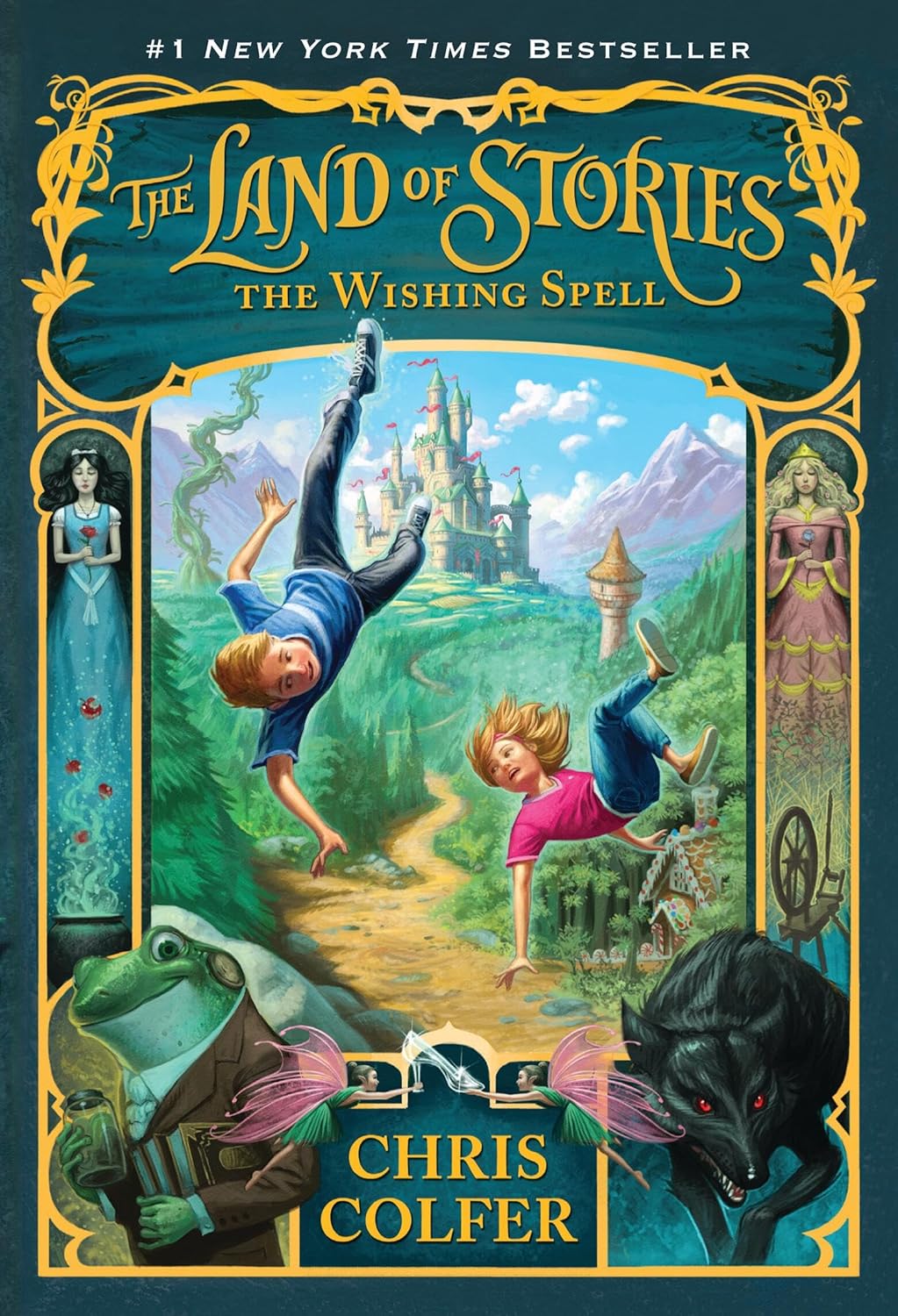
The Land of Stories: The Wishing Spell by Chris Colfer is a charming, fast-paced fantasy adventure about twelve-year-old twins Alex and Conner Bailey who tumble into the magical fairy tale world their grandmother has always read to them from a mysterious storybook — and discover that living inside a fairy tale is nothing like the stories made it sound. This complete guide covers the book’s reading level, recommended age, content considerations, characters, themes, and books similar to The Land of Stories: The Wishing Spell, designed for parents, teachers, and students.
For Parents
The Land of Stories is a warmly entertaining fantasy series that works on two levels simultaneously — as a straightforward adventure story for younger readers and as an affectionate, clever riff on fairy tale conventions for readers who know their source material well. The book requires no prior knowledge of specific fairy tales to enjoy, but children who love classic stories will get a special kick out of seeing familiar characters in new situations. Content concerns are minimal. The book is appropriate for most readers ages 8 and up and is a strong choice for fans of fairy tales, fantasy adventure, and humor.
For Teachers
The Land of Stories works well in grades 4–6 as an independent reading selection or literature circle choice, particularly for units on fairy tales, fractured fairy tales, or intertextuality. The book’s premise — familiar fairy tale characters encountered through fresh eyes — naturally generates discussion about how stories work, how we know the characters we know, and what it would be like if those stories were real rather than fictional. The twin protagonists’ contrasting personalities (Alex the eager student, Conner the reluctant one) also offer useful discussion points about learning, reading, and the value of stories.
The Land of Stories: The Wishing Spell at a Glance
Find on Amazon →| Author | Chris Colfer |
| Published | 2012 |
| Grade Level | 4–6 (our assessment) |
| Recommended Age | 8–12 |
| Flesch-Kincaid Grade | 5.5 |
| Word Count | ~78,000 |
| Pages | 438 (standard hardcover) |
| Chapters | 22 |
| Genre | Fantasy / fairy tale / adventure |
| Setting | Small-town America; the Land of Stories (a world where fairy tales are real) |
| Awards | — |
For official Lexile and AR levels, visit Lexile.com or AR BookFinder. ReadingVine provides independent editorial assessments.
What Reading Level Is The Land of Stories: The Wishing Spell?
The Land of Stories: The Wishing Spell reads at approximately a 5th- to 6th-grade word level by standard readability measures (Flesch-Kincaid grade 5.5), placing it in the upper middle-grade range. Our editorial assessment is grades 4–6 for independent reading, with the book most rewarding for readers in grades 4–5. Colfer’s prose is accessible and breezy — he writes with a light, comic touch and a fondness for humor that keeps the pages turning — though the book’s length at 438 pages means readers need stamina and genuine engagement to carry through to the end.
The reading complexity in The Land of Stories comes primarily from its length and from the density of its fairy tale references. The book assumes a degree of familiarity with classic fairy tales — Cinderella, Snow White, Sleeping Beauty, Red Riding Hood, Jack and the Beanstalk, and others all appear as characters — and while Colfer provides enough context for readers unfamiliar with the source material to follow the plot, readers who know their fairy tales will get considerably more out of the book’s jokes and subversions. This makes it an especially rewarding choice for children who have been read the classics and are ready to see them with fresh eyes. For official Lexile and AR scores, visit Lexile.com or AR BookFinder.
What Age Is The Land of Stories Appropriate For?
We recommend The Land of Stories: The Wishing Spell for readers ages 8–12, with the strongest fit at ages 9–11. The fairy tale premise, the twin protagonists, the humor, and the sense of adventure make it broadly appealing across the upper elementary range. Strong readers as young as 7 or 8 can enjoy it as a read-aloud or with parental support, and the series has devoted fans well into middle school. Readers who grew up loving fairy tales and are ready for a longer, more complex take on the genre tend to respond to it enthusiastically.
The Land of Stories: The Wishing Spell contains mild fantasy peril and adventure — the twins face various dangers in the fairy tale world, including encounters with the Evil Queen, wolves, and other classic fairy tale threats — but the tone is consistently light and the danger is never genuinely frightening. The book deals with the twins’ grief over the recent death of their father, which is handled with sensitivity and is woven through the emotional core of the story. This theme of parental loss may resonate deeply for some readers. There is no profanity, graphic violence, or sexual content. The overall tone is warm, funny, and optimistic, and the book ends in a way that is emotionally satisfying without being dishonestly tidy.
The book works particularly well for reluctant readers who are fans of fairy tales but haven’t yet found a longer chapter book that captured them. The familiar characters and settings provide an immediate sense of comfort and recognition, while the novel’s own plot — and the twins’ very different personalities — give readers something genuinely new to engage with.
What Is The Land of Stories: The Wishing Spell About?
Alex and Conner Bailey are twelve-year-old twins who couldn’t be more different. Alex is a voracious reader, an excellent student, and deeply passionate about fairy tales; Conner is funny, sociable, and would rather be doing anything other than schoolwork. The twins are struggling in the aftermath of their father’s death — their mother works double shifts as a nurse to keep the family afloat, and their beloved grandmother visits to read to them from a beautiful, mysterious old storybook called The Land of Stories. One morning, Alex discovers that the storybook is more than a book: objects fall into it, and sounds come from within its pages. Before she fully understands what is happening, both twins have tumbled through the book and landed in the Land of Stories itself.
The Land of Stories is exactly what it sounds like: the world where all the fairy tales are real. Cinderella is now a queen. Red Riding Hood has a kingdom of her own. The Evil Queen has been imprisoned but her darkness still echoes through the land. Alex and Conner desperately need to find a way home — and they discover that a magical object called the Wishing Spell, assembled from eight specific items scattered across the various fairy tale kingdoms, can open a portal back to their world. The twins split up and travel through the kingdoms collecting the items, encountering the fairy tale characters Alex has always loved in their real, imperfect, often surprising forms.
Chris Colfer — best known as an actor on the television series Glee — wrote The Land of Stories as a passion project, drawing on a lifelong love of fairy tales and storytelling. He has spoken about writing the book during downtime on set and about his desire to create something that honored the power of stories to transport readers into other worlds. The book became an instant number-one New York Times bestseller on publication in 2012 and launched a six-book series. Colfer continued writing throughout the series’ run and has subsequently published several standalone novels in related fairy tale worlds.
The Land of Stories Characters
The Land of Stories Themes and Lessons
At its heart, The Land of Stories is a book about what stories actually do for us — why we love them, why we need them, and what happens when the distance between a story and reality collapses. Alex’s deep love of fairy tales has always been a way of holding onto something beautiful in a world that has taken her father from her; the Land of Stories is, in a sense, the place where the things she loves live and breathe. But the book consistently complicates the fairy tale world it conjures: the characters Alex knows from stories are imperfect, surprising, and sometimes disappointing in their real forms, and the happy endings she read about turn out to have complicated afterlives. Colfer is doing something genuinely interesting here — he is writing about the gap between how we imagine stories and what stories are actually like when you live inside them.
The twin dynamic is also one of the book’s most effective elements. Alex and Conner represent two kinds of readers — the devoted, immersed reader who knows every detail and the reluctant, skeptical reader who finds all this story business a bit much — and watching them navigate the same world from those different starting points generates both comedy and genuine insight. By the end of the book, each twin has learned something from the other’s way of seeing. Discussion questions worth exploring: How does the Land of Stories differ from the fairy tales Alex always imagined? Why does Conner’s outside perspective help the twins in ways Alex’s deep knowledge doesn’t? What does the Evil Queen’s backstory suggest about the difference between villains in stories and people in real life? How does the twins’ father’s death shape the way each of them experiences the fairy tale world?
How Many Pages and Chapters Are in The Land of Stories: The Wishing Spell?
The Land of Stories: The Wishing Spell is 438 pages in the standard hardcover edition, divided into 22 chapters plus a prologue and epilogue. The word count is approximately 78,000 words — a long middle-grade novel that moves briskly despite its length, thanks to Colfer’s light, comedic prose style and the constant forward momentum of the twins’ quest structure. At an average middle-grade reading pace of around 250 words per minute, most readers in the target age range will finish the book in 7–9 hours of total reading time — typically one to two weeks of 30–45 minute daily reading sessions, though readers who get fully absorbed in the fairy tale world frequently move faster. Most editions include illustrations by Brandon Dorman scattered throughout, which add visual warmth to the storytelling. The chapters are long by middle-grade standards — most run 18–22 pages — which means the book rewards readers who can sustain engagement through extended scenes rather than looking for frequent stopping points.
Books Similar to The Land of Stories: The Wishing Spell
About Chris Colfer
Chris Colfer was born in 1990 in Clovis, California, and became famous as a teenager for his role as Kurt Hummel on the Fox television series Glee, for which he won a Golden Globe Award for Best Supporting Actor in 2011. He began writing The Land of Stories during breaks on set, drawing on a lifelong love of fairy tales, mythology, and storytelling that he has credited with helping him through a difficult childhood. The book was published in 2012 and immediately debuted at number one on the New York Times bestseller list, making Colfer — still in his early twenties at the time — one of the youngest authors ever to achieve that distinction. The Land of Stories series ran to six main volumes: The Wishing Spell (2012), The Enchantress Returns (2013), A Grimm Warning (2014), Beyond the Kingdoms (2015), An Author’s Odyssey (2016), and Worlds Collide (2017). Colfer has since published additional books set in the Land of Stories universe, including the Adventures from the Land of Stories companion series and a trilogy of prequel novels called A Tale of Magic. He has spoken warmly about his hope that the books help young readers find in stories the same escape and comfort he found in them as a child.
The Land of Stories: The Wishing Spell: Frequently Asked Questions
What grade level is The Land of Stories: The Wishing Spell?
By standard readability measures, The Land of Stories reads at approximately a 5th- to 6th-grade word level (Flesch-Kincaid grade 5.5). Our editorial assessment is grades 4–6 for independent reading, with the book most rewarding for readers in grades 4–5. The prose is accessible and breezy, but the book’s length — 438 pages — means it is best suited for readers who are comfortable with longer chapter books and can sustain engagement through extended scenes.
Is The Land of Stories part of a series?
Yes. The Land of Stories: The Wishing Spell is the first of six main books in the Land of Stories series by Chris Colfer. The sequels are The Enchantress Returns (2013), A Grimm Warning (2014), Beyond the Kingdoms (2015), An Author’s Odyssey (2016), and Worlds Collide (2017). There are also companion books in the Adventures from the Land of Stories series and a prequel trilogy called A Tale of Magic. The first book works as a satisfying standalone with its own complete quest arc, but readers who love it will find plenty more to explore.
Do you need to know fairy tales before reading The Land of Stories?
No — Colfer provides enough context for readers unfamiliar with the source material to follow the plot and enjoy the adventure. However, readers who are familiar with classic fairy tales — Cinderella, Snow White, Sleeping Beauty, Red Riding Hood, Jack and the Beanstalk, Rapunzel, and others — will get considerably more out of the book’s humor, subversions, and character moments. If you have a young reader who hasn’t been exposed to the classic fairy tales, reading a collection of them alongside or before The Land of Stories is a rewarding companion experience.
Who wrote The Land of Stories — is it the actor from Glee?
Yes. Chris Colfer, best known for playing Kurt Hummel on the Fox television series Glee (2009–2015), wrote The Land of Stories. He began the book during downtime on set and published it in 2012 when he was 21 years old. The book debuted at number one on the New York Times bestseller list — making Colfer one of the youngest authors ever to achieve that distinction — and he has continued writing throughout the series’ run and beyond.
Which fairy tale characters appear in The Land of Stories?
The Land of Stories: The Wishing Spell features a wide range of fairy tale characters encountered as real people in their world after their stories have ended. Major characters encountered include Cinderella and Prince Charming (now the rulers of their kingdom), Red Riding Hood (now a queen with her own domain), Goldilocks (wanted as a fugitive), Jack (of beanstalk fame, also on the run), Sleeping Beauty, Snow White, Rapunzel, and the Evil Queen. The Fairy Godmother, the Big Bad Wolf, and various other figures from the tradition also appear. Part of the book’s pleasure is seeing how these characters have aged and developed since their famous stories concluded.
What is the Wishing Spell?
The Wishing Spell is a magical object — or rather, a magical process — that can grant a single wish of any kind to whoever assembles it. It is created by collecting eight specific items scattered across the various fairy tale kingdoms: a lock of Cinderella’s hair from her glass slipper, a piece of Sleeping Beauty’s spindle, a shard of Snow White’s glass coffin, and five other items from fairy tale landmarks and characters. The twins’ quest to collect all eight items forms the backbone of the novel’s plot, taking them through most of the Land of Stories’ major kingdoms and characters in the process.
Is The Land of Stories appropriate for a 3rd grader?
For strong 3rd-grade readers who love fairy tales and are comfortable with longer chapter books, yes — though the 438-page length is a significant commitment for that age group. The content is appropriate for ages 8 and up, the vocabulary is manageable for confident upper-elementary readers, and the fairy tale premise is enormously appealing to children who have grown up loving those stories. As a parent-child read-aloud it works very well for 3rd grade. For independent reading, it is most naturally suited to 4th grade and above.
Is there a movie or TV adaptation of The Land of Stories?
As of this writing, no film or television adaptation of The Land of Stories has been released, though the series’ popularity has generated ongoing speculation and interest. Chris Colfer has been involved in conversations about adaptation over the years. Check current entertainment news sources for the latest updates on any announced projects.