
 = Partner Site
The Pearl Reading Level: A Complete Guide
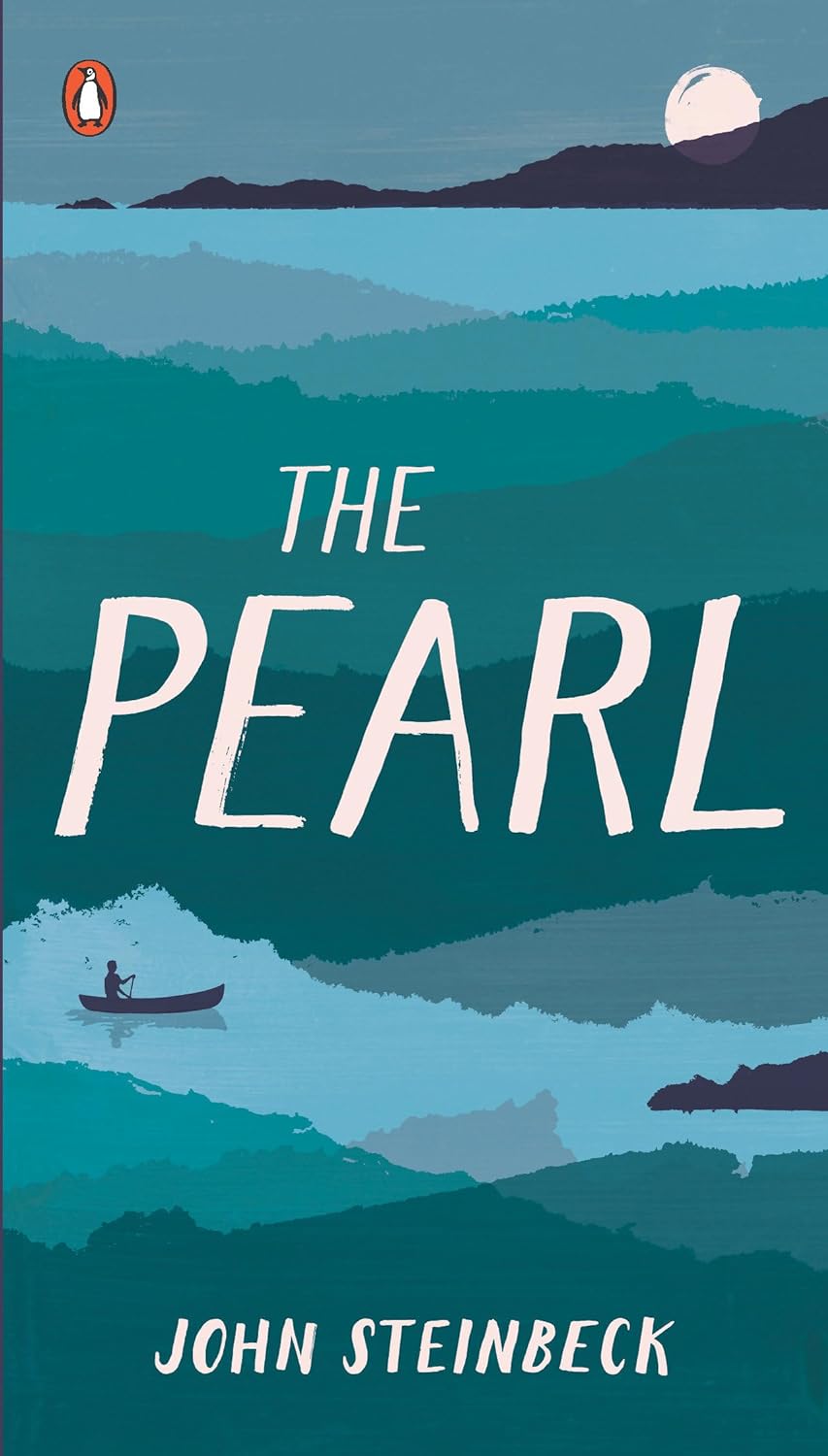
The Pearl is a 1947 novella by John Steinbeck, based on a Mexican folk tale he encountered during a research trip to Baja California in 1940. It follows Kino, a poor Indigenous pearl diver, whose discovery of an enormous pearl—the “Pearl of the World”—rapidly transforms from a miracle into a catastrophe as greed, colonial exploitation, and violence close in around his family. Short, parable-like, and thematically rich, it is one of the most widely assigned works in American middle and high school curricula. This guide covers the book’s reading level, age appropriateness, themes, characters, and teaching resources for students, parents, and educators.
For Parents
The Pearl is one of Steinbeck’s most accessible works and is frequently assigned beginning in 7th grade. The novella contains violence—including attacks on Kino and a devastating death at the end—but is not graphic. Its parable-like simplicity makes it an excellent entry point for Steinbeck, and its themes of greed, inequality, and the corrupting power of sudden wealth generate meaningful classroom and family discussion. It is appropriate for most readers ages 11 and older.
For Teachers
The Pearl is widely regarded as the easiest of Steinbeck’s books to teach—its allegorical structure is clear, its chapters are short, its prose is accessible, and its moral and thematic architecture reward analysis at multiple levels. It works well as a standalone unit or as a bridge to longer Steinbeck works like Of Mice and Men. The novella pairs productively with units on colonialism, economic exploitation, the nature of greed, and folk literature traditions. Steinbeck himself called it a parable, which invites discussion of the genre and its conventions.
The Pearl at a Glance
Find on Amazon →| Author | John Steinbeck |
| Published | 1947 |
| Grade Level | 7–9 (our assessment) |
| Recommended Age | 11–15 |
| Flesch-Kincaid Grade | 6.3 |
| Word Count | ~26,000 (novella) |
| Pages | ~90 (standard paperback) |
| Chapters | 6 |
| Genre | Novella / parable |
| Setting | La Paz, Baja California, Mexico, early 20th century |
For official Lexile and AR levels, visit Lexile.com or AR BookFinder. ReadingVine provides independent editorial assessments.
What Reading Level Is The Pearl?
ReadingVine places The Pearl at a grade 7–9 reading level, with a Flesch-Kincaid score of approximately 6.3. Steinbeck’s prose here is lean and biblical in its cadences—simple sentences, spare description, and a deliberate parable-like quality that gives even young readers access to the story without much linguistic struggle. The novella moves quickly: six short chapters, a plot that unfolds with the inevitability of a folk tale, and characters drawn with the bold clarity of allegory rather than psychological complexity.
The thematic richness lies beneath the accessible surface. Steinbeck is writing simultaneously about one family’s tragedy and about systemic economic exploitation, colonialism, and the way greed operates within and between social classes. Readers in grades 7–9 will engage with the story; readers who bring additional historical context about colonial Mexico, economic inequality, and the function of parables as a literary form will find considerably more to discuss. It is one of the most widely used entry-point texts for Steinbeck in middle school and early high school, often serving as a bridge to Of Mice and Men.
For official Lexile and AR scores, visit Lexile.com or AR BookFinder.
What Age Is The Pearl Appropriate For?
ReadingVine recommends The Pearl for readers ages 11–15. The novella’s content is relatively mild compared to most high school canonical texts. There is violence—Kino is attacked multiple times and kills at least one person in self-defense, and the story ends with the death of his infant son Coyotito—but it is handled with restraint and serves the parable’s moral architecture rather than gratuitous shock. The emotional weight of Coyotito’s death is significant and may affect younger or more sensitive readers. There is no sexual content and no profanity.
The Pearl contains several scenes of violence: Kino is attacked in his home, his canoe is destroyed, and his house is burned. In the final chapter, Kino kills a tracker in self-defense during a desperate nighttime confrontation, and his infant son Coyotito is killed by a stray bullet. The death of the baby is not graphic but is emotionally devastating—it is the culminating tragedy of the parable and is handled with Steinbeck’s characteristic restraint. Parents should be aware that the story ends in loss rather than redemption. There is no profanity and no sexual content.
What Is The Pearl About?
Kino is a poor Indigenous pearl diver who lives with his wife Juana and their infant son Coyotito in a brush hut near the Gulf of California in La Paz, Baja Mexico. His life is simple and, in its way, harmonious—Steinbeck opens the novella with a lyrical depiction of a morning routine that feels ancient and complete. Then Coyotito is stung by a scorpion. Kino rushes to the doctor, but the doctor—a man of the colonial class who despises the Indigenous people of La Paz—refuses to treat the baby because Kino cannot pay.
That same day, diving the oyster beds with Juana, Kino finds the largest pearl anyone has ever seen—a pearl as large as a seagull’s egg, perfect and luminous. The “Pearl of the World” instantly transforms their circumstances. Kino hears in it the “Song of the Family,” a promise of everything the system has denied them: medicine for Coyotito, a church wedding, rifles, and most importantly, an education for his son that would break the cycle of poverty and subjugation. News of the pearl travels through the town with the speed of a nervous system, and by nightfall Kino is being watched. That night, someone attacks him in his home.
The pearl dealers offer a fraction of what the pearl is worth, conspiring to cheat Kino as they cheat all the divers. He refuses and announces he will travel to the capital to sell it at a fair price. His neighbors try to warn him; Juana begs him to throw the pearl away before it destroys them. He refuses. The novella’s final chapters track Kino and Juana’s desperate flight from La Paz—their hut burned, their canoe destroyed—pursued by trackers through the mountains. In the last confrontation, Kino kills the trackers, but not before a shot fired at what one of them believed was a coyote kills Coyotito instead. Kino and Juana walk back into La Paz carrying the body of their son. Kino looks at the pearl one last time—and sees in it only the images of all the horrors it has brought—and hurls it into the sea.
The Pearl Characters
Is The Pearl Banned?
The Pearl has not been a significant target of banning or challenge efforts and does not appear on major challenged books lists. It has occasionally been offered as an alternative text when other Steinbeck works—most commonly Of Mice and Men—have been challenged in school districts, which speaks to its reputation as one of Steinbeck’s more classroom-accessible works. Its parable structure, relatively mild content, and clear moral framework have kept it out of the censorship controversies that have followed Steinbeck’s other major works. It is widely assigned and universally available in school and public libraries.
The Pearl Themes and Lessons
The novella’s central theme is the way that sudden wealth—far from liberating the poor—reveals and intensifies the systems of exploitation that keep them poor in the first place. The pearl doesn’t corrupt Kino so much as it exposes everyone around him: the doctor who withholds medicine, the dealers who conspire to underpay, the priest who calculates his tithes. Even Kino’s neighbors, who initially rejoice with him, quickly feel the corrosive pull of envy. Steinbeck is making an argument not just about individual greed but about how colonial economic structures are designed to ensure that even when Indigenous and poor communities gain access to wealth, the system moves to reclaim it.
Equally important is the novella’s form. Steinbeck called it a parable, and the label invites students to read it as a folk tale with a moral rather than as a realistic portrait of a specific place and time. But reading it only as parable risks missing the historical specificity—the colonial Mexico setting is not incidental; it is the ground from which the story’s critique grows. The best classroom discussions hold both registers simultaneously: the universal parable about greed and the historically situated story about what colonialism does to a family. Discussion questions: Is the pearl itself evil, or is it a neutral object that reveals the evil already present? Could Kino have found a way to keep the pearl and his family? What does it mean that Juana sees the danger before Kino does?
How Many Pages and Chapters Are in The Pearl?
The Pearl is divided into 6 chapters and runs approximately 90 pages in the standard Penguin paperback. At roughly 26,000 words, it is firmly a novella—shorter than Of Mice and Men, comparable in length to Animal Farm, and one of the briefest major texts assigned in American schools. An average reader will complete it in 2–3 hours. Most teachers assign it over one to two weeks, with each chapter generating its own discussion. The brevity of the chapters—and the parable-like clarity of each one—makes it well-suited to close reading instruction, with individual passages yielding significant symbolic and thematic content.
Books Similar to The Pearl
About John Steinbeck
For a full biographical account of John Steinbeck, see our guide to Of Mice and Men. In the context of The Pearl specifically: Steinbeck encountered the folk tale that inspired the novella during a research trip to the Gulf of California in 1940, undertaken with his friend the marine biologist Ed Ricketts and documented in their joint nonfiction work Sea of Cortez (1941). The original tale he heard was brief and moralistic—a young man finds a great pearl, is ruined by it, and throws it back into the sea. Steinbeck expanded it into a novella over the next several years, first publishing it as a short story called “The Pearl of the World” in Woman’s Home Companion in 1945, then revising and expanding it for publication as a standalone novella by Viking Press in 1947. A Mexican film adaptation, La Perla, was produced simultaneously and released the same year. Steinbeck considered the novella a parable—an explicitly moral form—which helps explain its spare, almost biblical prose style and the clarity of its allegorical architecture. He won the Nobel Prize in Literature in 1962 for his body of work, which the Nobel committee described as marked by “sympathetic humor and keen social perception.”
The Pearl: Frequently Asked Questions
What is the reading level of The Pearl?
ReadingVine places The Pearl at a grade 7–9 reading level, with a Flesch-Kincaid score of approximately 6.3. Steinbeck’s prose is lean and accessible, written in a parable-like style that gives most readers entry to the story without significant linguistic struggle. The thematic richness—its critique of colonial exploitation and greed—rewards additional historical and literary context. It is most commonly assigned in grades 7–9 and widely considered the easiest of Steinbeck’s works to teach.
Did The Pearl win any awards?
The Pearl did not win a standalone literary prize. John Steinbeck won the Nobel Prize in Literature in 1962 for his body of work—a body that includes The Pearl alongside Of Mice and Men, The Grapes of Wrath, and East of Eden. The Grapes of Wrath won both the Pulitzer Prize and the National Book Award in 1940. The Pearl is widely recognized as a modern classic and is one of the most assigned novellas in American middle and high schools.
What does the pearl symbolize in The Pearl?
The pearl is the novella’s central and most complex symbol. When Kino first finds it, it represents hope—the possibility of everything the colonial system has denied his family: medicine, education, dignity, a future. But from the moment it is found, the pearl also functions as a mirror, reflecting back the greed, corruption, and exploitation that already exist in the society around it. By the end of the novella, when Kino looks into the pearl and sees only images of disaster, it has become a symbol of the destructive power of wealth itself—not because wealth is inherently evil, but because the systems that surround it are.
Is The Pearl based on a true story?
The Pearl is based on a Mexican folk tale Steinbeck heard during his 1940 research trip to the Gulf of California, which he documented in Sea of Cortez. He describes hearing a story about a young Mexican boy from La Paz who found a great pearl, was destroyed by the greed and violence it attracted, and ultimately threw it back into the sea. The setting, the pearl-diving culture, and the general arc of the story are drawn from that folk tradition. The specific characters and events are Steinbeck’s invention, though the colonial economic dynamics he depicts are historically grounded.
Why does Kino throw the pearl back into the sea?
After the trackers kill Coyotito, Kino and Juana walk back into La Paz carrying their dead son. Kino looks at the pearl one final time and sees in its surface only reflections of everything it has cost them: Coyotito’s death, the burning of their home, the destruction of their canoe, the violence and fear. The pearl that once showed him visions of hope now shows him only loss. He throws it into the sea not as a defeat but as a rejection—a refusal to let the object that has taken everything from him retain any power over him. Juana watches but does not interfere. The act is his, as it must be.
What is the moral of The Pearl?
Steinbeck described The Pearl as a parable, which means it is designed to carry a moral. The most obvious moral is a warning about greed—that the desire for wealth can destroy everything one already has. But Steinbeck’s critique is more specifically aimed at the systemic greed of colonial society than at individual avarice. Kino’s ambitions are modest and loving: he wants medicine for his son, education, dignity. The novella suggests that in a society built on exploitation, even these reasonable desires become dangerous—because the system cannot allow those at the bottom to succeed without threatening the structure that keeps everyone else in place.
How many pages and words is The Pearl?
The Pearl is approximately 90 pages in the standard Penguin paperback edition, divided into 6 chapters, with a word count of approximately 26,000 words. It is firmly a novella—one of the shortest major texts assigned in American schools. An average reader will complete it in 2–3 hours, and most teachers assign it over one to two weeks to allow close reading of each chapter.