
 = Partner Site
They Both Die at the End Reading Level: A Complete Guide
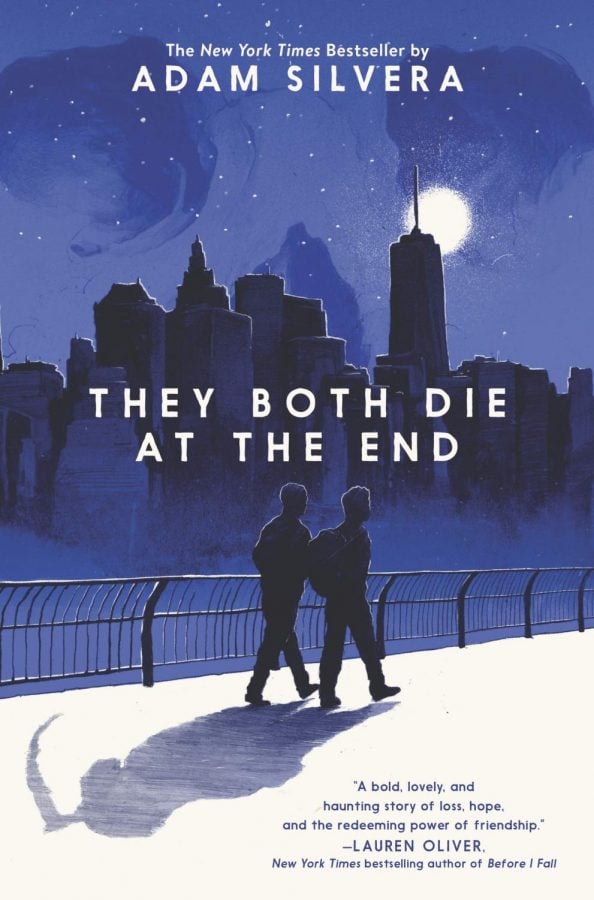
They Both Die at the End by Adam Silvera is a novel about two strangers — Mateo Torrez and Rufus Emeterio — who receive calls from Death-Cast in the middle of the night informing them that they will die before midnight. The title tells you this. The first sentence tells you this. The novel’s entire project is built on that foreknowledge: knowing someone will die does not make their life less worth living, their love less real, or their day less full. Published in 2017, it was a #1 New York Times bestseller with four starred reviews, spent years on school library lists, and was resurrected by BookTok in 2020 into a cultural phenomenon that introduced it to a new generation of readers who sobbed through it on camera and made Adam Silvera one of the most discussed authors on the platform. This complete guide covers They Both Die at the End‘s reading level, recommended age, content considerations, characters, themes, and books similar to They Both Die at the End, designed for parents, teachers, and students.
For Parents
A near-future contemporary YA novel about two teenage boys — one Latino, one Puerto Rican — who fall in love on the last day of their lives. The novel’s death content is sustained and purposeful rather than gratuitous; the LGBTQ+ relationship is the novel’s emotional center. Appropriate for ages 13 and up; widely read in grades 8–10. The novel’s emotional weight is the primary parental consideration rather than specific content concerns.
For Teachers
An excellent grades 8–10 text for teaching narrative structure, multi-POV storytelling, and the dramatic irony of a title-as-spoiler. The novel’s near-future setting (Death-Cast as a system, the Last Friend app, the societal infrastructure built around knowing when you will die) rewards speculative fiction analysis. Silvera’s own Latinx and gay identity is directly embedded in the novel’s characterization and is worth contextualizing for students. The BookTok resurrection is a productive entry point for discussions of how books find new readers.
They Both Die at the End at a Glance
Find on Amazon →| Author | Adam Silvera |
| Published | 2017 (HarperTeen / HarperCollins) |
| Grade Level | 8–10 (our assessment) |
| Recommended Age | 13+ |
| ATOS Reading Level | 5.5 |
| Lexile | 870L |
| Word Count | ~93,250 |
| Pages | 416 (HarperCollins paperback) |
| Structure | Multi-POV; single day; no traditional chapters in some sections |
| Genre | Young adult contemporary / speculative fiction |
| Setting | New York City; near future |
For official Lexile and AR levels, visit Lexile.com or AR BookFinder. ReadingVine provides independent editorial assessments.
What Reading Level Is They Both Die at the End?
They Both Die at the End has an ATOS reading level of 5.5 and a Lexile of 870L. These scores accurately reflect the prose — Silvera writes in an accessible, emotionally immediate style that is neither as stripped as Collins’s nor as ornate as Maas’s. The sentences are clean and direct; the emotional content is the primary demand on the reader rather than linguistic complexity. Booksource’s interest level is 9–12; TeachingBooks grades it 7–12. Our editorial assessment places it at grades 8–10, ages 13 and up.
The novel’s structural challenge is its multi-POV architecture: Mateo and Rufus narrate alternating sections, and the novel also includes shorter interstitial chapters from secondary characters — the Death-Cast caller who phones Mateo, a nurse at a hospital, Rufus’s best friend — whose perspectives expand the world and fill in the day’s events from outside the protagonists’ experience. Readers who have not encountered multi-POV fiction before may find the transitions initially disorienting; readers who are comfortable with ensemble narration will find the structure one of the novel’s greatest strengths. At approximately 93,250 words and 416 pages, most engaged readers complete it in a weekend; the single-day timeline and the emotional momentum make it nearly impossible to put down. For official Lexile and AR scores, visit Lexile.com or AR BookFinder. ReadingVine’s assessments are independent editorial judgments.
What Age Is They Both Die at the End Appropriate For?
We recommend They Both Die at the End for readers ages 13 and up. The novel’s most significant content consideration is its sustained engagement with death and grief — the premise requires living inside the knowledge that the protagonists will die today, and the novel does not flinch from what that means emotionally. Parents of readers who are sensitive to death-related content should be aware that the novel’s emotional impact is profound and intentional.
The LGBTQ+ content — Mateo and Rufus’s developing relationship, Mateo’s anxiety about being openly gay, Rufus’s comfort with his own identity — is central to the novel and handled with care. The relationship develops from friendship to love over the course of the day; there is no explicit sexual content. The novel also depicts the death of Rufus’s entire family in a car accident (which occurred before the novel begins and which shapes his End Day), and the death of secondary characters during the novel’s present-day events. Profanity is present, consistent with the characters’ authentic voices. There are no content concerns that exceed what is expected in serious YA contemporary fiction.
What Is They Both Die at the End About?
In a near-future version of New York City, a company called Death-Cast calls people before midnight to inform them that they will die before the following midnight. The calls are always accurate. The day you receive a call is called your End Day. Society has built an entire infrastructure around this foreknowledge: therapists who specialize in End Days, Decker communities (a slur for people who have received calls), apps that allow Deckers to connect with each other and with “Last Friends” who want to spend time with someone on their final day.
Mateo Torrez is seventeen years old, Puerto Rican, introverted to the point of near-paralysis. He has spent his adolescence managing anxiety that keeps him inside whenever possible, and his End Day begins with him sitting alone in his apartment, unable to figure out how to spend it. His father is in a coma in a hospital across the city. His best friend Lidia is heavily pregnant and he doesn’t want to put her at risk. He downloads Last Friend. He connects with Rufus.
Rufus Emeterio is eighteen, Nuyorican, extroverted and impulsive. His entire family — parents, two sisters — died in a car accident eight months ago. He is living in a group home with other teens who have lost their families, who have become a found family of their own. His End Day begins in the middle of a fight — he was in a confrontation with his ex-girlfriend’s new boyfriend when Death-Cast called, and by the time he reaches Mateo, he is running from the police. He downloads Last Friend. He connects with Mateo.
The novel is their day together: the city they move through, the people they encounter, the conversations they have about what they want their lives to have meant. Mateo, who has spent his life being afraid to live, uses his End Day to actually live — to say things he hasn’t said, go places he hasn’t gone, be the person he has been too afraid to be. Rufus, who has been sprinting through grief since his family died, uses his End Day to slow down enough to feel the grief he has been outrunning, and to find that there is still love available to him. They both die at the end. The novel tells you this from the first page. What the novel is arguing is that this does not make the day meaningless — it makes it the most meaningful day either of them has ever had.
They Both Die at the End Characters
Is They Both Die at the End Banned?
They Both Die at the End has been challenged and removed from school libraries in multiple states as part of the broad wave of LGBTQ+ book challenges that accelerated after 2021. It does not appear by name on the ALA’s annual top-ten most challenged list, but it has been targeted in Florida’s statewide review of school library materials, in district-level challenges across multiple states, and in the coordinated pressure-group campaigns that have targeted LGBTQ+ YA fiction broadly. The primary challenge reason, consistent with the broader pattern, is its LGBTQ+ content — the same-sex relationship between Mateo and Rufus — sometimes accompanied by claims of “sexual content” that do not reflect what the novel actually contains. There is no explicit sexual content in They Both Die at the End.
The broader context for challenges to this novel is the pattern the ALA has consistently documented: 53% of the books on recent ALA most challenged lists contain LGBTQ+ themes or content. They Both Die at the End is precisely the kind of book driving this statistic — not graphic, not sexually explicit, widely praised for literary quality, and targeted specifically because it depicts a same-sex romantic relationship between two teenage boys as something natural, central, and worth reading about. The Washington Post’s investigation of LGBTQ+ book challenges found that the second most common stated reason — after “sexual content” — is the explicit desire to prevent children from reading about LGBTQ+ lives. In the case of this novel, there is no sexual content to object to. What is being challenged is the love story itself.
They Both Die at the End Themes and Lessons
The novel’s central conceit — a service that tells you when you will die — is not primarily about death but about life. Death-Cast is a thought experiment: if you knew today was your last day, what would you do? The answer the novel gives through Mateo is devastating in its simplicity: he would stop being afraid. He would say the things he has not said. He would go to the places he has avoided. He would be, for one day, the person he has wanted to be all along. The novel’s most painful implication — which it does not soften — is that the only difference between Mateo’s End Day and every other day of his life is the knowledge. The death has always been coming. The day has always been worth living. The anxiety that kept him inside was keeping him away from the life he wanted and already had access to.
The novel’s near-future world is one of its most underappreciated achievements. Silvera builds, in the margins of the main story, an entire society organized around Death-Cast: Decker support groups, End Day therapists, the Last Friend app’s terms of service (Last Friends may not accompany Deckers in dangerous activities), the legal and insurance implications of receiving a call. This world-building is specific enough to feel real and light-touch enough not to overwhelm the emotional story, and it gives the novel a speculative dimension that rewards analytical reading alongside the emotional reading.
Silvera’s own identity — he is Puerto Rican and gay — is woven directly into the novel’s characterization in ways that are worth naming. Mateo and Rufus are not token LGBTQ+ characters inserted into a straight narrative framework; they are Puerto Rican and Nuyorican young men whose identities are specific and detailed, whose anxieties are particular to their lives, and whose love story is the novel’s emotional center rather than a subplot. Silvera has said he wrote the book he needed as a teenager — a book where gay Latino boys could be the main characters, could fall in love, and could matter. The novel’s enormous readership among LGBTQ+ teens is a direct measure of how successfully he did this.
Discussion questions for classrooms and families: If you knew today was your last day, what would you do — and what does your answer reveal about what you value? What does the novel argue about the relationship between the fear of death and the fear of living? How does Silvera use the multi-POV structure to create dramatic irony — what do readers understand that the characters don’t? What does the novel’s portrayal of found family — Rufus’s group home friends, Mateo and Rufus’s single-day connection — argue about what family means? What would it mean to live every day the way Mateo and Rufus live their End Day?
How Many Pages and Chapters in They Both Die at the End?
The HarperCollins paperback is 416 pages. The novel is structured as alternating sections from Mateo’s and Rufus’s perspectives, interspersed with shorter chapters from secondary characters. The timeline is a single day, September 5, moving from just after midnight through the following midnight. Word count is approximately 93,250. Most readers complete it in one or two sittings; the single-day timeline creates a momentum that makes stopping feel unnatural. Silvera has said the novel was originally longer and was tightened to preserve the urgency that a single-day narrative requires.
The novel includes a companion prequel, The First to Die at the End (2022), set on the first day Death-Cast ever makes calls — exploring different characters in the same world. It can be read before or after the original novel, though most readers encounter the original first.
Books Similar to They Both Die at the End
About Adam Silvera
Adam Silvera was born in 1990 in New York City to Puerto Rican parents and grew up in the Bronx. He studied creative writing and has said that his identity as a gay Puerto Rican teenager shaped his understanding of what YA fiction was missing when he was growing up: he did not see boys who looked like him or loved like him in the books he was reading, and he decided to write the books he had needed. His debut novel, More Happy Than Not (2015), was described by the New York Times as “profound.” They Both Die at the End was his third novel, published in 2017.
The novel’s second life began in 2020, when BookTok — the TikTok community of book readers — discovered it and began posting reaction videos: readers finishing the novel, crying visibly on camera, describing the emotional devastation. The videos went viral in a way that drove massive new sales — the novel had been well-reviewed and moderately successful at publication, and the BookTok moment turned it into a phenomenon. Silvera has spoken about the experience of watching a book he wrote five years earlier find its largest readership through a medium that did not exist when he wrote it, and about what it meant to see LGBTQ+ readers in particular responding to a story that centered them.
His subsequent novels include Infinity Son (2020) and Infinity Reaper (2021), a fantasy duology, and The First to Die at the End (2022), a prequel set in the Death-Cast universe on the day Death-Cast makes its first-ever calls. He lives in New York City.
They Both Die at the End: Frequently Asked Questions
What reading level is They Both Die at the End?
They Both Die at the End has an ATOS of 5.5 and a Lexile of 870L — accurately reflecting accessible, emotionally immediate prose. The challenge is the emotional weight and the multi-POV structure rather than linguistic difficulty. Our editorial assessment places it at grades 8–10, ages 13 and up. For official Lexile and AR scores, visit Lexile.com or AR BookFinder.
What grade is They Both Die at the End appropriate for?
We recommend grades 8–10, ages 13 and up. The primary content considerations are the sustained engagement with death and grief, and the LGBTQ+ relationship between the two protagonists. There is no explicit sexual content. The novel’s emotional impact is profound and intentional — parents of readers sensitive to death-related content should be prepared for a deeply affecting read.
How many pages are in They Both Die at the End?
416 pages; approximately 93,250 words. The single-day timeline and emotional momentum make most readers complete it in one or two sittings. A companion prequel, The First to Die at the End (2022), explores the same world with different characters.
What is They Both Die at the End about?
Mateo Torrez and Rufus Emeterio receive calls from Death-Cast at midnight informing them they will die before the following midnight. They are strangers who connect through a Last Friend app designed for people on their End Day. The novel follows their single day together — moving through New York City, finding moments of love and life and connection — knowing from the first page that they will not survive it.
Is They Both Die at the End appropriate for someone who is grieving?
This depends on the individual. The novel engages with grief with unusual depth and care — Rufus’s grief for his family, Mateo’s anticipatory grief for his father, the secondary characters’ grief for their own losses. Some readers who are grieving find the novel profoundly comforting: it insists on the value of love and connection even in the face of certain loss. Others may find it too emotionally activating while in acute grief. This is a question worth discussing with individual readers rather than answering categorically. If someone is in crisis or experiencing suicidal ideation, this novel is not the right book at that moment; please reach out to the 988 Suicide and Crisis Lifeline by calling or texting 988.
Do Mateo and Rufus actually die?
Yes — the title tells you this, the first sentence confirms it, and the novel’s entire architecture is built on the reader knowing the ending from the beginning. The novel is not asking you to wonder whether they will die; it is asking you to be with them while they live. Their deaths occur in the novel’s final pages, and the manner is not telegraphed in detail — but that they will die is never in question and is not a spoiler in the conventional sense.
Why is They Both Die at the End so sad?
The novel’s emotional power comes from its combination of foreknowledge and genuine attachment. Because the reader knows from the title that both protagonists will die, every moment of joy they experience is also a moment of grief — the reader is always aware that this is one of the last moments of this kind. Silvera uses this structure to argue that grief and love are not opposites: knowing that something will end does not make it less beautiful; it makes it more so. The novel is devastating precisely because it makes you love these characters fully before it takes them from you, and because it insists that this is what love always is.
Is there a They Both Die at the End movie or show?
As of 2026, no film or television adaptation has been produced. The novel’s BookTok popularity has generated significant interest in adaptation, and Silvera has mentioned the possibility in interviews, but no confirmed production has been announced.